
Solar System
Evolution of the Solar System
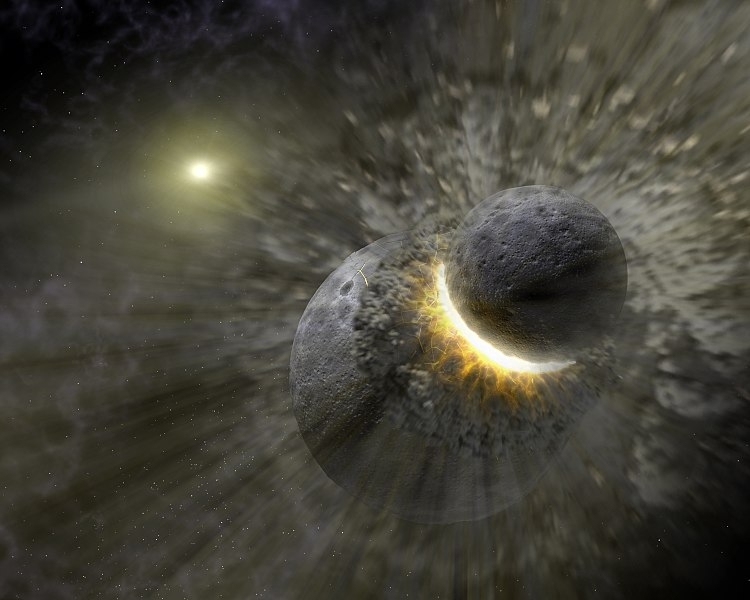
The Solar System has not stayed the same since its formation, but evolved—changed over time. Some astronomers think that the giant planets shifted their positions in the early years, moving nearer or farther away from the Sun. This "planetary migration", particularly that of Jupiter, was, according to this theory, responsible for much of the Solar System's early evolution. This is because the giant planets' massive gravitational force caused all other objects near them, including even some other planets, to be sent flying in all directions. Objects have also been colliding with one another continually since the Solar System's formation, often bringing about great changes. The Sun's gradually increasing output of energy has had an effect on the inner planets, and will continue to do so.
Origins
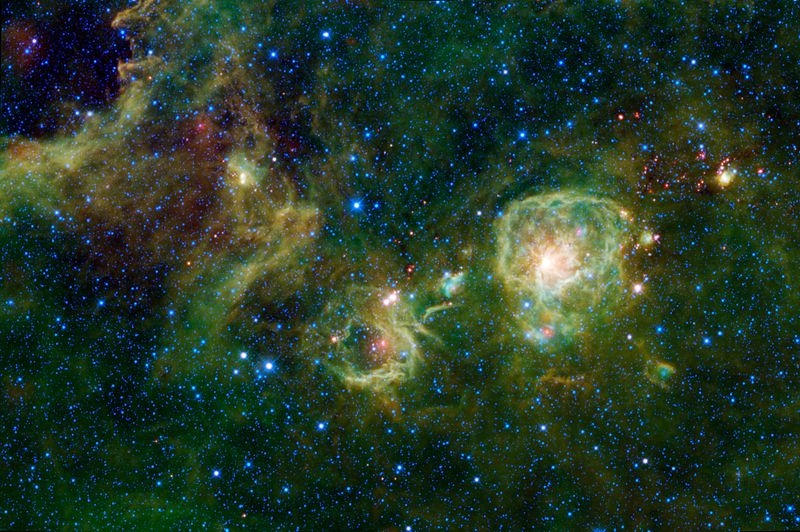
The Solar System began to form about 5 billion years ago when a giant cloud of dust and gas, called a molecular cloud, began to fall in on itself under its own gravity. This collapse may have been triggered by shock waves from a supernova. A small part of the cloud became a swirling disc, known as a solar nebula. The centre of the disc, hotter and denser than the rest, formed the beginnings of a star, called a protostar. This eventually became our Sun. The planets, moons, asteroids and a myriad of other small objects all formed from the material that made up the remainder of the disc. Meanwhile, other parts of the cloud underwent similar changes and formed other stars.
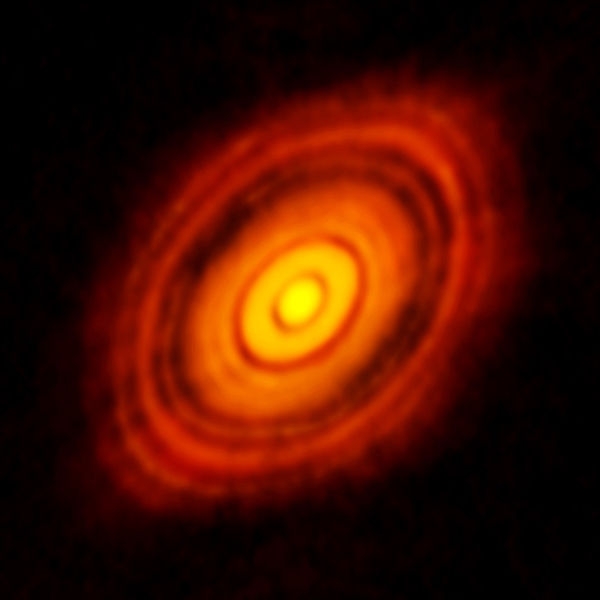
In its early years, the Sun was still a relatively cool object. The temperature at its core was too low for hydrogen fusion, the process by which a star creates and radiates energy. At this stage, the young Sun was what astronomers call a T Tauri star—one of a type that is observed in other parts of the Milky Way Galaxy today. This type of star is one that has recently formed, and is still surrounded by a disc of swirling gas and dust, called an accretion (or protoplanetary) disc.
Within 50 million years, the temperature and pressure at the core of the Sun became so great that its hydrogen began to fuse into helium, creating a nuclear furnace. The Sun, now what is known to astronomers as a main sequence star, began to shine.
Planetesimals
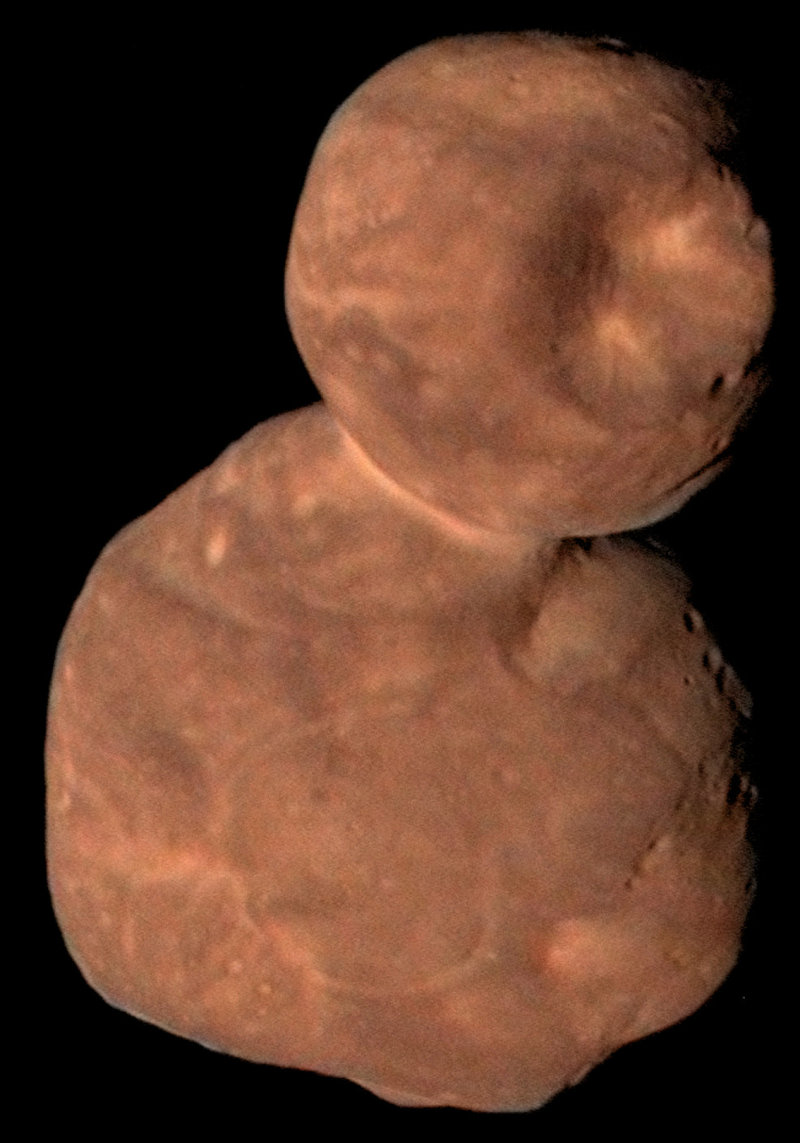
How did the planets form from gas and dust? Just a few specks stuck together and grew big enough to capture more of the cloud, slowly increasing their mass. This is known as accretion. Once they became clumps of rock about a metre across, gravity started to draw other fragments towards them to form boulders hundreds of metres in diameter, and eventually larger rocky objects, called planetesimals, 10 kilometres or more across.
These gradually increased in bulk through further collisions, growing a few centimetres per year over the next few million years until they formed moon-sized bodies known as protoplanets. Many of these were destroyed by later collisions, returning to the dust of their origins. But occasionally a collision rammed the material from these objects together. The size of this larger mass of rock became great enough for gravity to pull it in from all sides, creating a spherical world: a planet.
Terrestrial planets
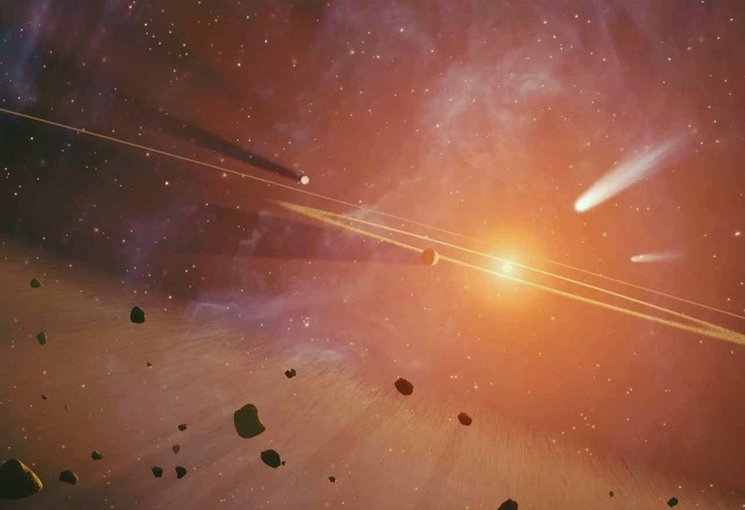
Each of the four inner planets, known as the terrestrial planets—Mercury, Venus, Earth and Mars—were formed from planetesimals. The young Sun's solar wind, high-energy particles streaming outwards in all directions, swept away lighter elements, such as hydrogen and helium, from the region closest to it, leaving only heavy materials, such as the metals iron, nickel and aluminium, and rocky silicates, to create the terrestrial planets. Farther away from the Sun, the solar wind had less impact on hydrogen and helium, allowing these gases to come together and form the giant planets.

Birth of the giants
Jupiter was the first of all the planets to form. By the time the Sun had started to radiate energy, Jupiter was already fully grown. Along with the other giants, Saturn, Uranus and Neptune, it formed outside what is known as the frost line (also known as the ice or snow line), the distance from the Sun beyond which it is cool enough for icy compounds to remain solid—that is, not to melt. Because icy fragments, along with the gases hydrogen and helium, were abundant in this region of space, Jupiter and the other giant planets were able to grow into huge, gassy balls.
Jupiter's migration
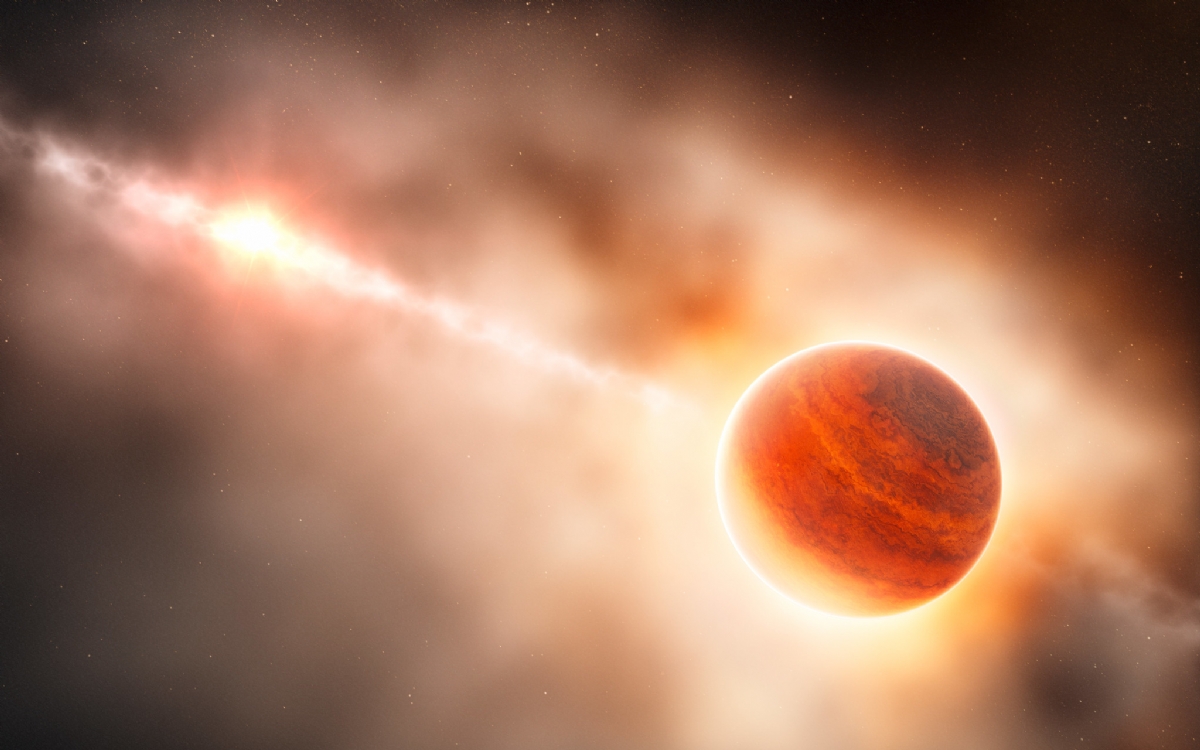
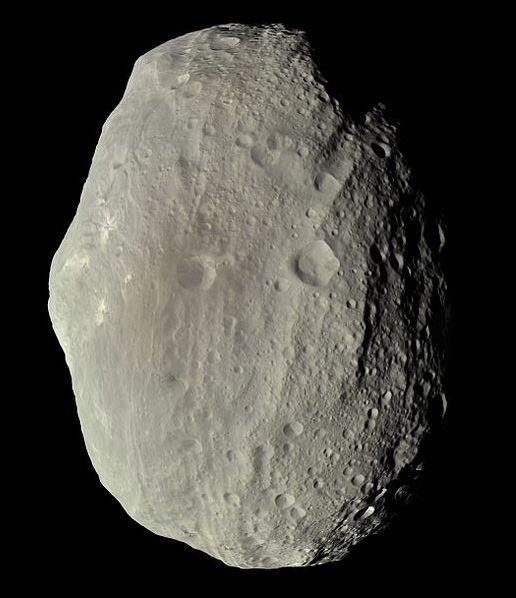
Around 4.5 billion years ago, Jupiter began to spiral slowly inwards towards the Sun. This movement was driven by the gravitational pull of the still-evolving Sun. This inward movement of such a large world had a devastating effect on that region of space which today lies between Jupiter and Mars and is occupied by the Asteroid Belt. At that time, it was filled by planetesimals zipping around, growing bigger and bigger. Jupiter's powerful gravity sucked in almost all their building material—or sent it flying. Two or three planets the size of Earth could have been created here. Instead, they were "robbed" of the material they needed to grow. The larger asteroids today, Ceres and Vesta, are surviving planetesimals from the early years of the Solar System.
As Jupiter continued to spiral further and further into the inner Solar System where other planetesimals were growing, the gravitational chaos sent many thousands of them crashing into one another at high speed or hurtling into the Sun. Only a relatively small amount of material was left behind for the four small rocky planets to form.

Grand Tack
Had Jupiter continued on its inward path, our Earth might never have formed at all. But just at this moment, Jupiter's progress was checked. This was because Saturn had been forming in a region of space beyond Jupiter's orbit. The gravitational pull between the two giants, magnified by what is known as orbital resonance (when the orbits of two objects line up), was enough to cause both planets to move outwards away from the Sun.
This change in direction is called the Grand Tack, because the reversal of Jupiter's migration is likened to the path of a sailing boat changing directions (tacking) as it travels against the wind. It took place over the course of just a few million years.
Jupiter's Grand Tack cleared away much of the material around the young Mars. This explains why this planet remained so small in comparison with Earth and Venus. Mercury may also have originally formed in the region beyond Mars's orbit and could have been sent spiralling inwards towards its present orbit during the Grand Tack.
Late Heavy Bombardment
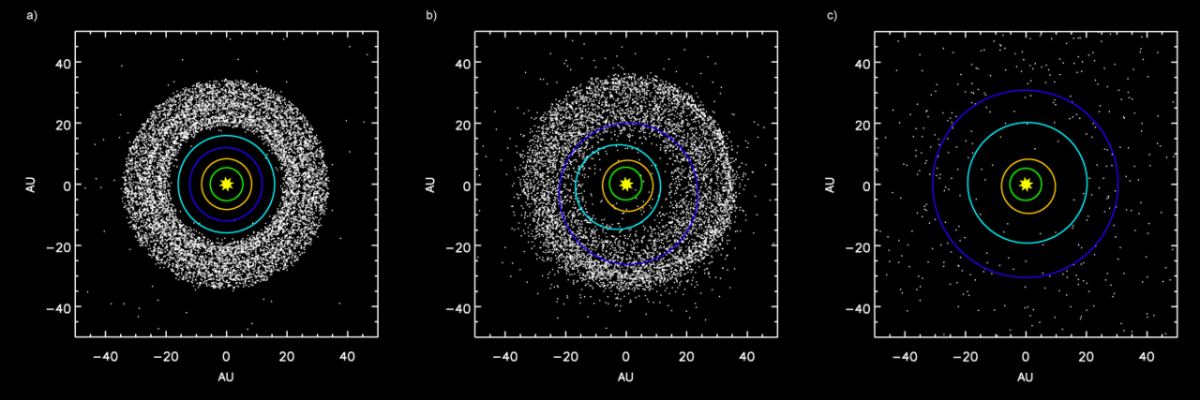
Moving away from the Sun on its Grand Tack, Jupiter crossed the Asteroid Belt a second time. Its gravity flung the asteroids back into the inner Solar System. There they crashed into the four young rocky planets with great intensity. This period is known as the Late Heavy Bombardment (LHB), and is thought to have occurred 4.1 to 3.8 billion years ago.
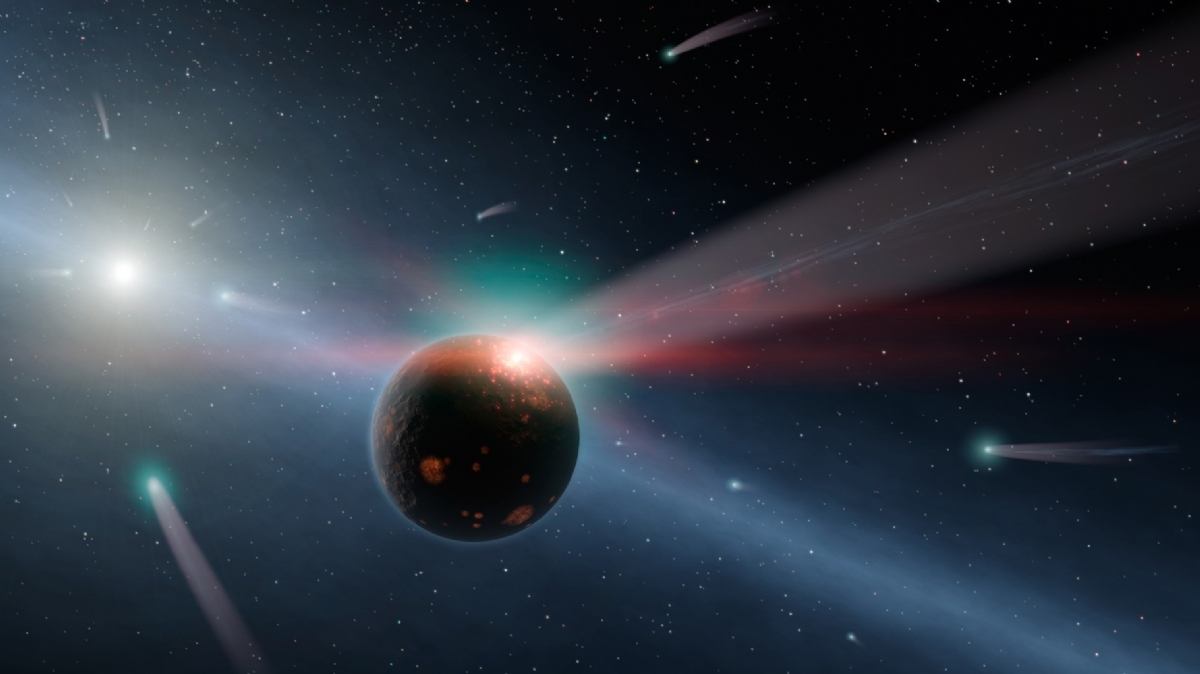
Some scientists say the LHB may have been a bombardment by comets rather than by asteroids (or that it was possibly both). The comets could have been "knocked out" of their original orbits in the Kuiper Belt, a zone of icy bodies surrounding the Solar System. The trigger was likely to have been the outward drift of Neptune from inside Uranus's orbit to well beyond it, a movement caused by the Grand Tack of Jupiter and Saturn. The bombardment by asteroids (and to a lesser extent, comets), objects rich in water ice and minerals, delivered much of the water Earth that still holds on its surface today—and which the other terrestrial planets held in the past.


Asteroids
The evolution of the Asteroid Belt since the Late Heavy Bombardment has been a story of collisions between the countless millions of rocky or metallic fragments that, thanks to Jupiter's intervention, never came together to form planets. On some occasions, the larger asteroids have been broken apart by collisions, while new ones have been forged from the remnants of other collisions.
Creation of moons
Some of the Solar System's moons have formed from discs of gas and dust orbiting their parent planets. Other moons are former asteroids or Kuiper Belt objects (KBOs) captured by the planets, or are relics of massive collisions.
All the outer planets have many moons. Those ofJupiter and Saturn probably originated from accretion discs circling each giant planet. in much the same way that the planets formed from the disc around the Sun. Neptune’s huge moon, Triton, is probably a captured KBO. Its arrival may have destroyed other Neptunian moons, of which only a few battered relics now remain. Mars's two small moons are thought to be captured asteroids.
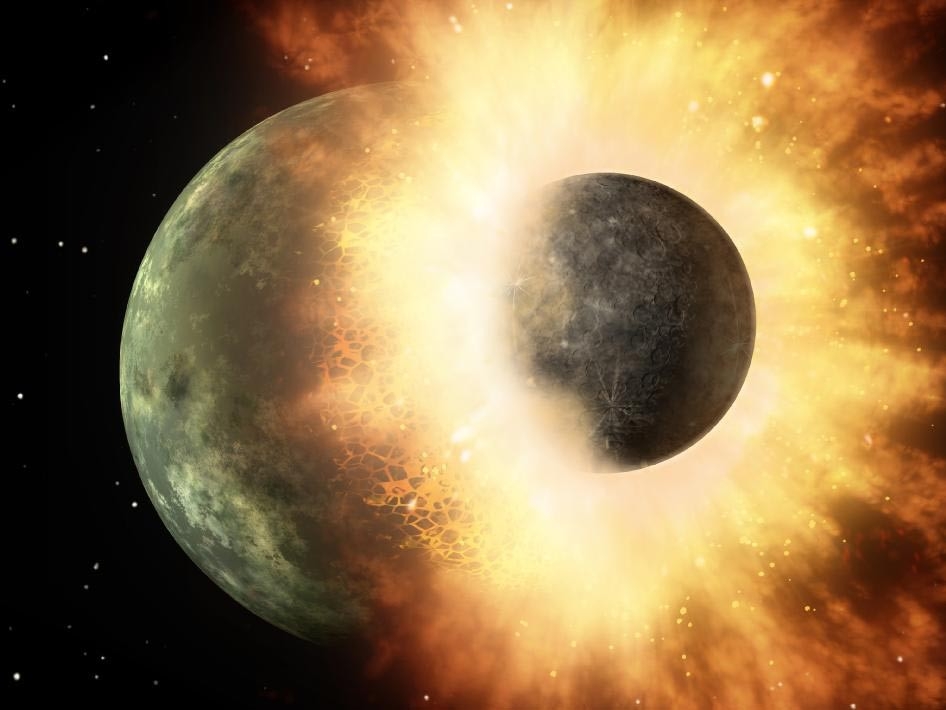
Earth's Moon probably formed as a result of a collision with another large object. The fragments remained in orbit and gradually coalesced into the Moon.

Recent events
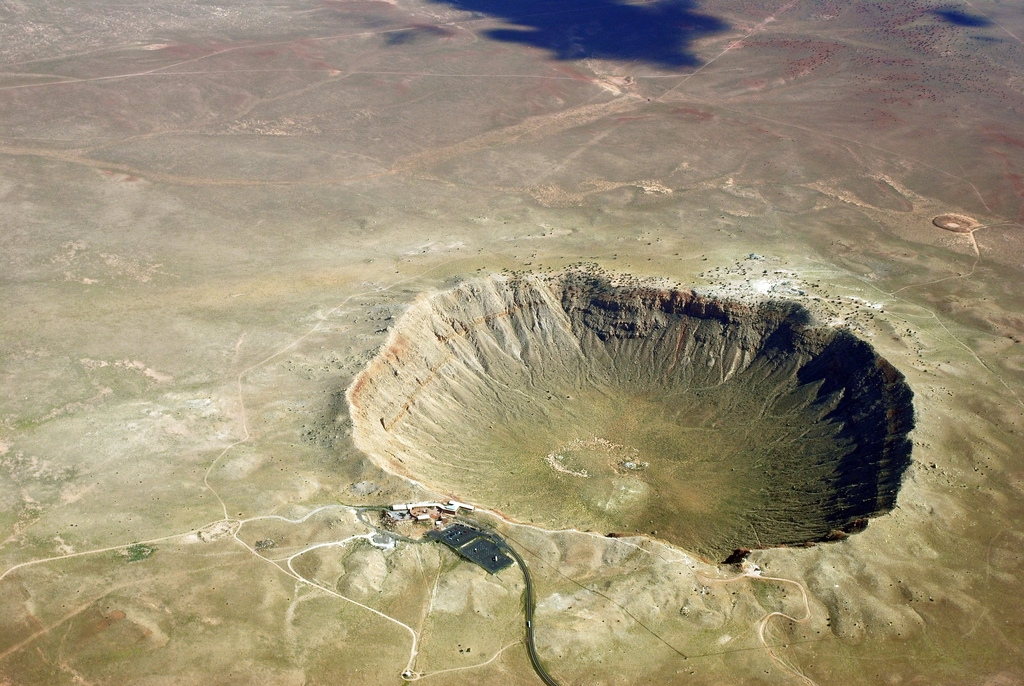
Impacts by asteroids and comets continue to play a part in the evolution of the Solar System. Disturbances to asteroids' and KBOs orbits happen frequently, sometimes hurling them to the far edges of the Solar System or inwards towards the inner planets. The impacts that caused the dinosaurs to go extinct 66 million years ago or punched out Meteor Crater in Arizona 50,000 years ago are both examples of past asteroid collisions with Earth. The trajectory of comets can also be affected by Jupiter's powerful gravitational force. A good example of this Comet Shoemaker–Levy, which was observed crashing into Jupiter in 1994.
Future of the Solar System
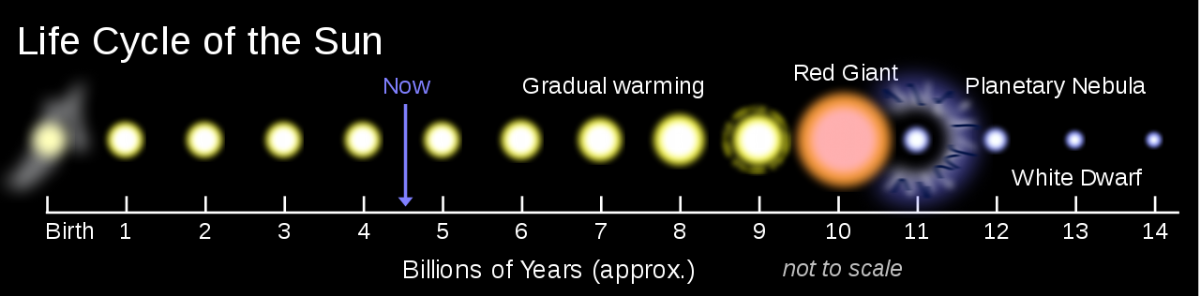
Astronomers think that the current state of the Solar System will not change drastically until the Sun enters its red giant phase 5.4 billion years from now. However, the Sun's gradually increasing energy output will mean that in about 1.4 billion years' time the Sun's habitable zone—the distance band from the Sun within which a planet can hold on to liquid water—will have shifted out to beyond the Earth’s orbit. This will mean that all Earth’s water will be in the form of gas (it will be too hot to remain liquid) so no unprotected life could survive.
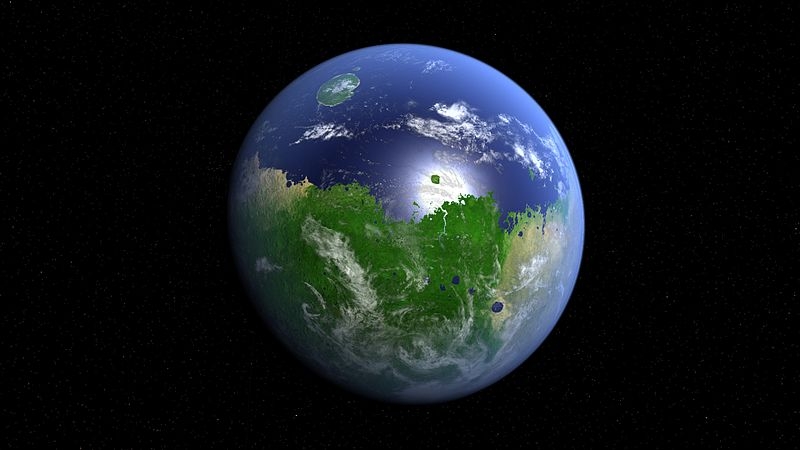
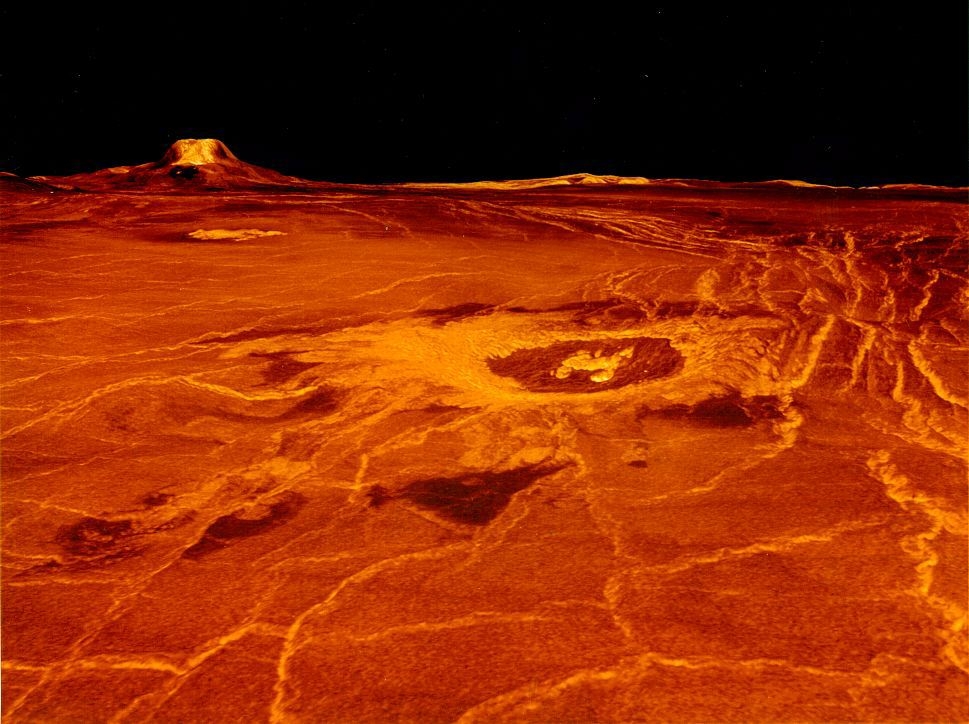
On the other hand, it could be that Mars will come to experience the same climatic conditions Earth enjoys today, and so provide a possible future haven for life. By contrast, in 3.5 billion years from now, Earth's surface conditions will quite likely be similar to those of Venus today, where any form of life is impossible in the fierce heat and crushing pressure.
The death of the Sun
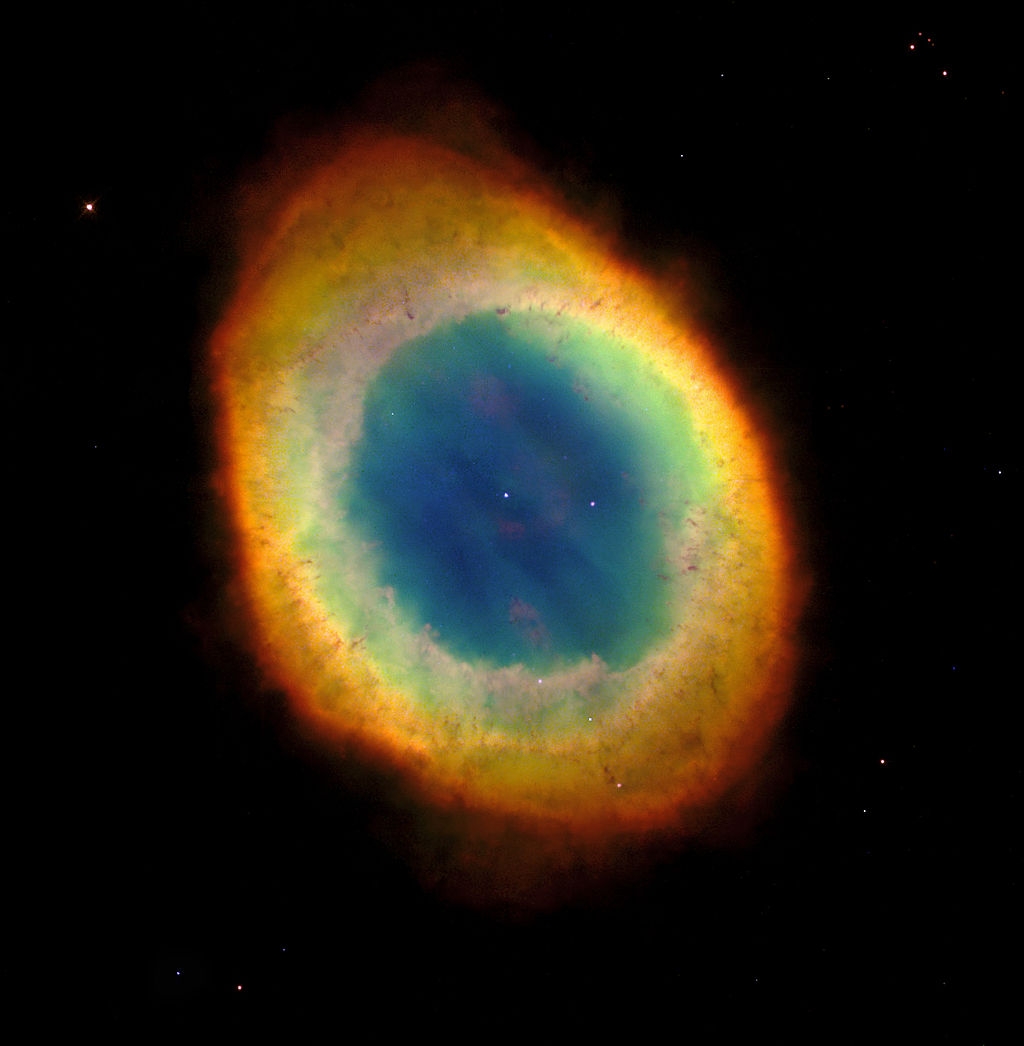
In about 5 billion years' time, the Sun will cool and expand outwards to many times its current diameter, becoming a red giant. Mercury and Venus will be swallowed up, while the Earth’s outer layers will be stripped away. The Sun will then cast off its outer layers as a planetary nebula and leave behind a tiny remnant of a star called a white dwarf. Eventually, the gravitational pull of passing stars will sweep away the Sun's remaining family of planets. Some will be destroyed while others will be ejected into interstellar space. The Solar System will no longer exist.
Consultant: Mike Goldsmith