
Aircraft
How a plane flies
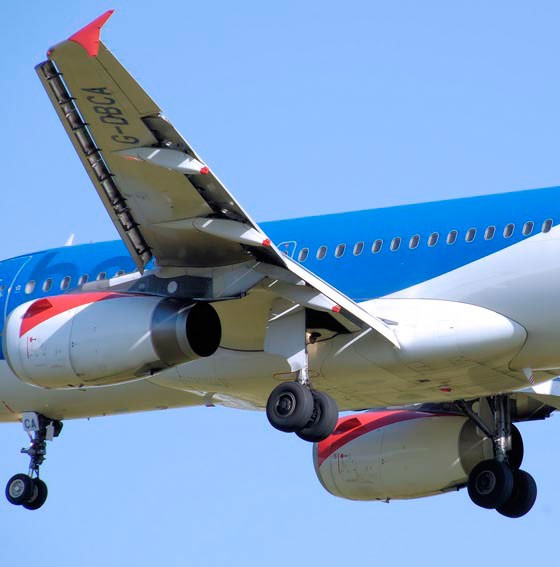
How does a heavy aeroplane fly through the air? It relies on its engines to drive it forward at speed and its wings to provide lift. To steer, the aeroplane's control surfaces (rudder, elevators and ailerons) on the wings and tail are adjusted, which change the airflow around the plane. On many planes, the wings are angled slightly upwards (called a dihedral), which helps the plane to stop rolling. Ailerons, which are like horizontal rudders attached to the rear (trailing) edges of the wings, constantly adjust the roll as the plane flies forward, keeping it level.
Lift
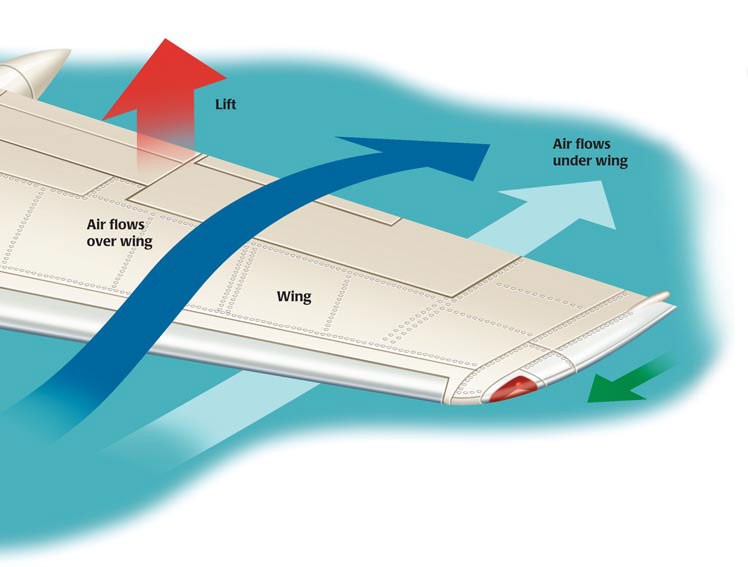
As an aeroplane moves forwards, air hitting the leading (front) edge of the wing separates above and below the wing. Because of the wing's aerofoil shape—curved more on its upper side than its lower side—the air that flows over it is faster than that flowing under it. This creates lower air pressure above the wing than beneath it. The difference in pressure pushes the wing upwards with a force called lift.
The amount of lift can be raised by increasing both the speed of the plane and the angle of attack, the angle at which the leading (front) edge of the wing strikes the air. At lower speeds, the pilot maintains lift by raising the nose of the plane to increase the angle of attack. But if the angle becomes too great, air cannot flow smoothly over the top of the wing and lift is lost. This is called a stall.
Take-off
First, the pilot must accelerate the plane along a runway until it reaches the speed where its wings provide enough lift. The aeroplane will climb into the air if this lift is greater than its weight. For any plane, maximum lift is needed at take-off. An airliner has flaps fitted to its wings. These are used to extend the wing surface and exaggerate its curved profile in order to provide extra lift. When an airliner takes off, the flaps extend outwards at the rear edge of its wings.

Steering
Steering a plane is not the same as steering a car, where a turn of the wheel sends it either to the left or right. A plane can move in three different ways. As well as turning to left or right (caused by yawing), it can climb or dive (caused by changing the pitch) and it can bank to one side or the other (caused by rolling).
Pitching
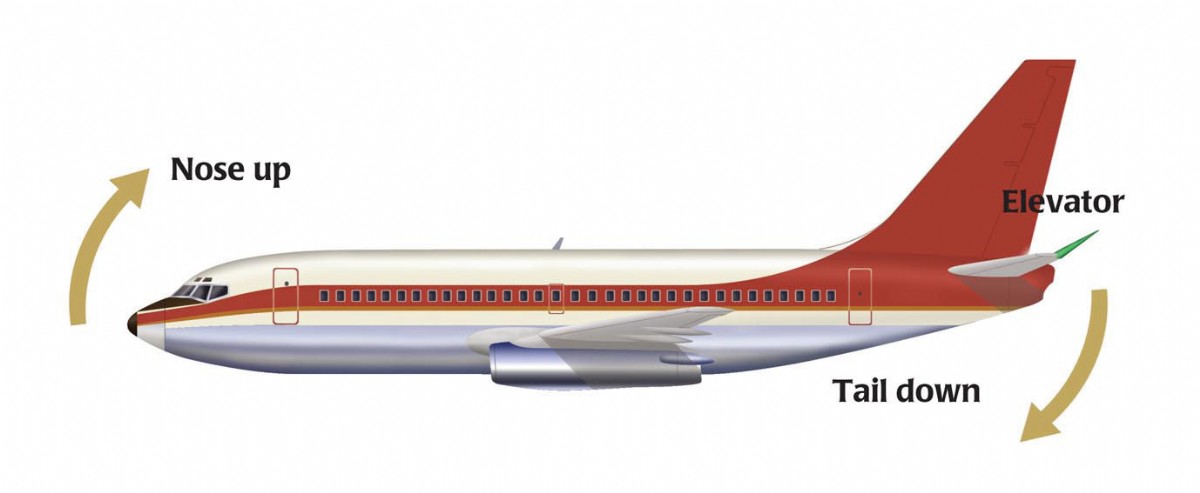
To climb, the pilot (an autopilot on an airliner) pulls the control column back. This raises flaps on the tail, called elevators. The airflow is turned upwards causing the plane’s tail to drop and its nose to rise.
To make the aircraft dive, the pilot pushes the control column forwards. This has the opposite effect on the airflow. The tail rises and the nose drops.
Yawing
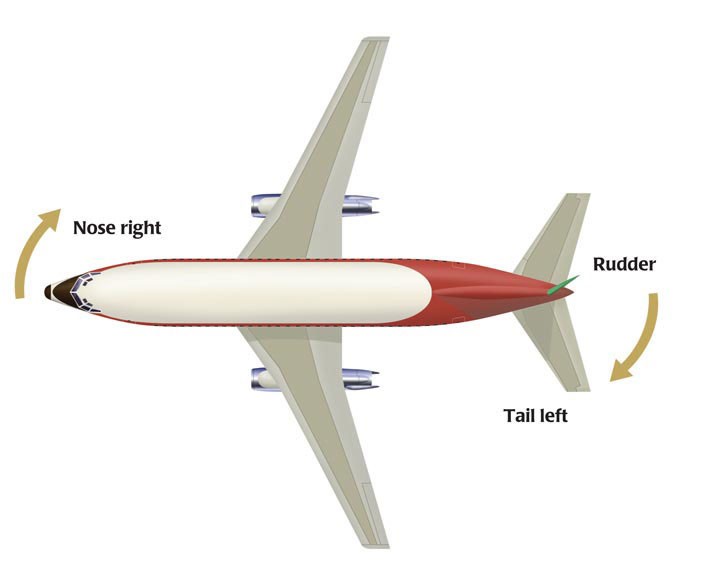
To turn the aeroplane to the right or left, the pilot uses pedals to swivel the rudder on the tail. This changes the airflow, pushing the nose to the left or right. On larger aircraft, the rudder is too heavy to be operated manually, so the steering is driven instead by hydraulic pumps (using the pressure of liquid, in this case oil, through pipes).

Rolling
To roll the plane, the pilot adjusts the ailerons. This is achieved by moving the control column left or right. The ailerons work in pairs, so as one moves up, the other moves down. Raising the left aileron deflects the airflow higher over this wing, causing it to drop. Lowering the right one causes that wing to rise. This makes the plane roll to the left. With the right aileron up and the left one down, the plane "banks" to the right.
To make a smooth turn, the pilot yaws and rolls the plane at the same time. The wing dips into the turn in the same way that a cyclist leans into a corner.
Consultant: Chris Oxlade