
Photography

CITE
We have made every effort to follow citation style rules, but there may be some minor differences. If in doubt, please refer to the appropriate citation style manual.
History of photography. (2026). In Q-files Encyclopedia, Technology, Photography. Retrieved from
https://www.q-files.com/technology/photography/history-of-photography
"History of photography." Technology, Photography, Q-files Encyclopedia, 13 Mar. 2026.
https://www.q-files.com/technology/photography/history-of-photography.
Accessed 22 Sep. 2026.
History of photography 2026. Technology, Photography. Retrieved 22 September 2026, from
https://www.q-files.com/technology/photography/history-of-photography
Technology, Photography, s.v. "History of photography," accessed September 22, 2026.
https://www.q-files.com/technology/photography/history-of-photography


History of photography
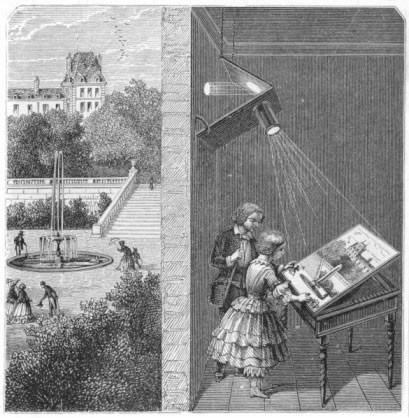
The forerunner of the camera was the camera obscura, used by artists, which made images with a lens, but could not record them. The earliest surviving photograph, an image recorded on to a surface of some kind, was taken by Frenchman Joseph Niépce in 1827. It was recorded on a metal plate coated with chemicals that changed very slowly where the image was light but not where it was dark. Photographic processes were soon improved by two inventors working independently without knowledge of each other's work: Frenchman Louis Daguerre and Englishman William Fox Talbot.
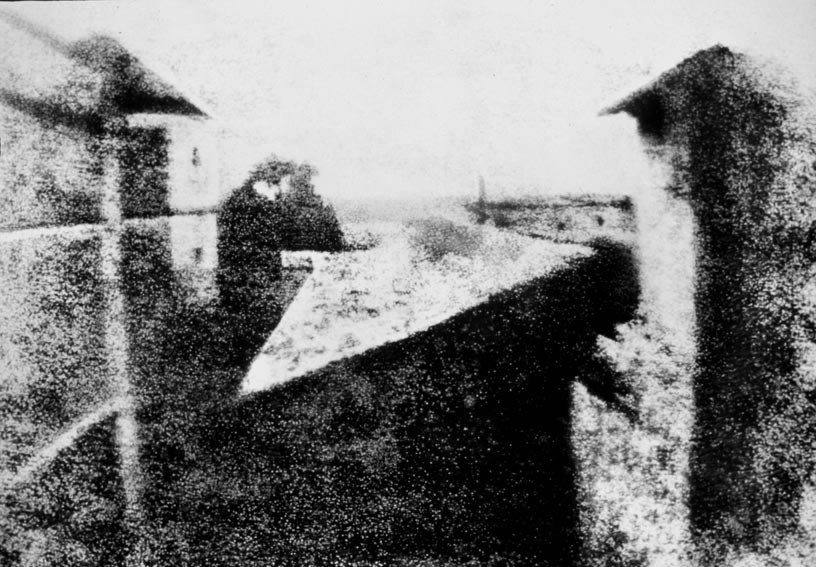
Nicéphore Niépce
The earliest surviving photograph was a view taken in 1827 by Frenchman Joseph Nicéphore Niépce (1765–1833) from the window of his home at Chalon-sur-Saône, near Beaune, France. Simple cameras, in which rays of light reflected from an object passed through a pinhole in a dark box to make an upside-down image on a screen inside, had been invented centuries earlier. The problem was how to make the image permanent. Niépce solved it by fitting his camera with a metal plate coated with a thin layer of bitumen (asphalt, the substance used to surface roads) and oil. After eight hours, a ghostly image formed on the plate.
Louis Daguerre
The quality of photographic images was soon improved by another Frenchman, Louis Daguerre (1787–1851). Daguerre’s photograph of an artist’s studio became the world’s first fully successful photograph in 1837. It was called a daguerreotype, a photograph on a copper plate coated with silver iodide, which is highly sensitive to light, fixed (made insensitive to further exposure to light) with ordinary salt.
To begin with, the process of taking a photo required exposure times of several minutes. But the biggest drawback is that the daguerreotype was a unique image, which could only be duplicated by re-photographing the original subject.
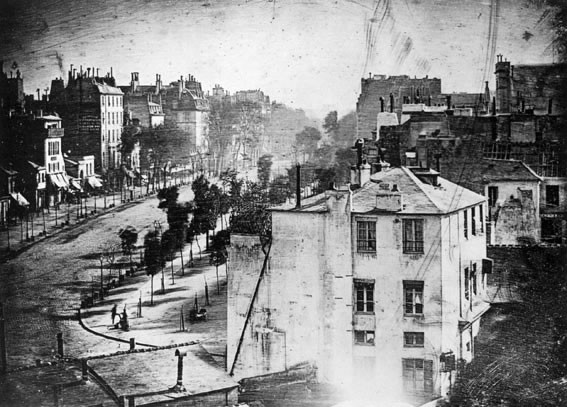
The daguerreotype was replaced by the wet collodion process, invented by Englishman Frederic Scott Archer (1813–1857) in the 1850s, in which the photographer developed a positive image from a negative one captured on a glass photographic plate.
William Fox Talbot
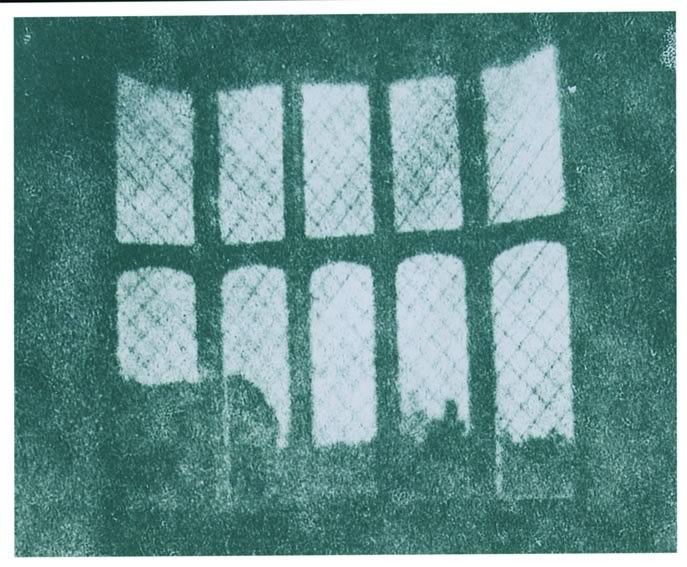
William Fox Talbot (1800–77) was unaware of both Niépce's or Daguerre's work. His 1835 photograph of a window at Lacock Abbey was the first made by the calotype process, in which the image is recorded as a negative in the camera, and is used to print positive photographs. This process allowed many copies of a photograph to be made. Paper coated with silver iodide was used in the process. But the grain of the paper (its texture) could be easily seen in the prints, making them lesser quality than daguerreotypes.
Eastman's Kodak
box camera
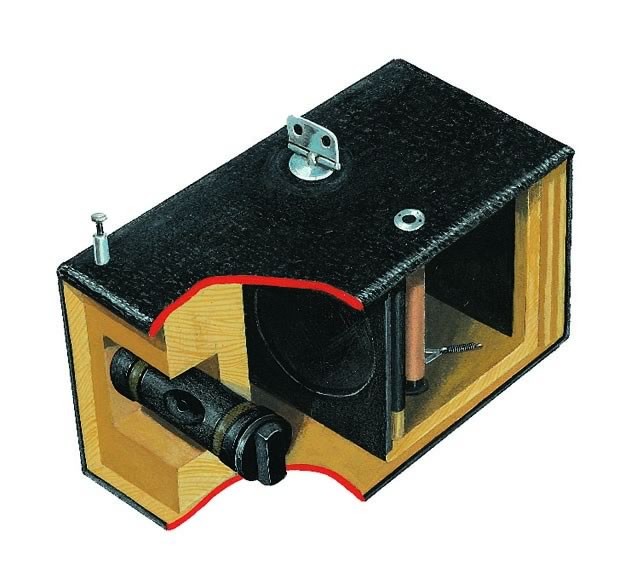
In 1888 American inventor George Eastman (1854–1932) introduced the easy-to-use Kodak box camera. It helped to make photography a popular hobby because the films could be sent away for developing. Eastman also produced the first roll films. A photographer no longer needed to carry around expensive plates and a darkroom for developing the image.
Digital cameras
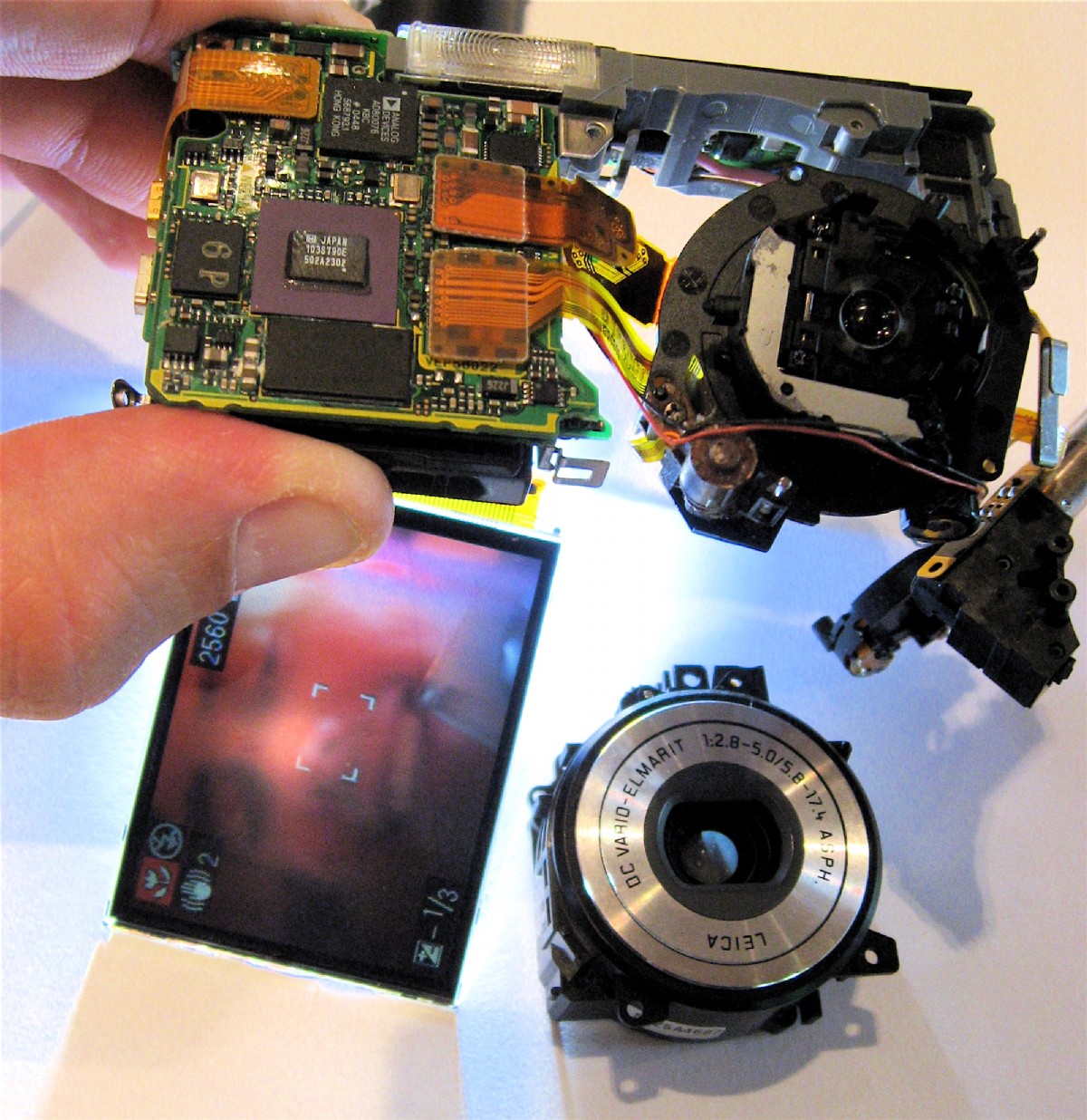
The first digital camera was built by Steven Sasson, an engineer at Eastman Kodak, in 1975. It used an image sensor, called a charge-coupled device (CCD). This is a device that divides an image into pixels, measures the brightness and colour of each one, and digitizes the readings. By the mid-1990s, digital cameras were becoming commonplace, and 10 years later they had largely replaced film cameras. Today most mobile phones and all smartphones have an integrated digital camera.
X-ray photos
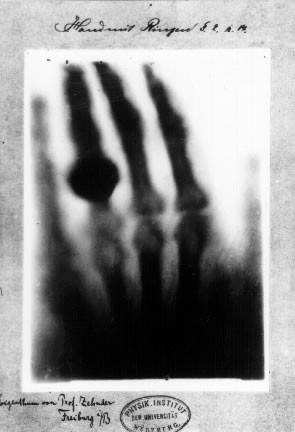
X-rays were discovered—accidentally—by German scientist Wilhelm Röntgen (1845–1923) in 1895. He found that a piece of cardboard coated with crystals of the salt barium platinocyanide glowed when a thermionic valve or vacuum tube (an early electronic device) was switched on in the same room, even when the tube was covered over with opaque cardboard. Röntgen guessed these mystery rays—to which he gave the temporary name X-rays—came from the tube. It was soon discovered that the invisible rays could pass through many materials, such as flesh, but not through metal or bone. Röntgen found that X-rays could expose photographic plates, and made the first X-ray photograph of his wife’s hand in December 1895.
Consultant: Chris Oxlade
Timeline
c.900
The first type of camera, the camera obscura, is used. A hole in the wall of a room enabled an image from outside to be projected on to the opposite wall.
1827
Nicéphore Niépce takes the earliest surviving photograph.
1837
Daguerre’s creates his photograph of an artist’s studio, the world’s first fully successful photograph.
1839
Frenchman Hippolyte Bayard discovered how to make positive images directly on paper with his photo of windmills in Montmartre, Paris.
1839
William Fox Talbot makes the first photographic negative.
1861
Scottish physicist James Clerk Maxwell takes the first colour photograph.
1884
George Eastman patents flexible film that can be rolled inside a camera.
1980s
The first digital cameras are sold.
pics
Without in any way limiting Q-files Ltd’s exclusive rights under copyright, any use of this publication to “train” generative artificial intelligence (AI) technologies to generate text is expressly prohibited. Q-files Ltd reserves all rights to license use of this work for generative AI training and development of machine learning language models.