
British kings and queens
Cnut (Canute)
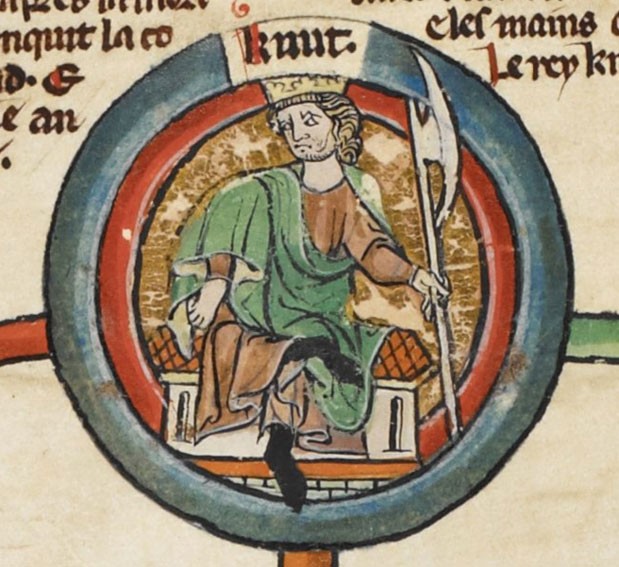
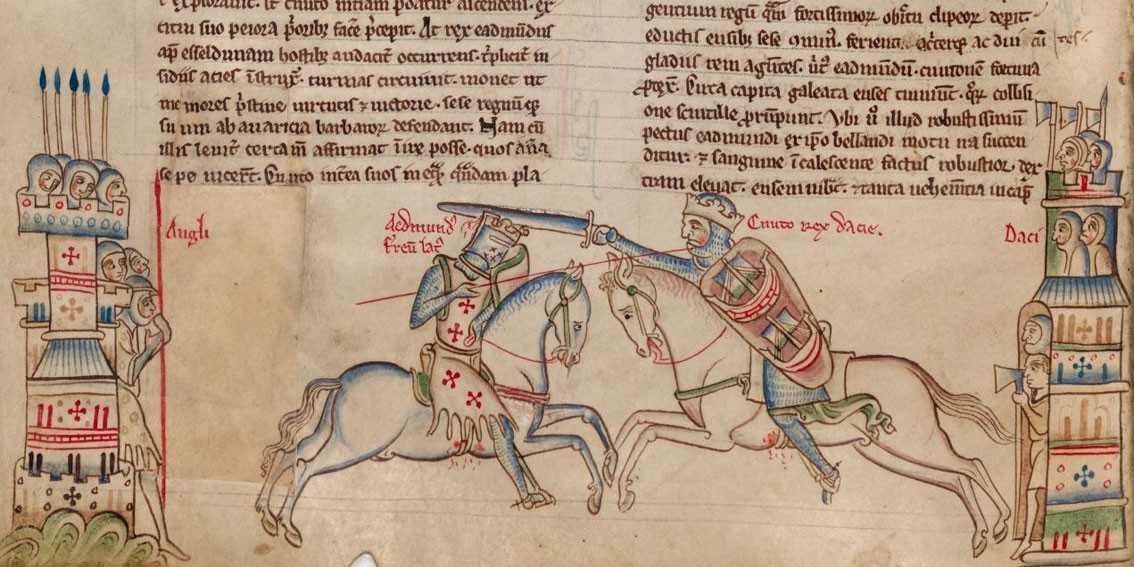
In 1014 the Danish king of England, Sweyn Forkbeard, died and was succeeded by his son Cnut (also spelled Canute, ruled 1016–1035). But the Saxon king, Aethelred II, returned to England to claim his throne. He drove out Cnut and ruled until his death in 1016. Aethelred's son, Edmund Ironside, was chosen to succeed him, while the Danes supported Cnut. The Saxon and Danish armies met at Assandun in Essex, where Edmund was defeated. He agreed to divide the kingdom, with Cnut ruling the north and Edmund the south. However, Edmund suddenly died, leaving Cnut the undisputed king of all England. Cnut was a wise ruler, treating both Danes and Saxons with equal respect.

Cnut’s rule
On his ascent to the English throne, his rivals—Ethelred's surviving sons and Edmund's son—fled abroad. In 1018, the last Danegeld (money raised by taxes in England to “pay off” the Danes) of 82,500 pounds was paid to Cnut. Cnut gained favour with his English subjects by sending most of his soldiers back to Denmark. In 1017, he married Emma of Normandy, the widow of Aethelred II, and divided England into the four earldoms of East Anglia, Mercia, Northumbria and Wessex.
The earls were to assist him in the government of England, since Cnut was also king of Denmark and parts of Norway and Sweden and he needed to divide his time between his realms (sometimes described as the “North Sea Empire”).
Cnut fails to command the tides
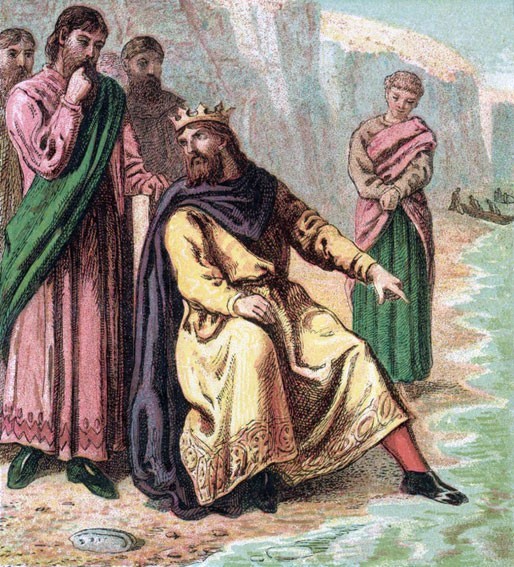
Cnut is famous for an event, which may or may not have happened. Possibly inspired by an earlier pilgrimage to Rome in 1027, Cnut wanted to demonstrate to his courtiers that, although he was a king, he was not a god and had no divine powers. He set his throne by the seashore and commanded the tide to halt—knowing full well this would fail. When the sea continued to rise as usual and the waves washed over his feet, Cnut leapt backwards and declared that a king's power was worthless: the sea obeyed only the law of God.
Consultant: Philip Parker