
Castles & knights

CITE
We have made every effort to follow citation style rules, but there may be some minor differences. If in doubt, please refer to the appropriate citation style manual.
Castle gatehouse. (2022). In Q-files Encyclopedia, History, Castles & knights. Retrieved from
https://www.q-files.com/history/castles-knights/castle-gatehouse
"Castle gatehouse." History, Castles & knights, Q-files Encyclopedia, 25 Feb. 2022.
https://www.q-files.com/history/castles-knights/castle-gatehouse.
Accessed 22 Sep. 2026.
Castle gatehouse 2022. History, Castles & knights. Retrieved 22 September 2026, from
https://www.q-files.com/history/castles-knights/castle-gatehouse
History, Castles & knights, s.v. "Castle gatehouse," accessed September 22, 2026.
https://www.q-files.com/history/castles-knights/castle-gatehouse


Castle gatehouse
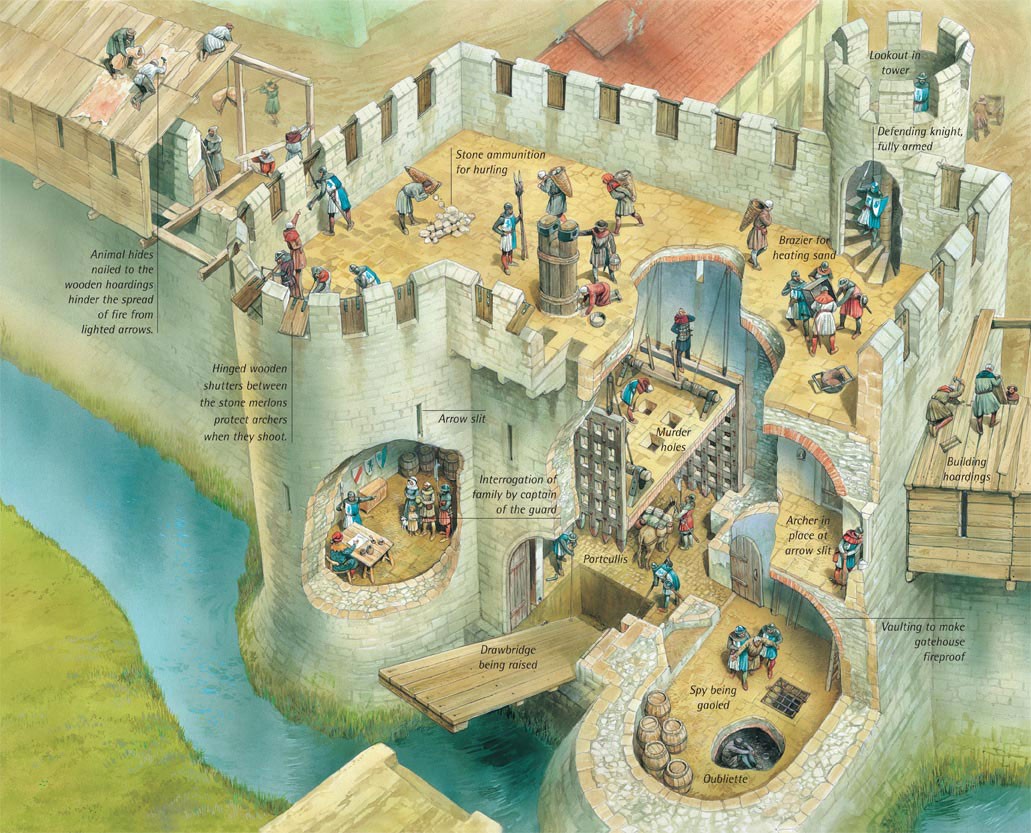
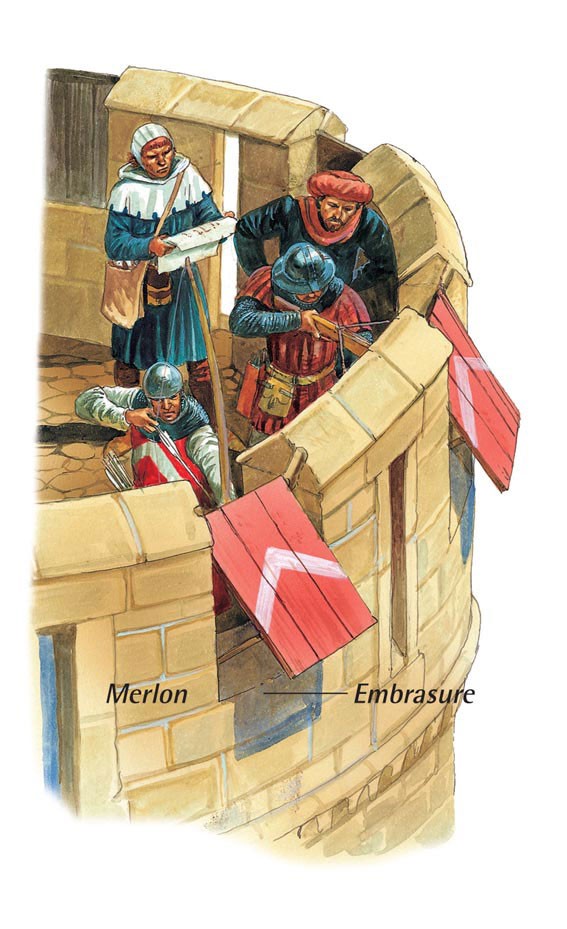
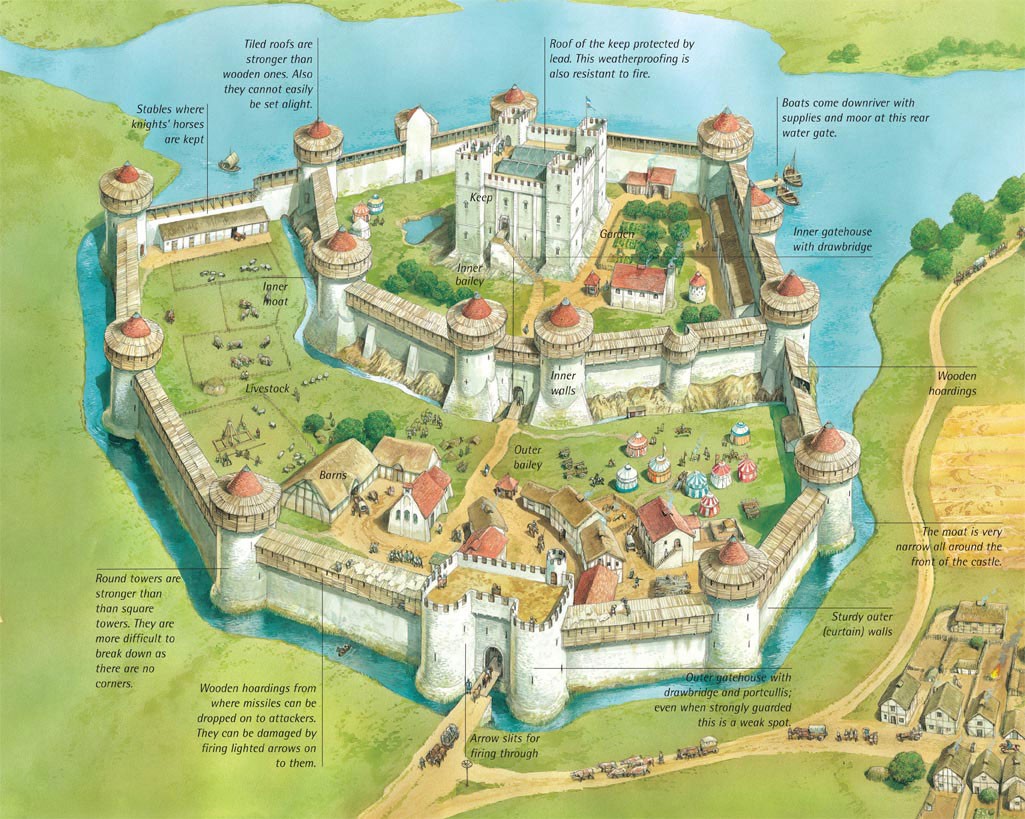
The castle's massive gatehouse was its only entrance—and it was more heavily fortified than any other part. The drawbridge over the moat, a water-filed ditch that ran all round the castle, could be quickly raised up to block the entrance. Behind it were heavy gates and two portcullises. Two towers stood close by on either side of the entrance, allowing guards to rain arrows down on intruders.

Portcullises
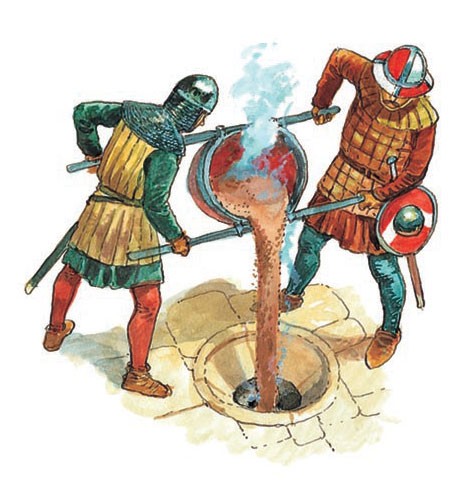
Portcullises were heavy wooden grilles that slid down grooves in the stone walls to either side. They were raised or lowered using winding gear linked to ropes or chains on the floor above. Trapping the enemy between the two portcullises gave the defending guards opportunities to shoot arrows and drop boulders or hot sand down through the “murder holes” in the gatehouse ceiling on top of them. Hot sand found its way through chinks in armour and scorched the skin.
Drawbridge
The first barrier against attack was the drawbridge over the moat. Made of heavy wood, it covered the entrance when raised. Some drawbridges could be operated either by chains or winches. Others were called turning bridges. They were raised by means of a counterweight attached to the inside edge of the bridge. When this weighted end was released, it dropped into a pit and the other end rose up sharply.

Constable
The castle’s defending garrison, many of them hired soldiers, spent most of their time in the gatehouse and reported to the constable, the lord’s second-in-command. He was in charge of the castle when the lord was not at home.
Whenever the castle was threatened with attack, the constable went into action. He put the garrison on full alert. He sent messengers to summon more soldiers and he ordered more supplies of food and water. Carpenters were instructed to fix wooden hoardings to the battlements. The constable might also interrogate suspected spies already living in the castle.
Dungeons
The gatehouse also served as the castle prison called the dungeons. The damp, narrow cells were in the basement, or even cut into the rock at the base of one of the towers. They had very little light. They could be reached only through a trapdoor in the guardroom above.

The unluckiest prisoners were thrown into a small, cramped cell deep inside the dungeons and left to starve. Called an oubliette, it took its name from the French word oublier, to forget. Perhaps it was used a threat to captives to do as their guards told them or be locked away forgotten for ever. More fortunate were the noble prisoners. They were held in relatively comfortable conditions until their family paid a ransom (release fee).
Consultant: Philip Parker
pics
Without in any way limiting Q-files Ltd’s exclusive rights under copyright, any use of this publication to “train” generative artificial intelligence (AI) technologies to generate text is expressly prohibited. Q-files Ltd reserves all rights to license use of this work for generative AI training and development of machine learning language models.