
Castles & knights
Tournaments
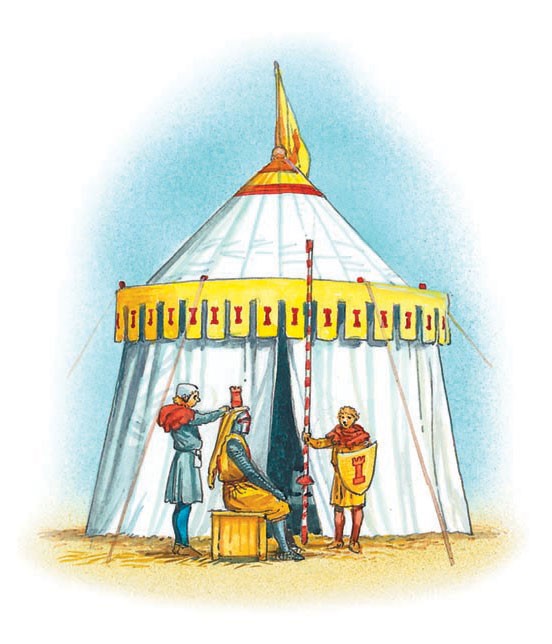
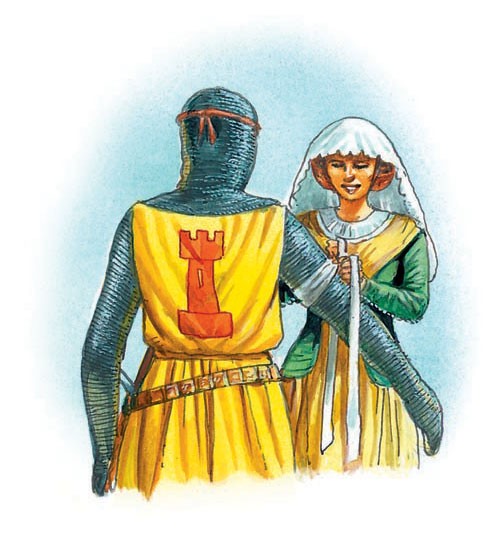
A knight was granted land from a noble lord in return for around 40 days’ military service each year. The rest of the year, a knight would travel up and down the land from one tournament to another, fighting mock battles for personal profit. Tournaments did, however, provide an opportunity for a knight to practise fighting skills in readiness for war, as well as show off his prowess in combat. In keeping with the code of chivalry, a knight took it upon himself on these occasions to display courtesy towards the watching ladies and generosity to his supporters.

Mêlée
The first event at a tournament was the mêlée. The knights were simply divided into two groups and, at a given sign, charged at one another. Each participant fought as an individual. The object was to capture as many of the opposing knights as possible in order to ransom them—exchange their freedom for money. The knights used real weapons and death or injury was a frequent occurrence.
Joust
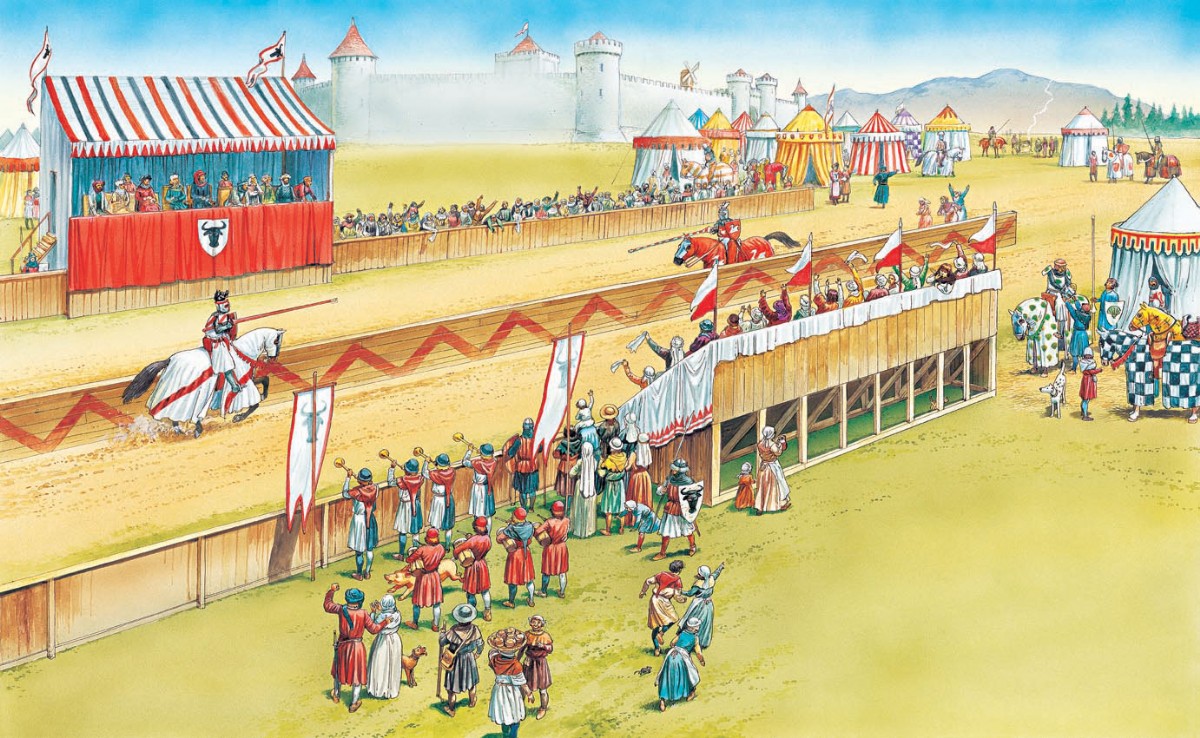
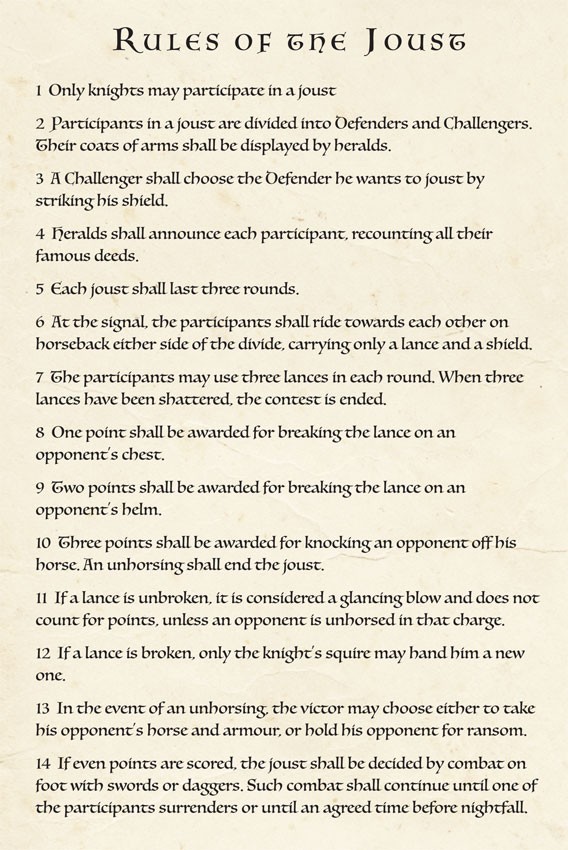
The joust, another tournament event, was no less dangerous than the mêlée. Proceedings began with the knights parading before the cheering crowds. The heralds announced their names and listed all the knightly deeds of the contestants. At the command of the herald, the joust began. Both knights, mounted on horseback at a distance of 300 paces apart, charged towards each other either side of a barrier called a tilt, down narrow lanes, called lists. Each knight urged his horse forward by pricking its sides with the spurs on his heels.

The object was to knock the opponent off his horse using a lance, a blunted wooden spear. There were several different scoring systems, but points were usually scored for striking an opponent on his body, with double points awarded for breaking the lance on his shield or helmet. Although jousting armour was reinforced and horses were protected by straw padding, injuries or death were common.
If the points were even after each of the knights’ three lances had been shattered, the contest continued on foot with swords or daggers until either one or other contestant surrendered, or until an agreed time before nightfall. The victorious knight could choose either to claim his opponent’s horse and armour, or hold his opponent to ransom. A defeated opponent’s weapons would be acquired with the help of a kipper, a peasant boy, hired specially to carry out this task.

Consultant: Philip Parker