
History of London
Tudor and Stuart London
London became England’s largest city and its centre of trade in the 16th century. Hundreds of ships crowded the Thames every day, waiting to unload their cargo or to load wool and cloth for shipping to other parts of Europe. The Royal Exchange, a place where merchants could conduct their business, opened in 1571. As a consequence of the Dissolution of the Monasteries during the 1530s, the Church lost possession of its London properties, which were acquired by wealthy supporters of Henry VIII. Many new businesses and charity hospitals also sprang up.

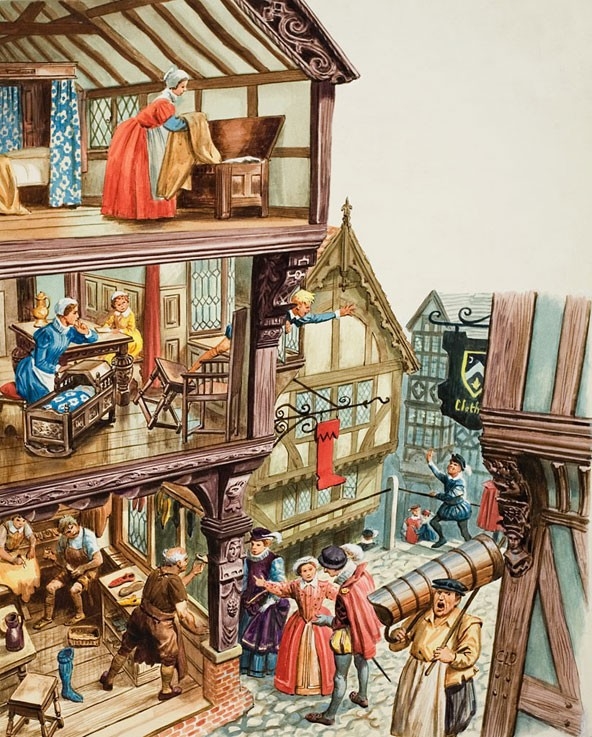
Life in Tudor London
Around 50,000 people lived in the City of London, the medieval city largely contained inside the Roman walls, in 1530. London's population would more than quadruple by the end of the century, when it would make up almost 10% of England's total. With so many people needing places to live, every spare corner of the City, including the former Church lands, was built on. But this was still not enough, so London began to expand beyond its walls. Houses for the well-to-do were built in the legal quarter around Fleet Street, along the Strand leading towards Westminster, and on Holborn to the northwest. Housing for craftworkers and semi-skilled workers—cottages or tenements (buildings divided into separate dwellings)—went up in the fields or villages to the east of the city, and along the south bank of the Thames.
Most Londoners still lived in wooden houses, packed closely together on narrow streets. Many neighbourhoods were dirty and smelly: waste was dumped straight into the River Thames, which meant that disease and plague spread quickly. Much of London suffered high levels of crime. Those wealthy Londoners who lived in mansions with riverside gardens along the Strand travelled to and from the City by boat, avoiding the worst of the conditions.
The playwright William Shakespeare lived and worked in London in the late 16th century. During this time, new playhouses, such as the Globe, Swan and Rose theatres, were built along the south bank of the Thames.
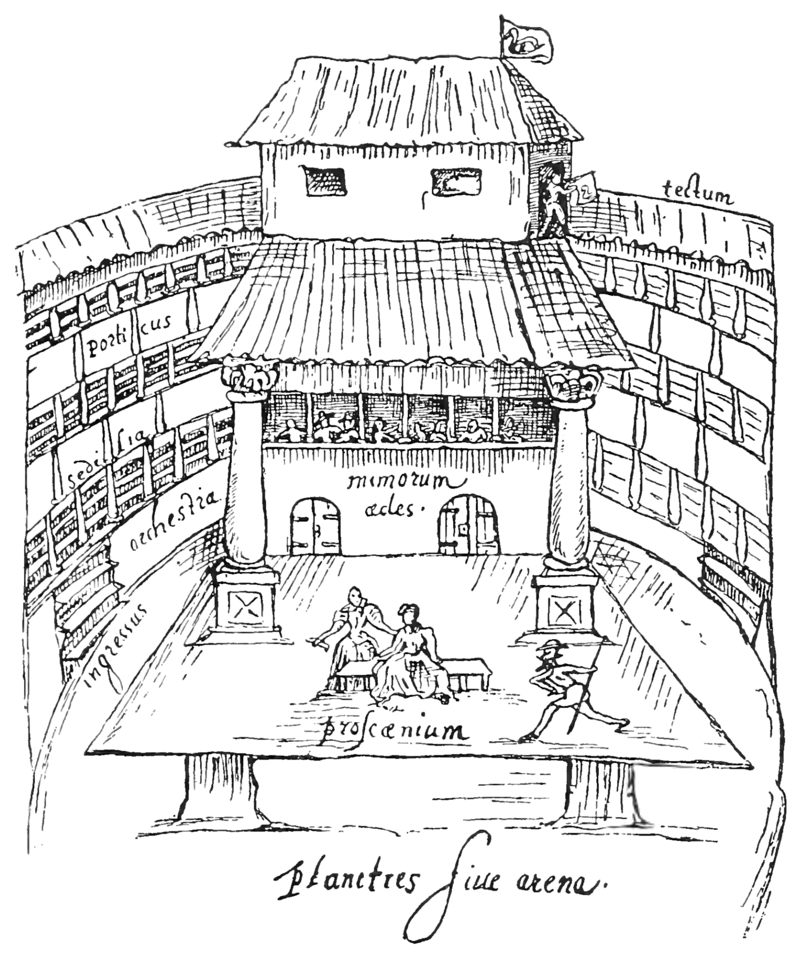

Stuart London
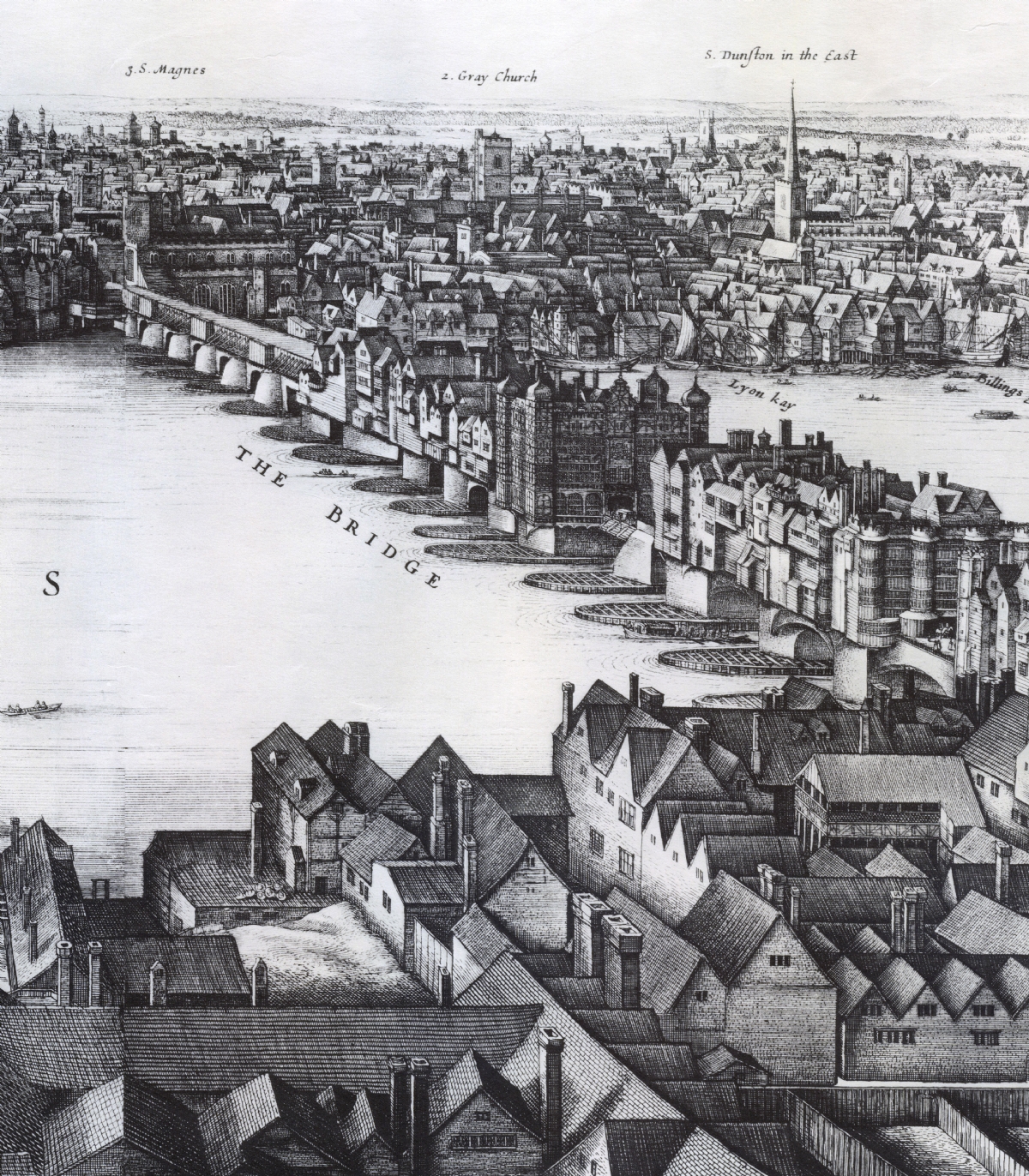
At the beginning of the 1600s, the City's streets, lanes and alleys were lined with tall, timber-framed buildings. Rich and poor lived side by side, although residences of the wealthy, clustered in certain favoured districts, were usually set back from the street. Typically with six or seven storeys, many poorer buildings had "jetties" (projecting upper floors) that leant out over the narrow streets, almost touching the houses opposite. Open drains flowed down the centre of the streets, creating the perfect conditions for the spread of diseases. Plague epidemics broke out in 1603, 1625 and 1636, killing tens of thousands of Londoners.

Expansion
London also contained some 100 churches and many public buildings, including company halls—home to the hundred or so guilds that controlled all aspects of trading and manufacturing in the City. The guilds' restrictive practices led to people setting up new businesses in the new, rapidly expanding suburbs to the north and east of the City, where rents (payments to landowners) were lower. Here London's population—375,000 in total by 1650—was growing the fastest, with migrants from poor rural areas of England constantly arriving looking for work.
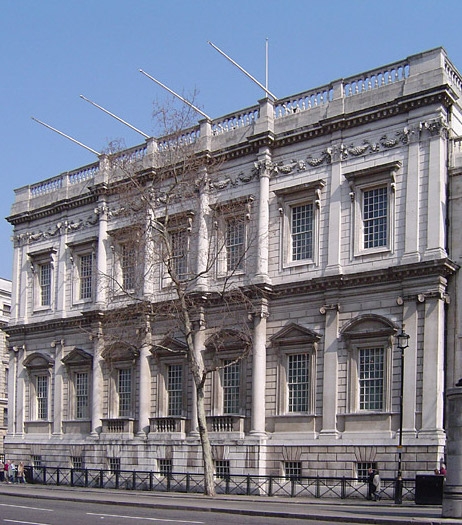
To the west of the City, meanwhile, London's wealthier citizens chose to live nearer the royal court at Westminster. Spacious squares, such as Covent Garden and Lincoln's Inn, lined with elegant houses, were built for them. The chief architect was Inigo Jones (1573–1652), who was greatly influenced by the Italian Renaissance architect Andrea Palladio (1508–80), himself a devotee of Classical Greek and Roman styles. The Banqueting House, Whitehall (1622), an extension of the Palace of Westminster, was Jones's first major building.
Great Plague
The outbreak of bubonic plague in 1665 may have arrived with Dutch trading ships carrying bales of cotton from Amsterdam. The number of deaths increased sharply during the first four months of that year. Overcrowded slums provided the perfect habitat for the chief culprit in the spread of the plague: the black rat. With the arrival of warmer weather, the disease really began to take hold. By July, the plague was rampant. Three thousand had reportedly died and London was in a state of panic. King Charles II and his court hurried to leave the city, along with many of its wealthy residents. Poor people, however, needed certificates of good health signed by the Lord Mayor to be allowed out through the city gates, and these were difficult to obtain.
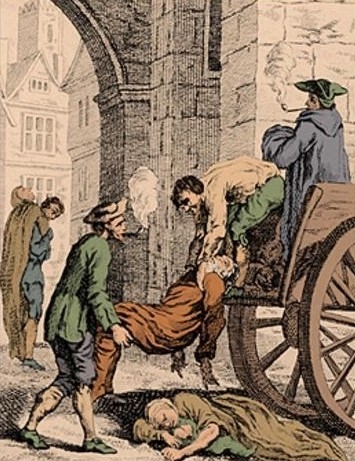

Pest-houses, places that were located away from other people and where the sick could be cared for (or stay until they died), were built. A system of quarantine was introduced: any house where someone had died from the plague would be locked up and no one allowed to enter or leave for 40 days. As the number of victims mounted up, burial grounds became full, and pits were dug to accommodate the dead. By late autumn, the death toll in London and the suburbs began to fall until, in February 1666, it was considered safe enough for the king to return. Cases continued to occur until the summer of 1666. By this time, the Great Plague had claimed an estimated 100,000 lives.
Great Fire

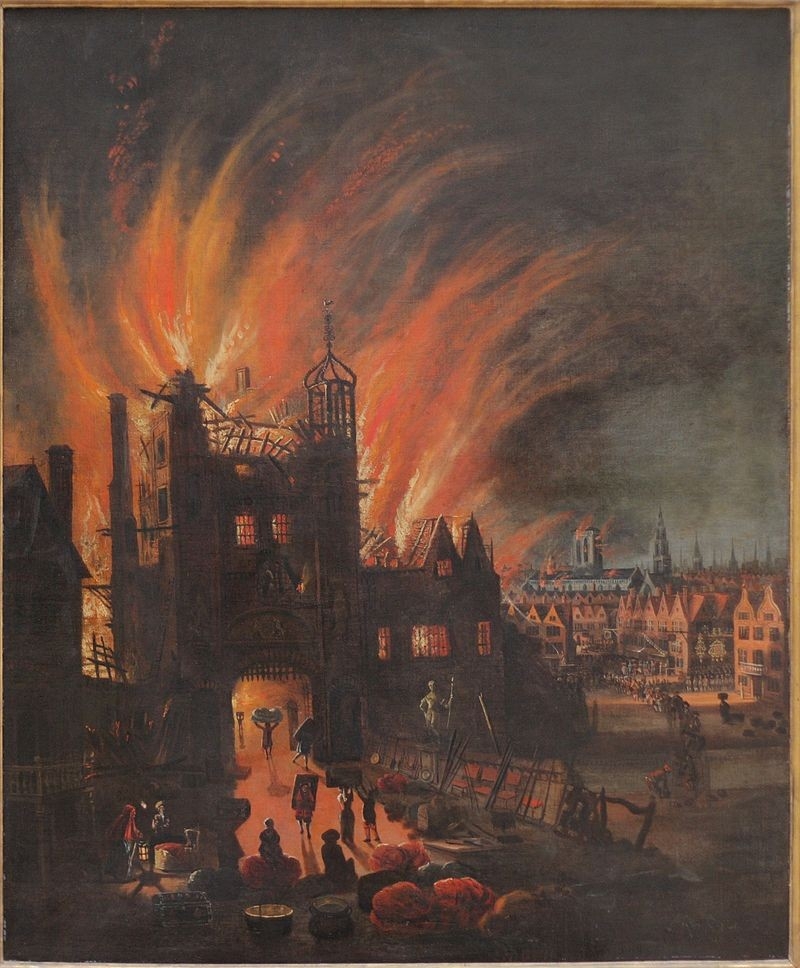
In 1666 London was devastated once again, this time by what has become known as the Great Fire of London. On 2nd September, fire broke out in a bakery in Pudding Lane and, fanned by a strong east wind, spread quickly across the city, burning for four days until it finally burned itself out. More than 13,000 buildings, including St Paul’s Cathedral, were destroyed. Attempts to fight it failed. There were neither water pumps nor hoses, only buckets or squirting devices. Efforts turned to ways of stopping the fire spreading rather than putting it out. Firebreaks were created by blowing up buildings using gunpowder ahead of the fire’s path, preventing the flames leaping from house to house. But by the time the fire was over, although only a handful of people perished, around 70,000 of the London’s 80,000 citizens had lost their homes in the blaze.

Rebuilding London
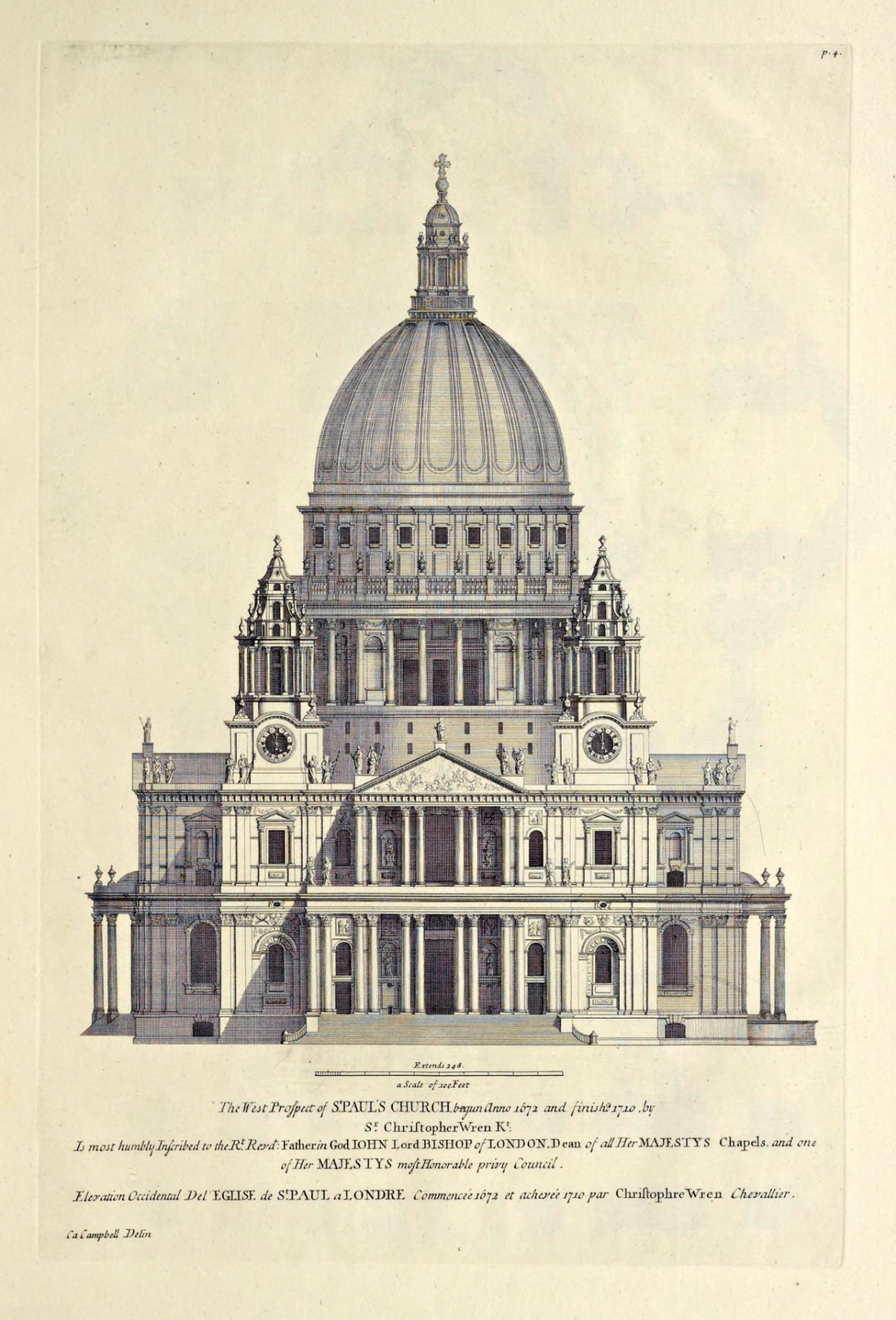
After the fire, it took only a few decades to rebuild London. New buildings, now made of brick rather than wood, were constructed. London's old narrow streets were also widened. Chief among those given the task of rebuilding London was the architect Christopher Wren (1632–1723). Between 1666 and 1680, he designed 52 new churches for central London, including a new St Paul’s Cathedral with a dome intended to equal in magnificence those of other great European buildings.
The Bank of England was founded in 1694, improving and growing London’s economy. London soon began to expand even more as people flocked to do business there.
Consultant: Philip Parker