
EASY READ The animal kingdom
A to Z of reptiles
Alligators
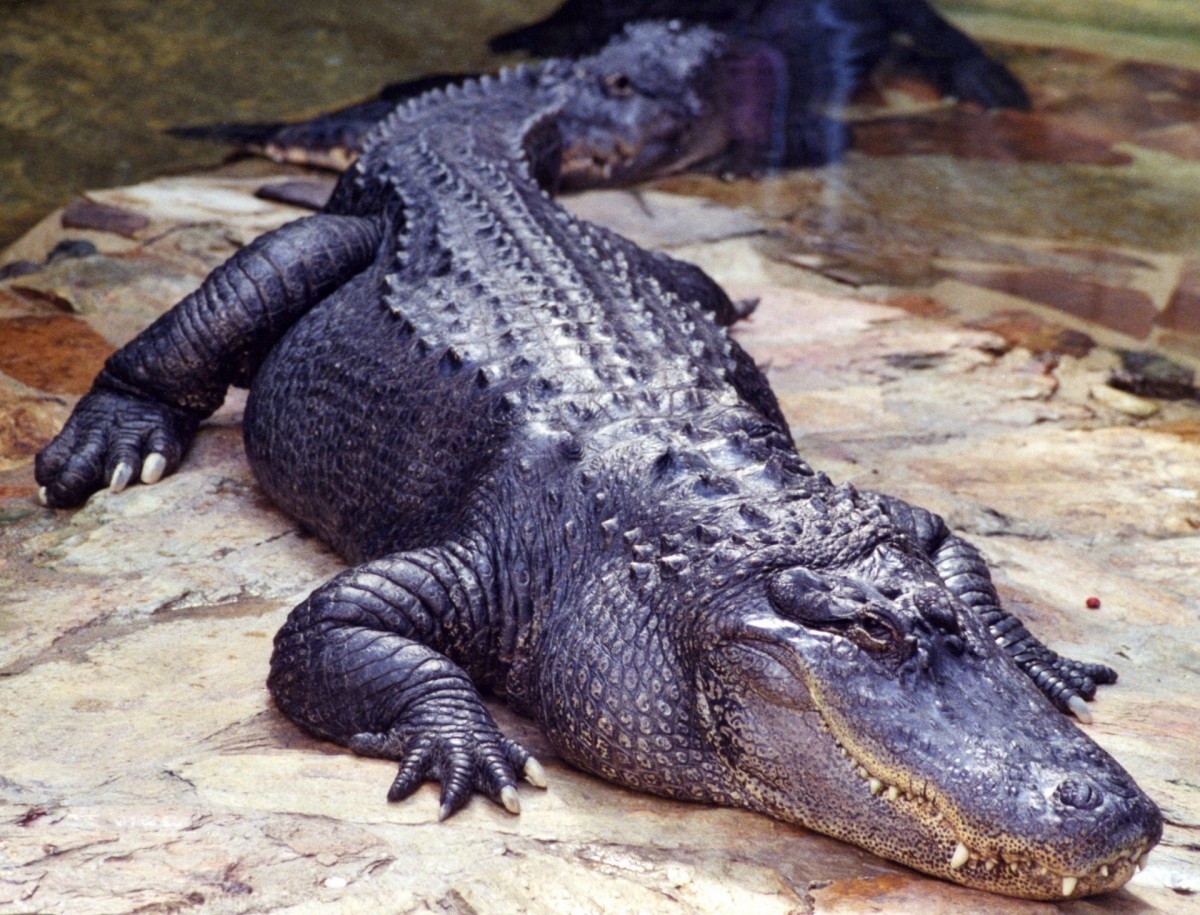
Alligators are closely related to crocodiles. Alligators have wider and more rounded snouts than crocodiles. The two main kinds are the American alligator, which lives in the swamps of southeastern United States, and the rare Chinese alligator, which lives in the Yangtze river valley. Alligators can grow up to 6 metres (20 feet) long.
Boas
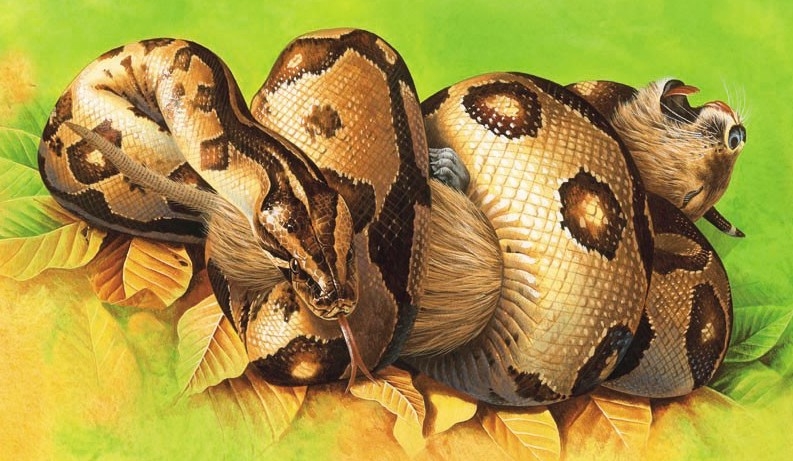
Boas are snakes that kill their prey by constricting them. They coil their bodies around their victims and squeeze them. This prevents them from breathing. Boas can stretch their jaws wide to swallow their prey whole. They will not need to eat again for several days or even weeks after feeding. Some boas can climb trees.

The anaconda is a type of boa from South America. One of the world’s largest and heaviest snakes, it grows up to 9 metres (30 ft) long. It spends much of its life wallowing in shallow water while it waits for an unwary animal to come within range.
Caimans
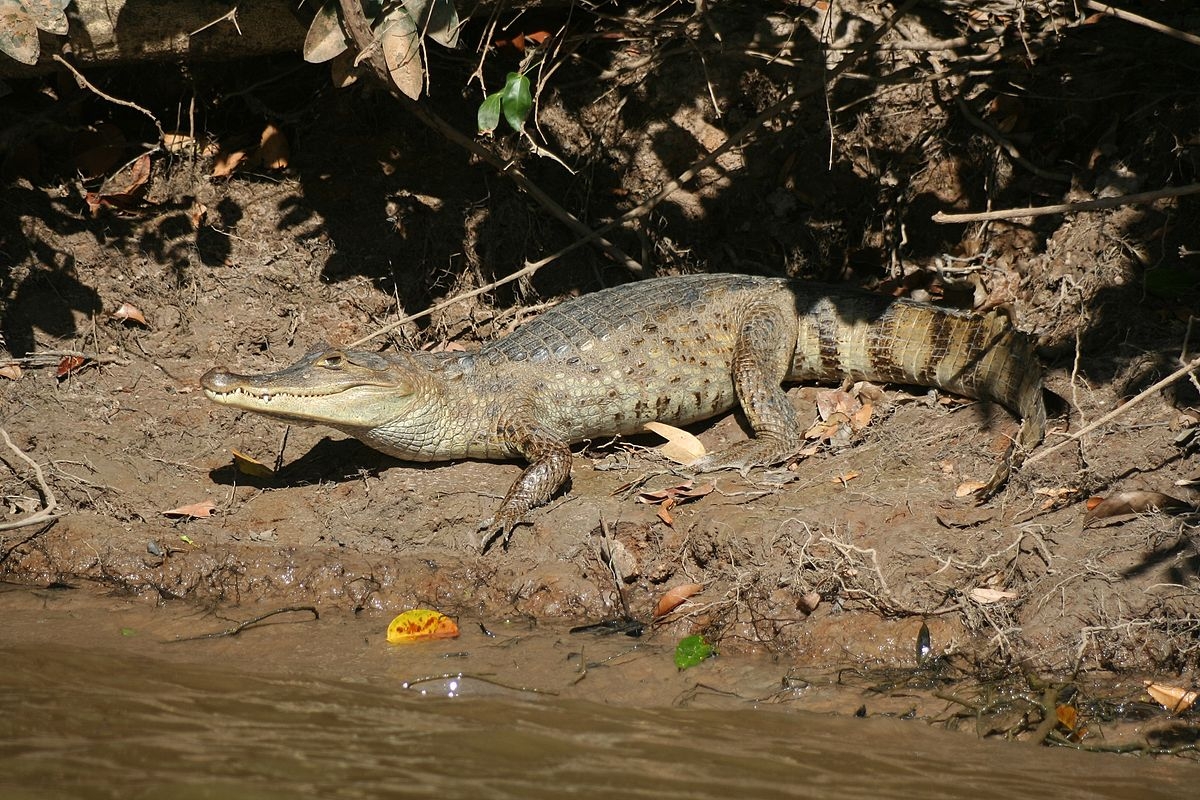
Caimans are relatives of the alligators. They have thick scales on their undersides. Living in Central and South America, they are usually smaller than alligators, although the black caiman can grow up to 5 metres (16 feet) long.
Chameleons

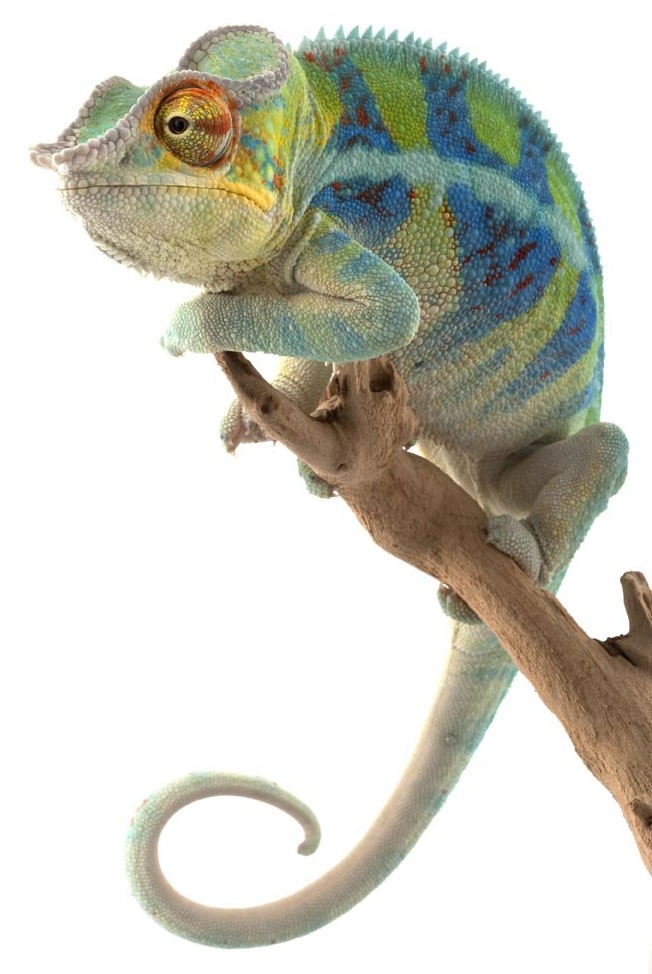
Chameleons are slow-moving lizards that live in trees. They have grasping feet and long, prehensile tails to help them grip branches and climb. They can change colour to blend in with their background. Their eyes can move in different directions and see different objects at the same time.
Most chameleons eat insects. When they spot one, quick as a flash they flick out their extremely long, sticky tongue to grab it and pull it into their mouth.
Cobras
Cobras are snakes with a hood of skin behind their heads. They kill their prey with a venomous bite. They have two fangs at the front of their mouths. When they bite, they inject deadly venom into their victim. They eat mainly other snakes, lizards, small mammals and frogs. They spread out their hood and hiss to frighten off attackers. The king cobra, from Southeast Asia, feeds mainly on other snakes. Up to 5.5 metres (18 ft) long, it is the largest venomous snake in the world.

Crocodiles

Crocodiles have long jaws and bony plates of armour on the top of their body. One pair of teeth in the lower jaw is always visible even when a crocodile’s mouth is closed. Crocodiles mostly live in tropical rivers and lakes. The largest kinds are the Nile crocodile and the saltwater crocodile, both of which grow up to 7 metres (23 feet) long. They can easily bring down large prey such as an antelope. They ambush their victims at the water’s edge, dragging them under water to drown.
Geckos
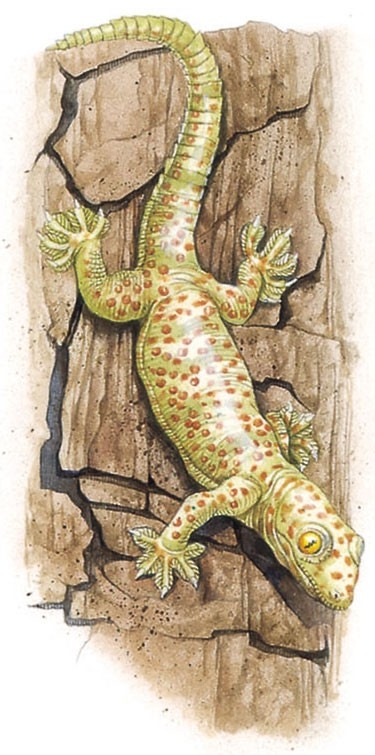
Geckos are types of lizard. They have tiny hairs on their toe pads. These enable them to grip on to smooth surfaces and even walk upside down. Geckos are hunted by many animals, including birds of prey, snakes, monkeys and small cats.
The colours and patterns on their bodies help camouflage them. Like other lizards, they can also break off their own tail if necessary. Most geckos have no eyelids and cannot blink, so they lick their eyes to keep them clean and moist.
Iguanas
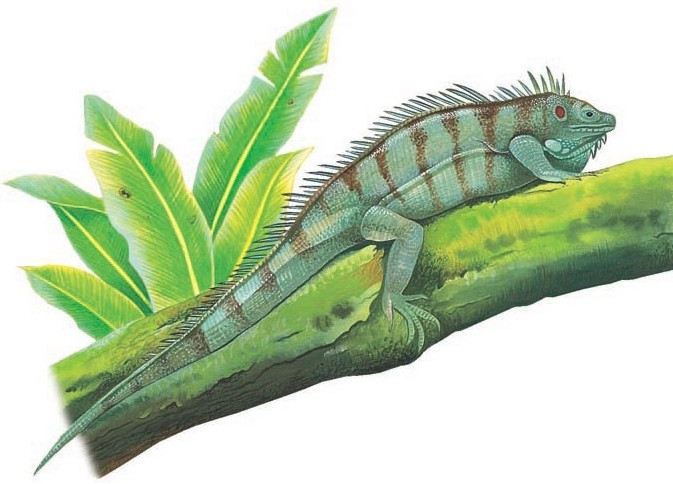
Iguanas are plant-eating lizards. They live in tropical or subtropical regions of the Americas. Some kinds of iguana have long, prehensile tails. They use these to help them climb trees. They also have flaps of skin beneath their jaws, called dewlaps. The green iguana lives in rainforest trees. It grows up to 2 metres (6.6 ft) long. If danger threatens, it drops into the water below.
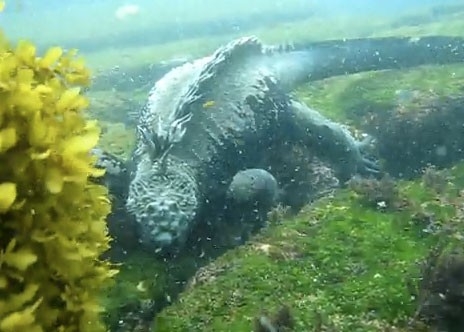
The marine iguana lives in the sea. It is the only sea-living lizard. It feeds on seaweed and algae in the waters of the Galapagos Islands. It can dive more than 15 metres (50 feet) deep in search of their food, using its flattened tail to propel itself through the water.
Komodo dragon
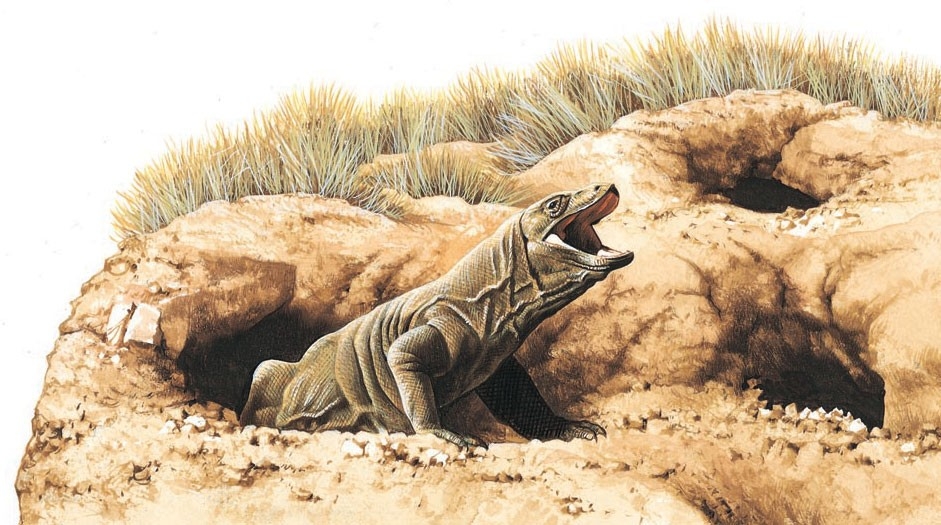
The Komodo dragon is a member of the monitor family. It is the largest lizard in the world. It can grow up to 3 metres (10 feet) long. It lives only on a few islands in Indonesia. Searching for food alone, it mostly feeds on carcasses of animals that are already dead, but will also hunt live prey—wild pigs, deer and goats. It can open its jaws wide enough to swallow some small prey whole.
Pythons
Pythons are large, constricting snakes. They lie in wait, hidden by their camouflage patterning, before striking suddenly at passing prey. They then coil their muscular bodies around their victim until it can no longer breathe. They then swallow their prey whole. It may take several days or even weeks to digest. The Indian python, from southeast Asia, hunts rodents and even small deer at night. The reticulated python, which grows up to 10 metres (33 feet) long, is the longest snake in the world.

Tortoises

Tortoises live on land. They have stumpy legs with short toes. They have heavy shells. If threatened, they pull their heads into their shells for protection. Tortoises are mostly plant-eaters. They feed on grasses, flowers and low-growing fruit. Giant tortoises live on remote islands. Tortoises can live for a very long time, some more than 150 years.

Tuatara
The tuatara, from New Zealand, is only distantly related to lizards, despite its close resemblance. It has a crest of skin down its back that it raises when threatened. It basks in the sun during the day and feeds at night, hunting insects, worms and small lizards. It also eats bird's eggs and chicks. The tuatara has a third "eye" on the top of its head. This is only visible in hatchlings, however. After a few months, it is covered over by scales.
Turtles

Turtles live in rivers or the sea. They do not have teeth. Instead they have sharp, horny, beak-like mouths. Most sea turtles feed on jellyfish, fish and crustaceans, except for the green turtle, which feeds on plants. River turtles, called terrapins, have webbed feet. Sea turtles have lightweight shells and large flippers.
All turtles lay eggs on land. Some large sea turtles return to the same beaches every year to lay them. They dig holes in the sand, lay their eggs, then cover them over. Then they return to the water. After hatching, the young must dig their way to the surface. They run across the beach to reach the sea.


Vipers
Vipers are snakes that kill their prey with their venomous bite. Vipers have long fangs that fold back inside their mouths until they strike. Pit vipers, from the Americas, include the rattlesnake family. These snakes have a "rattle" at the end of their tail. It is made of loose rings of hard skin. They shake their rattle to scare attackers away. Rattlesnakes themselves prey on small mammals and birds.
Consultant: Chris Jarvis
Ready to find out more?
Here are some pages in other parts of Q-files you might like to explore:
Reptiles
Boas
Chameleons
Cobras
Crocodiles and alligators
Green turtle
Iguanas
Komodo dragon
Lizards
Pythons
Snakes
Tortoises
Tuatara
Turtles
Vipers
Reptiles A-Z