
Fish
Salmon
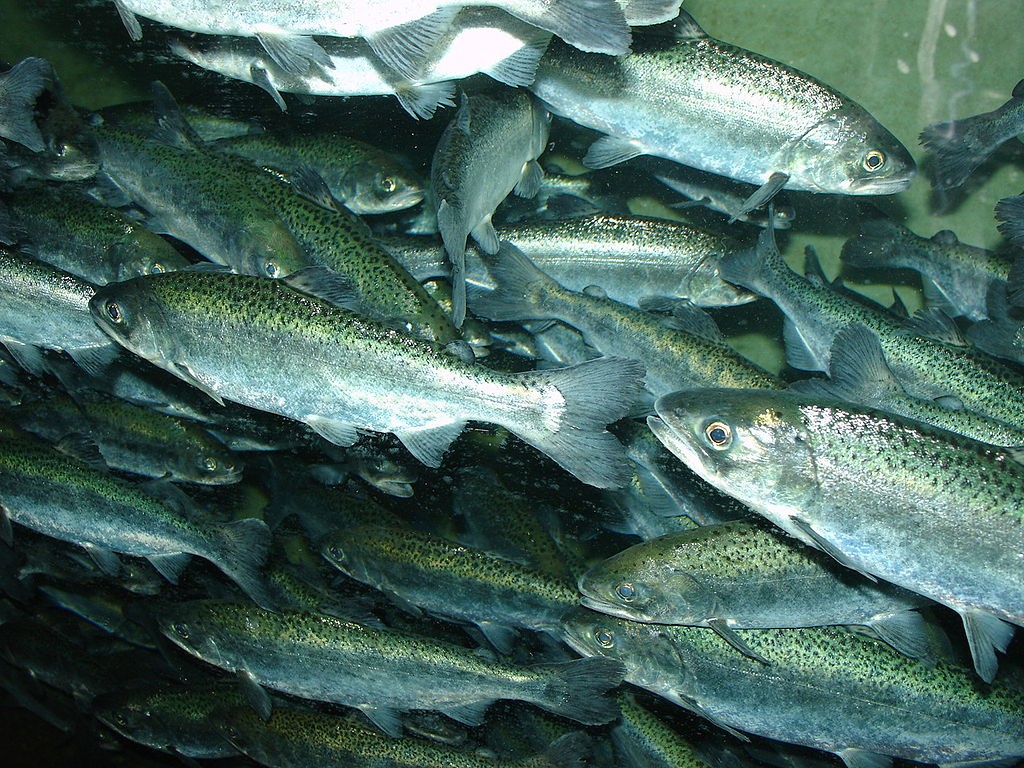
Salmon is the name for the family of fish that includes species of both salmon and trout. Most salmon hatch out in fresh water, migrate to the ocean and return to the same freshwater streams to spawn (reproduce). The journey may exceed 11,000 kilometres (6800 miles). Salmon are thought to find their way by recognizing the taste of their “home” rivers. Salmon live in the north Atlantic and Pacific oceans, as well as the Great Lakes of North America.
Migrating upstream
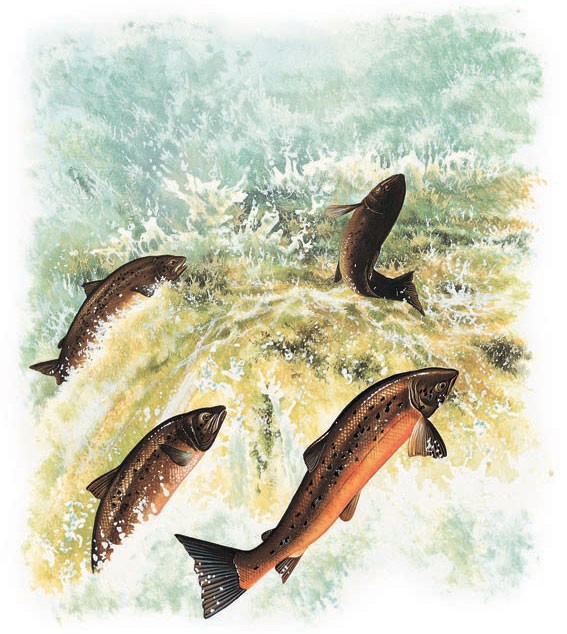
Sockeye salmon return to the rivers of their birth to lay their eggs. They face an exhausting and perilous journey, battling against strong currents, waterfalls and scores of hungry brown bears waiting to catch them.
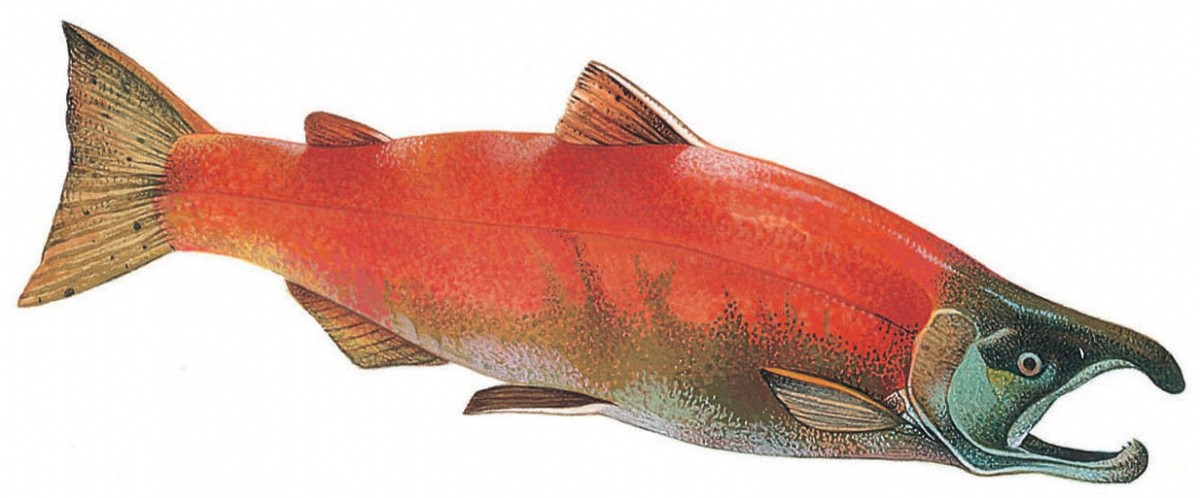
Along their journey upstream, the salmon gradually change colour, from silvery-blue to bright red. This indicates to potential mates that they are sexually mature. Adult males about to breed develop a humped back and hooked jaws which are filled with tiny teeth.
Breeding
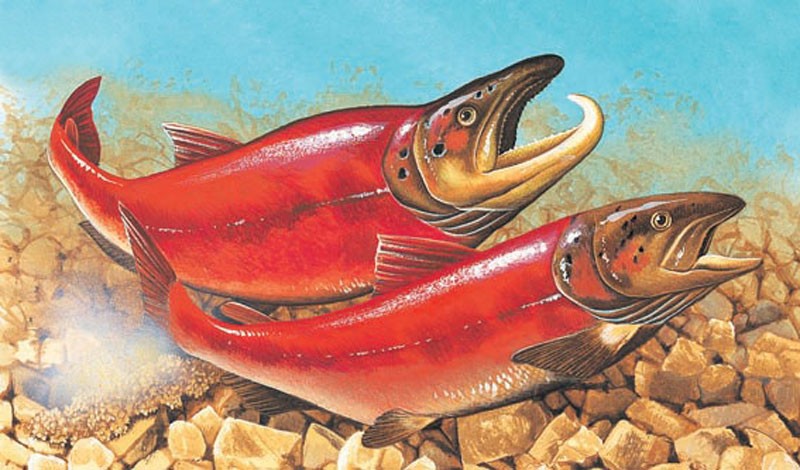
When the salmon reach the headstreams where they themselves hatched out, they pair off and lay their eggs. A female sockeye salmon uses her tail to scoop a basin, called a redd, in the gravelly river bed. As she lays her eggs, the male fertilizes them. Both fish then cover over the eggs with gravel. The female watches over the eggs until she dies. The male, too, will die soon after spawning.
Alevins
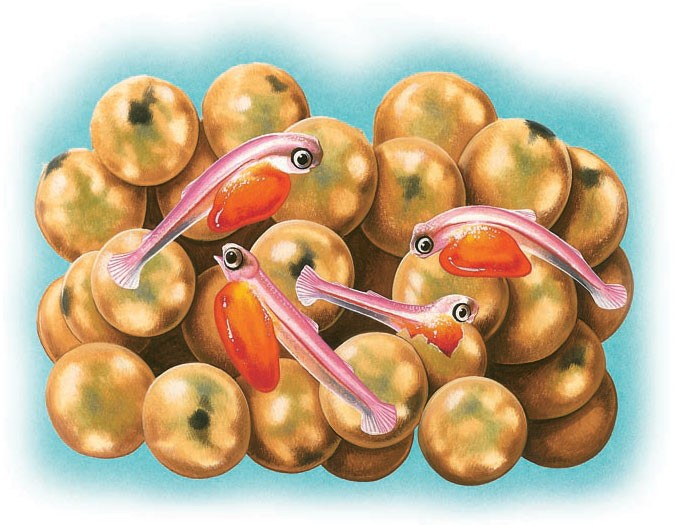
The eggs lie in the gravel through the winter, as the embryos inside them develop. Three months later in the early spring, the pea-sized eggs hatch out. The young salmon are called alevins. They have balloon-like yolk sacs attached to their bodies. These provide the young fish with a food supply for about a month, while they live in the gravels on the river bed.

Growing up
When the sockeye salmon leave their gravel nest, they are known as fry. They slowly make their way downstream, feeding on insects and other tiny aquatic animals. After several months, they develop stripy markings, at which stage they are known as parr. Parr spend up to four years in fresh water before swimming towards the sea. At this point, the young fish, now called smolts, cluster together and swim out into the Pacific Ocean, where they will spend the next five years of their lives.
Consultant: Chris Jarvis