
EASY READ The animal kingdom

CITE
We have made every effort to follow citation style rules, but there may be some minor differences. If in doubt, please refer to the appropriate citation style manual.
EASY READ A to Z of insect-eating mammals. (2026). In Q-files Encyclopedia, Life, EASY READ The animal kingdom. Retrieved from
https://www.q-files.com/life/easy-read-the-animal-kingdom/easy-read-a-to-z-of-insect-eating-mammals
"EASY READ A to Z of insect-eating mammals." Life, EASY READ The animal kingdom, Q-files Encyclopedia, 23 Mar. 2026.
https://www.q-files.com/life/easy-read-the-animal-kingdom/easy-read-a-to-z-of-insect-eating-mammals.
Accessed 13 Sep. 2026.
EASY READ A to Z of insect-eating mammals 2026. Life, EASY READ The animal kingdom. Retrieved 13 September 2026, from
https://www.q-files.com/life/easy-read-the-animal-kingdom/easy-read-a-to-z-of-insect-eating-mammals
Life, EASY READ The animal kingdom, s.v. "EASY READ A to Z of insect-eating mammals," accessed September 13, 2026.
https://www.q-files.com/life/easy-read-the-animal-kingdom/easy-read-a-to-z-of-insect-eating-mammals


A to Z of insect-eating mammals
Anteaters, armadillos and sloths all belong to a group of mammals called xenarthrans (pronounced "zen-AR-thrans"). These animals have few or no teeth. Their backbones have extra joints that strengthen and support their bodies when they dig. Anteaters and armadillos are insect-eaters, but sloths feed mostly on plants. The other insect-eating mammals included on this page are not necessarily related. They all eat insects or other invertebrates such as worms and slugs. Some also feed on seeds, leaves, fruits and nuts.


Aardvark
The aardvark lives on the grasslands of Africa. At night, it goes hunting for food: ants and termites. It finds them by listening out for them or smelling them. It uses its large, shovel-like nails to break open their nests. Then the aardvark licks the insects up with its long, sticky tongue.
Anteaters

Anteaters live in Central and South America. They have a long snout and a long tail. Giant anteaters have a bushy tail, but other kinds have a tail that helps them climb trees. Anteaters find insects using their keen sense of smell. They break open their nests using their claws, then lap them up with their long, sticky tongue.


Armadillos
The armadillo is protected by a scaly suit of armour. One kind of armadillo can curl itself up into a scaly ball if danger threatens. Armadillos feed mostly on insects. They have poor eyesight, so they use their keen sense of smell to find their nests. The claws on their front feet are good for digging up insects. The armadillos then lap them up using their long, sticky tongues.
Hedgehogs
Hedgehogs have spiny backs and pointed snouts. They eat mostly earthworms that they have sniffed out. They also feed on insects, slugs, eggs and fruit. Hedgehogs go in search of food at night, often wandering into gardens. If threatened, they roll themselves into a tight, spiny ball until the danger has passed.

Moles
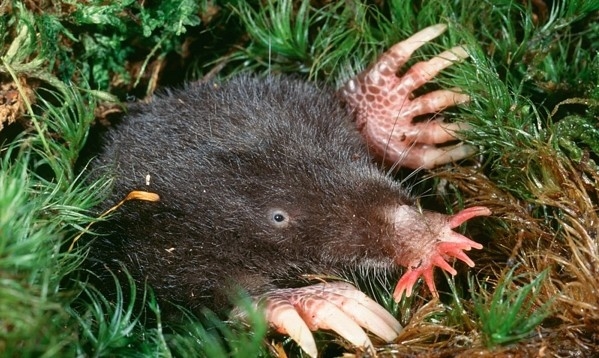
Moles are small, burrowing mammals. They have pointed snouts, shovel-like paws and small eyes. They rely mostly on their sense of touch to get around and find their prey. Moles tunnel underground in search of worms and other invertebrates to eat. As they dig, they push the waste soil up to the surface to form mole hills.
Pangolins
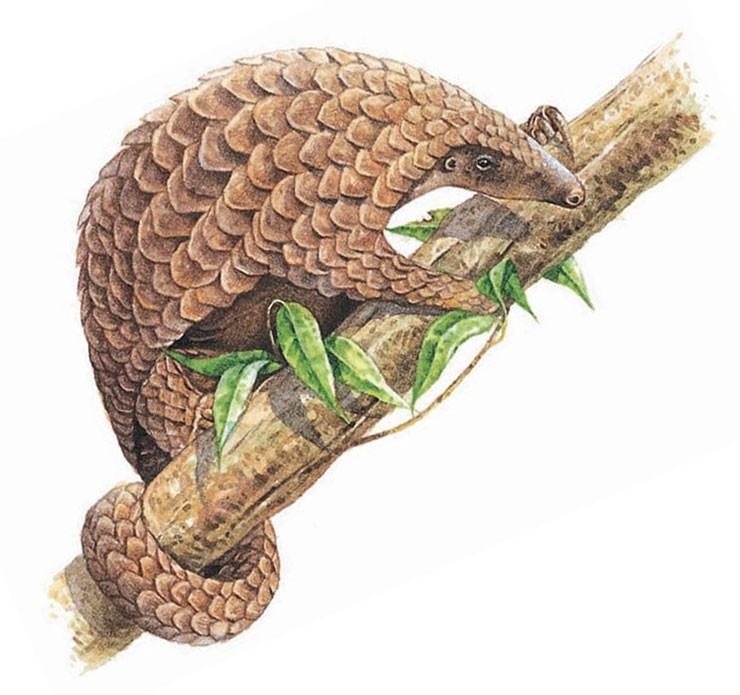
The pangolin is a nocturnal animal. It is covered with thick scales. It lives by itself. It has strong front claws which it uses to burrow into ant or termite nests. It shoots its worm-like, sticky tongue in and out to pick up lots of insects at once. If threatened, a pangolin can curl up into a ball so that its scales shield it from harm. It may also defend itself by giving off a foul smell.
Shrews
Shrews are small, mice-like animals. They are not rodents, but form a separate group. Shrews have long tails, pointed snouts and short, spiky teeth. They have small eyes and poor eyesight, but have excellent senses of hearing and smell instead. They feed on seeds, insects and worms. They eat nearly their own body weight in food each day.


Sloths
Sloths spend much of their time hanging upside down from branches of rainforest trees in South and Central America. Their long, curved claws help them cling on. They move so slowly that they travel only a few metres—if at all—each day. They can eat, sleep and even give birth in this position.

Tiny, plant-like algae grow on the sloths' coats. This gives them a greenish tinge. It helps camouflage the sloths from predators, jaguars and harpy eagles. There are several kinds of sloth, divided into two-toed sloths and three-toed sloths. They eat mostly leaves.
Consultant: Chris Jarvis
Ready to find out more?
Here are some pages in other parts of Q-files you might like to explore:
Aardvark
Anteaters
Armadillos
Hedgehogs, moles and shrews
Pangolins
Sloths
pics
Without in any way limiting Q-files Ltd’s exclusive rights under copyright, any use of this publication to “train” generative artificial intelligence (AI) technologies to generate text is expressly prohibited. Q-files Ltd reserves all rights to license use of this work for generative AI training and development of machine learning language models.