
Mathematics

CITE
We have made every effort to follow citation style rules, but there may be some minor differences. If in doubt, please refer to the appropriate citation style manual.
Mathematics. (2022). In Q-files Encyclopedia, Maths, Mathematics. Retrieved from
https://www.q-files.com/maths/mathematics/mathematics
"Mathematics." Maths, Mathematics, Q-files Encyclopedia, 26 Oct. 2022.
https://www.q-files.com/maths/mathematics/mathematics.
Accessed 21 Sep. 2026.
Mathematics 2022. Maths, Mathematics. Retrieved 21 September 2026, from
https://www.q-files.com/maths/mathematics/mathematics
Maths, Mathematics, s.v. "Mathematics," accessed September 21, 2026.
https://www.q-files.com/maths/mathematics/mathematics


Mathematics
Mathematics, often abbreviated to maths, is the study of numbers, shapes and patterns. It uses logic to understand the relationships between things, to solve problems and help make sense of the world. The subject has many branches, including arithmetic, algebra, geometry, calculus, probability and statistics. Pure maths deals with ideas while applied maths helps an understanding of science, engineering, technology, business or just everyday life.

Arithmetic
Every branch of mathematics uses arithmetic. Our number system, called the decimal system, is based on ten, and uses 10 symbols called digits or numerals: 0, 1, 2, 3, 4, 5, 6, 7, 8 and 9. One more than 9 is 10, a two-digit number. The first digit represents number of tens, the second digit single units. So 35 is three tens and five units.
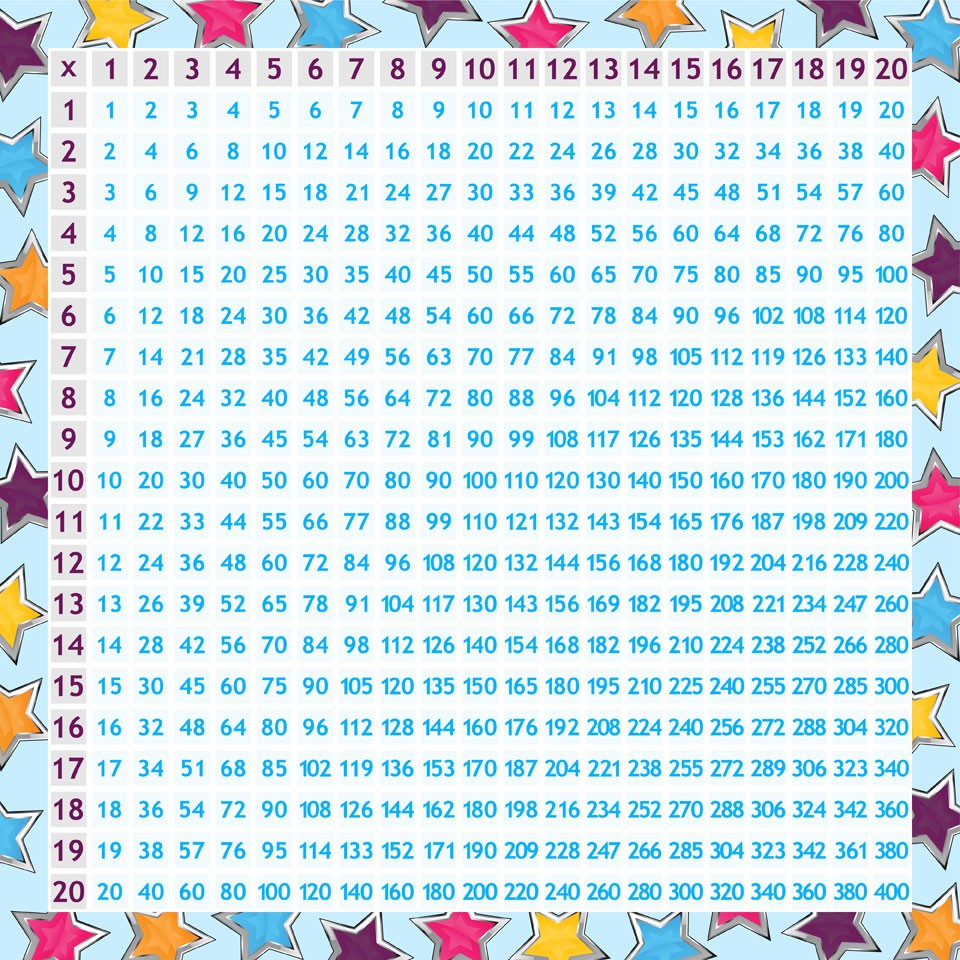
Arithmetic deals with counting and the four operations of addition, subtraction, multiplication and division. Addition is putting numbers together to make a bigger number, for example 5 + 3 = 8. Subtraction is taking one amount away from another, such as 8 – 3 = 5. Multiplication is repeated addition, so that instead of 5 + 5 + 5 = 15, 3 × 5 = 15 is written. Dividing is grouping or sharing; for example, 15 can be divided into five equal groups of three, written 15 ÷ 5 = 3.
Prime numbers
A prime number is a number greater than 1 that cannot be formed by multiplying two smaller whole numbers. Examples are 2, 3, 5, 7 and 11. A number greater than 1 that is not a prime is called a composite number. So, for example, 6 is a composite because it is the product of two numbers (2 × 3) that are both smaller than 6. Every prime other than 2 is an odd number, since all even numbers are a multiple of 2.
How can we can find out whether a number is a prime or a composite? The Sieve of Eratosthenes (named after the ancient Greek mathematician) is a simple way of finding all the prime numbers up to a given limit. It does so by excluding all the composites produced from the multiples of each prime, starting with the 2, then the next, and so on. Once all the composites have been excluded, the remaining numbers are primes. The table below works as a sieve for all primes up to 100.

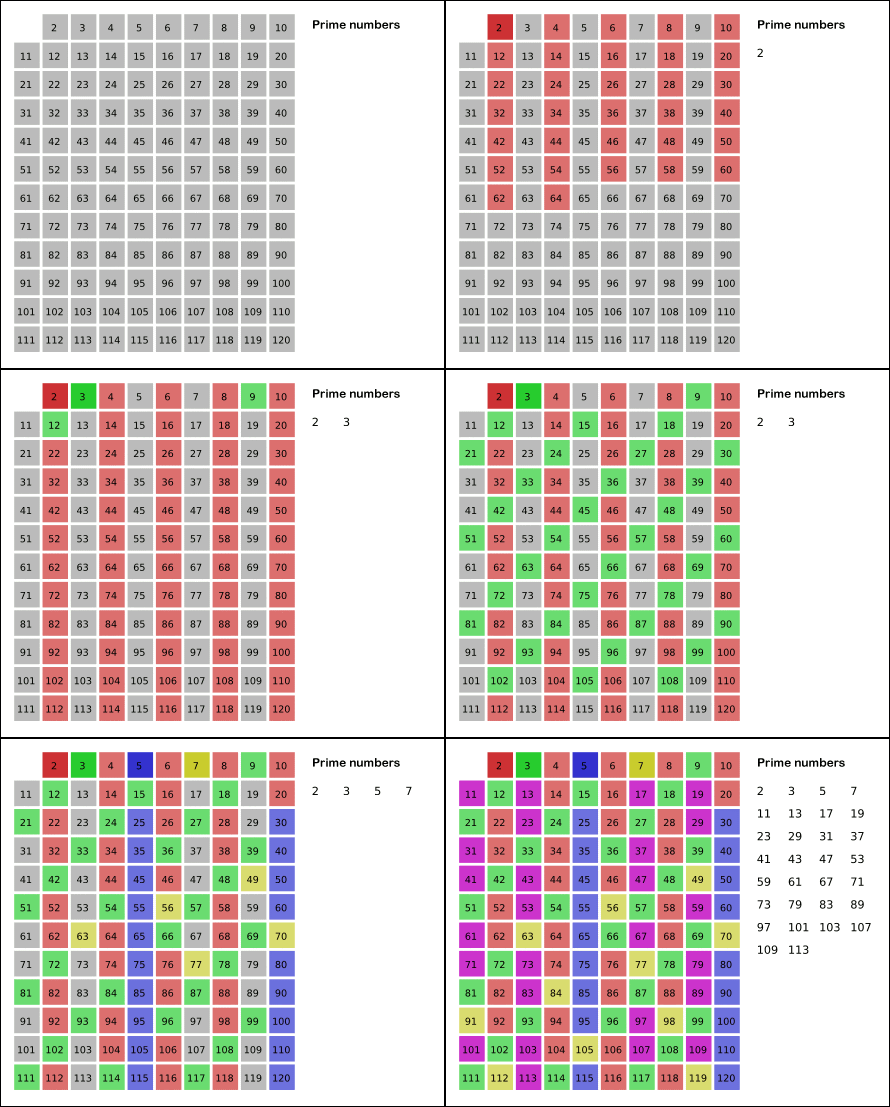
A computer can be used to test extremely large numbers to see if they are prime. But, because there is no limit to how large a number can be, there always comes a point where the test becomes too great a task for even the most powerful computer. The largest known prime number has 24,862,048 digits.

Fractions
Fractions are quantities less than one, for example 3/4. Improper fractions are quantities equal to or greater than one, for example 11/11 or 3/2. The numerator (the number above the line) represents the number of equal parts (3), and the denominator (the number below the line) indicates how many of those parts make up the whole (4). Fractions can also be written by using decimals or percentages. For the fraction 3/4, by making the denominator 100, the numerator becomes 75. The fraction 3/4 is written as 0.75, or, as a percentage, 75%.
DON'T CLICK ON THE IMAGE! First, match each fraction with its correct picture (red is the numerator), then click on the image to reveal the answers.
Binary number system
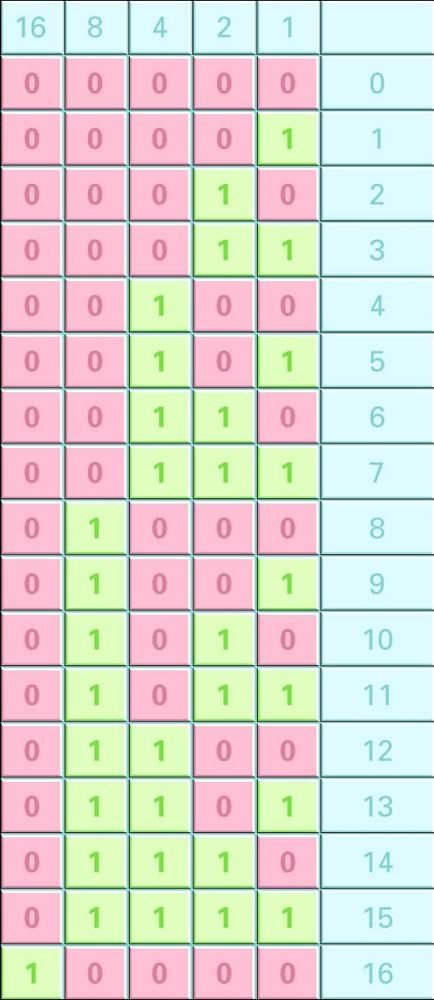
Numbers are represented inside computers using a different number system: the binary system. This uses only the digits 0 and 1—and so can easily be represented in electronic circuits by turning currents on (representing 1) or off (representing 0). In the decimal system, the digits of a number represent ones, tens, hundreds and so on. In the binary system, the digits represent ones, twos, fours, eights and so on. A four-digit binary number can represent decimal numbers up to 15 (one 8, one 4, one 2 and one 1). The binary number 1101, for example, represents the number 13 (one 8, one 4, no 2s and one 1).

Algebra
Algebra uses letters and other symbols to show numbers and quantities. For example x + y = y + x is an algebraic equation, a mathematical statement in which letters represent unknown numbers. A simple way in which algebra solves a problem is: x + 5 = 8. We can find the value of x by subtracting five from both sides of the equal sign, and so keep the equation in balance. So x + 5 – 5 = 8 – 5, so x + 0 = 3, giving the value of x as 3.
Algebra is used to show mathematical relationships and to solve problems. For example, the area (A) of a rectangle is its breadth (b) times its height (h). The equation for this is A = b x h. We use algebra in our daily lives. For example, when calculating how many computer games (y) at £40 each we can afford to buy with a set amount of money, say, £120. Here the equation is y × 40 = 120. An equation like this can be solved by dividing 40 from both sides of the equal sign, so y = 3.
Geometry
The word geometry comes from the Greek words geo meaning "Earth" and metron, meaning "measurement" and it describes shapes and figures. These can be as simple as a circle or a triangle, or as complicated as a cube. Geometry is about how to build and draw shapes, using lines, angles and curves, and how to measure and compare them. Geometry helps us work out areas and volumes.

The ancient Egyptians used their knowledge of triangles to build pyramids. A practical use of geometry today is to decide how much carpet is needed for a floor, or how much paint is needed to cover the walls.

A circle
A circle is a closed curve in which all points have the same distance from the centre. The circle's curve is called the circumference, or perimeter. An arc is a part of the circumference between any two points. The radius of the circle is any straight line drawn from the centre to the circumference. The plural of radius is radii. An area of the circle that lies between two radii is called a sector. The diameter is any straight line crossing the circle and passing through its centre. It is the twice of the length of the radius. A diameter cuts the circle into two equal parts, called semicircles.
The chord is a straight line joining two points on the circumference, but not necessarily passing through its centre. An area of the circle lying between the circumference and a chord is called a segment. A tangent is a straight line that touches the circumference without cutting across it.
The length of the circumference (C) can be calculated by multiplying the length of the radius (r) by two, and then by π (C = 2π r). The area of the circle (A) can be calculated by multiplying the length of the radius (r) by itself, or squaring it, and then by π (A = π r2)
Calculus
This branch of mathematics helps to work out the rate of change; for example, how fast a car is speeding up or slowing down. It was developed in the 17th century to help calculate the orbits of planets around the Sun. One practical use of calculus today is to judge in advance how strong a structure will be, allowing engineers to build safe bridges and buildings.

Probability
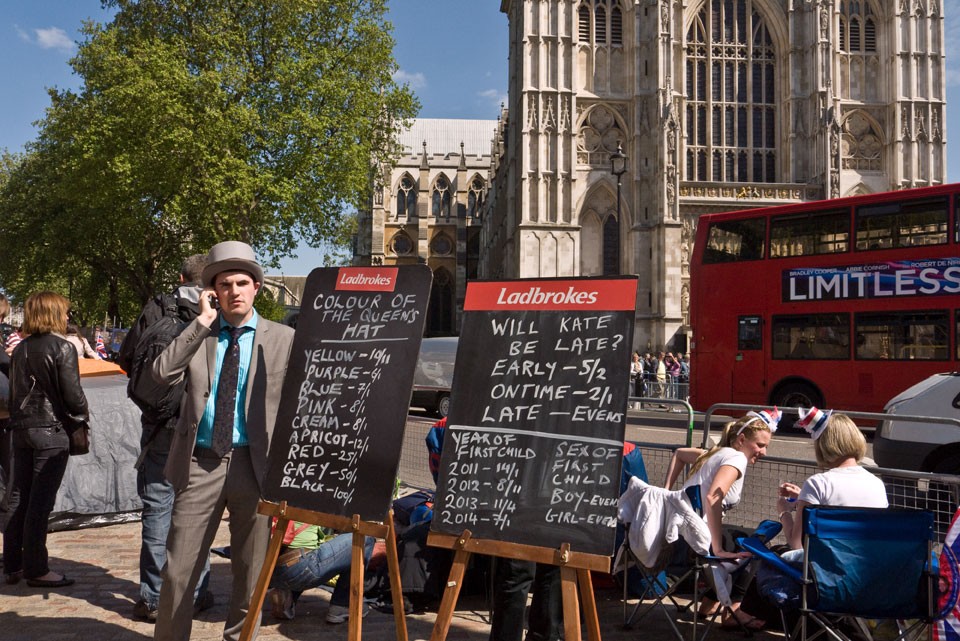
Probability is the calculation of how likely something is to happen. For example, a dropped coin will land either heads or tails up. So, with just two possibilities, there is a 1 in 2 chance that it will land heads up. This can also be expressed as the decimal fraction, 0.5, or the percentage 50%. Insurance companies use probability to decide the chances of a laptop, phone or bike being stolen. The more likely it is, the more they will charge to insure against it happening.
Statistics
Probability is part of a branch of mathematics called statistics. This is the collection and analysing of information known as data; for example, working out what the population of a town or a country might be in ten years’ time, or measuring how far a footballer runs during a game, how many tackles they make, and other contributions to the match.

Consultant: Mike Goldsmith
pics
Without in any way limiting Q-files Ltd’s exclusive rights under copyright, any use of this publication to “train” generative artificial intelligence (AI) technologies to generate text is expressly prohibited. Q-files Ltd reserves all rights to license use of this work for generative AI training and development of machine learning language models.