
Q-news

CITE
We have made every effort to follow citation style rules, but there may be some minor differences. If in doubt, please refer to the appropriate citation style manual.
Archaeologists uncover the long-lost tomb of Pharaoh Thutmose II. (2026). In Q-files Encyclopedia, , Q-news. Retrieved from
https://www.q-files.com/news/archaeologists-uncover-the-long-lost-tomb-of-pharaoh-thutmose-ii
"Archaeologists uncover the long-lost tomb of Pharaoh Thutmose II." , Q-news, Q-files Encyclopedia, 31 Aug. 2026.
https://www.q-files.com/news/archaeologists-uncover-the-long-lost-tomb-of-pharaoh-thutmose-ii.
Accessed 13 Sep. 2026.
Archaeologists uncover the long-lost tomb of Pharaoh Thutmose II 2026. , Q-news. Retrieved 13 September 2026, from
https://www.q-files.com/news/archaeologists-uncover-the-long-lost-tomb-of-pharaoh-thutmose-ii
, Q-news, s.v. "Archaeologists uncover the long-lost tomb of Pharaoh Thutmose II," accessed September 13, 2026.
https://www.q-files.com/news/archaeologists-uncover-the-long-lost-tomb-of-pharaoh-thutmose-ii


Archaeologists uncover the long-lost tomb of Pharaoh Thutmose II
An Egyptian-British team of archaeologists has uncovered the long-lost tomb of Pharaoh Thutmose II, a New Kingdom pharaoh of ancient Egypt's 18th Dynasty. It is the first royal tomb from that period uncovered since Tutankhamun's tomb in 1922. Located underneath a waterfall in the Theban mountains, the tomb lies 2.4 kilometres (one and a half miles) west of the Valley of the Kings where the rest of the New Kingdom pharaohs are buried—including Tutankhamun. Thutmose's tomb, however, was found to contain almost nothing but debris. The evidence strongly suggests it was flooded within six years of the pharaoh’s death in 1479 BC. The team suspect that the tomb's contents were moved to another tomb, as yet undiscovered, located nearby.
24th February 2025

Discovery

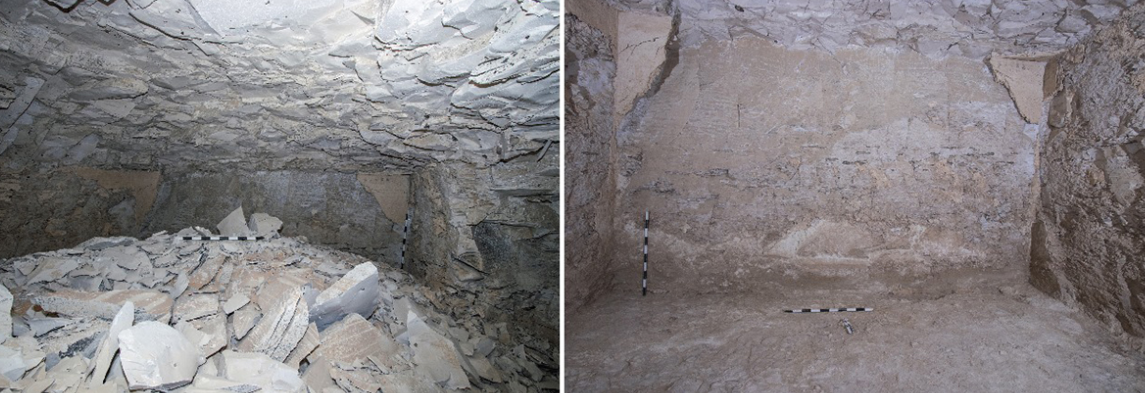
The excavation began in October 2022 when the entrance and main passage of a tomb was discovered and named Wadi C-4. Because of its location close to the tombs of three wives of Thutmose III, the team originally thought the tomb belonged to a royal wife. They found that flooding over the years—flash floods sweep through the desert valley from time to time—had filled the tomb with densely packed debris that had hardened to a concrete-like consistency.
After crawling through the top of a passageway, the archaeologists discovered a blue-painted ceiling with yellow stars on it, along with decorations of scenes from the Amduat, a religious text which was reserved for kings. These were key signs that they had found a king's tomb. After digging through the debris they realised the tomb was completely empty—not because it had been robbed (like nearly all of the pharaohs' tombs) but because it had been deliberately emptied and the contents moved elsewhere to protect them from further flood damage.

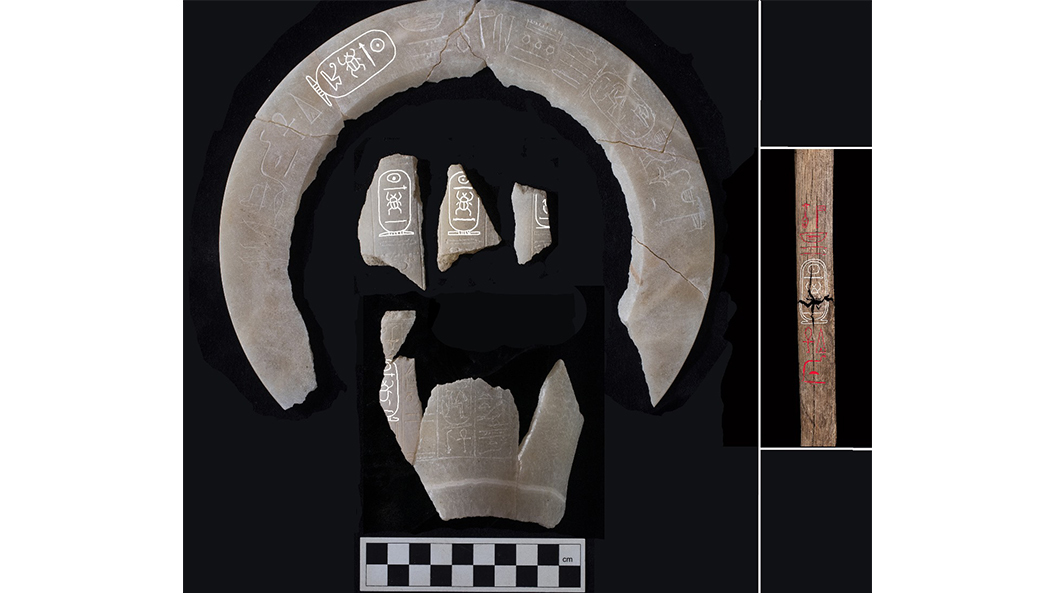
The contents would include both the pharaoh's mummified body along with many treasures of the magnificence that were unearthed by Howard Carter at the tomb of Tutankhamun in 1922. After sifting through tons of rubble, the archaeologists found fragments of alabaster jars which bore the hieroglyphic inscriptions of the names of Thutmose II and his principal wife, Hatshepsut. The team now knew for certain the tomb was that of Pharaoh Thutmose II.
Thutmose II
Thutmose II, whose reign is believed to have been from about 1493 to 1479 BC, was an ancestor of Tutankhamun. He is best known for being the husband of Queen Hatshepsut, regarded as one of Egypt's greatest pharaohs and one of the few female pharaohs who ruled in her own right. Thutmose became pharaoh on the death of his father Thutmose I. In keeping with tradition, he married his father's eldest daughter by another wife—his half-sister, Hatshepsut. They had a daughter called Neferure. He also had a son, the future Thutmose III, by a lesser wife named Iset. The young pharaoh died while still only in his 20s. Thutmose III, still a child, was considered too young to rule Egypt, so Hatshepsut took over on her nephew’s behalf, ruling as regent for six years before declaring herself pharaoh in 1478 BC.


A second tomb?
A mummified body of a 30-year-old man found in 1881 at Deir el-Bahri, a complex of temples and tombs located on the west bank of the Nile, opposite the city of Luxor, has been identified as that of Thutmose II. But Piers Litherland, field director and head of the British part of the team of archaeologists, believes the body is too old to be that of Thutmose. He also points out that while treasures from the tombs of other pharaohs are commonplace in museums, “there are no burial goods of any sort relating to the burial of Thutmose II in any museum or private collection”.
Litherland thinks instead that there is a second tomb, which could still be intact with treasures, along with the mummy of the young pharaoh. He and his team also have an idea where the second tomb could be: secretly buried beneath a 23-metre (75-foot) pile of limestone slabs, rubble, ash and mud plaster and made to look like part of the mountain. The Egyptian-British team are now working to uncover the tomb by hand. "We should be able to take the whole thing down in about another month," Litherland said.

pics
Without in any way limiting Q-files Ltd’s exclusive rights under copyright, any use of this publication to “train” generative artificial intelligence (AI) technologies to generate text is expressly prohibited. Q-files Ltd reserves all rights to license use of this work for generative AI training and development of machine learning language models.