
Ancient Egypt

CITE
We have made every effort to follow citation style rules, but there may be some minor differences. If in doubt, please refer to the appropriate citation style manual.
History of ancient Egypt. (2026). In Q-files Encyclopedia, History, Ancient Egypt. Retrieved from
https://www.q-files.com/history/ancient-egypt/history-of-ancient-egypt
"History of ancient Egypt." History, Ancient Egypt, Q-files Encyclopedia, 30 Mar. 2026.
https://www.q-files.com/history/ancient-egypt/history-of-ancient-egypt.
Accessed 13 Sep. 2026.
History of ancient Egypt 2026. History, Ancient Egypt. Retrieved 13 September 2026, from
https://www.q-files.com/history/ancient-egypt/history-of-ancient-egypt
History, Ancient Egypt, s.v. "History of ancient Egypt," accessed September 13, 2026.
https://www.q-files.com/history/ancient-egypt/history-of-ancient-egypt


History of ancient Egypt
For over 30 centuries—from the time Upper Egypt and Lower Egypt united to become one kingdom in around 3100 BC, to its conquest by the Romans in 30 BC—ancient Egypt was the dominant power in the eastern Mediterranean world. From the pyramids of the Old Kingdom to the temples and tombs of the New Kingdom, from mummies to hieroglyphics, Egypt has long fascinated people. The archaeological study of ancient Egypt even has its own name: egyptology. Egyptologists have learned much about ancient Egypt not only from the many monuments, paintings and other objects that have been been discovered, but also from deciphering hieroglyphs and other written records. From all this, we now know that Egypt was an incredibly rich civilization that made great steps forward in every area of human knowledge, from the arts and sciences to technology.


Egypt's name
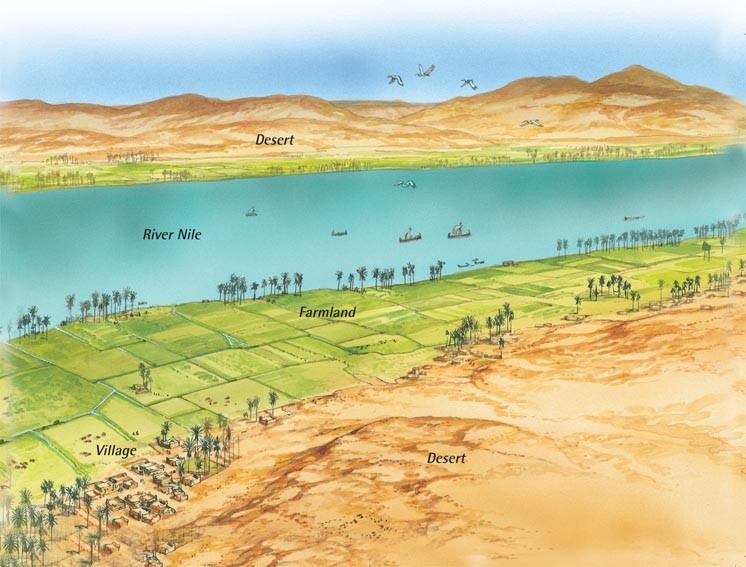
The name “Egypt” comes from the Greek Aegyptos. This was the way the ancient Greeks pronounced the name the Egyptians themselves gave to their country: Hwt-Ka-Ptah ("House of the Spirit of Ptah”—Ptah was one of the earliest of the ancient Egyptian gods). In the early Old Kingdom, Egypt was known as Kemet, or “Black Land”, after the rich, dark soils formed by the annual flooding of the River Nile and where the first settlements began.
Much later, in the 7th century AD, the name Misr, or “Country”, came to be used. It is still the name modern Egyptians call their own nation today.
Periods and dynasties
The history of ancient Egypt is divided into a number of periods. Many of the dates given are approximate as historians do not know for sure when events such a long time ago took place. The dates have the letter “c.” in from of them, which stands for circa, the Latin word for “about”. Each period of Egyptian history is made up of dynasties. A dynasty is a succession of rulers—kings, and sometimes queens, from the same family. Dynasties often have a family name. Ancient Egyptian dynasties are numbered (in Roman numerals) from I to XXXI or 1st to 31st. The Ist dynasty began with Menes (or Narmer) the first king to unify Egypt in around 3100 BC. The 31st dynasty, a line of Persian kings, ended with the conquest by Alexander the Great in 332 BC.


Predynastic Period
The centuries between the time people first settled along the banks of the River Nile (around 5500 BC) to when Egypt became a single kingdom ruled by Ist dynasty kings (c. 3100 BC) is called the Predynastic Period. For thousands of years people had grazed cattle and hunted in what is now the Sahara Desert, but what was then a vast grassland. As the climate became drier, these nomads began to settle in the cooler, wetter valley of the Nile. They learned how to dig irrigation channels and farm the land. The annual flooding of the Nile created fertile soils in which farmers grew wheat and other crops.
Two kingdoms
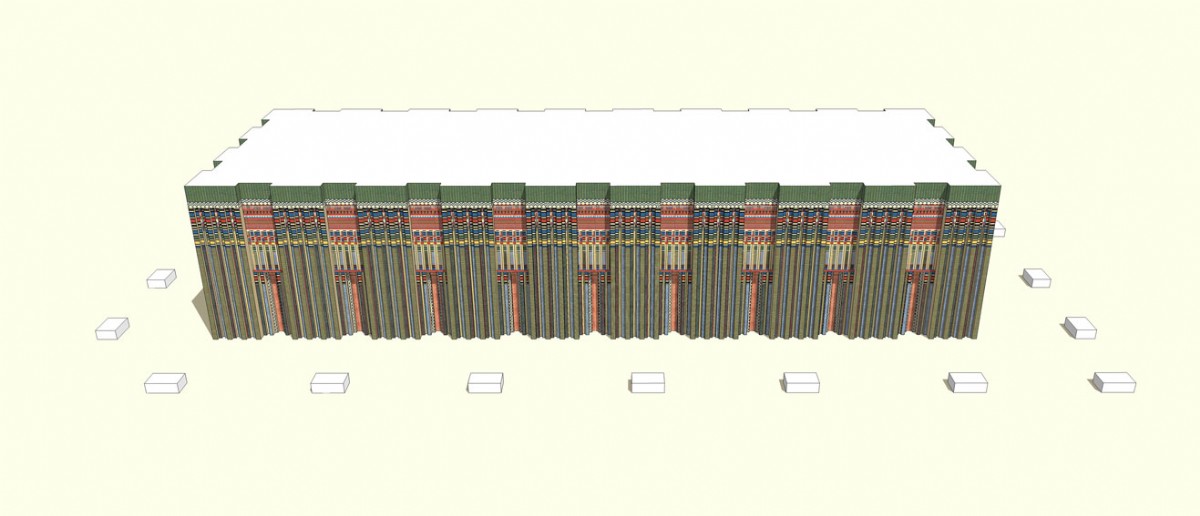
The farmers' villages grew, with some becoming towns and cities. Two kingdoms emerged: the White Land or Upper Egypt in the south (so-called because the Nile flows from south to north) and the Red Land or Lower Egypt—the lands around the Nile Delta—in the north. Wealthy people and kings were buried in mud-brick tombs called mastabas, along with superbly crafted pots and other objects. By 3500 BC mummifying the dead was being practised, suggesting that a belief in life after death (the Afterlife) was already part of the ancient Egyptian culture. Around 3200 a system of writing using pictures, called hieroglyphs, was in use.
Early Dynastic Period
The Early Dynastic, or Archaic, Period (c. 3100–c. 2700 BC) began with the unification of the north and south kingdoms of Egypt. According to a much later account by the ancient historian, Manetho, King Manes (also known as Meni or Menes) of Upper Egypt had conquered the north in 3118 BC. It is now thought that Manes was also called Narmer, a king who peacefully united Upper and Lower Egypt under his rule. King Narmer (or Menes) founded the capital of ancient Egypt at a place called White Walls—later known as Memphis—in the north, close to where the River Nile fans out into its delta. Memphis, which had its own special god, Ptah, would later grow into a great metropolis that dominated Egypt during the Old Kingdom period. During this time, more elaborate mastaba tombs were built and more sophisticated mummification techniques were practised.


Old Kingdom
The period of ancient Egyptian history known as the Old Kingdom (c. 2700–c. 2190 BC) began with the start of the 3rd dynasty. The king ruled Egypt with the help of local governors, called nomarchs, each of whom was responsible for a particular area, called a nome. During this period, Egyptian kings ordered the construction of buildings and monuments on a massive scale: this was the era of the pyramids and the Great Sphinx at Giza.
Pharaoh Djoser, who reigned about 2667–2648 BC, built the Step Pyramid at Saqqara. Designed by the pharaoh’s chief architect and physician, Imhotep, it was the world’s first major stone building. At the site, on the desert plateau overlooking Memphis, Imhotep built a huge enclosure surrounded by a stone wall. Within the walls was a vast complex of pavilions, terraces and courtyards as well as the Step Pyramid.
Sneferu, the second king of the fourth dynasty followed Djoser’s example, supervising the building of two pyramids at Dahshur.


The Giza pyramids
Sneferu’s son, Khufu (also known by his Greek name as Cheops), surpassed his father’s achievement by building the Great Pyramid of Giza, the largest and most impressive of all Egyptian pyramids and the only survivor of the Seven Wonders of the World. He reigned c. 2589–2566 BC. The pyramids of his successors Khafre (c. 2558–2532 BC) and Menkaure (c. 2528–2510 BC) followed over the next half century. The grandeur of the pyramids on the Giza plateau, clad in gleaming white limestone, was a testament to the great power and wealth of the Old Kingdom pharaohs.

Fall of the Old Kingdom
Successful military campaigns in Nubia to the south added to Egypt’s prosperity. But over the course of the fifth and sixth dynasties, the pharaohs’ wealth steadily decreased—partly because of huge expense of pyramid-building. (Many of the pyramids of this later period survive today as no more than piles of rubble.) The nobles and the priesthood began to gain more and more say in how the kingdom was run. The 6th dynasty pharaoh, Pepi II, ruled for some 94 years, with the result that he outlived all his natural successors. After his death, the nomarchs vied for power. The Old Kingdom period ended in civil war and confusion.


First Intermediate Period
During the First Intermediate Period (2190–2040 BC), no single king ruled all Egypt. Independent states with their own rulers sprang up across the country. Two centres of power began to emerge: Herakleopolis in Lower Egypt and Thebes in Upper Egypt. Each centre had its own dynasty, and each fought the other for supreme control of Egypt. This was also a period of drought, when the pattern of annual Nile floods became disrupted, causing farmers’ crops to fail year after year. Then, in around 2040 BC, a Theban king, the man who would become Mentuhotep II, defeated the forces of Herakleopolis and united Egypt once again.
Middle Kingdom
Mentuhotep II’s rule marked the start of the 11th dynasty and the 400-year period that is known as the Middle Kingdom (c. 2040–1674 BC). During this time, Egyptian art and culture reached great heights and Thebes became the wealthiest city in the country. Mentuhotep built a magnificent mortuary temple and tomb for himself on the west bank of the Nile opposite Thebes. This marked a break with the Old Kingdom tradition of building pyramids for their dead pharaohs.

The kings of the 12th dynasty conquered and colonized Nubia and Kush to the south, taking advantage of the rich reserves of gold, ebony and ivory in these southern lands. To protect their new territory, the kings built massive forts along its borders.

Although Thebes remained the country’s main religious centre, a new capital was established at a place called Itjtawy, south of Memphis. But luxurious spending and building projects (including a temporary return to pyramid-building), combined with the recurrence of famine, weakened the government. It had no power to halt the increasing presence and power of the Hyksos people, who had started to settle in the Nile Delta.
The Hyksos
The Hyksos people (their name means “foreign rulers”), who probably came from Palestine or Syria, first appeared in Egypt around 1800 BC and settled in the Nile Delta. In the meantime, following the reign of Queen Sobekneferu (c. 1789–1786 BC), the first female Egyptian ruler and the last ruler of the 12th dynasty, Egypt became divided once again. The official royal court moved back to Thebes, while a rival court became established in the city of Xois in the Delta.

Second Intermediate Period
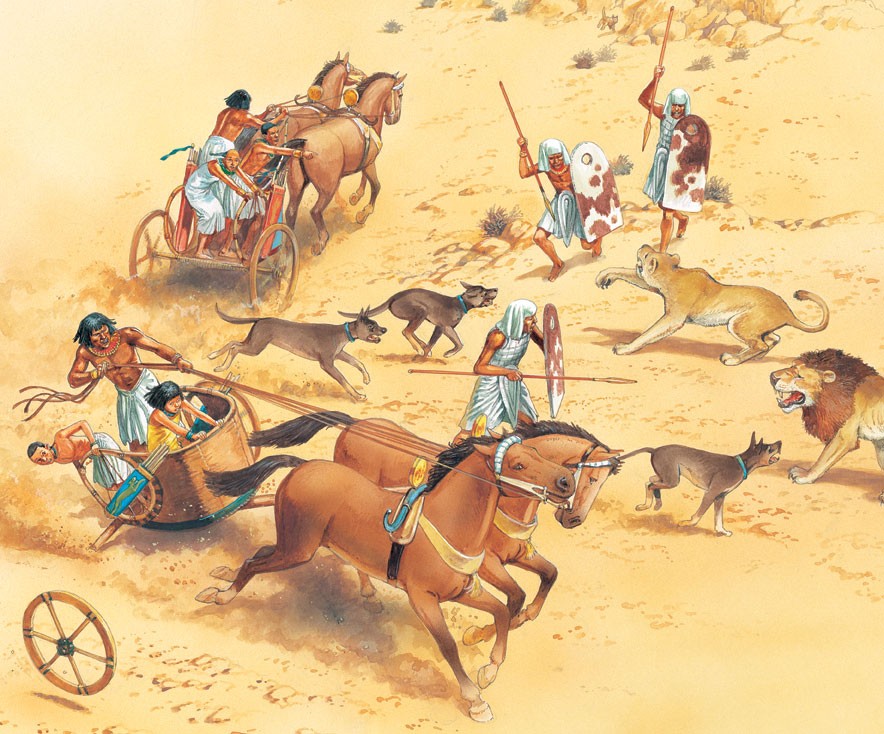
Ruling from their capital at Avaris, the Hyksos eventually took control of the whole of Lower Egypt by about 1650 BC. The Egyptian pharaoh became no more than a figurehead. This era is known as the Second Intermediate Period (c.1674–1552 BC). The Hyksos were hated by the Egyptians, but they introduced many improvements, including the horse and chariot, along with an efficient system of farming, called crop rotation.
Theban kings still ruled the lands of southern Egypt, but the Nubian Kingdom of Kush allied themselves with the Hyksos rulers against the Kingdom of Thebes. The Egyptians launched a number of campaigns to drive the Hyksos out and hold back the Nubians, but all failed. Finally, Ahmose I, who had once been a soldier in the Theban army, succeeded in defeating the Hyksos in 1552 BC.

New Kingdom
Ahmose began what is known as the period of the New Kingdom (1552–1069 BC). It is often referred to as Egypt’s “Golden Age”, a time of great prosperity under a strong central government—especially during the 18th and 19th dynasties. The great temples of Karnak and Luxor, together with the tombs of the Valley of the Kings, all date from this time in Egypt's long history.
The first 18th dynasty pharaohs, Ahmose I, Amenhotep I and Thutmose I, consolidated their power by expanding the boundaries of Egypt as far as the River Euphrates in the north and Nubia in the south. The 18th dynasty pharaohs fought many campaigns in Syria and Palestine, clashing with other powers in the region, including the Mitanni and Hittites.

Trade and empire
Thutmose II’s queen, Hatshepsut began ruling as a regent for her young nephew (he later became Thutmose III, Egypt’s greatest military hero) after her husband’s death, but later decided to became pharaoh in her own right. She was one of Egypt’s greatest rulers, bringing peace and prosperity to her nation.

During Hatshepsut's 21-year reign (c. 1478–1458 BC) Egypt greatly expanded trade with other nations, most notably Punt (probably in present-day Somalia), importing gold, resins, ebony, ivory, animal skins, frankincense and myrrh. By the time of the death of Thutmose III, a brilliant military commander, in 1425 BC, Egypt’s empire had reached its greatest extent.
Amarna Period
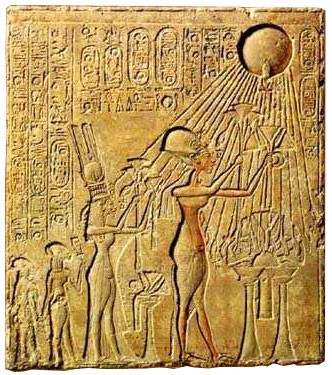
In around 1348 Amenhotep IV succeeded to the throne. Shortly afterwards, he changed his name to Akhenaten (“living spirit of Aten”) to reflect his belief in a single god, the sun-god Aten. The Egyptians traditionally believed in many gods—Amun, Osiris, Isis, Hathor and many others—who influenced every aspect of their daily lives. The priests of Amun, the god of Thebes, in particular, had become almost as powerful as the pharaoh himself. Akhenaten and his queen, Nefertiti, banned these beliefs and established a new religion based upon worship of Aten alone. His reforms effectively removed power from the priests.
Akhenaten moved the capital from Thebes to a new one at Akhetaten, later known as Amarna. This period in the New Kingdom is therefore known as the Amarna Period. But during this time, while Akhenaten was focusing on religious reforms, the Hittites began to conquer the northernmost provinces of the Egyptian Empire.
The boy king
Akhenaten died in around 1338 BC. Someone called Smenkhkare became pharaoh after him. He may have been Akhenaten's son or brother, but the ruler's other name, Neferneferuaten, is probably that of a woman—so the ruler could have been either Meritaten (one of Akhenaten's daughters) or Nefertiti herself. Whoever it was, he or she did not reign for long before Tutankhamun (c. 1336–1327 BC), probably Akhenaten’s son, came to the throne. After Akhenaten’s death, the capital returned to Thebes and Egyptians went back to worshipping their traditional gods. Tutankhamun was originally named “Tutankhaten” to reflect the beliefs of Akhenaten, but he soon changed his name to Tutankhamun in honour of the god Amun.

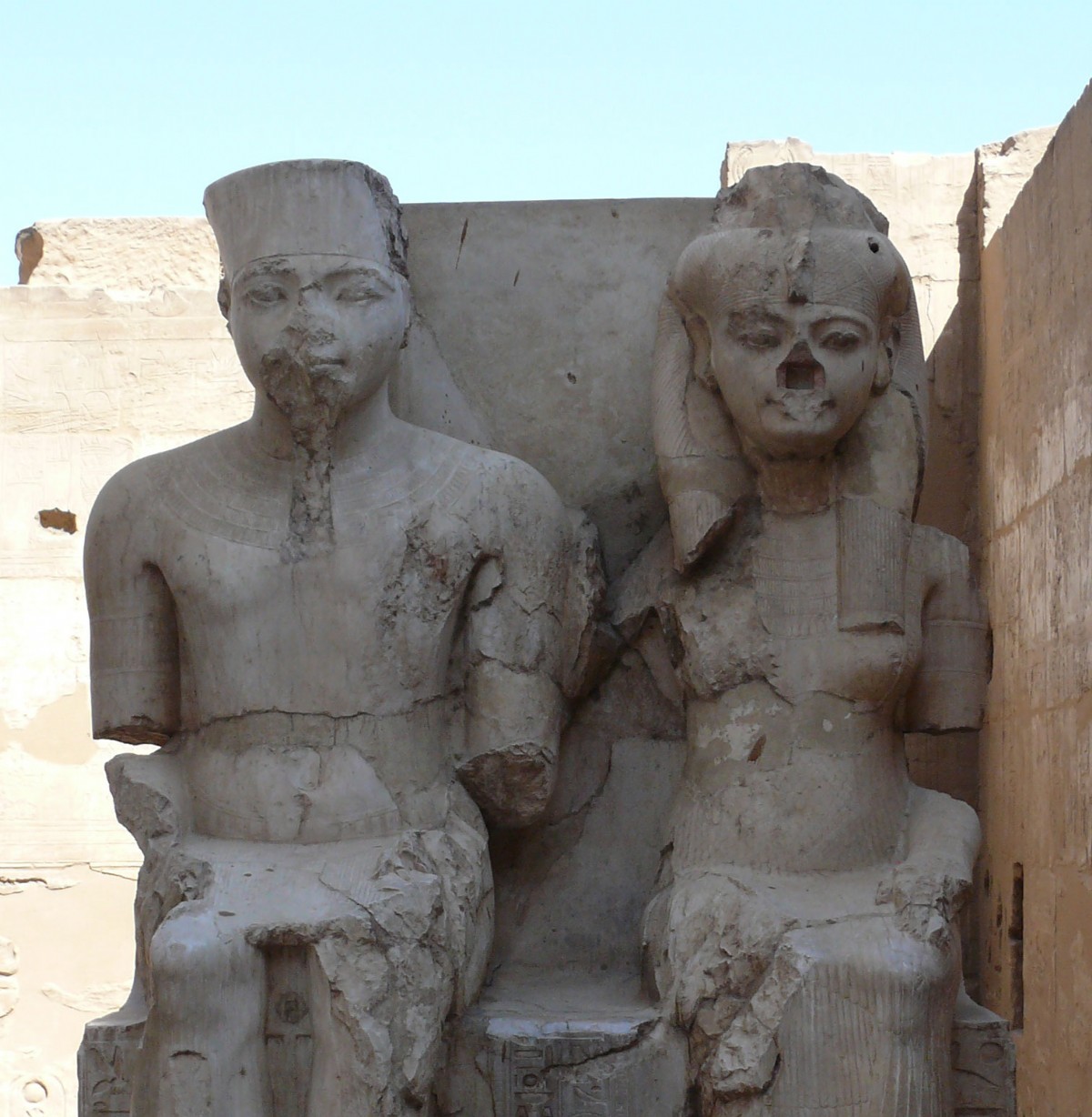
Tutankhamun, the “boy king”, died young, and his adviser, Ay, succeeded him as pharaoh. Tutankhamun’s widow, Ankhesenamun, sought to marry the son of the Hittite king, but on his way to Thebes he was assassinated—possibly on the orders of Horemheb (c. 1323–1295 BC), the man who became pharaoh after Ay’s death. A ruthless king, Horemheb tried to erase any record of the existence of Akhenaten, Tutankhamun and Ay from all paintings and sculptures. But Horemheb was undoubtedly a strong ruler, and restored order to the government and army after a turbulent episode in the New Kingdom.
The Ramesside Period
The 18th dynasty ended with the death of Horemheb. He had appointed a man named Ramesses to follow him, and he became the first pharaoh of the 19th dynasty. But Ramesses I was already an old man and reigned for only two years before his son, Seti I (c. 1294–1279 BC), succeeded him as pharaoh. Keen to restore the empire to the glory years of the 18th dynasty, Seti personally led his army into Syria and Libya. His men met the Hittites, a constant menace on the northern frontier, in battle. But any territory he gained through the wars he fought in Palestine and Syria soon fell back into Hittite hands. Seti was also responsible for restoring Egypt’s architectural glories as well—including the sculptures and paintings vandalized during Akhenaten’s reign.


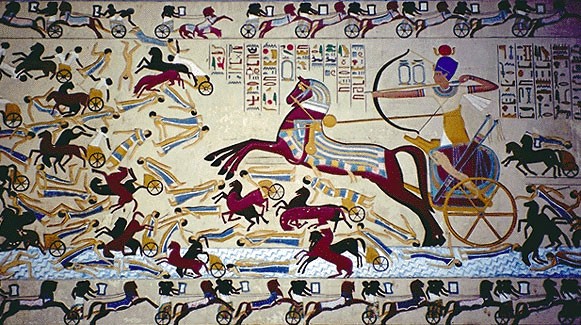
Seti’s son became one the greatest rulers in Egyptian history: Ramesses II (reigned c. 1279–1213). Continuing his father’s military campaigns, he fought King Muwatalli II of the Hittites at the Battle of Kadesh, a place on the Egyptian frontier with Syria, in 1274. Despite narrowly escaping heavy defeat (Ramesses himself was at one stage in danger of losing his own life), Ramesses considered it a great Egyptian victory. Wall paintings in two great buildings, the temple of Abu Simbel and part of the hypostyle hall at Karnak both depict scenes from the battle. Ramesses later signed a peace treaty with the Hittite king, and Egypt remained at peace for the rest of his reign.

Ramesses II, who reigned for 67 years, lived into his late eighties. He was responsible for more building projects than any other Egyptian ruler. He also built a new capital, named Per-Ramesse, on the site of the old Hyksos city of Avaris in the Nile Delta. This remained Egypt's capital until the end of the New Kingdom.
Egypt in decline
Later pharaohs tried—but failed—to repeat Ramesses II’s glories. Many rulers of the 20th dynasty even took his name, though none matched his brilliance as a ruler. Egypt’s great wealth had attracted the attention of its neighbours, including the Libyans, who lived to the west of the Nile Delta.

Then, from across the Mediterranean, the people the Egyptians described as the “Sea Peoples” began to make regular raids along the coast. The Sea Peoples, one group of whom may have been the people known as the Philistines in the Bible, may have come from the islands of the Aegean Sea. Ramesses III (c. 1186–1154 BC) fought them off, finally defeating them at the Battle of the Delta in around 1176 BC. But Egypt would soon lose its provinces in Palestine and Syria for good. Nubia also managed to break away from the Egyptian Empire.

Ramesses III is considered by historians to be the last powerful pharaoh to rule Egypt. Like his predecessors, he ordered several major building projects, but when he failed to pay his construction workers on one occasion, they went on strike—the first recorded strike in history. By the time of Ramesses XI (reigned c. 1098–1068 BC), at the end of the 20th Dynasty, the government had become so weakened by scandal and weak rulers that Egypt collapsed into chaos once more.
Army generals, priests and other officials vied for power. A military man called Heri-Hor, who also took the title of high priest, effectively became the country's ruler.
Third Intermediate Period
On the death of Ramesses XI, two men—possibly the sons of Heri-Hor—took control of Egypt: Smendes and the high priest Pinudjem. Smendes declared himself king and moved the capital from Per Ramesses to Tanis in the Nile Delta, while Pinujdem later did the same from Thebes. Divided once again, Egypt entered what is known as the Third Intermediate Period (1069–702 BC). Libyan settlers in the Delta seized their chance to take control of Egypt. Their leader took the title of pharaoh as Shoshenq I in about 945 BC.

Libyan rule in Egypt lasted more than 200 years before the Nubians, under their leader Piankhi (also known as Piye), pushed north, taking Thebes in about 713 BC. He started the 25th dynasty and fought the Tanis rulers until they finally recognized him as king of all Egypt.

Assyrian sack of Thebes
Meanwhile, another powerful empire had risen in the Near East: Assyria. By 750 BC the Assyrians controlled Mesopotamia and Palestine. In 665 BC they began their invasion of Egypt, but, having no plans to conquer the country, simply plundered and destroyed the Nubians’ capital of Thebes, driving the Nubians out. Egypt was left in the hands of local rulers. The 26th dynasty—the last by native Egyptians—began.
Late Period
For about 150 years, a dynasty of kings, beginning with Psamtek, ruled a reunified Egypt from a place called Sais in the Nile Delta. This is the time known to historians as Egypt’s Late Period (664–525 BC). But yet another great empire had begun to cast envious eyes at Egypt’s riches: Persia. Cambyses II struck at the city of Pelusium in 525 BC, defeating the last king of Sais, Psamtik III, and making Egypt part of his empire.

Persian rule of Egypt was deeply unpopular. It was during this time that many Greeks began to come and live in Egypt, forming alliances with the local people and encouraging rebellion against their joint enemy, Persia. They even managed to rid Egypt of the hated Persians in 404 BC, but the mighty empire reconquered it and remained in power—until a strong Greek leader eventually came to the rescue.

Alexander and the Ptolemaic dynasty
Alexander the Great invaded Egypt and seized it from the Persians in 332 BC. He was welcomed by the Egyptians as a hero and declared a son of Amun, the most important Egyptian god. Alexander founded the city of Alexandria and moved on to conquer the rest of the Persian Empire.

After Alexander's death in 323 BC, his general, Ptolemy, brought his body back to Alexandria and founded the Ptolemaic Dynasty (305–30 BC). All the kings of this dynasty were called Ptolemy (pronounced TOLL-er-mee). They were Greek and spoke their own language—although they held Egyptian traditions and culture in great respect.
Surrender to Rome
The last of the Ptolemies—and the last ruler of independent Egypt—was Cleopatra VII (51–30 BC). By the 1st century BC, the growing power and influence of the Roman Empire could no longer be resisted by Egypt. Cleopatra became queen as the wife of her young brother, when he became pharaoh as Ptolemy XIII in 51 BC. She had no intention of sharing power with him, but, after her bid to win power failed, won the support of the Roman general Julius Caesar. He defeated Ptolemy's army at the Battle of the Nile in 47 BC and Cleopatra became Egypt’s sole ruler.

After Caesar's assassination, Cleopatra joined forces with his great friend Mark Antony, whom Caesar’s successor, Octavian (later Augustus), considered a dangerous rival. Cleopatra committed suicide in 30 BC after the defeat of her troops—and those of Mark Antony—by the Romans under Octavian at the Battle of Actium (31 BC). Egypt then became a province of Rome.
Consultant: Philip Parker
pics

Without in any way limiting Q-files Ltd’s exclusive rights under copyright, any use of this publication to “train” generative artificial intelligence (AI) technologies to generate text is expressly prohibited. Q-files Ltd reserves all rights to license use of this work for generative AI training and development of machine learning language models.