
Age of Dinosaurs
Triassic Period
The Age of Dinosaurs, the Mesozoic Era, began with the Triassic Period, 252–201 million years ago. The period began at a time when a vast number of animals, both on land and in the sea, became extinct. Scientists believe the great extinction at the end of the Permian Period was caused by very high global temperatures combined with a huge volcanic eruption, which belched out clouds of greenhouse gases and raised the temperature yet higher. The first dinosaurs, such as Herrerasaurus, Coelophysis and Plateosaurus, all emerged during the Triassic Period. Pterosaurs, the flying reptiles, such as Eudimorphodon, along with marine reptiles such as Placodus and Nothosaurus, also first appeared during the Triassic.

Triassic world
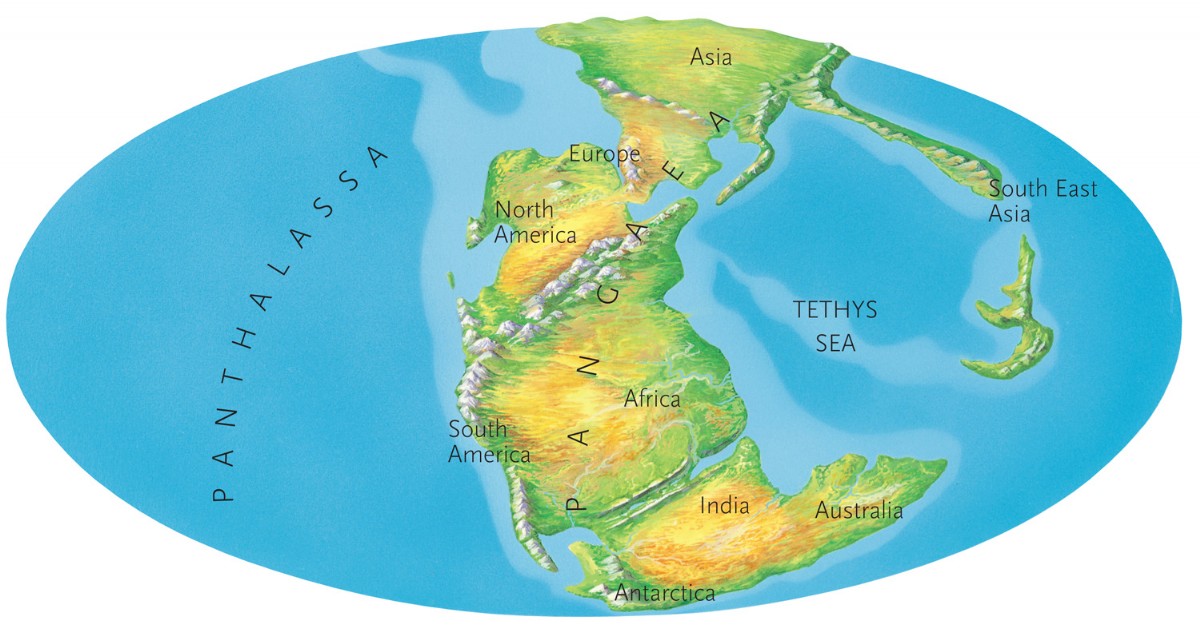
At the beginning of the Triassic all the Earth's continents were joined together to make the supercontinent of Pangaea. Surrounding this vast landmass was a great ocean, called Panthalassa. As the waters slowly rose and fell, the shape of the coast changed too. So the continents looked very different from what modern maps show. India was far away from the south of Asia, where it lies today. In Triassic times it was situated between Africa and Antarctica.
Archosaurs
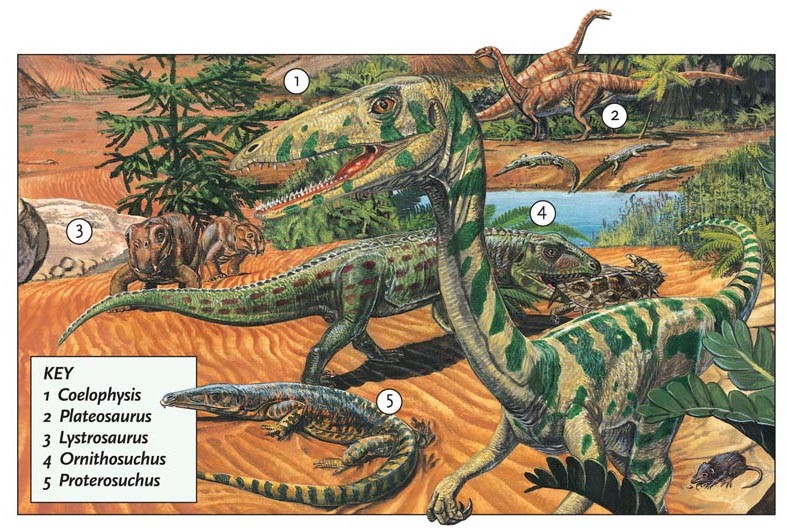
A number of reptiles survived the Permian extinctions. Lystrosaurus, a tusked, pig-like reptile, spread rapidly. The archosaurs, reptiles from the diapsid group, also began to achieve dominance at this time. Equipped with powerful jaws and bony armour, the first archosaurs had a low, sprawling gait (like modern lizards), but, as the Triassic went on, some kinds evolved a more upright stance. The powerful runner Ornithosuchus, for example, a type of archosaur known as a thecodont, had a short body with a long, counter-balancing tail and strong hind legs. It was one of a number of archosaur species that could run on two legs.
Euparkeria
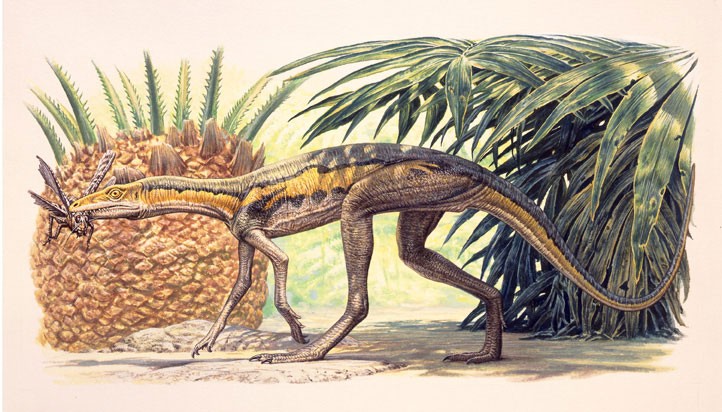
Euparkeria was a small African archosaur of the early Triassic. About 60 centimetres (2 feet) long, it had a slender body, long tail and long hind legs; it could probably move on just its hind legs when running quickly. It had needle-like teeth and may have fed on insects and other small animals on the forest floor.
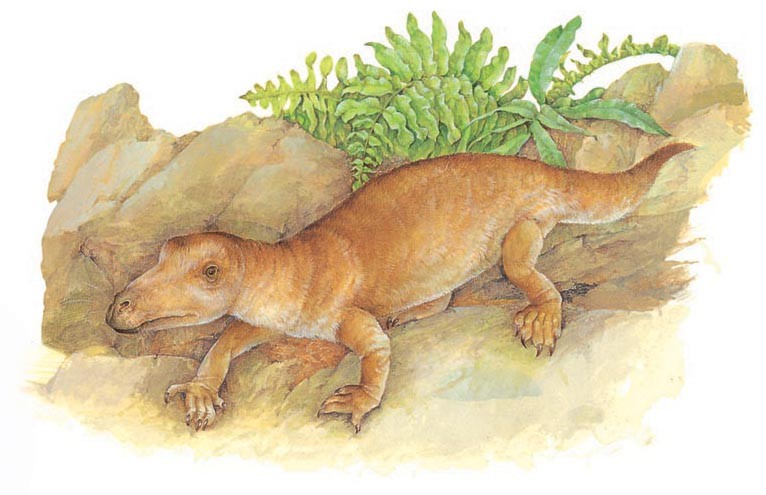
Thrinaxodon
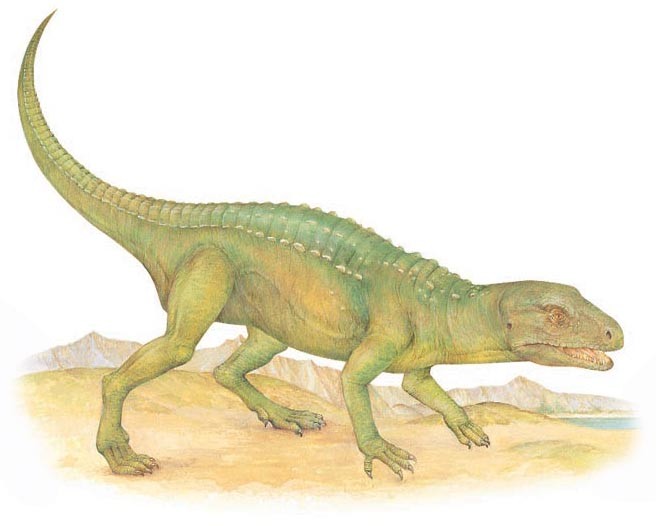
Thrinaxodon was a cynodont, a mammal-like reptile about the size of a cat. It probably even had whiskers and a covering of fur. It digested its food quickly, providing it with internal heat that its warm coat prevented from escaping. Thrinaxodon still laid eggs and its skeleton was reptile-like. It lived in burrows, and fed on insects and other small reptiles.
The first dinosaurs
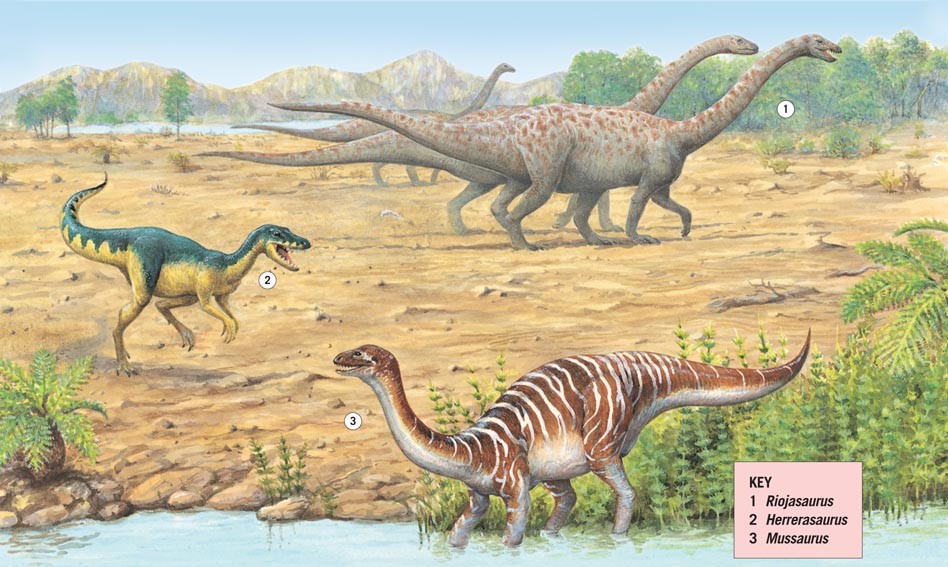
The first known dinosaurs appeared about 240 million years ago in the southern part of South America, Africa and in Europe. In Triassic times, both these regions lay on the fringes of Pangaea, a lush landscape—in contrast to the supercontinent’s arid interior. These early dinosaurs were small theropods (meat-eaters) which ran on two legs all the time. Herrerasaurus, a fast, 3-metre (10-foot) predator that lived in South America, had a long, flexible neck, large eyes, sharp teeth and a long tail, which acted as a balance. Being able to run on its strong back legs left its arms free to grasp prey.
Pisanosaurus
Pisanosaurus was a small, lightly built herbivore, measuring about a metre (3.3 feet) long, that lived in northwestern Argentina in the late Triassic approximately 229 million years ago. Palaeontologists are unsure whether it was a dinosaur or not. Some think that Pisanosaurus was the oldest known ornithischian, the same group which would later give rise to Stegosaurus, Iguanodon and Triceratops. Others suggest it was a not a dinosaur but a silesaurid, a member of a family of archosaurs—possibly insect-eating—that walked on four legs at least some of the time.

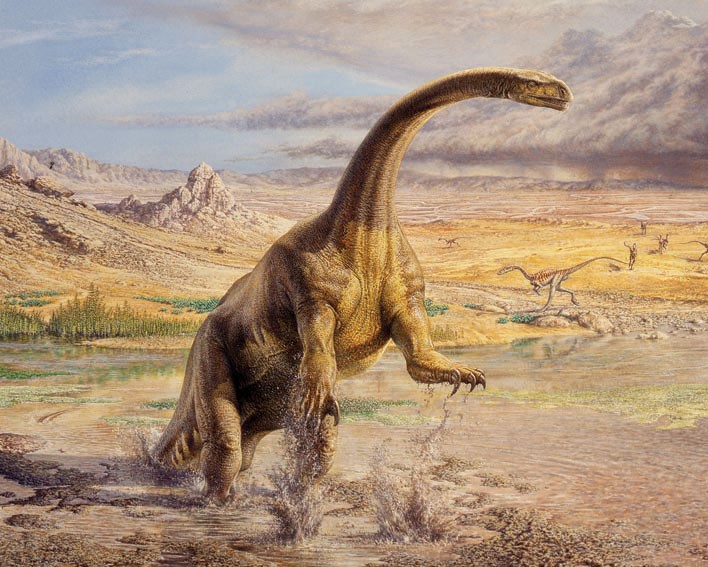
Prosauropods
The plant-eaters, or sauropodomorphs, emerged towards the end of the Triassic. One of the largest of these types of dinosaur, called the prosauropods, was the 10-metre (33-foot) Riojasaurus, also from South America. Another was Plateosaurus, from Europe. Eight metres (26 feet) long, it probably spent some of its time on all fours, but most of the time walked and ran on its two long, powerful back legs. Plateosaurus may have used its large, curved thumb-claw to pull down branches.
Coelophysis
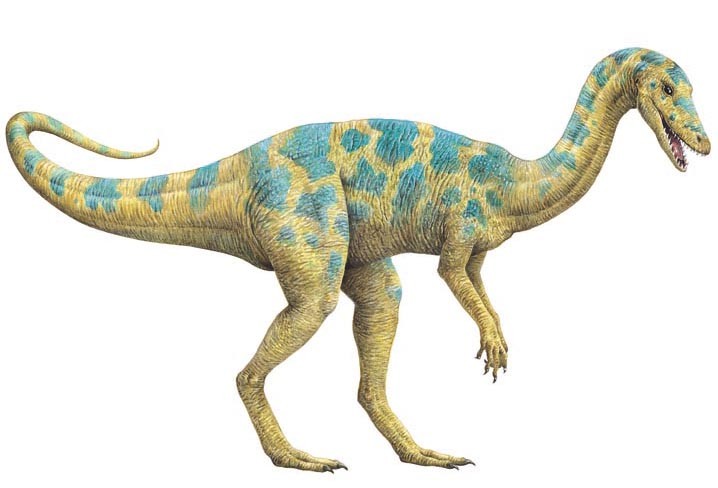
One of the best-known of all Triassic dinosaurs was Coelophysis. A three-metre-long (10-foot) theropod, it lived in what is now the southern United States. Coelophysis had a long, narrow head and sharp, saw-edged teeth, which it used to devour lizards and other small prey. Large numbers of fossils have been found together, suggesting that Coelophysis lived in packs like wolves.

Pterosaurs
Another group of archosaur reptiles gradually evolved the ability to fly during the Triassic Period. They were not dinosaurs, but pterosaurs. Eudimorphodon, from the rhamphorynch group, was one of the first kinds. Its wings were sheets of skin stretching from its legs to its greatly-lengthened fourth fingers.
Marine reptiles
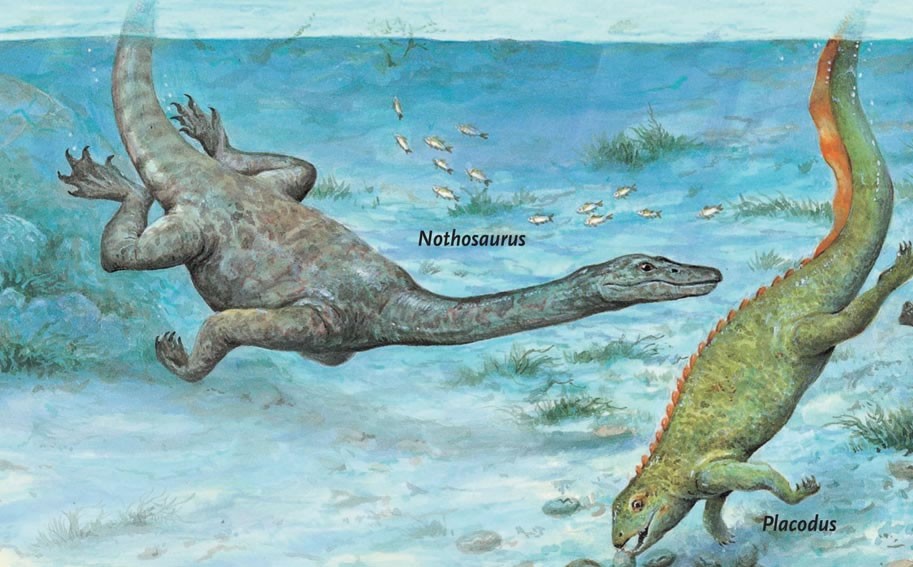
Some kinds of reptile began to feed on marine life during the Triassic Period, and gradually the body design of marine reptiles adapted to an underwater lifestyle. Reptiles had originally evolved from the amphibians, so for this group of reptiles, it marked a "return" to their ancestral habitat: the water. Among them were Placodus and Nothosaurus.
Consultant: Chris Jarvis