
Dinosaur species

CITE
We have made every effort to follow citation style rules, but there may be some minor differences. If in doubt, please refer to the appropriate citation style manual.
Coelophysis. (2026). In Q-files Encyclopedia, Prehistoric, Dinosaur species. Retrieved from
https://www.q-files.com/prehistoric/dinosaur-species/coelophysis
"Coelophysis." Prehistoric, Dinosaur species, Q-files Encyclopedia, 10 Mar. 2026.
https://www.q-files.com/prehistoric/dinosaur-species/coelophysis.
Accessed 6 Nov. 2026.
Coelophysis 2026. Prehistoric, Dinosaur species. Retrieved 6 November 2026, from
https://www.q-files.com/prehistoric/dinosaur-species/coelophysis
Prehistoric, Dinosaur species, s.v. "Coelophysis," accessed November 6, 2026.
https://www.q-files.com/prehistoric/dinosaur-species/coelophysis


Coelophysis
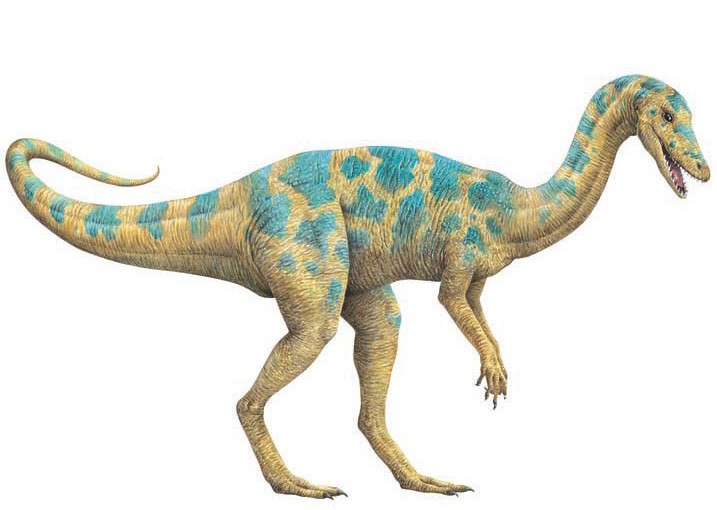
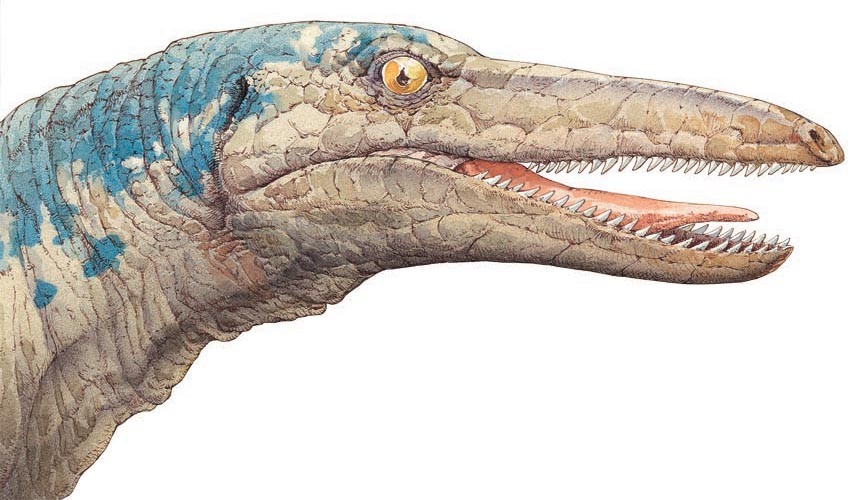
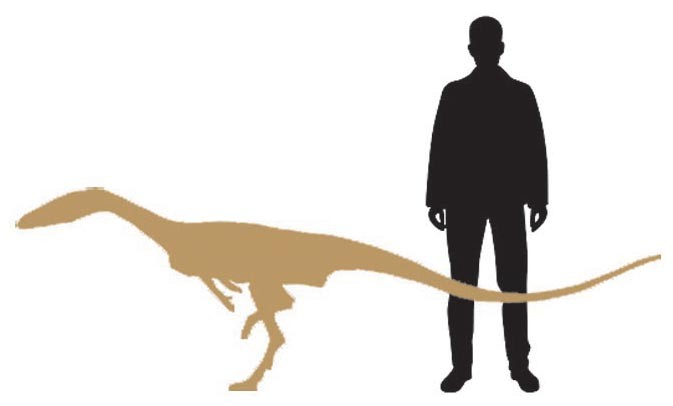
Coelophysis was a theropod from Triassic North America. It had a narrow head, shaped like a stork’s, with a long curved neck. Its body was slim and compact, with long legs and three-toed, bird-like feet. Its short arms had three-fingered clawed hands. Coelophysis's long tail (half its length) was used to balance the rest of its body. Coelophysis was as long as a small car but, because its bones were hollow, it was as light as an eight-year-old child.
Pack-hunter

Coelophysis may have been a ferocious pack-hunter, with several of them surrounding and ambushing their prey. Rushing at its victim, Coelophysis would catch its prey in its jaws with a sudden, jabbing motion of the head. It could swallow smaller prey whole. When tackling larger prey, it would hold it down with its claws while tearing it apart with its teeth.
Fossil finds

Palaeontologists excavating a site at Ghost Ranch, New Mexico, found many skeletons of different sizes belonging to Coelophysis in the same place. The dinosaurs may have lived as a group and probably died in a flash flood.
Two of the adult skeletons had tiny skeletons apparently inside them, leading to suggestions that Coelophysis was a cannibal. New studies show that what were previously thought to be baby Coelophysis were, in fact, small crocodiles crushed underneath the larger dinosaurs.
Eoraptor

At the time Coelophysis lived, dinosaurs were still fairly uncommon creatures. Eoraptor (“Dawn plunderer”) was one of the very earliest dinosaurs known. It lived in the forests of South America about 228 million years ago. It was the size of a fox: it was 1 metre (3.3 feet) long and weighed just 11 kilograms (24 pounds). It had both carnivore-type and herbivore-type teeth and so was probably omnivorous.

Herrerasaurus
Another theropod living at the same time and in the same place as Eoraptor was Herrerasaurus (“Herrera’s reptile”, named after Victorino Herrera, the Argentinian farmer who first discovered its skeleton). Herrerasaurus was three times the size of Eoraptor, upon which it may have preyed. Only the crocodile-like reptile Saurosuchus was bigger and more powerful. But with its upright stance and long legs, Herrerasaurus was probably the more agile predator of the two.

Facts about Coelophysis
Pronunciation: SEEL-oh-FIE-sis
Size: 3 m (10ft) long
Where and when: Semi-desert plains of North America, 225 million years ago (Triassic)
Diet: Meat and insects
Prey: Lizards; small plant-eating reptiles such as Technosaurus and Revueltosaurus
Predators: Other flesh-eating dinosaurs and parasuchians, crocodile-like carnivorous reptiles
Features: Streamlined body with light, hollow bones; long legs for sprinting; clawed hands for clutching prey; sharp, curved, saw-edged teeth; forward-facing eyes, giving it excellent stereoscopic vision
Relatives: Gojirasaurus, Podokesaurus, Segisaurus (North America); Procompsognathus (Europe)

Consultant: Chris Jarvis
pics

Without in any way limiting Q-files Ltd’s exclusive rights under copyright, any use of this publication to “train” generative artificial intelligence (AI) technologies to generate text is expressly prohibited. Q-files Ltd reserves all rights to license use of this work for generative AI training and development of machine learning language models.