
Dinosaur species

CITE
We have made every effort to follow citation style rules, but there may be some minor differences. If in doubt, please refer to the appropriate citation style manual.
Archaeopteryx. (2026). In Q-files Encyclopedia, Prehistoric, Dinosaur species. Retrieved from
https://www.q-files.com/prehistoric/dinosaur-species/archaeopteryx
"Archaeopteryx." Prehistoric, Dinosaur species, Q-files Encyclopedia, 10 Mar. 2026.
https://www.q-files.com/prehistoric/dinosaur-species/archaeopteryx.
Accessed 21 Sep. 2026.
Archaeopteryx 2026. Prehistoric, Dinosaur species. Retrieved 21 September 2026, from
https://www.q-files.com/prehistoric/dinosaur-species/archaeopteryx
Prehistoric, Dinosaur species, s.v. "Archaeopteryx," accessed September 21, 2026.
https://www.q-files.com/prehistoric/dinosaur-species/archaeopteryx


Archaeopteryx
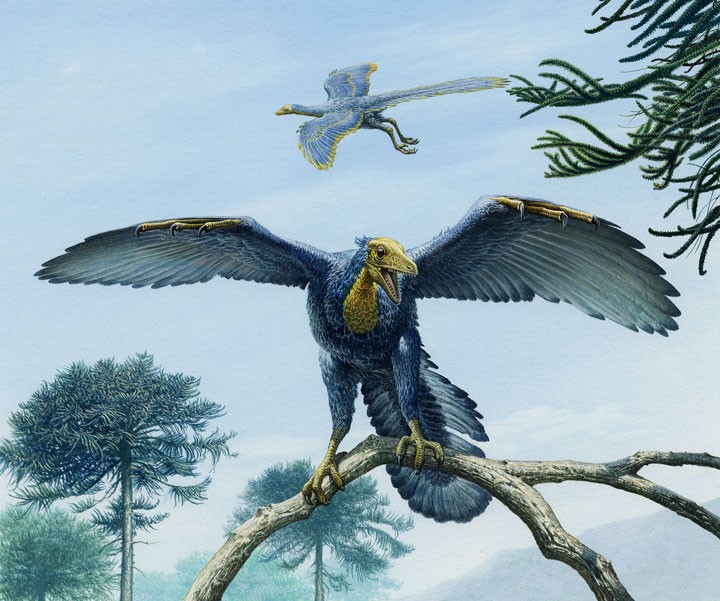
Archaeopteryx was a bird-like dinosaur that lived in Europe around 150 million years ago. It had features that resembled those of both birds and dinosaurs, leading many palaeontologists to believe that birds were directly descended from small theropod dinosaurs. Its bird-like features included flight feathers, broad wings and a very small and light body. Among its dinosaur-like features were jaws with sharp teeth, three-clawed fingers on its forelimbs or arms and a long, bony tail.


Ability to fly
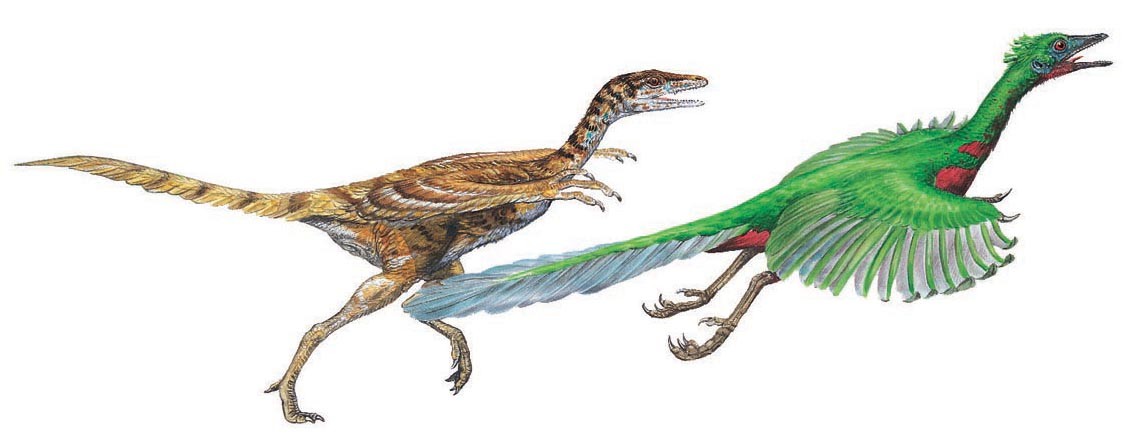
Although Archaeopteryx quite closely resembled the small theropod it shared its habitat with, Compsognathus, scientists think it was more closely related to other small, feathered theropods from the dromaeosaur family, such as Deinonychus and Microraptor. Being able to fly—or at least glide down from trees—would have allowed it both to pounce on its prey more easily and escape attack from larger predators.

Archaeopteryx lacked the well-developed breast bone of modern birds, meaning its wings were not quite strong enough for flapping flight. Instead, it might have taken to the air in short “hops”, or by gliding down from a perch. The arid habitat where Archaeopteryx lived would have had low shrubs instead of trees, suggesting it may have been primarily a ground-dweller. It probably spent its life preying on any small lizards and insects it could find near the shores of the subtropical islands where it lived.
Fossils
The first Archaeopteryx fossil, a single feather, was discovered in 1861. All Archaeopteryx fossils unearthed over the years came from limestone quarries near Solnhofen, Germany. Most of them include impressions of feathers. The wing and tail feathers show the same structure of flight feathers as in modern birds. The body feathers were fluffy and down-like, perhaps appearing more like fur than feathers.

Facts about Archaeopteryx
Pronunciation: Ar-kee-OP-ter-ix
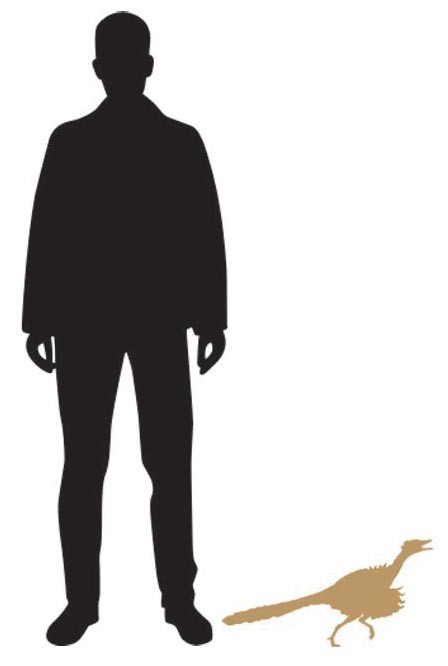
Size: 50 cm (20 inches) long and 15 cm (6 inches) tall (about the size of a magpie)
Where and when: Semi-desert islands, forming part of what is now Europe 150 million years ago (Late Jurassic)
Diet: Meat, fish, insects
Prey: Small mammals and lizards living in trees or on the ground
Features: Relatively large brain, eyes and ears, giving it co-ordination vital for flight; lightweight and feathered wings, equipping it for flight or gliding; feathers for heat insulation; sharp claws and teeth to grab prey
Relatives: Deinonychus (North America); Microraptor, Anchiornis, Troodon (Asia)
Consultant: Chris Jarvis
pics

Without in any way limiting Q-files Ltd’s exclusive rights under copyright, any use of this publication to “train” generative artificial intelligence (AI) technologies to generate text is expressly prohibited. Q-files Ltd reserves all rights to license use of this work for generative AI training and development of machine learning language models.