
Dinosaur species

CITE
We have made every effort to follow citation style rules, but there may be some minor differences. If in doubt, please refer to the appropriate citation style manual.
Therizinosaurus. (2026). In Q-files Encyclopedia, Prehistoric, Dinosaur species. Retrieved from
https://www.q-files.com/prehistoric/dinosaur-species/therizinosaurus
"Therizinosaurus." Prehistoric, Dinosaur species, Q-files Encyclopedia, 11 Mar. 2026.
https://www.q-files.com/prehistoric/dinosaur-species/therizinosaurus.
Accessed 6 Nov. 2026.
Therizinosaurus 2026. Prehistoric, Dinosaur species. Retrieved 6 November 2026, from
https://www.q-files.com/prehistoric/dinosaur-species/therizinosaurus
Prehistoric, Dinosaur species, s.v. "Therizinosaurus," accessed November 6, 2026.
https://www.q-files.com/prehistoric/dinosaur-species/therizinosaurus


Therizinosaurus
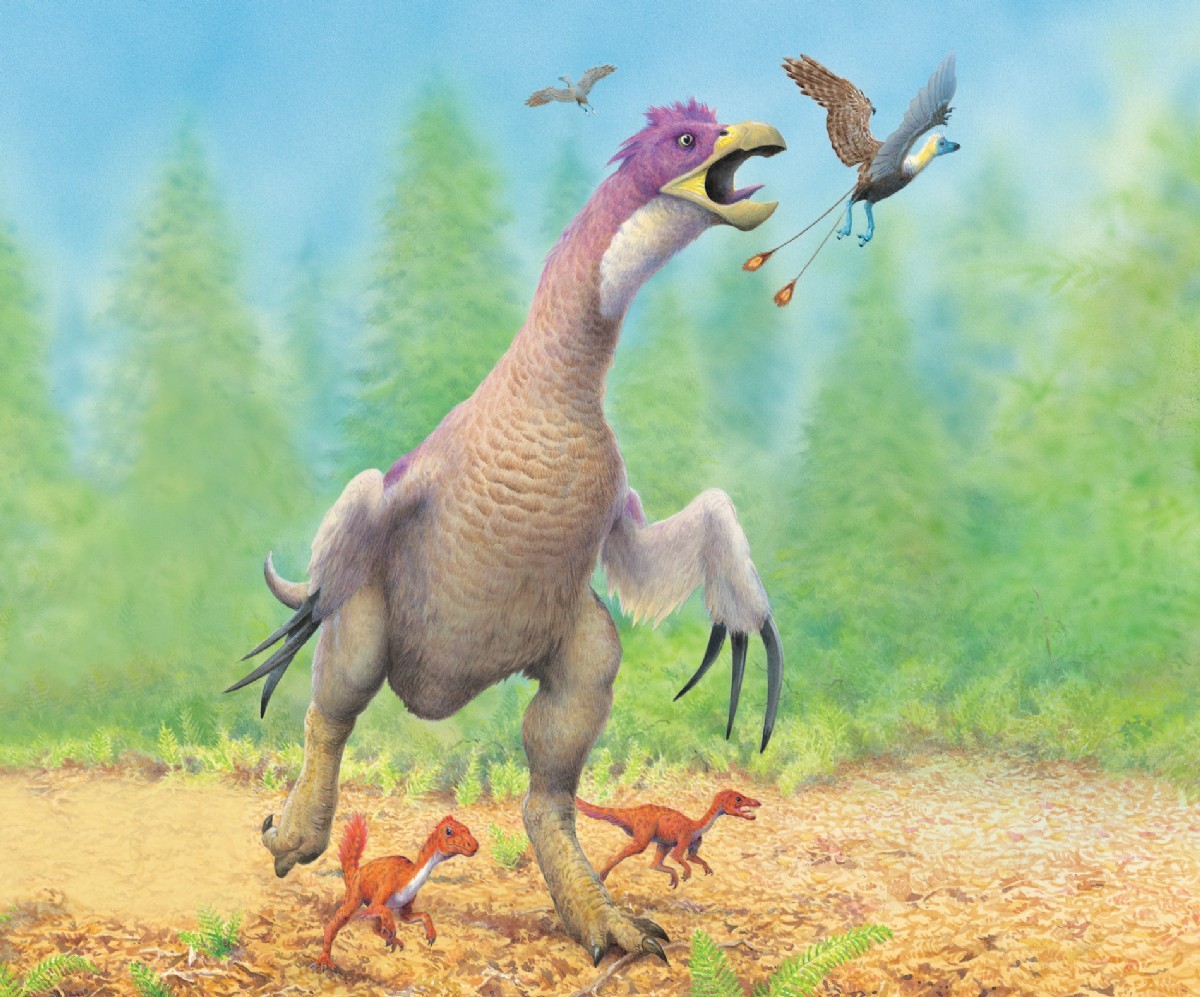
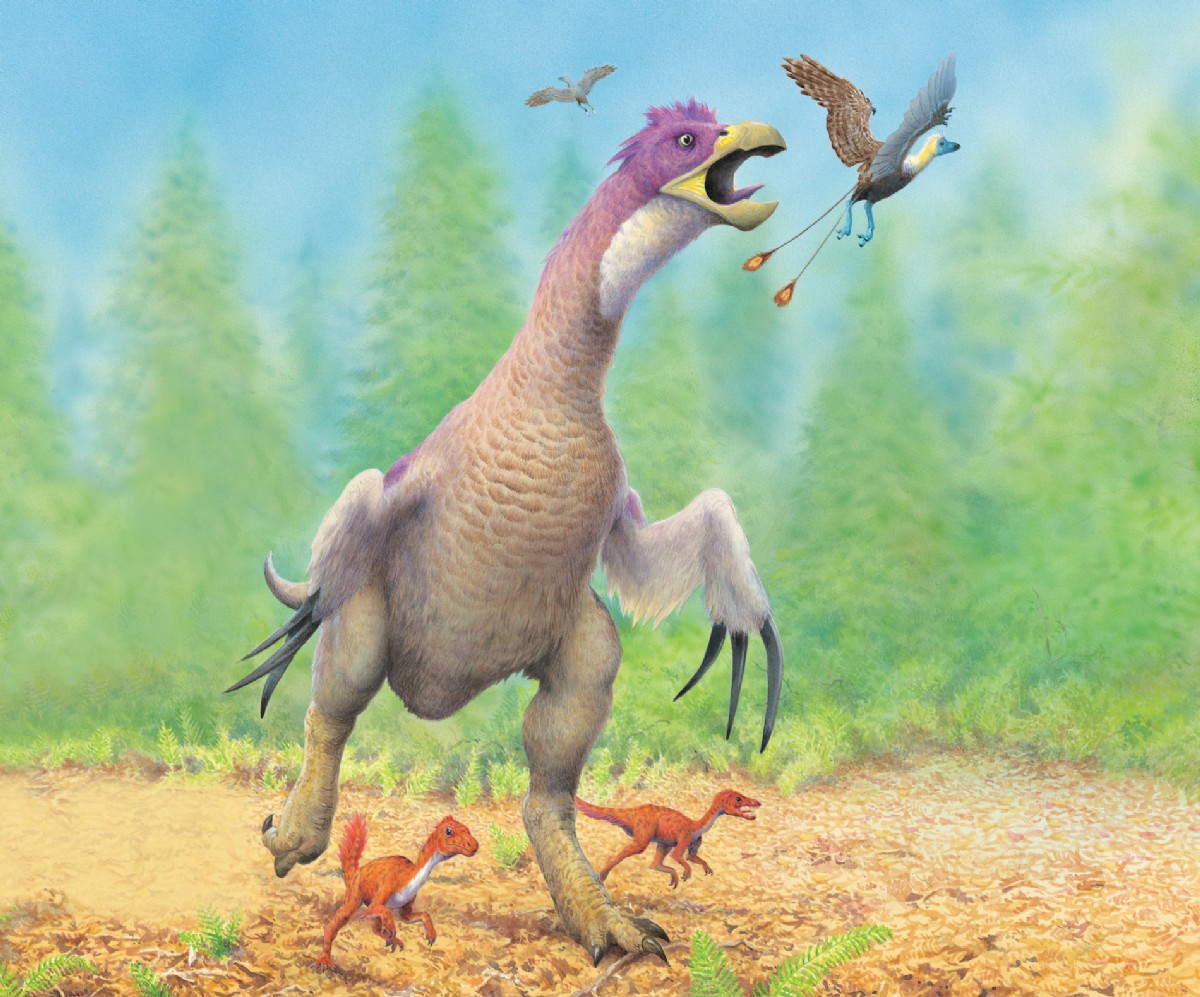
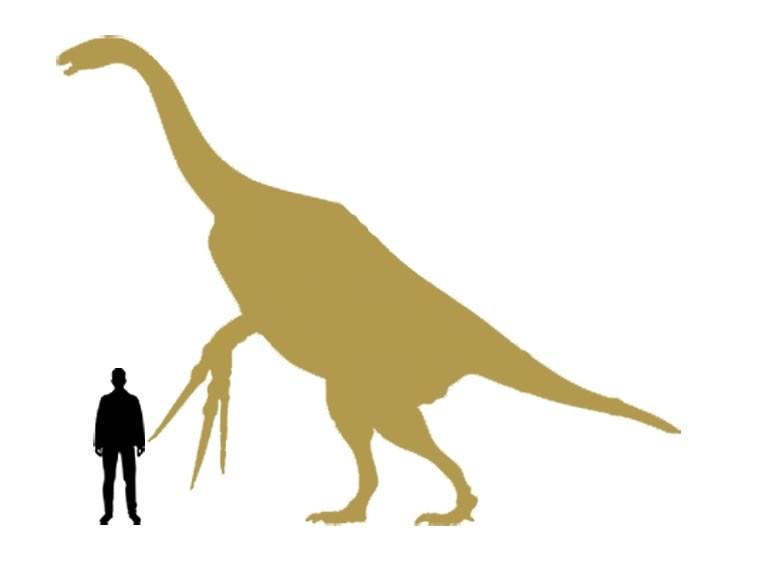
Therizinosaurus was an unusual theropod—one that was probably not carnivorous, but herbivorous—from East Asia in the Late Cretaceous. It had a small head with a toothless beak. Its long neck, broad, heavy body and relatively short tail were all covered with feathers. Its close relatives, the therizinosaurs, all belonged to a group of bird-like dinosaurs called the maniraptors. Therizinosaurus’s feathers might have been both for body insulation and for display during mating. It had short, four-toed feet. Therizinosaurus's most distinctive feature was the presence of three gigantic finger-claws, gently curved, flat-sided and tapering. The longest of these was one metre (more than 3 feet) long.


Fossil studies
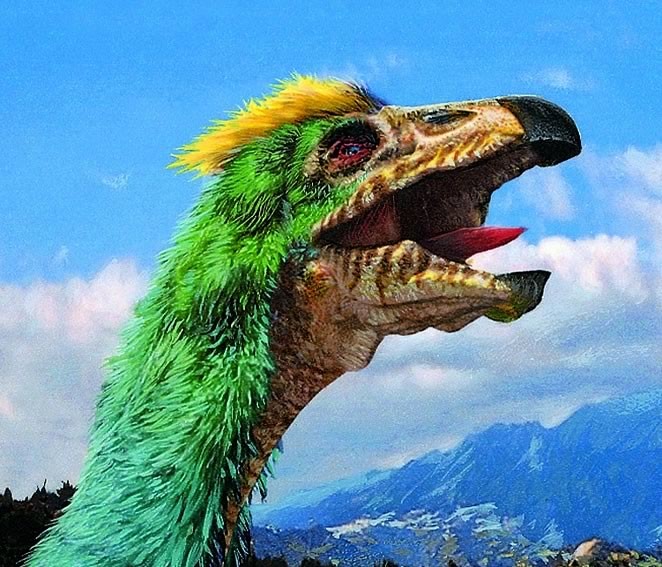
Therizinosaurus means “scythe lizard”, after its immensely long claws. Its skull has never been discovered. Reconstructions have been based on the skulls of related species. Therizinosaurus and its relatives, all of which looked like giant, flightless birds with outsize claws, were probably the most unusual dinosaurs ever discovered.
Possible uses for claws
Palaeontologists have speculated on the uses for Therizinosaurus's huge claws. They have several theories, apart from the obvious use in defence: the fearsome claws would have certainly deterred a giant predator such as Tarbosaurus from attacking it. They may have enabled Therizinosaurus to rip open termite nests and devour vast quantities of the insects clustered inside.
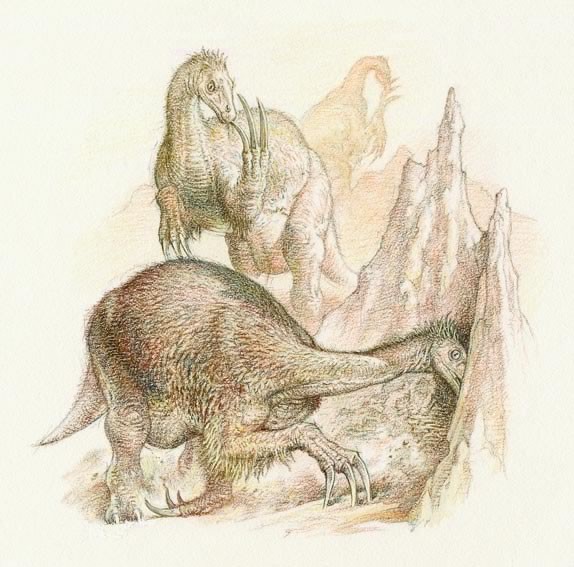

An alternative purpose might have been for raking out water plants or pulling down branches to eat leaves. But perhaps the likeliest explanation is that large claws may have played a part in male courtship display, or in fighting between rival males. The most impressive set of claws would have impressed females and intimidated rivals.
Facts about Therizinosaurus
Pronunciation: THER-ee-ZINE-oh-SAW-rus
Size: 10 m (33 ft) long and 5 m (16.5 ft) tall; weighed up to 6 tonnes
Where and when: Riverside woodland in East Asia, 70 million years ago (Late Cretaceous)
Diet: Although classified as a theropod, it probably ate only plants or possibly termites
Predators: Tarbosaurus
Features: Gigantic claws with multiple uses; long neck allows it to reach into high branches; massive size deters predators
Relatives: Segnosaurus, Nanshiungosaurus, Alxasaurus, Beipiaosaurus (all East Asia)


Consultant: Chris Jarvis
pics
Without in any way limiting Q-files Ltd’s exclusive rights under copyright, any use of this publication to “train” generative artificial intelligence (AI) technologies to generate text is expressly prohibited. Q-files Ltd reserves all rights to license use of this work for generative AI training and development of machine learning language models.