
How dinosaurs lived

CITE
We have made every effort to follow citation style rules, but there may be some minor differences. If in doubt, please refer to the appropriate citation style manual.
Dinosaur herding and courtship. (2026). In Q-files Encyclopedia, Prehistoric, How dinosaurs lived. Retrieved from
https://www.q-files.com/prehistoric/how-dinosaurs-lived/dinosaur-herding-and-courtship
"Dinosaur herding and courtship." Prehistoric, How dinosaurs lived, Q-files Encyclopedia, 11 Mar. 2026.
https://www.q-files.com/prehistoric/how-dinosaurs-lived/dinosaur-herding-and-courtship.
Accessed 6 Nov. 2026.
Dinosaur herding and courtship 2026. Prehistoric, How dinosaurs lived. Retrieved 6 November 2026, from
https://www.q-files.com/prehistoric/how-dinosaurs-lived/dinosaur-herding-and-courtship
Prehistoric, How dinosaurs lived, s.v. "Dinosaur herding and courtship," accessed November 6, 2026.
https://www.q-files.com/prehistoric/how-dinosaurs-lived/dinosaur-herding-and-courtship


Dinosaur herding and courtship
From the evidence of “mass graves”, fossilized remains of hundreds of individuals found close together, we know that a number of plant-eating dinosaur species must have lived together in herds. Many modern herbivores live like this, too. So palaeontologists’ insight into why some dinosaurs herded together can be helped by studying the behaviour of modern herding animals.

Protection
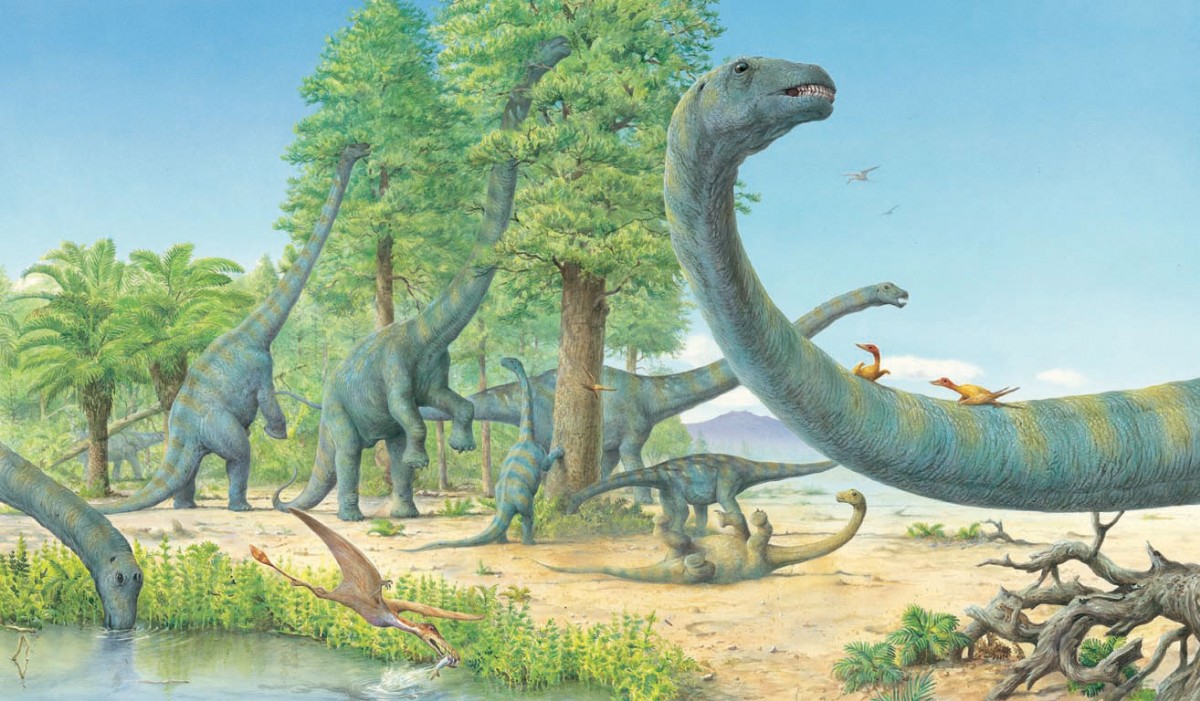
Modern herding animals—for example, those from the African savanna grasslands—live together for protection from predators, and as the safest way in which to bring up their young. The approach of a predator would more likely be spotted. It would probably be deterred from attacking a group of stampeding adult dinosaurs, preferring instead to seek out a sick, elderly, injured or juvenile individual.

Recognition
Many herding dinosaur species, for example hadrosaurs, had head crests or, in the case of ceratopsians, a neck frill and an array of horns. In both cases, these features probably had several uses. The distinctive shape and colours may have allowed members of the same family group to recognize one another, just as today’s antelopes do from the shape of their horns.
Sexual display
Because the sizes of the crests and horns in fossils vary quite a lot, we can assume that they were larger in males than females—a common feature in many present-day animals. It is therefore likely that males deliberately paraded their crests, horns or neck frills in attempt to win the attentions of females during the mating season. Male peacocks are a spectacular example among the many modern animals that demonstrate this pattern of behaviour, which is known as “sexual display”.

Competing for dominance
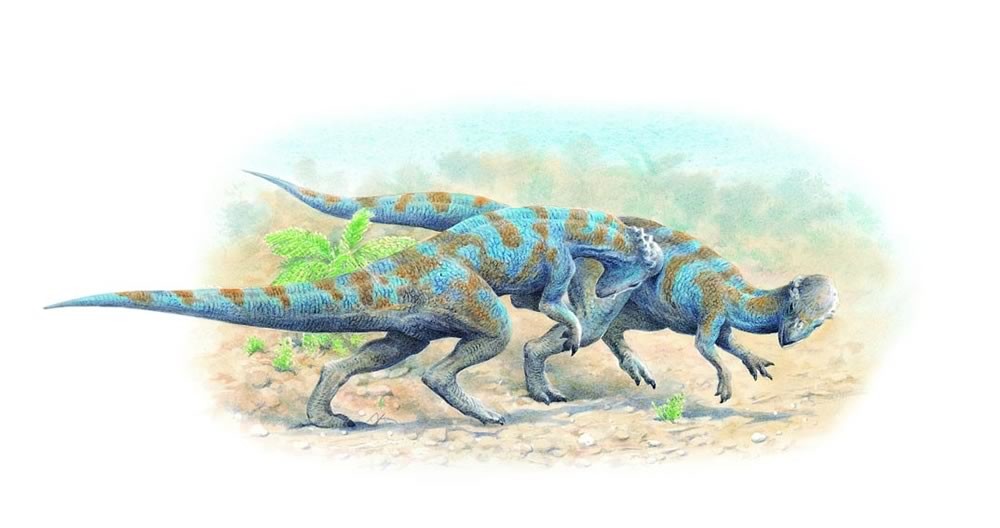
Besides showing off the magnificence of their crests or horns, male dinosaurs competed for females in other ways. Like many animals today, they fought each other for the dominance of their group. We know from the fossil evidence that the horns of Triceratops, for example, were not sturdy enough to defend it from a large predator. But they could have been used in sparring contests with others of its own kind. The thick, domed skull of Pachycephalosaurus may have been used for butting contests, just as billy goats do today. This is probably the cause of the injuries seen on the skulls of Pachycephalosaurus.
Calls
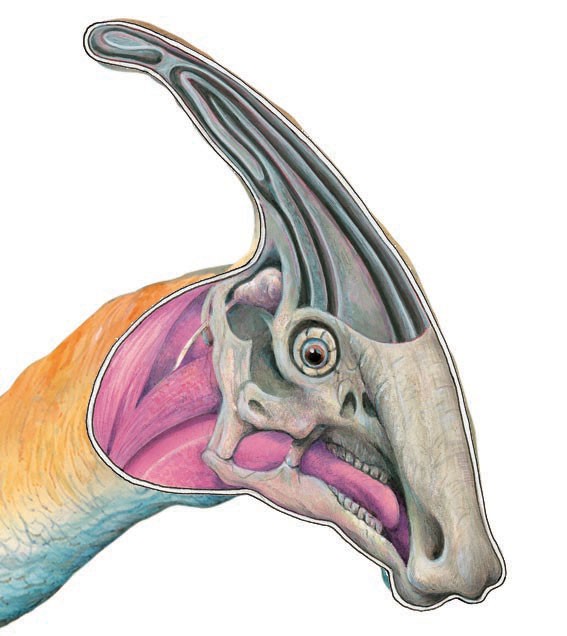
Parasaurolophus had a long, backwards-curving, bony crest. The hollow tubes inside were linked to its nasal passages. Air blown through the tubes would have made its calls loud and deep—useful for sounding an alarm to its herd, or for warning off rival males.

Consultant: Chris Jarvis
pics
Without in any way limiting Q-files Ltd’s exclusive rights under copyright, any use of this publication to “train” generative artificial intelligence (AI) technologies to generate text is expressly prohibited. Q-files Ltd reserves all rights to license use of this work for generative AI training and development of machine learning language models.