
How dinosaurs lived

CITE
We have made every effort to follow citation style rules, but there may be some minor differences. If in doubt, please refer to the appropriate citation style manual.
How dinosaurs hunted. (2026). In Q-files Encyclopedia, Prehistoric, How dinosaurs lived. Retrieved from
https://www.q-files.com/prehistoric/how-dinosaurs-lived/how-dinosaurs-hunted
"How dinosaurs hunted." Prehistoric, How dinosaurs lived, Q-files Encyclopedia, 11 Mar. 2026.
https://www.q-files.com/prehistoric/how-dinosaurs-lived/how-dinosaurs-hunted.
Accessed 6 Aug. 2026.
How dinosaurs hunted 2026. Prehistoric, How dinosaurs lived. Retrieved 6 August 2026, from
https://www.q-files.com/prehistoric/how-dinosaurs-lived/how-dinosaurs-hunted
Prehistoric, How dinosaurs lived, s.v. "How dinosaurs hunted," accessed August 6, 2026.
https://www.q-files.com/prehistoric/how-dinosaurs-lived/how-dinosaurs-hunted


How dinosaurs hunted
Among the theropods, the meat-eating dinosaurs, were not only giant predators such as Allosaurus and Tyrannosaurus rex but also a wide range of smaller hunters. From the study of their bones and those of other dinosaurs close by, and by applying our knowledge of how modern animals hunt, we can re-create the hunting strategy of these prehistoric predators.

Pack hunters
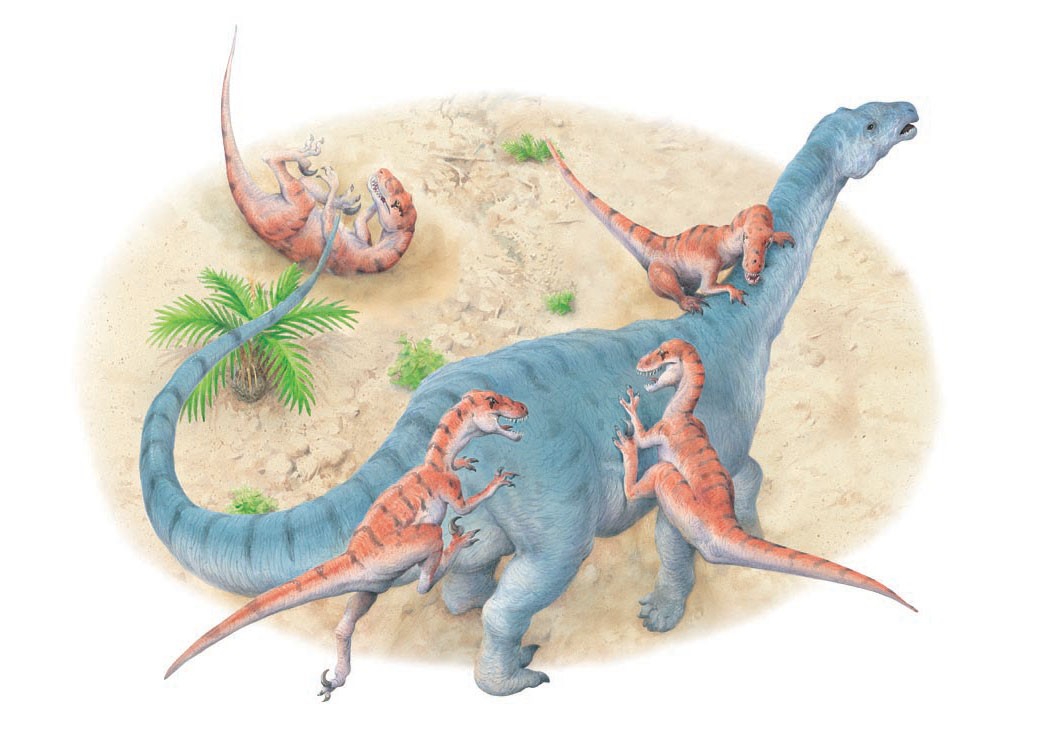
The discovery of the bones of several Deinonychus, small theropods, lying near the body of much larger herbivore, Tenontosaurus, suggests that the predators may have hunted in packs. Today, some pack-hunting predators, like African wild dogs, wear down their prey by chasing and exhausting it. Others, like lions, stealthily surround their prey and close off escape routes before launching a surprise ambush. Swift and agile, but also relatively intelligent, Deinonychus would have followed one of these hunting methods. Having claimed their victim, they would use their sickle-shaped claws to stab through its thick skin.

Lone hunters
From the evidence of fossilized trackways, we know that the big predators, such as Tyrannosaurus rex, hunted alone. Its method of attack was probably similar to that of a modern tiger. Having spotted an old, young or disabled individual in a herd, it would stalk it carefully. Then, seeing its quarry straying from the herd, it broke cover and rushed at it, plunging its teeth into its thick hide.
Nocturnal predator
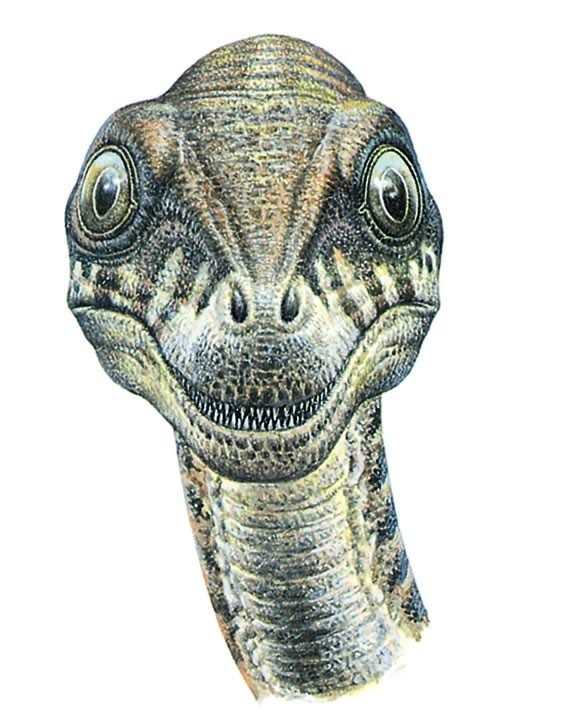
From studying the skull of Troodon, we can tell it had a large braincase and big, forward-facing eyes. This small, speedy predator may have hunted at night, making good use of its sharp, stereo vision to seek out prey under cover of darkness. The name Troodon means "wounding tooth", a reference to its sharp, serrated teeth. These are quite similar to those of iguanas, modern herbivorous reptiles, which suggests that Troodon may have supplemented its diet with plants.
Consultant: Chris Jarvis
pics

Without in any way limiting Q-files Ltd’s exclusive rights under copyright, any use of this publication to “train” generative artificial intelligence (AI) technologies to generate text is expressly prohibited. Q-files Ltd reserves all rights to license use of this work for generative AI training and development of machine learning language models.