
How dinosaurs lived

CITE
We have made every effort to follow citation style rules, but there may be some minor differences. If in doubt, please refer to the appropriate citation style manual.
Dinosaur nests. (2026). In Q-files Encyclopedia, Prehistoric, How dinosaurs lived. Retrieved from
https://www.q-files.com/prehistoric/how-dinosaurs-lived/dinosaur-nests
"Dinosaur nests." Prehistoric, How dinosaurs lived, Q-files Encyclopedia, 11 Mar. 2026.
https://www.q-files.com/prehistoric/how-dinosaurs-lived/dinosaur-nests.
Accessed 29 Oct. 2026.
Dinosaur nests 2026. Prehistoric, How dinosaurs lived. Retrieved 29 October 2026, from
https://www.q-files.com/prehistoric/how-dinosaurs-lived/dinosaur-nests
Prehistoric, How dinosaurs lived, s.v. "Dinosaur nests," accessed October 29, 2026.
https://www.q-files.com/prehistoric/how-dinosaurs-lived/dinosaur-nests


Dinosaur nests
The discovery of fossilized dinosaur eggs, the nests that they were hatched in and even the baby dinosaurs inside the eggs, has given palaeontologists a great deal of information about how dinosaurs brought up their young. A 1979 find of fossil eggshells and babies of Maiasaura was particularly revealing. Taken together with study of nesting habits in modern birds and reptiles helps us to build up a picture of the dinosaurs’ parenting behaviour.

Nesting colony
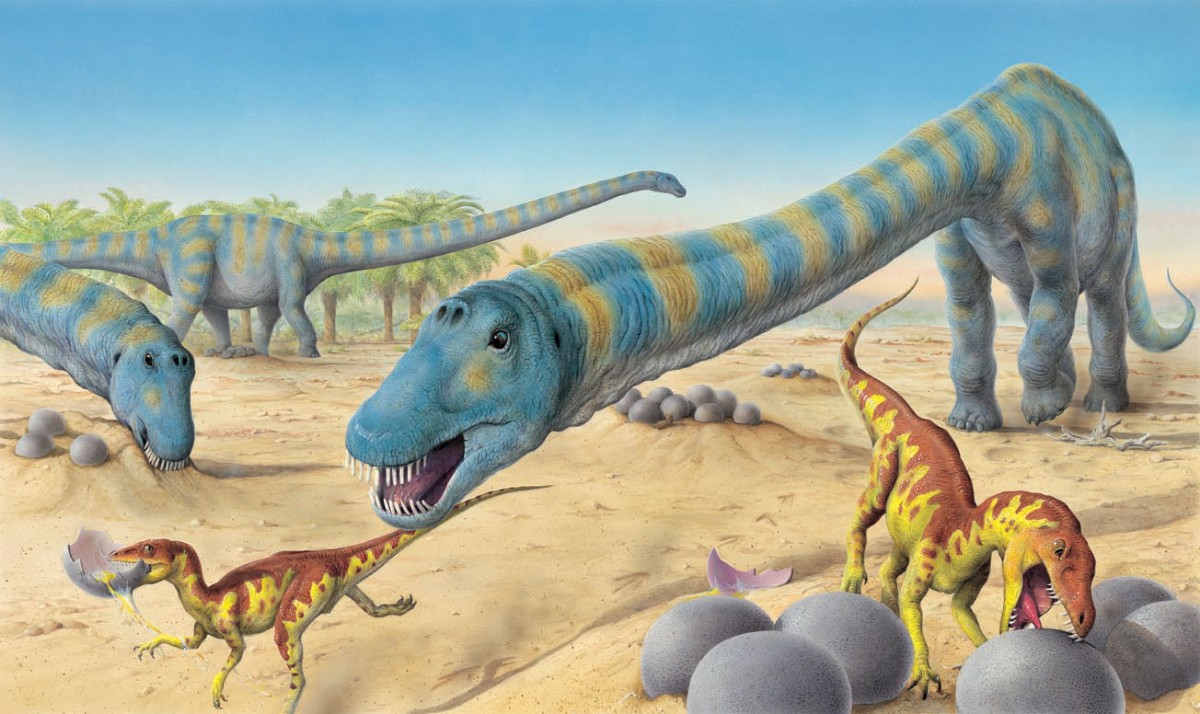
Close examination of fossilized nesting colonies tells us both about how the nests were constructed and the early years of the hatchlings. Some dinosaurs built their nests in colonies on high ground to avoid flooding and predators—a similar strategy to sea birds, such as albatrosses. The nests were packed together with the gap between them just sufficient to allow the parents to visit their nests without disturbing their neighbours’.
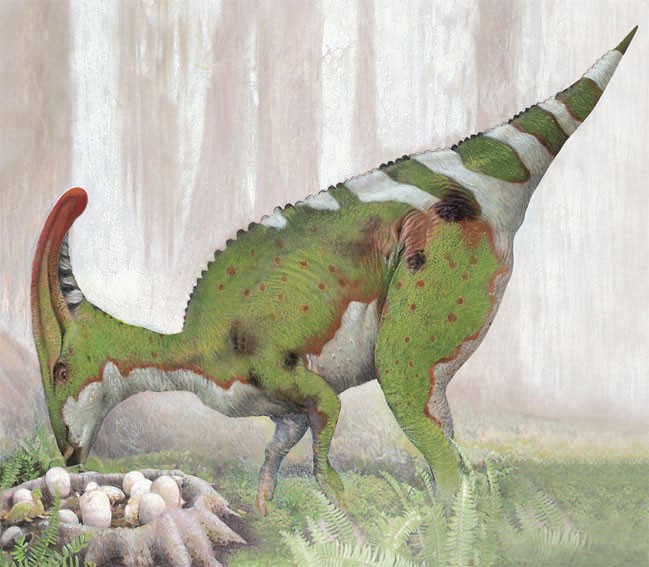
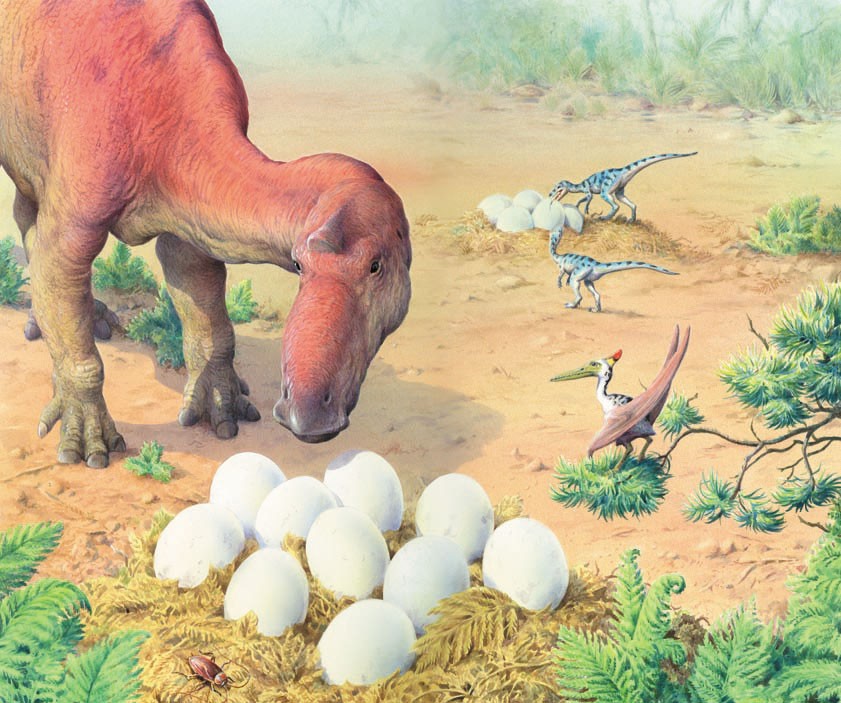
Using their feet, the mother dinosaurs gouged out hollows in the ground in which they laid their eggs. Then, using their teeth, they built up the soil around them and covered the eggs with a blanket of rotting vegetation to keep the eggs warm. Afterwards, they stood guard to keep predators away. The eggs were incubated by heat coming from rotting vegetation piled on top of them, rather than a parent sitting on the nest—although some smaller dinosaurs, for example, Citipati, did brood their eggs.
Eggs
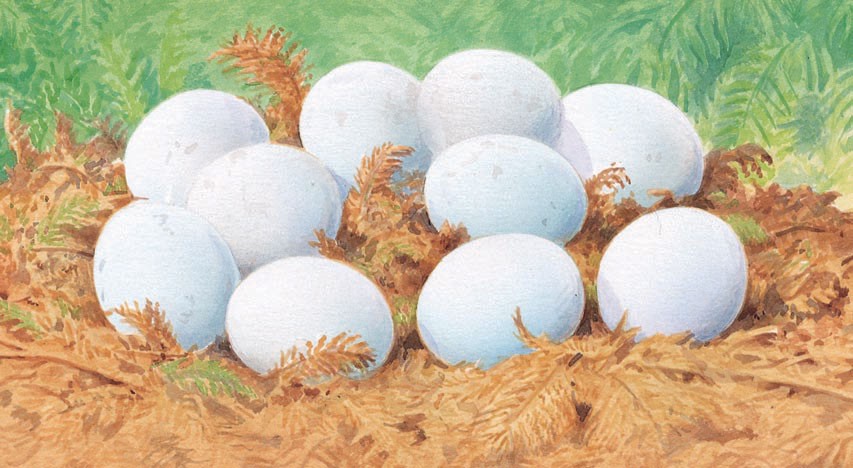
The study of fossilized dinosaur eggs shows they had shells thin enough to allow oxygen to pass through, and for the baby to break out. The textured surface would have prevented the tiny pores in the shells from being blocked. Colours and patterns on the eggshells served to camouflage them from egg predators.


Babies
Fossils of some baby dinosaurs, Maiasaura for example, show that they were too weak to leave the nest. Their teeth were also partly worn, suggesting that adults brought food to them in their nest. Other fossil evidence, including fragments of trampled eggshell (from the mother and babies walking over them) and even the remains of regurgitated vegetation, confirm this.
Fossils of the nest of other dinosaurs contain eggs with just their tops of their shells knocked off. This indicates that the hatchlings of these particular species were more fully developed at birth and capable of walking away from the nest immediately.

Consultant: Chris Jarvis
pics


Without in any way limiting Q-files Ltd’s exclusive rights under copyright, any use of this publication to “train” generative artificial intelligence (AI) technologies to generate text is expressly prohibited. Q-files Ltd reserves all rights to license use of this work for generative AI training and development of machine learning language models.