
Dinosaur species

CITE
We have made every effort to follow citation style rules, but there may be some minor differences. If in doubt, please refer to the appropriate citation style manual.
Oviraptor. (2026). In Q-files Encyclopedia, Prehistoric, Dinosaur species. Retrieved from
https://www.q-files.com/prehistoric/dinosaur-species/oviraptor
"Oviraptor." Prehistoric, Dinosaur species, Q-files Encyclopedia, 11 Mar. 2026.
https://www.q-files.com/prehistoric/dinosaur-species/oviraptor.
Accessed 6 Nov. 2026.
Oviraptor 2026. Prehistoric, Dinosaur species. Retrieved 6 November 2026, from
https://www.q-files.com/prehistoric/dinosaur-species/oviraptor
Prehistoric, Dinosaur species, s.v. "Oviraptor," accessed November 6, 2026.
https://www.q-files.com/prehistoric/dinosaur-species/oviraptor


Oviraptor
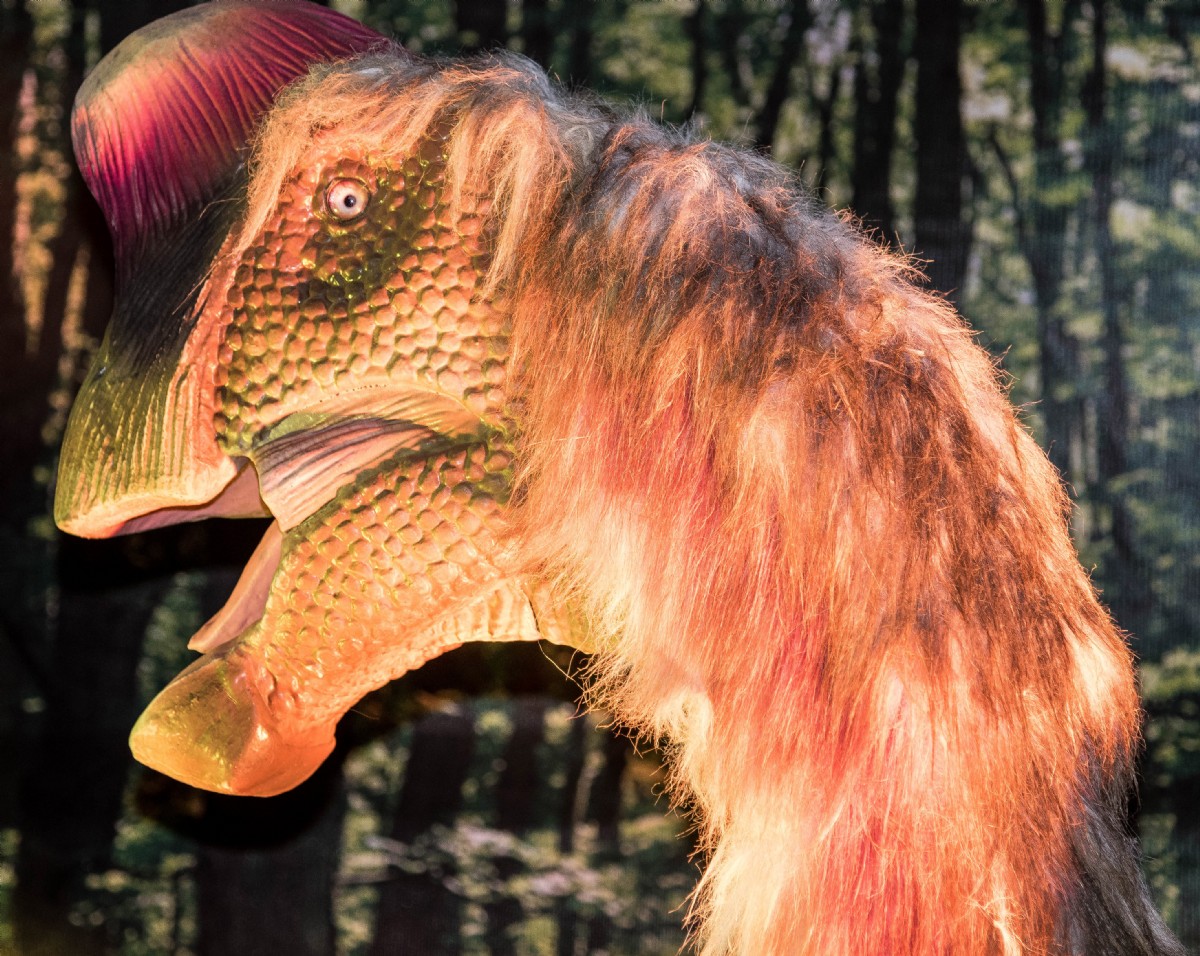
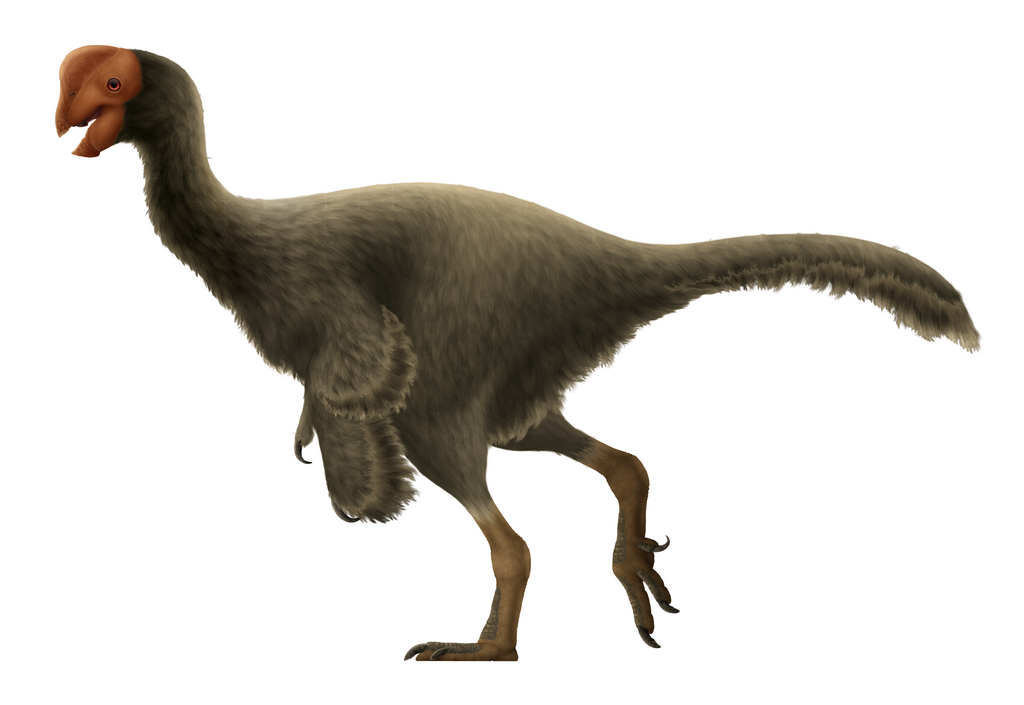
Oviraptor was a small, feathered theropod that lived in Mongolia during the Late Cretaceous Period. It had a parrot-shaped head, a short, toothless beak and extremely powerful, crushing jaws. A short, bony crest contained a nasal cavity. Oviraptor had a flexible S-shaped neck, a long tail and slender legs with three-toed feet. Its short, strong arms had three-fingered, grasping hands with curved claws. Its body was covered with feathers, with wings and tail fan, giving it a bird-like appearance.
Egg thief?
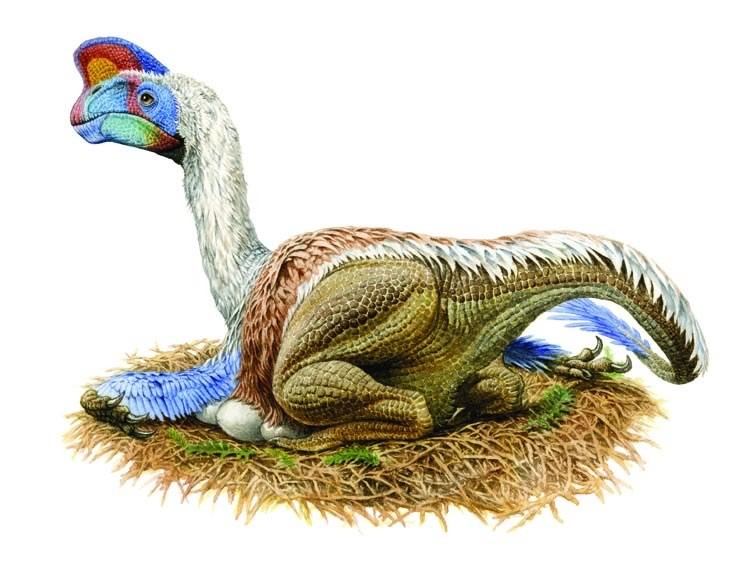
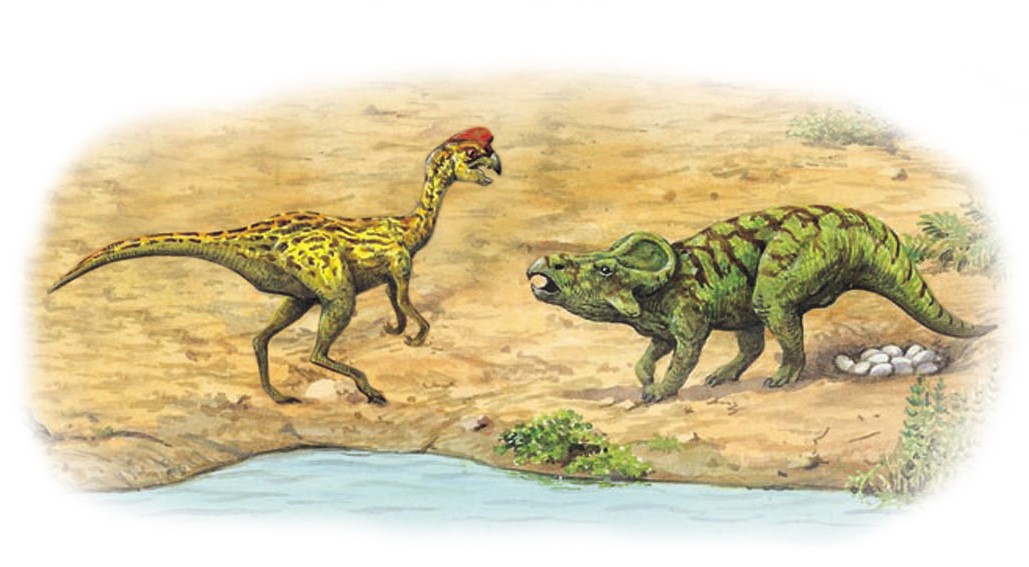
Oviraptor means “egg thief”. This refers to the fact that the first fossil was discovered on top a pile of what were at the time (1924) thought to be the eggs of a Protoceratops. Later finds showed that the eggs probably belonged to Oviraptor itself, and that this particular individual was actually brooding its own eggs.
Bird-like features
Oviraptor was one of the most bird-like dinosaurs of all. Its ribcage had several features that are typical of birds. Skin impressions from some of its close relatives clearly showed a covering of feathers and the presence of wings. Its hands are heavily clawed with a wrist bone similar to that found in birds.

A number of fossils of the closely-related Citipati have been found in brooding positions. One, nicknamed “Big Mamma”, has its feathered wings spread symmetrically to cover the eggs on either side of its body, a posture found today only in birds.
Maniraptors

Oviraptor belonged to the maniraptor group—all those dinosaurs most closely related to birds. They include Archaeopteryx, the dromaeosaurs, such as Deinonychus, Velociraptor and Microraptor, and the therizinosaurs. Maniraptors all had long arms and three-fingered hands. They were the only dinosaurs known to have breast bones.
Caudipteryx was quite closely related to Oviraptor. It had a bird-like beak and feathers, but ran like a theropod. It probably had a wide-ranging diet, including fish, insects and plants.
Facts about Oviraptor
Pronunciation: OH-vih-RAP-tor
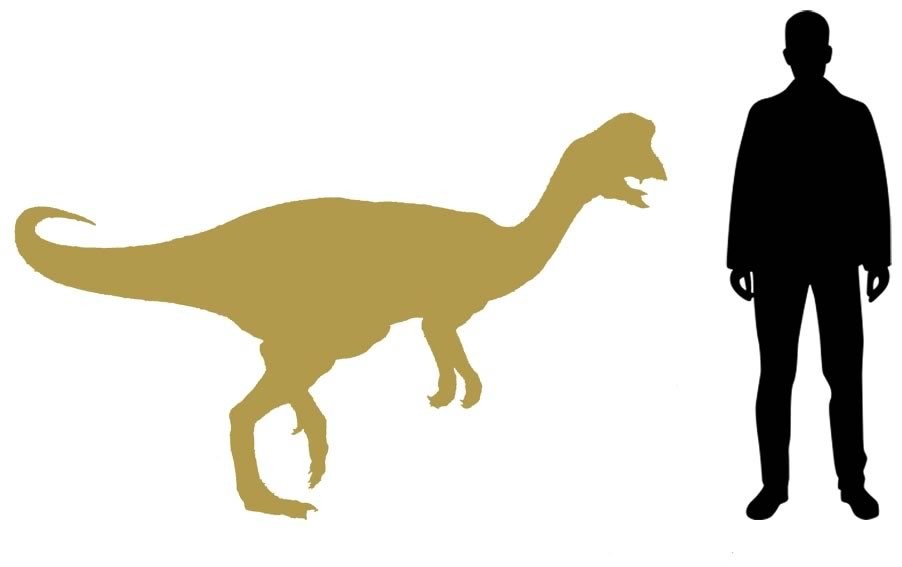
Size: 2 m (6.6 ft) long and 1 m (3.3 ft) tall
Where and when: Semi-arid plains of Gobi Desert, Mongolia, 75 million years ago (Late Cretaceous)
Diet: Possibly omnivorous: lizards, insects, plants and seeds
Predators: Alectrosaurus, Tarbosaurus
Features: Powerful beak; speed to escape predators; the nasal cavity in its crest may have amplified its calls; feathers for heat insulation
Relatives: Citipati, Caudipteryx, Gigantoraptor, Khaan, Nemegtomaia, Nomingia, Rinchenia (all East Asia)
Consultant: Chris Jarvis
pics

Without in any way limiting Q-files Ltd’s exclusive rights under copyright, any use of this publication to “train” generative artificial intelligence (AI) technologies to generate text is expressly prohibited. Q-files Ltd reserves all rights to license use of this work for generative AI training and development of machine learning language models.