
Dinosaur species

CITE
We have made every effort to follow citation style rules, but there may be some minor differences. If in doubt, please refer to the appropriate citation style manual.
Pachycephalosaurus. (2026). In Q-files Encyclopedia, Prehistoric, Dinosaur species. Retrieved from
https://www.q-files.com/prehistoric/dinosaur-species/pachycephalosaurus
"Pachycephalosaurus." Prehistoric, Dinosaur species, Q-files Encyclopedia, 11 Mar. 2026.
https://www.q-files.com/prehistoric/dinosaur-species/pachycephalosaurus.
Accessed 21 Sep. 2026.
Pachycephalosaurus 2026. Prehistoric, Dinosaur species. Retrieved 21 September 2026, from
https://www.q-files.com/prehistoric/dinosaur-species/pachycephalosaurus
Prehistoric, Dinosaur species, s.v. "Pachycephalosaurus," accessed September 21, 2026.
https://www.q-files.com/prehistoric/dinosaur-species/pachycephalosaurus


Pachycephalosaurus
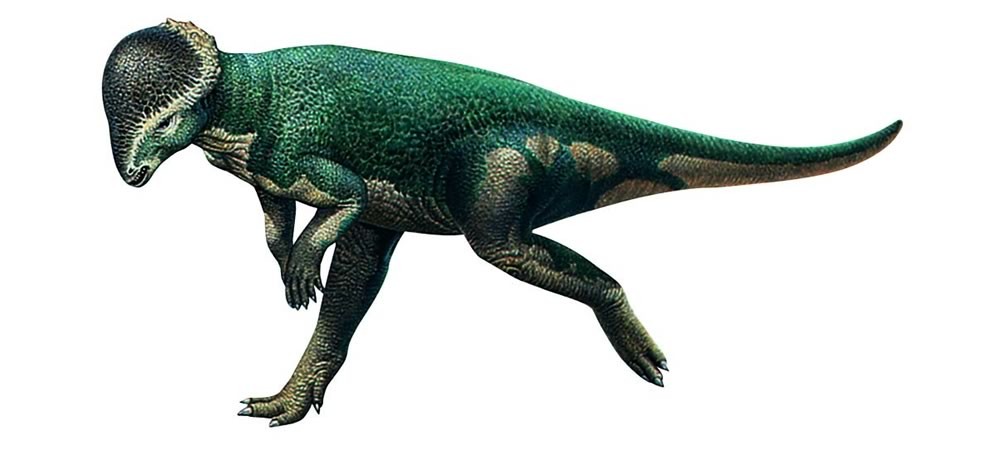
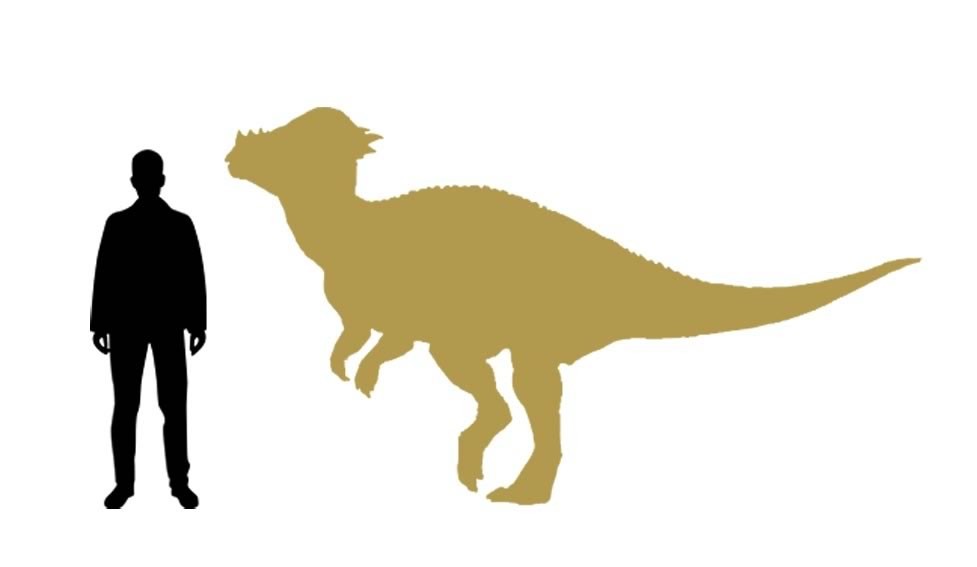
Pachycephalosaurus lived in North America during the Late Cretaceous. Its most distinguishing feature was its smooth, high-domed head made of thick bone with bony knobs around the rear edge. Short, bony spikes jutted out from its snout and there were ridges over its eyes. It had tiny serrated teeth. Pachycephalosaurus had a short, thick neck, and a heavy, rigid tail. It ran on its hindlegs, holding its back and tail straight and horizontal as it did so. Its arms were short, with small claws.

Skull
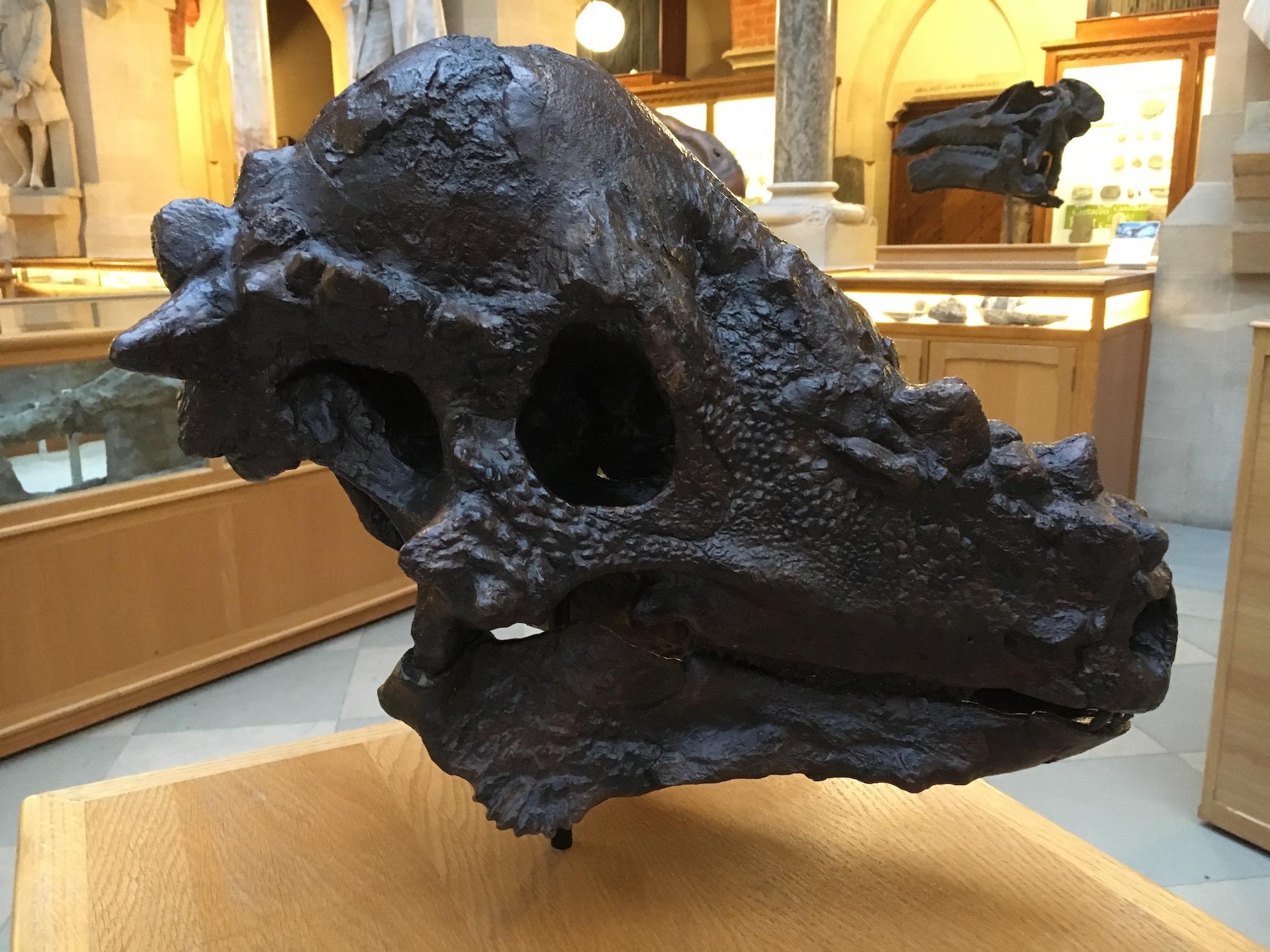
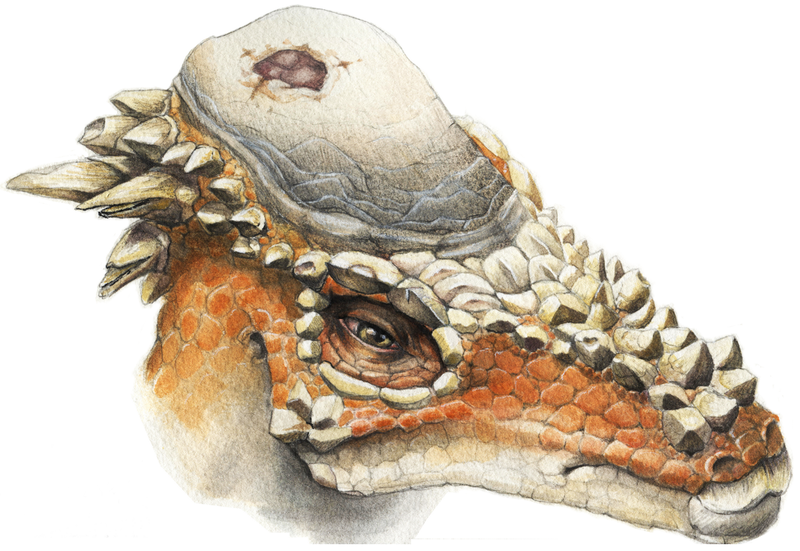
The name Pachycephalosaurus means “thick-headed lizard”, after its thick-boned, domed skull. The skull bone became thicker as the dinosaur got older. The skulls of Pachycephalosaurus and its relatives may have been used for butting contests between rival males during the breeding season, just as rams and billy goats do today. This probably accounts for the serious injuries seen on the skulls of many Pachycephalosaurus.

Senses
From studies of its brain cavity and eye sockets, scientists think Pachycephalosaurus had both excellent eyesight and a well-developed sense of smell. These qualities would help it sense an approaching predator from far off, giving it time to flee the danger.
Stygimoloch
Stygimoloch was the name given to a dinosaur that lived at the same time as Pachycephalosaurus. Today most palaeontologists think that the Stygimoloch fossils found may actually be examples of young Pachycephalosaurus rather than a different dinosaur entirely. Stygimoloch means “horned devil from the river of death”. This is a reference to its appearance and the Hell Creek rocks in Montana, USA where its remains were found.
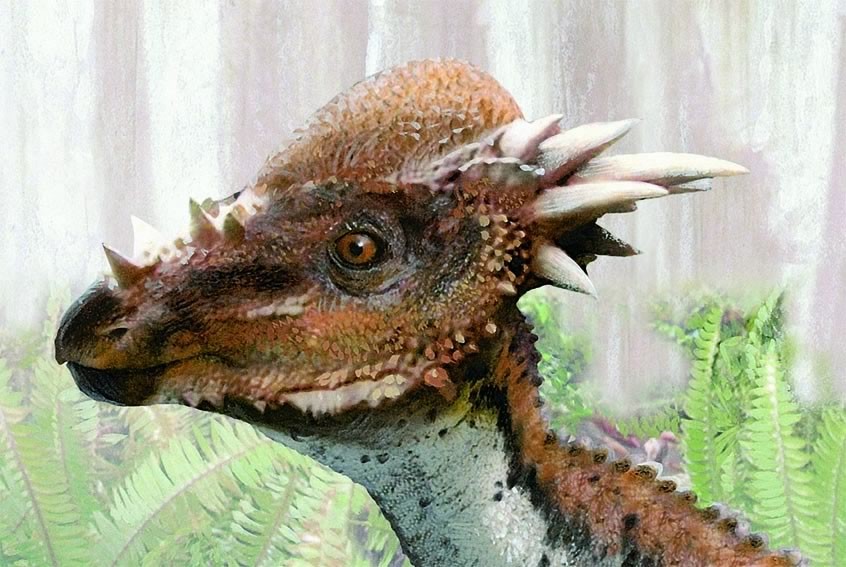
Sticking out from the back of Stygimoloch’s skull was a pair of huge, backward-pointing spikes, each 15 centimetres (6 inches) long. They were surrounded by a cluster of smaller spikes. No one knows what they were for.

Stegoceras
Stegoceras (not to be confused with the similarly named Stegosaurus) probably looked quite similar to Pachycephalosaurus even though it was half the length of it. Stegoceras means “horny roof”, after its thickened skull. As Stegoceras grew older, the dome on its head overgrew the bony rim around the sides and back. This created the appearance of a brimmed hat.
Facts about Pachycephalo- saurus
Pronunciation: PACK-ee-SEFF-ah-low-SAW-rus
Size: 4.5 m (14.75 ft) long and 2 m (6.6 ft) tall
Where and when: Swampy forest in North America, 67–65 million years ago (Late Cretaceous).
Diet: Leaves, seeds, fruit, insects
Predators: Albertosaurus, Tyrannosaurus rex
Features: Good eyesight and sense of smell
Relatives: Prenocephale, Stegoceras (North America); Homalocephale, Prenocephale (East Asia)


Consultant: Chris Jarvis
pics
Without in any way limiting Q-files Ltd’s exclusive rights under copyright, any use of this publication to “train” generative artificial intelligence (AI) technologies to generate text is expressly prohibited. Q-files Ltd reserves all rights to license use of this work for generative AI training and development of machine learning language models.