
Dinosaur species

CITE
We have made every effort to follow citation style rules, but there may be some minor differences. If in doubt, please refer to the appropriate citation style manual.
Mamenchisaurus. (2026). In Q-files Encyclopedia, Prehistoric, Dinosaur species. Retrieved from
https://www.q-files.com/prehistoric/dinosaur-species/mamenchisaurus
"Mamenchisaurus." Prehistoric, Dinosaur species, Q-files Encyclopedia, 11 Mar. 2026.
https://www.q-files.com/prehistoric/dinosaur-species/mamenchisaurus.
Accessed 21 Sep. 2026.
Mamenchisaurus 2026. Prehistoric, Dinosaur species. Retrieved 21 September 2026, from
https://www.q-files.com/prehistoric/dinosaur-species/mamenchisaurus
Prehistoric, Dinosaur species, s.v. "Mamenchisaurus," accessed September 21, 2026.
https://www.q-files.com/prehistoric/dinosaur-species/mamenchisaurus


Mamenchisaurus
Mamenchisaurus was a sauropod that lived in East Asia during the Late Jurassic Period. It had typical sauropod features: an enormously long neck—more than half its body length—a long whip-like tail and a bulky body with four pillar-like legs. Its hindlegs were longer than its front ones. Its snout was quite blunt, with nostrils on top of its head.


Feeding
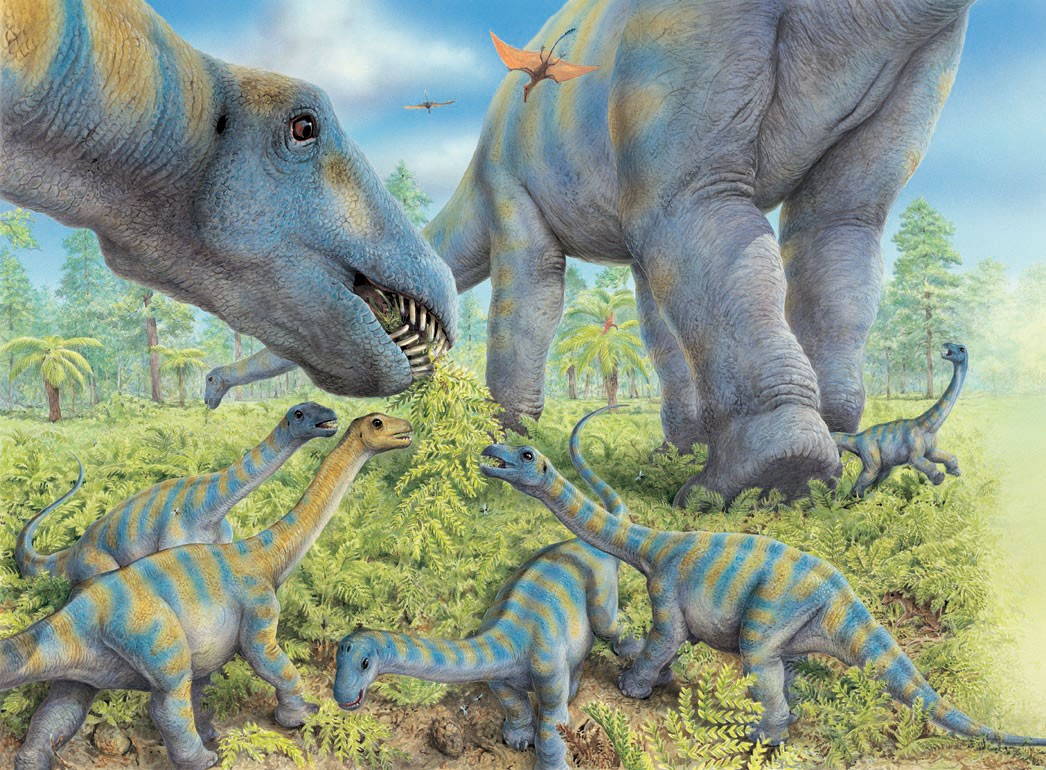
Mamenchisaurus’s long neck enabled it to reach high into the trees, or reaching forward to browse on plants in swampy places while standing on firm ground. It had sturdy, spoon-shaped teeth—just right for cropping leaves and ferns. It probably also swallowed stones (gastroliths) to enable it to digest tough plants.
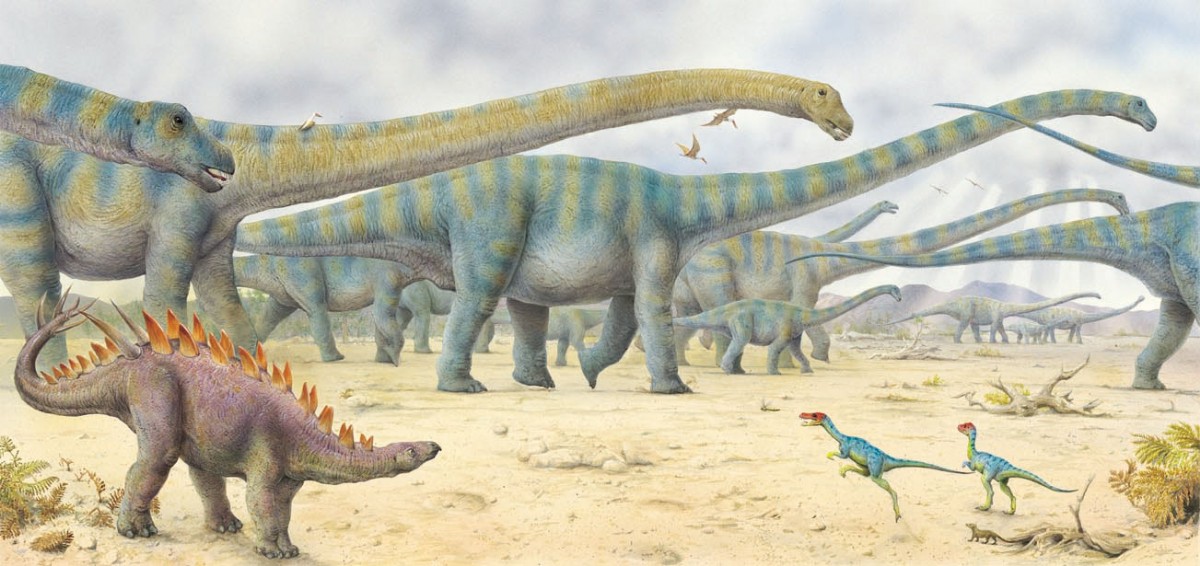
Herds of Mamenchisaurus would still have devoured vast amounts of vegetation. They marched from one area to the next in search of new food supplies, the young walking in the centre of a group for protection against predators.
Raising its young
Mamenchisaurus may have laid its eggs on the ground, then raked up the soil around them with its teeth. It then covered them with rotting vegetation to keep them warm—and hidden. The mother may have needed to keep a watchful eye over her eggs to defend them from being stolen by numerous predators, for whom eggs were an easy meal.

Defence

As with the other giant sauropods such as Brachiosaurus and Diplodocus, Mamenchisaurus's sheer size would have deterred predators from attacking it. Packs of Yangchuanosaurus may have preyed on young or sick individuals, however. Confronted by attackers, the adults would defend their young by rearing up on their hind legs before crashing down on them with their heavy forelimbs and clawed toes. They could also flick their whip-like tails with great force into the predators' heads or bodies.
Facts about Mamenchisaurus
Pronunciation: Mah-MEN-chee-SAW-rus
Size: Up to 35 m (115 ft) long and 9 m (30 ft) tall at the shoulder
Where and when: Swamp forests in East Asia, 160–145 million years ago (Late Jurassic)
Diet: Conifers, gingkos, seed ferns, cycads, ferns, club mosses and horsetails
Predators: Yangchuanosaurus
Features: A long neck for feeding on the leaves of tall trees; strong, spoon-shaped teeth for cropping leaves and ferns; a whip-like tail for defence
Relatives: Possibly Olmeisaurus and Euhelopus (East Asia)


Consultant: Chris Jarvis
pics


Without in any way limiting Q-files Ltd’s exclusive rights under copyright, any use of this publication to “train” generative artificial intelligence (AI) technologies to generate text is expressly prohibited. Q-files Ltd reserves all rights to license use of this work for generative AI training and development of machine learning language models.