
How dinosaurs lived

CITE
We have made every effort to follow citation style rules, but there may be some minor differences. If in doubt, please refer to the appropriate citation style manual.
How dinosaurs fed. (2026). In Q-files Encyclopedia, Prehistoric, How dinosaurs lived. Retrieved from
https://www.q-files.com/prehistoric/how-dinosaurs-lived/how-dinosaurs-fed
"How dinosaurs fed." Prehistoric, How dinosaurs lived, Q-files Encyclopedia, 11 Mar. 2026.
https://www.q-files.com/prehistoric/how-dinosaurs-lived/how-dinosaurs-fed.
Accessed 6 Aug. 2026.
How dinosaurs fed 2026. Prehistoric, How dinosaurs lived. Retrieved 6 August 2026, from
https://www.q-files.com/prehistoric/how-dinosaurs-lived/how-dinosaurs-fed
Prehistoric, How dinosaurs lived, s.v. "How dinosaurs fed," accessed August 6, 2026.
https://www.q-files.com/prehistoric/how-dinosaurs-lived/how-dinosaurs-fed


How dinosaurs fed
Dinosaurs can be divided into plant-eaters or meat-eaters, although some may have been omnivores: they ate both animals and plants. The shape of a dinosaur’s jaws or teeth is often the first clue that reveals to which group it belonged and how it obtained its food. We know from the fossil record what food was available at a certain time. In some fossils, the stomach contents have also been preserved, providing vital clues about diet. We can also work out how dinosaurs fed simply by studying modern animals’ eating habits.


Gastroliths
The sauropods’ sheer size meant they would have needed immense amounts of food in the form of plant matter to nourish them. Yet their teeth were small, few in number and incapable of chewing. How could they digest their colossal meals?
The presence of pebbles in some fossil remains provides the answer. Known as gastroliths, these polished, rounded pebbles were a vital part of the digestive system.
From studying how birds—the dinosaurs’ modern relatives—eat, we know that they swallow grit or small stones to fill their gizzard, a part of their stomach. Muscular movements inside the gizzard cause the stones to grind the food into a paste, which can then be digested in the intestines. Sauropods such as Apatosaurus could digest their vast daily intake of unchewed vegetation with the help of gastroliths in the same way. The digestion process was further assisted by the action of special bacteria, which turned the dinosaurs' stomachs into vast fermentation tanks.
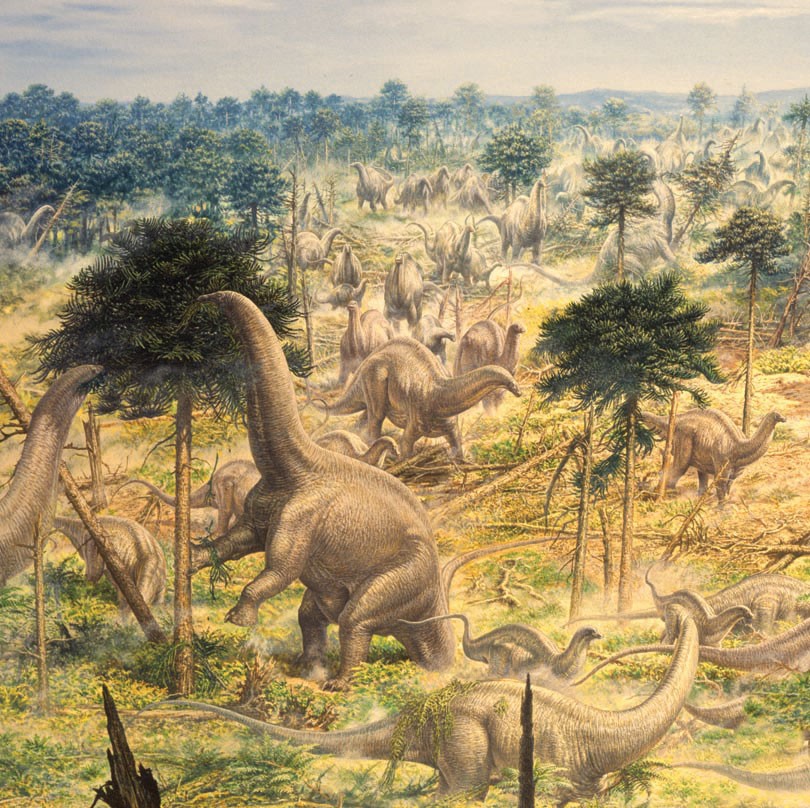
Plant-eaters
Hadrosaurs, such as Saurolophus, had flat beaks and hundreds of cheek teeth. Using their beaks, hadrosaurs tore vegetation from trees, shrubs or other plants. They then either stored it in their cheeks for later consumption, or chewed it up in their teeth (the way their jaws were hinged enabled them to do this) before swallowing it.

This chewing ability allowed hadrosaurs to break down their food more efficiently than other plant-eaters. It enabled them to feed on tough plant material—bark, horsetails and ferns—which helped them survive when food was scarce.

Meat-eaters
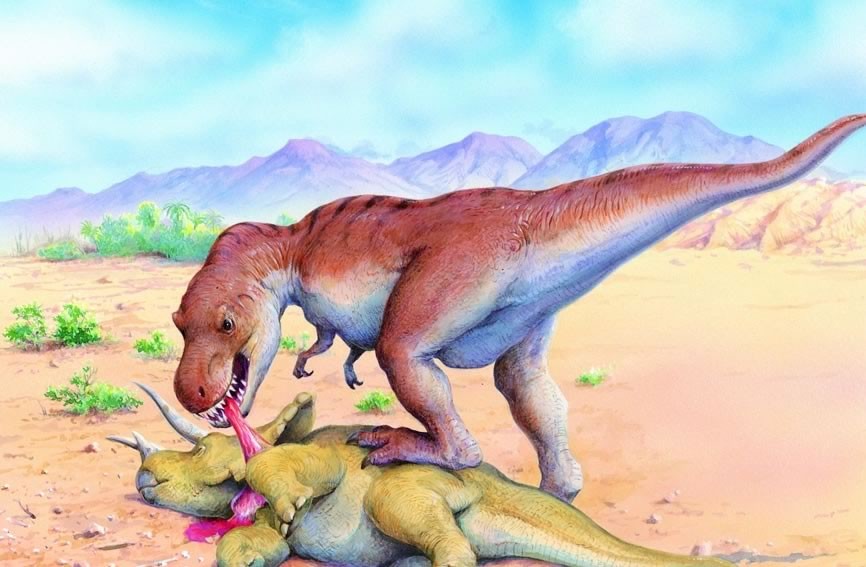
For meat-eating dinosaurs, their food had to be found or caught. From the behaviour of modern lions and hyenas, we know that few large meat-eaters would turn down the opportunity to scavenge, or steal the kill of others. It is likely, however, that large theropods, with their powerful build, were primarily active hunters of other dinosaurs. We know from fossil evidence of stomach contents that some predators, especially smaller ones (much commoner in the fossil record than the giants) fed on smaller animals, such as fish, lizards, mammals and insects.
Fish-eaters
Fish scales have been found inside the fossil remains of Baryonyx. Its skull was long and narrow like a crocodile’s, with jaws lined with narrow, pointed and finely serrated teeth. So we know Baryonyx ate fish—but it is likely that it hunted other prey as well. No large land animals today can survive on a diet of fish alone. Iguanodon bones have also been found inside Baryonyx’s body cavity, suggesting that it could have scavenged on its corpse.
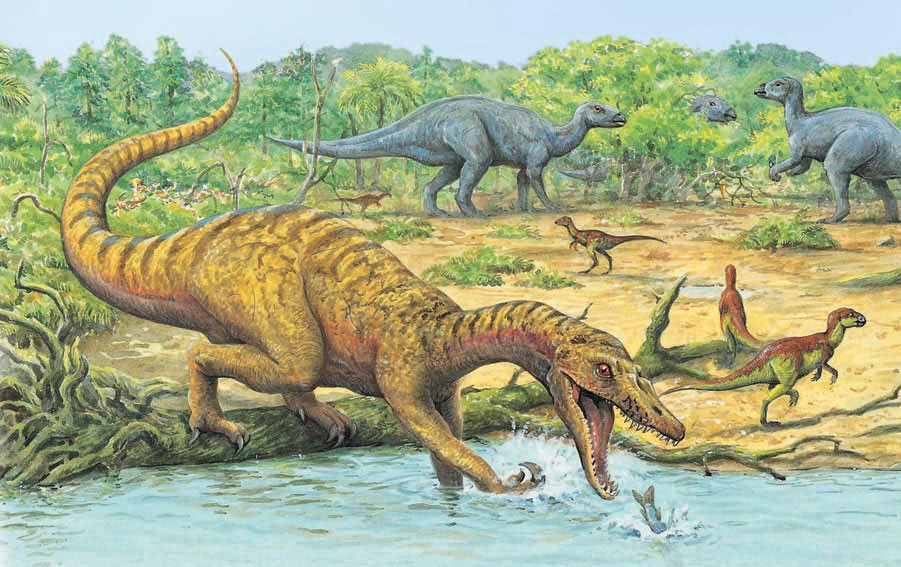
Insect-eaters
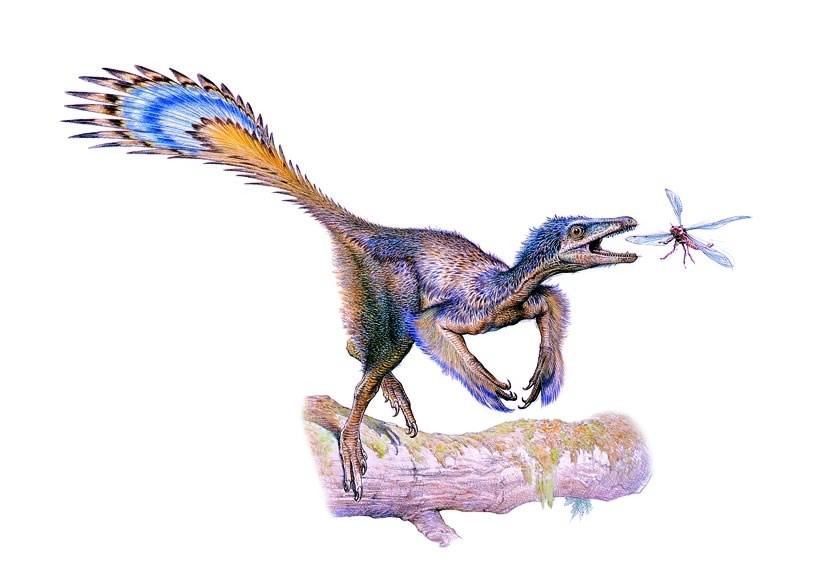
As with birds, insects would have been a highly nutritional food for the tiniest dinosaurs, such as Microraptor, and easy to catch, too. Recent studies of Microraptor's fossil remains show its guts contained bones of a mammal and bird, along with fish scales. This proves it had a very wide-ranging diet.
Consultant: Chris Jarvis
pics

Without in any way limiting Q-files Ltd’s exclusive rights under copyright, any use of this publication to “train” generative artificial intelligence (AI) technologies to generate text is expressly prohibited. Q-files Ltd reserves all rights to license use of this work for generative AI training and development of machine learning language models.