
EASY READ Science

CITE
We have made every effort to follow citation style rules, but there may be some minor differences. If in doubt, please refer to the appropriate citation style manual.
EASY READ How do machines work?. (2026). In Q-files Encyclopedia, Science, EASY READ Science. Retrieved from
https://www.q-files.com/science/easy-read-science/easy-read-how-do-machines-work
"EASY READ How do machines work?." Science, EASY READ Science, Q-files Encyclopedia, 10 Mar. 2026.
https://www.q-files.com/science/easy-read-science/easy-read-how-do-machines-work.
Accessed 29 Oct. 2026.
EASY READ How do machines work? 2026. Science, EASY READ Science. Retrieved 29 October 2026, from
https://www.q-files.com/science/easy-read-science/easy-read-how-do-machines-work
Science, EASY READ Science, s.v. "EASY READ How do machines work?," accessed October 29, 2026.
https://www.q-files.com/science/easy-read-science/easy-read-how-do-machines-work


How do machines work?
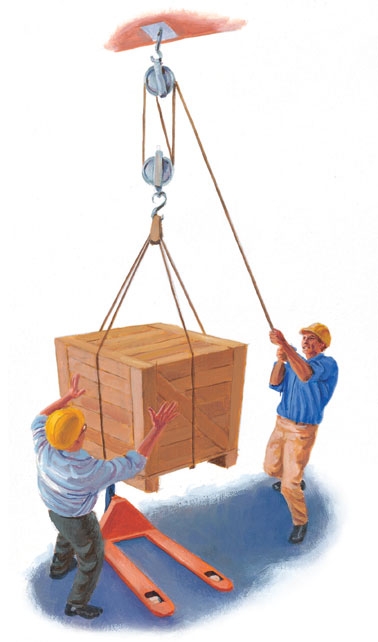
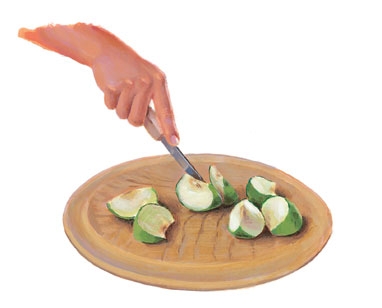
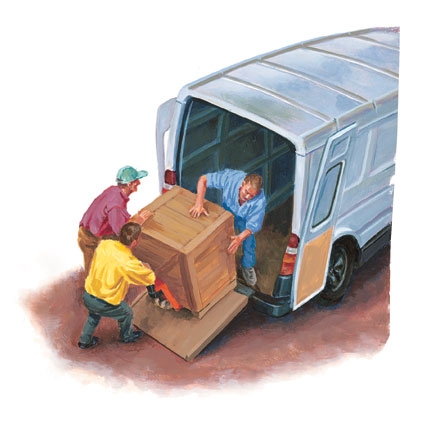
Machines are designed to make work easier and quicker to complete. They use forces to do different jobs. Even complex machines are made up of a few kinds of simple machines: pulleys, levers, wedges, screws, wheels and axles, and slopes. Here, as shown in this illustration on the right, a crate of apples is unloaded using a pulley (it is easier to pull down on a rope than to pull up). The apples are checked before the crate is loaded into a van. This sequence shows how machines can be used to carry out a simple job.
Lever

A lever is a bar that rests on a point called a fulcrum. Its job is to magnify a force. As you press down on one end, the other end lifts the load. The closer the fulcrum to the load, the smaller the effort needed.
Wedge
Wedges are machines that magnify force. Knives and axes are wedges. Their sharp edge cuts easily into things and their shape forces them to split apart.
Screw
A screw is a wedge twisted into a corkscrew shape. This helps it to force its way through a substance with greater ease.


Wheel and axle
Wheels help to move loads around easily. Two wheels can be joined together by a rod called an axle.
Ramp
It is much easier to push a heavy load up a ramp or incline than to lift it up a series of steps. You have to move it further, but it needs less force (effort).
Ancient machines
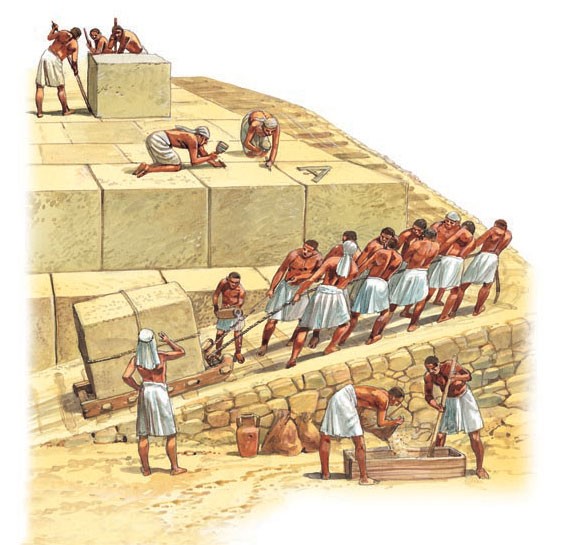
Ramps were used to build the pyramids of ancient Egypt. Workers hauled stone blocks on sledges up long spiral ramps as the pyramids grew taller and taller. This must have been hard work, but it is much easier to drag something up a slope than to lift it up a series of steps.
The workers eased each block off its sledge and on to wooden logs—which acted as wheels and axles. The block was then rolled into position, using heavy wooden posts as levers.
Consultant: Mike Goldsmith
Ready to find out more?
Here is a page in another part of Q-files you might like to explore:
pics

Without in any way limiting Q-files Ltd’s exclusive rights under copyright, any use of this publication to “train” generative artificial intelligence (AI) technologies to generate text is expressly prohibited. Q-files Ltd reserves all rights to license use of this work for generative AI training and development of machine learning language models.