
EASY READ Science

CITE
We have made every effort to follow citation style rules, but there may be some minor differences. If in doubt, please refer to the appropriate citation style manual.
EASY READ Why do things float or sink?. (2026). In Q-files Encyclopedia, Science, EASY READ Science. Retrieved from
https://www.q-files.com/science/easy-read-science/easy-read-why-do-things-float-or-sink
"EASY READ Why do things float or sink?." Science, EASY READ Science, Q-files Encyclopedia, 10 Mar. 2026.
https://www.q-files.com/science/easy-read-science/easy-read-why-do-things-float-or-sink.
Accessed 13 Sep. 2026.
EASY READ Why do things float or sink? 2026. Science, EASY READ Science. Retrieved 13 September 2026, from
https://www.q-files.com/science/easy-read-science/easy-read-why-do-things-float-or-sink
Science, EASY READ Science, s.v. "EASY READ Why do things float or sink?," accessed September 13, 2026.
https://www.q-files.com/science/easy-read-science/easy-read-why-do-things-float-or-sink


Why do things float or sink?
Why do some things float and other things sink? It depends on the density of the object. An object is made of substances that are themselves made up of molecules. Density is a measure of both how massive those molecules are, and how closely packed together they are. If the object's total density is greater than that of water, it sinks, but if it is less, it floats.
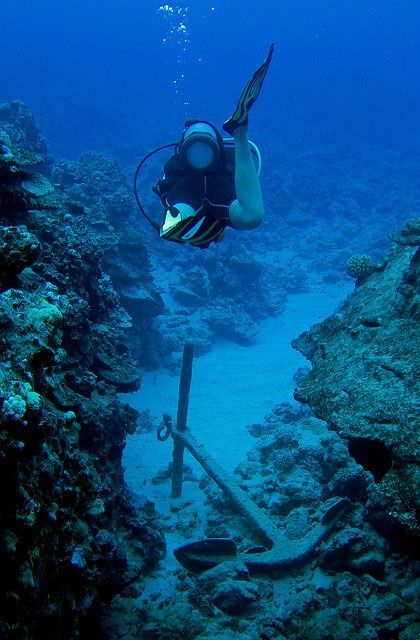
Floating in water
Cork is less dense than water, but stone is denser. A piece cork of any size floats, but a stone, even quite a tiny one, sinks. Rubber rings float because they are full of air—which is less dense than water. People are almost the same density as water, which is why you just about float. Air-filled buoys are attached by a chain to a heavy weight on the sea bed that stops the buoy floating away.

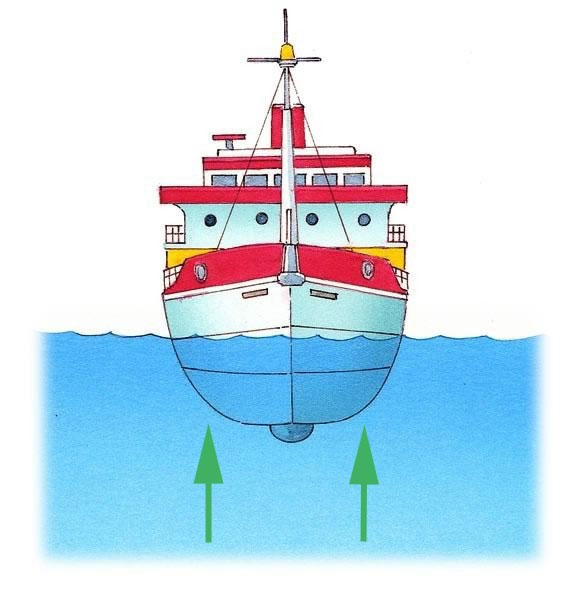
How do ships float?
Boats and ships—especially enormous steel-hulled ships—look too heavy to float. But because the ship is hollow it contains a lot of air. It is this air that, makes the ship, overall, less dense than water, so it floats. The force of the water pushing upwards against something is called the upthrust, or bouyancy. When something floats, the upthrust exactly matches the force of gravity, which pulls the object down.
Floating in air
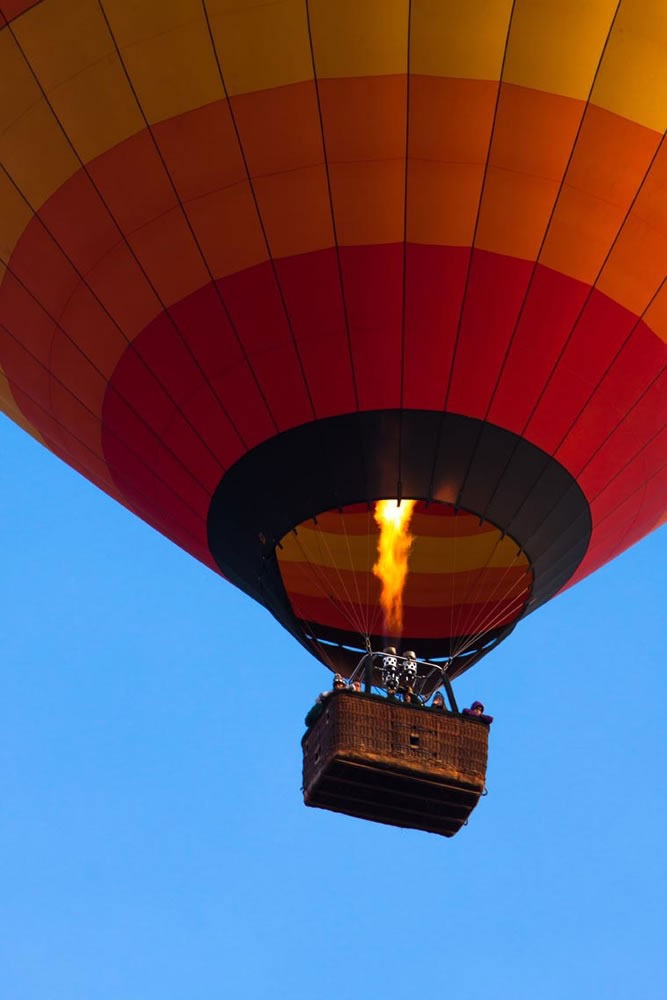
Floating in air is the same as floating in water. Anything that is less dense than air will float in it. When you heat air it becomes less dense because its molecules spread out. Hot-air balloons use this principle to fly. Air inside the balloon is heated, which makes it less dense than the cooler air outside. This causes the balloon to rise up into the air.
Consultant: Mike Goldsmith
Ready to find out more?
Here are some pages in other parts of Q-files you might like to explore:
pics
Without in any way limiting Q-files Ltd’s exclusive rights under copyright, any use of this publication to “train” generative artificial intelligence (AI) technologies to generate text is expressly prohibited. Q-files Ltd reserves all rights to license use of this work for generative AI training and development of machine learning language models.