
EASY READ Science

CITE
We have made every effort to follow citation style rules, but there may be some minor differences. If in doubt, please refer to the appropriate citation style manual.
EASY READ What is heat?. (2026). In Q-files Encyclopedia, Science, EASY READ Science. Retrieved from
https://www.q-files.com/science/easy-read-science/easy-read-what-is-heat
"EASY READ What is heat?." Science, EASY READ Science, Q-files Encyclopedia, 10 Mar. 2026.
https://www.q-files.com/science/easy-read-science/easy-read-what-is-heat.
Accessed 13 Sep. 2026.
EASY READ What is heat? 2026. Science, EASY READ Science. Retrieved 13 September 2026, from
https://www.q-files.com/science/easy-read-science/easy-read-what-is-heat
Science, EASY READ Science, s.v. "EASY READ What is heat?," accessed September 13, 2026.
https://www.q-files.com/science/easy-read-science/easy-read-what-is-heat


What is heat?
Heat is the energy an object has when its molecules are moving or vibrating (shaking). The hotter the object is, the more its molecules move. In solids, the molecules may vibrate so much they break away from one another. The solid has melted to become a liquid. Heated further, the molecules suddenly spread out a lopng way apart: the liquid turns to gas. Temperature is a measure of how fast the molecules in an object are vibrating.

Where does heat come from?
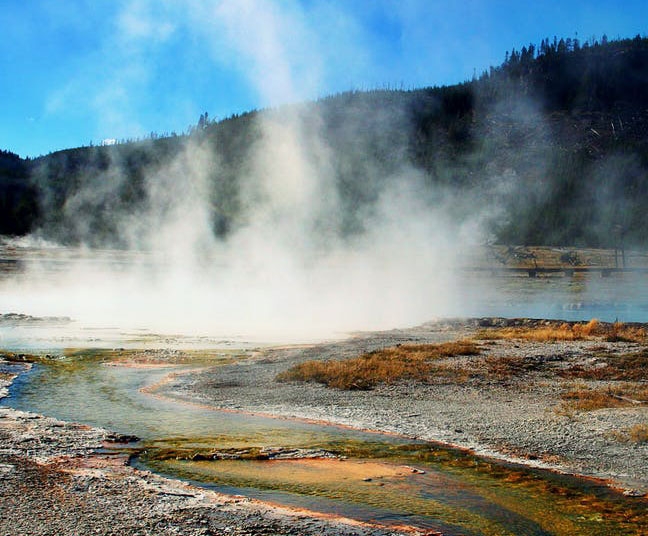
Nearly all the Earth’s heat comes from the Sun. It travels to us by radiation (see below). But there is also a source of heat inside the Earth. Called geothermal energy, it comes from the molten rocks deep below ground. This molten rock sometimes erupts at the surface through volcanoes all over the world.
How heat moves
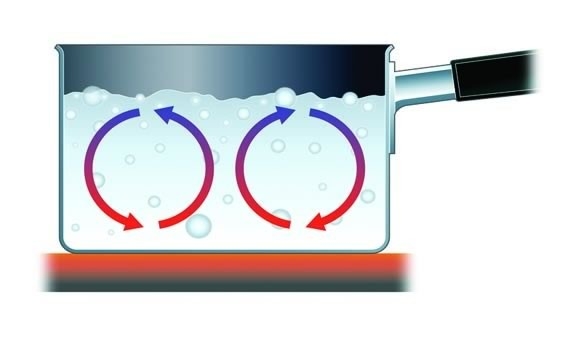
Heat moves through solids by conduction: vibrating molecules knock against neighbouring ones, causing them to vibrate too.



Insulation
Substances that slow down the movement of heat are called insulators. Air, fibreglass and plastic are all good insulators. They can be used to stop heat loss through the walls of a building.
A layer of fat, fur or feathers in animals, such as penguins, prevents too much heat escaping from their bodies. Whales have a thick layer of fat under their skins, called blubber, to keep them warm in cold waters.
Expansion and contraction
When most substances heat up, their molecules start to move apart. This makes them get bigger, or expand. When they cool down, the molecules come together and they get smaller, or contract. This happens in solids, liquids and gases. A bridge made of metal becomes longer as it heats up in the sun. It may have special joints with gaps in them so that there is room for the metal to expand.
Air expands as it heats up, making it lighter than cold air. This is why hot-air balloons rise.

Consultant: Mike Goldsmith
Ready to find out more?
Here are some pages in other parts of Q-files you might like to explore:
pics
Without in any way limiting Q-files Ltd’s exclusive rights under copyright, any use of this publication to “train” generative artificial intelligence (AI) technologies to generate text is expressly prohibited. Q-files Ltd reserves all rights to license use of this work for generative AI training and development of machine learning language models.