
EASY READ Science

CITE
We have made every effort to follow citation style rules, but there may be some minor differences. If in doubt, please refer to the appropriate citation style manual.
EASY READ What are the properties of water?. (2026). In Q-files Encyclopedia, Science, EASY READ Science. Retrieved from
https://www.q-files.com/science/easy-read-science/easy-read-what-are-the-properties-of-water
"EASY READ What are the properties of water?." Science, EASY READ Science, Q-files Encyclopedia, 10 Mar. 2026.
https://www.q-files.com/science/easy-read-science/easy-read-what-are-the-properties-of-water.
Accessed 13 Sep. 2026.
EASY READ What are the properties of water? 2026. Science, EASY READ Science. Retrieved 13 September 2026, from
https://www.q-files.com/science/easy-read-science/easy-read-what-are-the-properties-of-water
Science, EASY READ Science, s.v. "EASY READ What are the properties of water?," accessed September 13, 2026.
https://www.q-files.com/science/easy-read-science/easy-read-what-are-the-properties-of-water


What are the properties of water?
Water is made of molecules. Water molecules are made up of two chemical elements: hydrogen (chemical symbol H) and oxygen (O). Each atom of oxygen is bonded to two hydrogen atoms. This is why water has the chemical formula H2O. Water occurs in nature in all three states of matter: solid (ice), liquid and gas (water vapour). All known forms of life need water to survive. Every living thing is made up mostly of water. Our own bodies are more than two-thirds water.


Freezing and boiling points
When the atmospheric pressure is normal, pure liquid water freezes into solid ice when the temperature falls to 0°C (32°F) or below. As liquid water, it is found in rivers, lakes, seas and raindrops. The process of turning from liquid into gas is called evaporation. When water evaporates, it becomes an invisible part of the air. When water vapour cools and turns back to water, it is called condensation.
Evaporation speeds up the warmer the water becomes. When the atmospheric pressure is normal, at temperatures of 100°C (212°F), the boiling point of water, pure water can exist only as water vapour.
Properties of water
To humans, pure water has neither taste nor smell. It is transparent and almost colourless. Water can dissolve a large variety of chemical substances. As it freezes, water expands. This is an unusual property, because most other substances contract (get smaller) when they change from liquid to solid. Because water expands as it freezes, it becomes less dense, not denser.
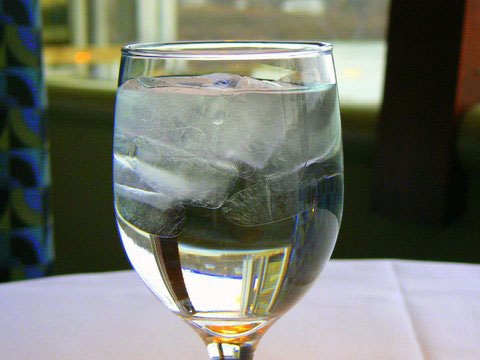
This explains why ice cubes—and massive icebergs—float in liquid water. Water also expands when it is heated.
Surface tension
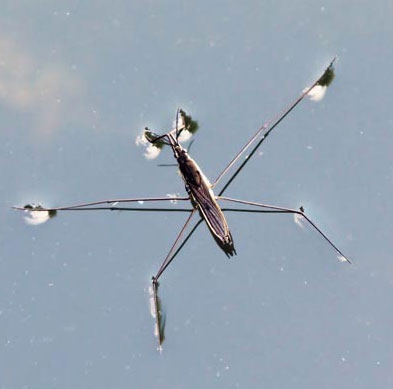
Molecules of water are attracted to one another because of the strong bonds between them. This creates a property called surface tension. It makes water acts as if it has a stretchy “skin” on its surface. Some insects, such as pond skaters, are able to move about on it.
Consultant: Mike Goldsmith
Ready to find out more?
Here is a page in another part of Q-files you might like to explore:
pics
Without in any way limiting Q-files Ltd’s exclusive rights under copyright, any use of this publication to “train” generative artificial intelligence (AI) technologies to generate text is expressly prohibited. Q-files Ltd reserves all rights to license use of this work for generative AI training and development of machine learning language models.