
EASY READ Science

CITE
We have made every effort to follow citation style rules, but there may be some minor differences. If in doubt, please refer to the appropriate citation style manual.
EASY READ How is light made?. (2026). In Q-files Encyclopedia, Science, EASY READ Science. Retrieved from
https://www.q-files.com/science/easy-read-science/easy-read-how-is-light-made
"EASY READ How is light made?." Science, EASY READ Science, Q-files Encyclopedia, 10 Mar. 2026.
https://www.q-files.com/science/easy-read-science/easy-read-how-is-light-made.
Accessed 13 Sep. 2026.
EASY READ How is light made? 2026. Science, EASY READ Science. Retrieved 13 September 2026, from
https://www.q-files.com/science/easy-read-science/easy-read-how-is-light-made
Science, EASY READ Science, s.v. "EASY READ How is light made?," accessed September 13, 2026.
https://www.q-files.com/science/easy-read-science/easy-read-how-is-light-made


How is light made?
During the day, the world is lit by light rays from the Sun. Light is only one kind of energy which the Sun produces (heat and ultraviolet radiation are among the others). Light usually comes from very hot things: the Sun, fire, or the tiny wire inside electric light bulbs. But it can also be made by chemical reactions in some animals.


The speed of light
Light travels at about 300,000 kilometres (186,000 miles) per second. We do not notice light moving over short distances: when we flick a switch, light appears to fill the room instantly. But over long distances in space, light takes a noticeable time to get from one place to another. It takes more than eight minutes for light to reach us from the Sun.
Light years
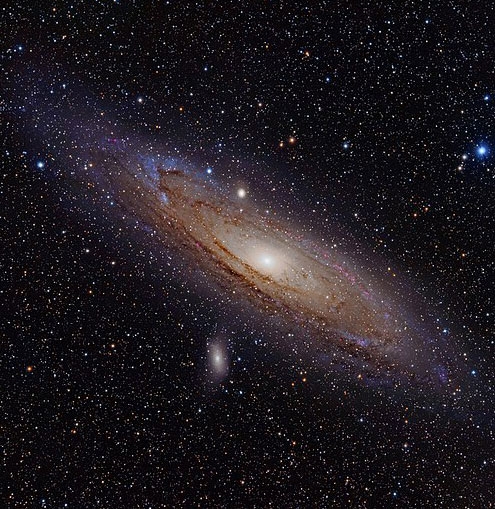
Even travelling extremely fast, light can take many years to reach us from other stars. Distances in space are measured in light years: the time it takes for the light from an object to reach us. The nearest star to Earth (apart from the Sun) is Proxima Centauri: it lies 4.2 light years away. The Andromeda Galaxy is 2.25 million light years away.

Shadows
Light always travels in straight lines. When light rays strike an object which does not allow light to pass through it, a shadow is cast on the unlit side.
Reflection

We can see objects because light is reflected from them into our eyes. The Moon does not give off its own light, but reflects the Sun’s light. Flat, shiny surfaces, such as mirrors or the surface of water, reflect light best of all.
You can use mirrors to see round corners, or above where you are. A simple periscope has two mirrors set at an angle opposite each other. Light coming in at one end can be reflected through to an observer at the other.
Mirrors can also be convex or concave. The largest telescopes use concave (dish-shaped) mirrors to collect light from distant stars. Shaving mirrors, which are designed to produce a magnified image of your face, are also concave.


Refraction
Light rays bend, or refract, when they pass between different transparent materials. This is because light travels at different speeds through different materials. You can see this effect when looking at the bottom of a swimming pool. It looks much shallower than it really is.
Lenses
A lens, a shaped piece of glass or plastic, can bend light, either spreading it out or bringing it together at a single point called a focus. A simple magnifying glass is a convex lens, one with a bulging shape. It is useful for studying the detail on a tiny insect or flower.


Bioluminescence
Some animals can make light. This is called bioluminescence. Female glow worms (really beetles) give off light when they are ready to mate.
Consultant: Mike Goldsmith
Ready to find out more?
Here are some pages in other parts of Q-files you might like to explore:
pics
Without in any way limiting Q-files Ltd’s exclusive rights under copyright, any use of this publication to “train” generative artificial intelligence (AI) technologies to generate text is expressly prohibited. Q-files Ltd reserves all rights to license use of this work for generative AI training and development of machine learning language models.