
EASY READ Science
What are the properties of gases?


Expansion
When a gas is heated, it expands: its molecules spread out and become less dense. As a result, warm or hot gas becomes lighter than cold gas. Lighter, warm air rises above heavier, colder air. This is why hot-air balloons rise. The air inside them is heated by a burner in the basket hanging underneath the envelope.
High pressure
Heating a gas inside a fixed space—a can or a glass jar, for example—causes its pressure to increase. This is because, as the gas gets hotter, its molecules bump into both one another and the walls of the container more and more. The container may eventually explode.

Use in engines
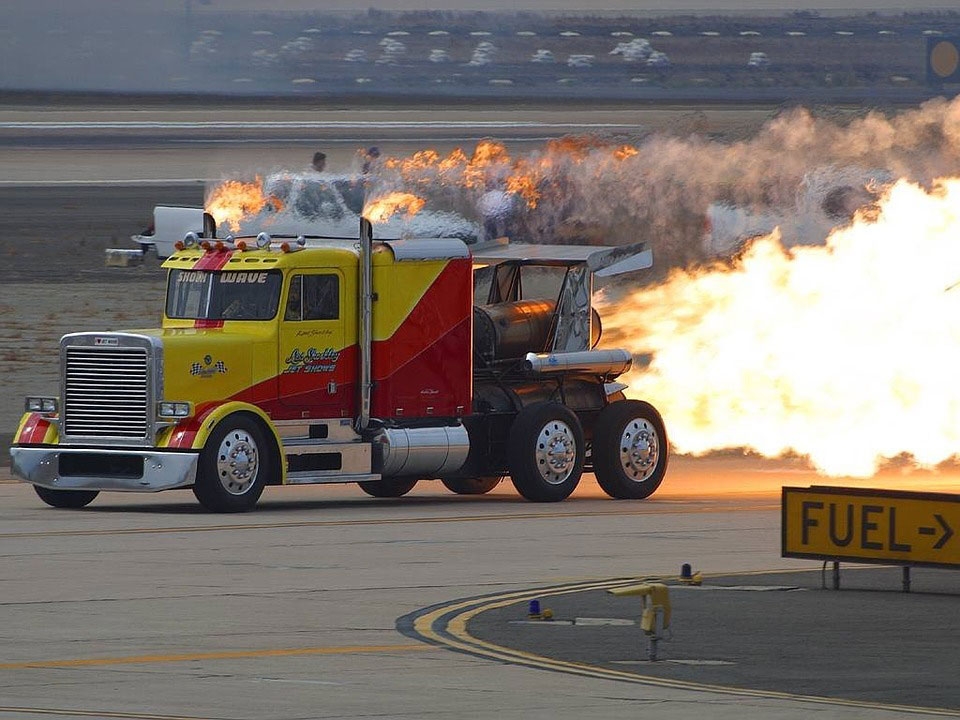
This property of gas— to expand on heating and exert pressure—is used to make some types of engines work. In a steam engine, water is heated and turns into steam inside a boiler. The pressure becomes very high. The force of the expanding steam let out of the boiler pushes pistons inside cylinders.

In a petrol engine, when a mixture of fuel and air inside a cylinder is ignited (set on fire), it expands quickly. This pushes a piston inside the cylinder down.
Consultant: Mike Goldsmith
Ready to find out more?
Here are some pages in other parts of Q-files you might like to explore: