
EASY READ Science
What is friction?
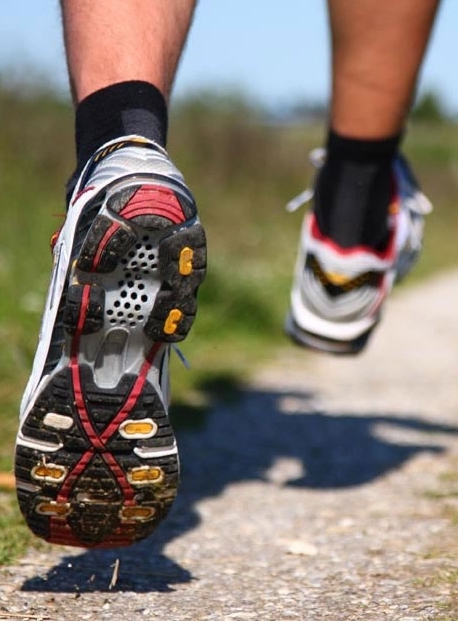
Friction is a force that tends to stop things moving. It is produced when two surfaces rub together. Rough surfaces produce more friction than smooth ones. Friction can cause problems, such as making machines wear out. But friction can also be helpful. Friction caused by the grips on your shoes, for example, stops you slipping over. Water resistance and air resistance (also called drag) are kinds of friction. They tend to hold back fast-moving objects or people.
Reducing or increasing friction

This cyclist’s “streamlined" helmet and smooth lycra clothing help to reduce air resistance, enabling him to move faster. The cogs and chains on a bike are coated in slippery oil to reduce friction. This keeps them running smoothly.
To slow down, the cyclist squeezes the brakes, which grip the wheel rims, causing friction. The tread on a bicycle’s tyres increase friction. This allows the tyres to grip the road.

Skis are smooth on the underside, allowing the skier to glide easily over the snow. However, the skier can stop quickly by rubbing the sharp edge of the skis against the snow, digging into it. This creates friction between the snow that is pushed out of the way, and the snow the ski digs into.

Air resistance
The faster an object travels, the greater the air resistance, or drag, acting on it becomes. This is why military jets have a streamlined shape: to reduce drag.
In space there is no air, so there is no resistance to slow things down. A spaceship does not need to have a streamlined shape.

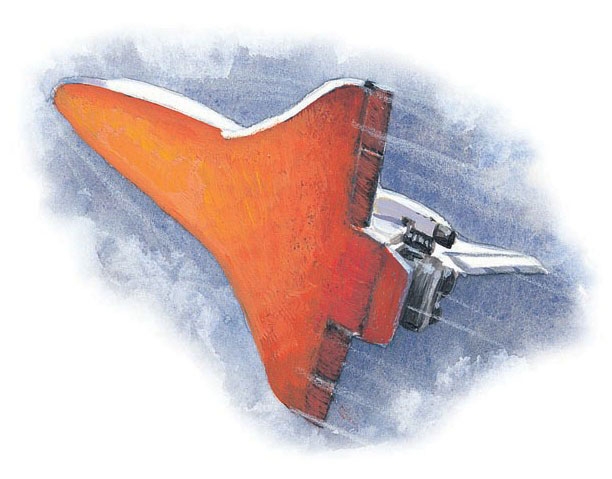
A spaceship returning to Earth from space experiences enormous air resistance when it enters the Earth’s atmosphere, which is made of air molecules. Friction creates heat. The spaceship travels so fast that the friction makes its protective tiles glow red hot.

Consultant: Mike Goldsmith
Ready to find out more?
Here is a page in another part of Q-files you might like to explore: