
Medicine

CITE
We have made every effort to follow citation style rules, but there may be some minor differences. If in doubt, please refer to the appropriate citation style manual.
History of medicine. (2026). In Q-files Encyclopedia, Science, Medicine. Retrieved from
https://www.q-files.com/science/medicine/history-of-medicine
"History of medicine." Science, Medicine, Q-files Encyclopedia, 10 Mar. 2026.
https://www.q-files.com/science/medicine/history-of-medicine.
Accessed 21 Sep. 2026.
History of medicine 2026. Science, Medicine. Retrieved 21 September 2026, from
https://www.q-files.com/science/medicine/history-of-medicine
Science, Medicine, s.v. "History of medicine," accessed September 21, 2026.
https://www.q-files.com/science/medicine/history-of-medicine


History of medicine
Medicine is the science of diagnosing (identifying), treating and preventing diseases to make people healthy. Ancient beliefs that illnesses were caused by angry gods have been replaced over the centuries by a scientific approach that has led to the development of vaccines and other treatments to treat diseases. Skulls dating back to 10,000 BC show signs of trepanning: drilling holes in the bone, possibly to release evil spirits. The ancient Egyptians used herbs and drugs for treatment and their surgeons learned how to set broken bones. The first known doctor, called Imhotep, lived in Egypt in about 2600 BC.


Hippocrates
The scientific approach to medicine was introduced by the ancient Greeks. Hippocrates (born around 460 BC) founded a school of medicine on the Greek island of Kos, where diagnosis of illness was based on thorough examination of patients, including making records about their condition. He believed that all diseases had a natural cause rather than a supernatural one, that is, caused by the gods. He also proposed that diet and exercise affected the human body. Such ideas led to Hippocrates being known as the Father of Medicine.

Many of Hippocrates' ideas and practices were still widely followed in Europe until the 19th century. Today’s doctors still swear to uphold a Hippocratic Oath, promising to treat the ill to the best of their ability, respect their privacy and teach medicine to others.
Understanding anatomy
The Greek surgeon Galen (AD 131–201) lived during the age of the Roman Empire. He performed operations on many patients, including injured Roman gladiators. He also wrote studies of anatomy, based on the dissection (cutting up) of the bodies of apes. His writings were followed for centuries, as were those of the Persian physician (doctor) Avicenna, who wrote some 40 medical text books.
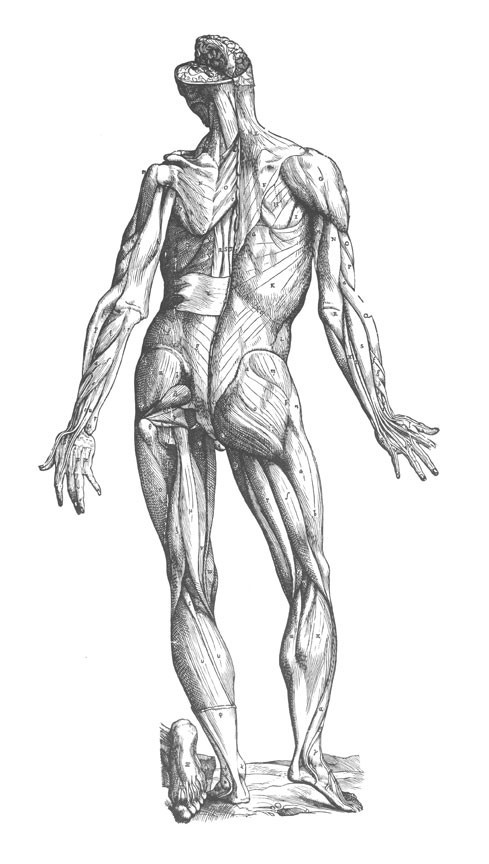
By the 16th century, scientists were dissecting human bodies, allowing much greater understanding of human anatomy. In 1543, Flemish physician Andreas Vesalius (1514–1564) published seven volumes of detailed drawings and explanations, together entitled On the Structure of the Human Body.
Middle Ages
Hippocrates believed that the body had four liquid "humours"—yellow bile, black bile, phlegm and blood—that had to be kept in balance. Galen accepted this view. He also believed in the healing power of nature, and developed treatments that he thought would restore the balance of the humours.

These ideas persisted into the Middle Ages and beyond. Blood-letting was a popular treatment for many diseases, which were thought to be caused by an excess of blood in the body. To release blood, a vein would be cut. If only a small amount needed to be lost, leeches would be used to suck it out of the body. Other remedies were based on herbs and potions, more in hope than by design.
Blood circulation
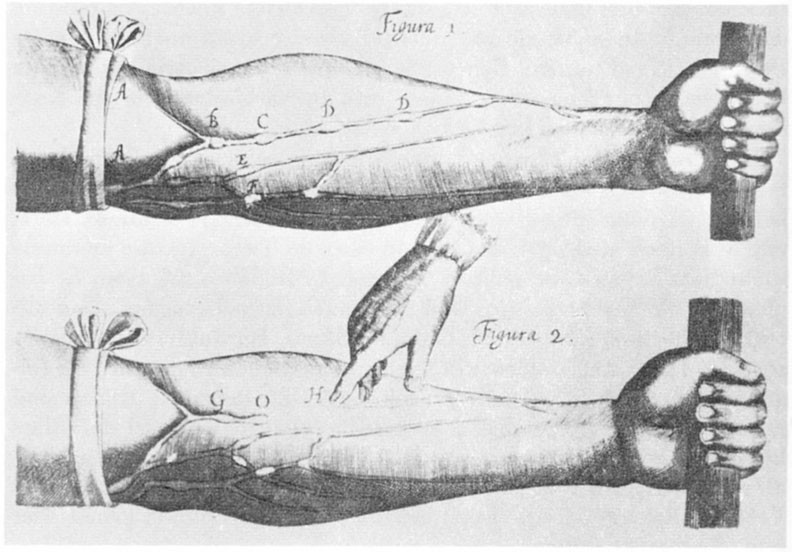
Scientists still did not know how blood circulated around the body until 1628, when English surgeon William Harvey (1578–1657) published his findings. He had studied at Padua, Italy, and been influenced by the teachings of Galileo. Harvey's dissections of various animals, including humans, laid the basic foundations for the study of physiology, the study of how the body works.
Harvey showed how the blood circulated through the body, with the heart acting as pump for pushing blood—in one direction—through the network of arteries and veins. He also observed that veins had one-way valves to stop blood flowing backwards.
Preventing smallpox
For centuries, serious diseases such as the plague and smallpox went uncontrolled. Millions of people died from them. It was the discovery of a means to protect people against one such disease, smallpox, that began the modern era of medicine. Edward Jenner (1749–1823), an English country doctor observed that milkmaids who caught a disease called cowpox from their cows never caught smallpox itself. Cowpox is similar to smallpox, but much milder, and produces pus-filled blisters on the hands.

Jenner realised that infection with cowpox must be protecting the milkmaids from smallpox, and decided to test his theory. He took some pus from a milkmaid’s blister and scratched it into the arm of an eight-year-old boy. Within a few days, the boy developed mild cowpox. A few weeks later, Jenner infected the boy with smallpox—but he did not develop the disease. Jenner had "vaccinated" the boy against smallpox.

Vaccines
Jenner had developed vaccines—substances introduced into the bloodstream that protect people from serious disease. They are dead or weakened versions of germs that cause the disease—although Jenner himself was unaware of what germs were. The germs cannot themselves cause harm, but the body’s defence system fights and kills them. It will then recognize the germs again quickly in the future. It took until the 1840s before the medical establishment could accept the findings of a country doctor and adopt vaccination as a method of preventing disease.
Germ theory

French chemist Louis Pasteur (1822–1895) was the first to demonstrate that it was microbes, tiny disease-carrying micro-organisms present in air and water, often called "germs", that infected people to cause diseases. He also showed how they could spread to new victims. Pasteur's “germ theory” was proposed at a time when many scientists refused to believe that tiny organisms were capable of killing people.
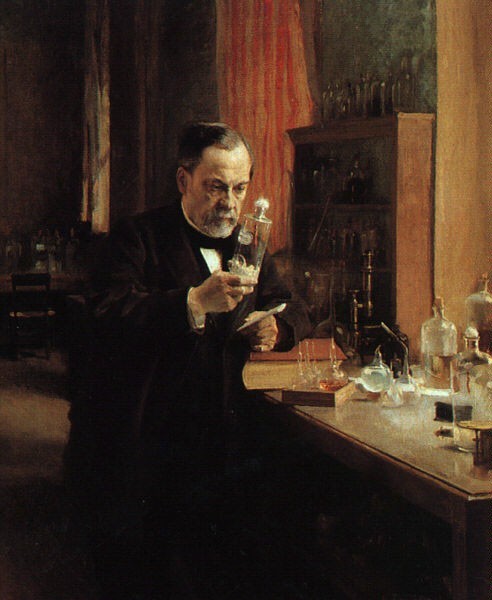
Pasteur's major discovery grew from work he carried out in 1856 when, after using a microscope to analyse vats of beer that had gone sour, he found that the contamination was caused by microbes. He found that wine and milk contamination was also caused by microbes, and that this contamination could be prevented by simply heating the liquids, thus killing them. This process is still known as "pasteurization".
Pasteur investigated how disease could spread and in 1880 noticed that when he gave chickens a mild form of the common illness chicken cholera, from microbes he had bred in a laboratory, they became immune to the disease. This led him to experiment further on animals with the diseases anthrax and rabies, which can also infect humans. He developed an anthrax vaccine in 1881 and, four years later, used his rabies vaccine to cure a nine-year-old boy of the disease.
Safer surgery
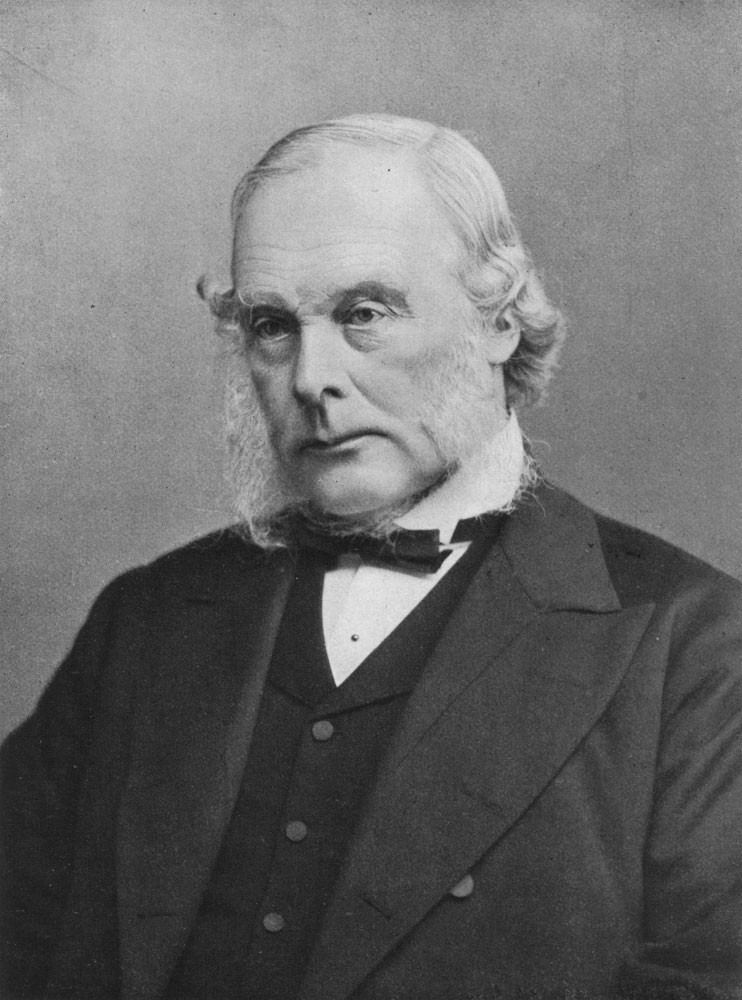
Inspired by Pasteur's work, Joseph Lister (1827–1912) carried out investigations into how germs could be killed. He knew that while people often survived surgical operations, many died on the wards afterwards. He realised that germs in the air were infecting patient’s wounds, causing them to get other diseases, such as gangrene—the death of body tissue as a result of infection. In 1865 he came up with the idea of using carbolic acid to keep wounds clean during surgery. Death rates from his operations fell from more than 45% to 15%.

Antibiotics
While serving as a medical captain during World War I, Scottish biologist Alexander Fleming (1881–1955) observed the terrible effects of deadly bacteria on patients. Later, in September 1928, Fleming made a discovery—by accident. He noticed a ring of mould, a fungus, growing on one of the glass dishes of bacteria that had been left out after research. On this dish alone, the area around the ring was free of bacteria. Fleming realised that the mould, now called Penicillium rubens, had killed the bacteria. He had discovered the first antibiotic—later called penicillin—a substance that kills bacteria. During World War II, penicillin saved the lives of thousands of wounded soldiers.
X-rays
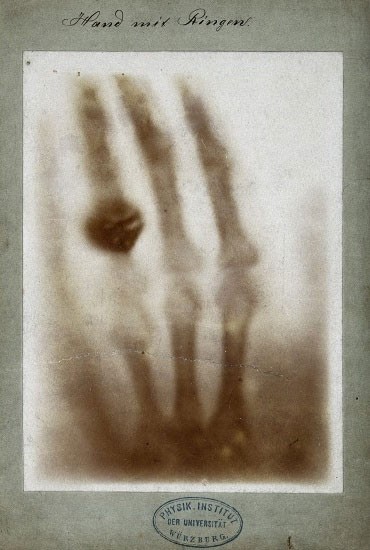
The discovery of X-rays in 1895 by German physicist Wilhelm Röntgen (1845–1923), was an important breakthrough in medicine. Observing mysterious flickering lights coming from apparatus in a darkened room, he called them "X-rays" because he did not know what they were. Röntgen later realised that some materials—but not others—could be penetrated by these rays. An image of his wife's hand, for example, showed a contrast between the bone (which was opaque: X-rays could not pass through them) and flesh (which was translucent: X-rays could pass through it). By using X-rays, the internal structure of the body could now be seen without the necessity of surgery. The discovery allowed doctors to study the insides of the human body, to study, for example, cancerous growths or fractured bones. It was later discovered that frequent exposure to X-rays could be harmful, but that X-rays could also be used to treat cancers or skin diseases by directing them at harmful cells.
Consultant: Richard Walker
pics
Without in any way limiting Q-files Ltd’s exclusive rights under copyright, any use of this publication to “train” generative artificial intelligence (AI) technologies to generate text is expressly prohibited. Q-files Ltd reserves all rights to license use of this work for generative AI training and development of machine learning language models.