
Crafts
Toys
The earliest toys for children were often small versions of adult things. Children living in the Middle Ages played with toy hunting weapons and dolls to prepare them for their adult lives. In 19th century Europe, the wealth created by the Industrial Revolution meant more people than ever before could afford to buy new toys for their children. During this period many of the toys we know today were invented, such as stuffed toys, model railways and the first construction toys. The invention of plastic in the 20th century unleashed a tide of plastic toys of all shapes and sizes. Tiny plastic parts could be put together to make cheap, “toy” versions of more valuable things, such as musical instruments and electrical appliances.


First toys
Balls and hoops are some of the oldest known toys. Since the beginning of civilization, children have played games with balls made from wood, animal skins or rubber. Metal hoops were popular with ancient Greek and Roman children, who made a game from rolling them along the ground with sticks. Children in ancient India played with pull-along toys, such as horses and chariots carved from wood or clay. Kites were invented in China around 3000 years ago, made from silk fixed over a bamboo frame. The designs of these early toys have changed very little in thousands of years, and are still popular today.
Wooden toys
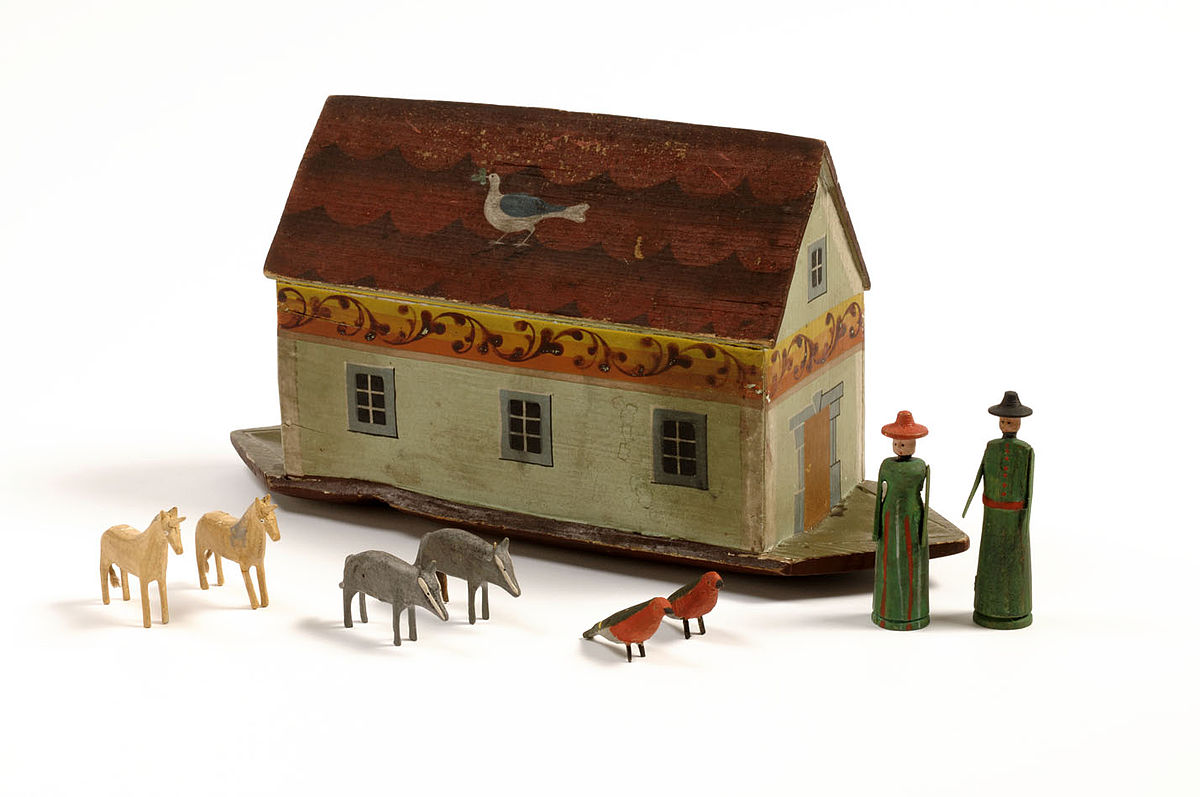
In the 17th and 18th centuries, salesmen travelled around Europe selling wooden dolls, soldiers, carved animals and dolls’ houses. A wooden train set that could be slotted together and taken apart was invented in the 1880s by a Swedish company called Brio. It is still sold today, and its design has changed very little in 100 years. At the beginning of the 20th century, Christian children were not allowed to play with toys on Sunday because it was a holy day. The exception was a wooden Noah’s Ark and animals, because it featured in the Bible. As a result, nearly every family home had a Noah’s Ark toy.
Dolls
Dolls are some of the oldest toys in the world. Some of the earliest dolls we know about are those found in ancient Egyptian tombs around 2100 BC. They were made from wood and human hair.
Wax dolls became popular in the 18th century. Toy-makers could create a lifelike finish by moulding the dolls’ heads from wax, which closely resembled human skin. In the 19th century, the trend switched to china dolls: realistic-looking dolls with heads, hands and feet made from porcelain, and with eyes from glass. Their bodies were usually made from fabric and stuffed like soft toys. These dolls were designed to look like miniature adults—it was not until the 1860s that the first childlike “baby” dolls became fashionable.

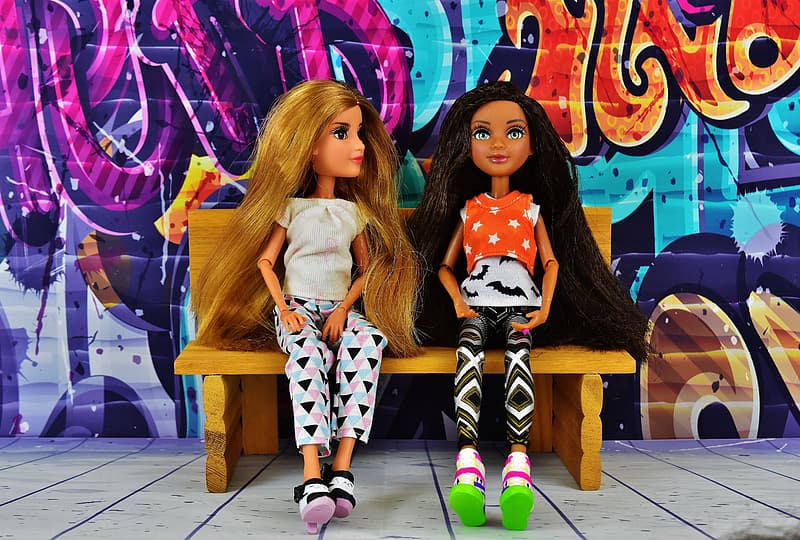
Fashion dolls have been around since the late 19th century, when they were first used to display the latest clothing fashions in miniature. In the 1960s, "Barbie", "Ken" and "Action Man" fashion dolls became some of the era's most popular toys. They came with sets of miniature clothes so they could be dressed up; Barbie's hair could be brushed and styled. Soon, a large range of accessories were designed to fit them—from small objects like hairbrushes and mirrors, to cars and houses.

Dolls' houses (US: dollhouses) began as grand "dream homes" filled with tiny replicas of people and furniture. These 16th-century models were so delicate and expensive that children were never allowed to play with them. In the 19th century, the Industrial Revolution made it cheaper to produce dolls' houses and they became widely available as toys. The models of furniture inside are made to a 1:18 scale, making them 18 times smaller than the real thing.
Stuffed toys
In the 1880s a German seamstress named Margarete Steiff created a collection of sewn animal toys including elephants, giraffes, monkeys and rabbits. These were the first stuffed toys, made from pieces of soft felt sewn together and stuffed with wool. To make them, Steiff's factory used techniques and machines that had been recently developed for padding soft furniture. Steiff toys soon became popular across Europe.


Today stuffed toys come in all shapes and sizes, from tiny crocheted Japanese amigurumi toys to large stuffed animals the same size as a child. The first Beanie Babies were produced in 1993: a range of soft beanbag animals, stuffed with plastic beans. Over the next decade they became a popular craze, and today the rarest Beanie Babies are highly prized by collectors.

Teddy bears
In 1902, Richard Steiff—a nephew of Margarete Steiff—made a stuffed toy bear which quickly became popular in the US. The bear was designed to look like a real bear cub. It had jointed, moveable arms and legs, and was covered in soft fur made from wool. At around the same time an American inventor, Morris Michtom, made a stuffed bear toy after seeing a cartoon of the president, Theodore Roosevelt, refusing to kill a bear that had been captured on a hunting trip. Michtom nicknamed his toy “Teddy’s bear”, and the name stuck. On both sides of the Atlantic, teddy bears were soon in high demand.
Die-cast toys
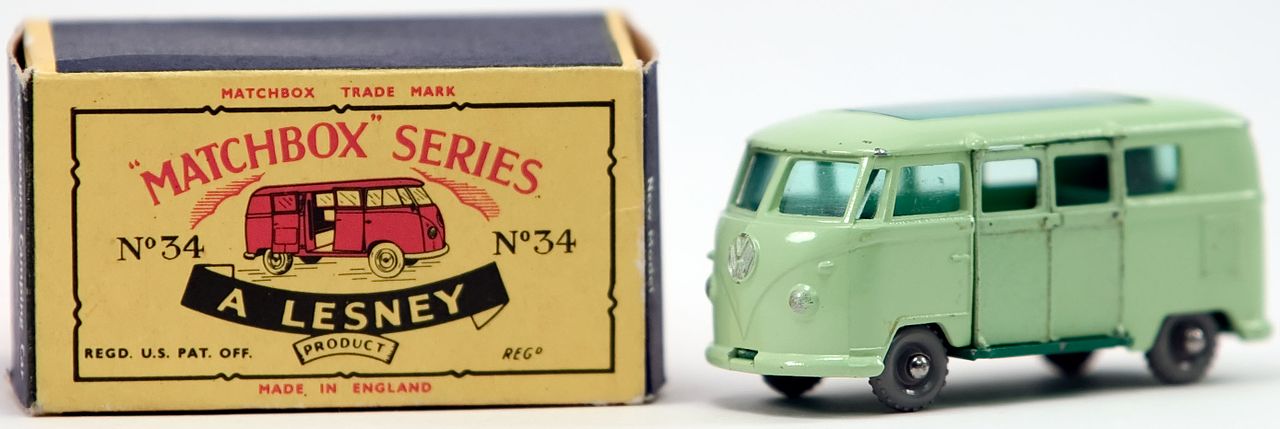
A manufacturing process called die-casting was invented at the beginning of the 20th century. It was well-suited to making tiny model cars, trains, ships and figures. These were manufactured by pouring a mix of molten metals including zinc, aluminium and copper into a mould and letting it set. From the 1950s onwards, clear plastic “glass” was added to these models to make windows. Matchbox cars were invented in the 1950s, so named because they were small enough to carry around in a matchbox.
Accidental inventions
Some toys were invented by accident while their inventors were trying to research something else. The Slinky was invented in 1943 when the American engineer Richard James dropped a spring in his workshop and saw it appear to “walk” as it bounced across the floor. Since the first Slinky appeared in shops, more than 300 million have been sold.

Silly Putty was also invented during World War II while its inventors were trying to create synthetic (artificial) rubber for use in the military. They found that mixing boric acid and silicone oil made a bouncy, stretchy substance. After they put their new creation on sale it quickly became popular as a toy.
Construction toys
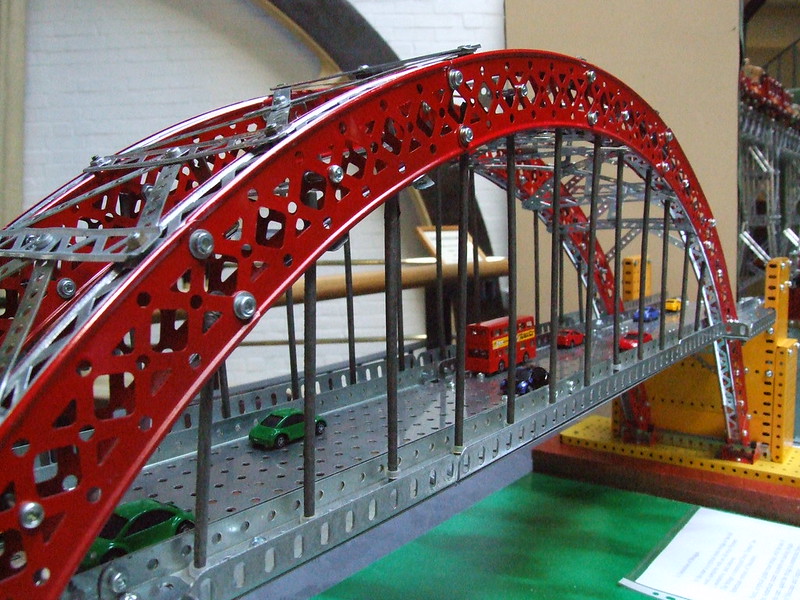
As technological advances in the late 19th century enabled manufacturers to make tinier, more detailed parts, a variety of construction toys with small parts were invented. One of the earliest was Meccano, first sold as a construction toy in 1898. It was a set of metal plates, wheels and other parts that could be connected by nuts and bolts. Lincoln Logs were invented in 1916. They were tiny versions of the real logs used in construction, and could be used to build miniature log cabins and structures.
The Lego company was founded in the 1930s by a Danish carpenter named Ole Kirk Christiansen (1891–1958). It started out making wooden toys, but by 1950 it had become best-known for making tiny interlocking building bricks. Christiansen's factory soon started making these bricks from plastic using a process called injection moulding, in which melted plastic is forced into a mould where it sets. These early Lego bricks were some of the earliest plastic toys. Today around 75 billion bricks are sold around the world every year. Since 2018, garden pieces in Lego sets—such as plants, trees and bushes—have been made from bioplastic, a plastic made partly from sugar cane. By 2030, all the bricks will be made from sustainable materials.

Puzzle toys
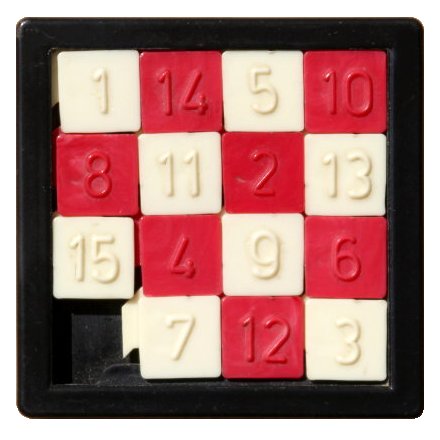
Puzzle toys are often based on interesting problems in mathematics or geometry. They often involve ordering or sorting, and offer a satisfying solution when they are solved. One of the first modern examples was the “15 puzzle”, invented in the USA in the 1870s. It was a pocket-sized grid of numbered tiles which could be slid around until the numbers 1 to 15 were in order. In 1880 it became a worldwide craze.
The Rubik’s Cube was invented in 1974 by a Hungarian designer named Ernő Rubik (born 1944). It was a 3D puzzle designed to be solved by rotating sections of the cube until all the squares on each face showed the same colour. Its popularity soared in 1980, when people began competing to find the cube’s quickest solutions, and tens of millions of cubes were sold around the world. Today, the world record time for solving the cube is a speedy 4.22 seconds.

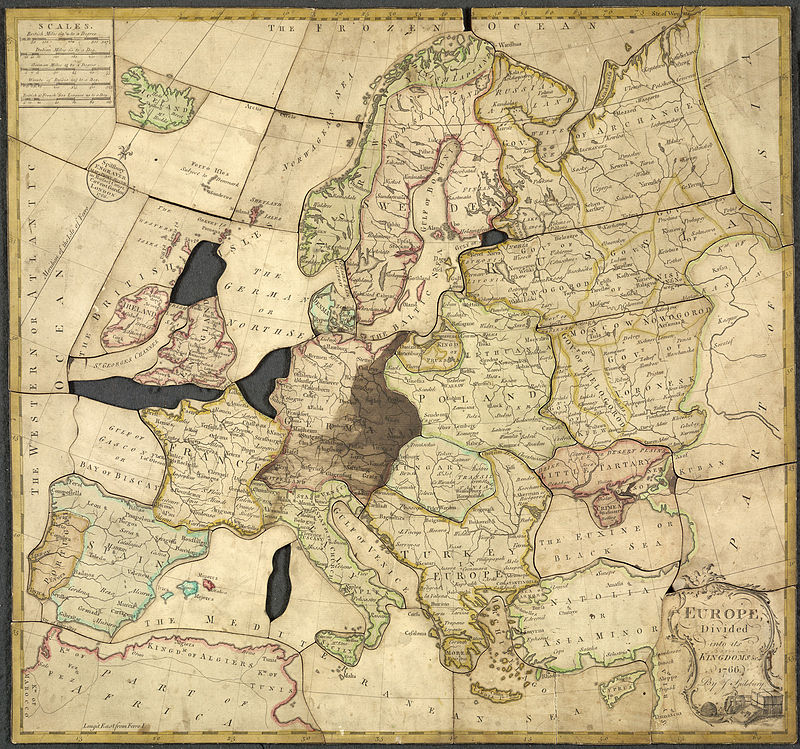
The first known jigsaw puzzle was made in the 1760s by British cartographer (mapmaker) John Spilsbury (1739–69) who fixed a map to a piece of flat wood and cut the countries out into separate shapes. It was designed to help teach geography. By the late 19th century, jigsaw puzzles had become toys featuring colourful illustrations. Manufacturers started using cardboard rather than wood to make them, and introduced pieces with rounded tabs to make them "fully interlocking". In the 1930s they became popular with adults as well as children. Jigsaws are still well-loved family toys today, since several people can work on solving a puzzle at once.
Radio-controlled toys
Radio-controlled toys—such as model cars and helicopters—can be steered from a distance using radio signals. These kinds of toys have been around since the 1970s, when the earliest models were powered by gas. Today, radio-controlled toys are battery-powered, and have wireless receivers to pick up radio signals sent by the controller. They all use the same radio frequency, which has been specially allocated for their use. This makes them different from remote-controlled toys, which use infrared signals or are connected to their controllers by wires.

In a radio-controlled car, a handheld controller contains the transmitter, which sends radio signals to a receiver inside the car. These signals control the speed of the motor and the car’s direction. Stick-like controls called joysticks are used for steering. The motor receives its power from a battery inside the car.