
Weather and climate
What causes winds to blow?
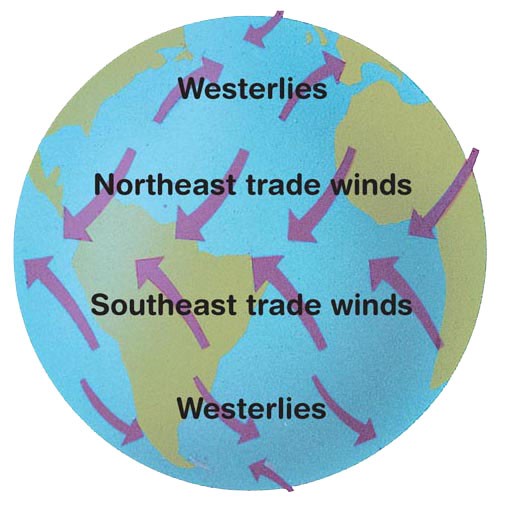
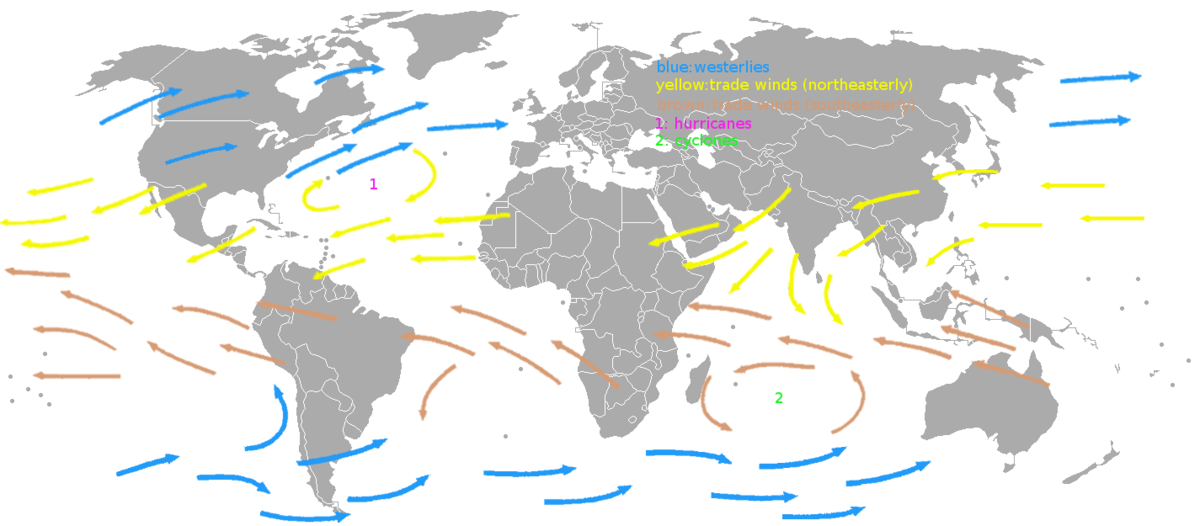
Wind is air moving from one area to another. When warm air rises, cooler air flows in to take its place. Winds are the result of the Sun’s uneven heating of the Earth’s surface. As a result, some places warm up more quickly than others. In the tropics, the surface is hot. The air rises and cooler air from both to the north and the south blow in to replace it. These are called trade winds. The Earth’s rotation causes the winds in the Northern Hemisphere to the swing to the right, and those in the Southern Hemisphere to the left (this is known as the Coriolis Effect). Winds carry rain-laden clouds and moist air evaporated from ocean waters around the globe.

Uneven heating
The Sun's rays reach the Earth's surface in polar regions at a greater angle than regions nearer the equator. The surface warms the air above it at the equator, causing it to rise. The air above the poles is cooled, causing it to sink and spread outwards.
The Earth's surface also warms unevenly because the land warms up more quickly than the oceans.
Atmospheric pressure
Atmospheric pressure at the Earth's surface is a measure of the weight of the air in the atmosphere pressing down on to it. The greater the mass of air above, the higher the pressure. Different places have differences in pressure, according to whether the air is rising or sinking. Where air is rising—because its warmer—there is lower pressure at the Earth's surface. Where air is sinking—because it is colder—there is higher pressure.
Air at the surface moves, as the wind, from high to low pressure to balance out the differences in pressure. The greater the difference in pressure, the faster the wind.

Cyclones and anticyclones
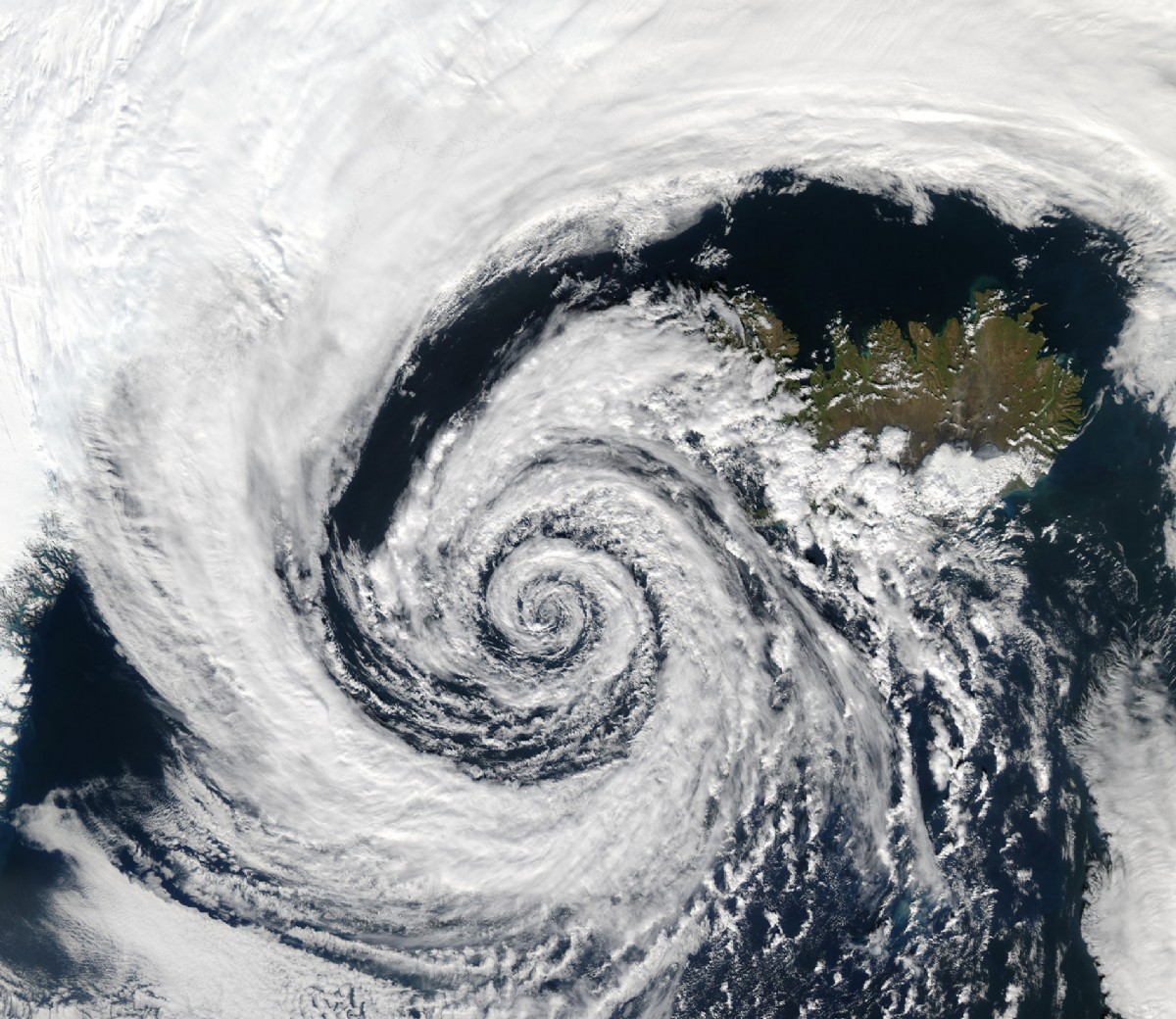
Cyclones are regions or centres of low pressure around which winds blow. Because of the way the Earth spins around, the winds blow anticlockwise in the Northern Hemisphere and clockwise in the Southern Hemisphere, the result of what is called the Coriolis Effect. In tropical areas where there is intense heating of sea water, winds blowing around a cyclone may increase in speed and tighten into a spiral to become a hurricane (known as a typhoon in the Pacific Ocean).
Anticyclones are regions or centres of high pressure. The winds circling around anticyclones blow clockwise in the Northern Hemisphere and anticlockwise in the Southern Hemisphere.
Land and sea breezes
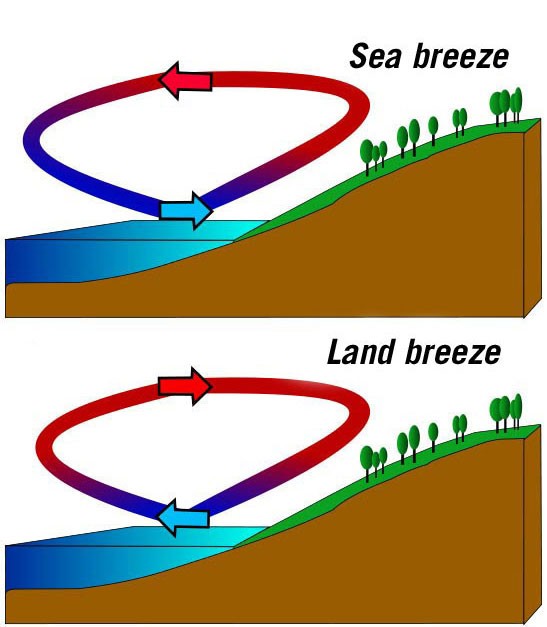
A sea breeze is a wind from the sea that develops over land near coasts. It is caused by temperature differences between the land and water. Because the land is relatively warmer than the sea during the day, the air above it rises. The air pressure above the land is therefore low, so higher pressure, cooler air from the sea blows inland: a sea breeze, or onshore wind. It explains why beaches are often cooler than inland areas on hot, sunny days.
At night, the land cools down quicker than the sea. The air pressure over the water is now lower than that over the land, so higher pressure, cooler air from above the land blows out to sea: a land breeze, or offshore wind.
Consultant: Ian Fairchild
Other Q-&-As to explore:
Why is the sea salty?
Where do the stars go in the day?
What is a flame?
Why did the dinosaurs die out?
What is thunder?
For a full list of all our Q&As, please click here.
If you have a question that you would like to see answered on Q-files, please send us an email to info@Q-files.com or use the contact us page.