
Polar regions
Climate change and Antarctica
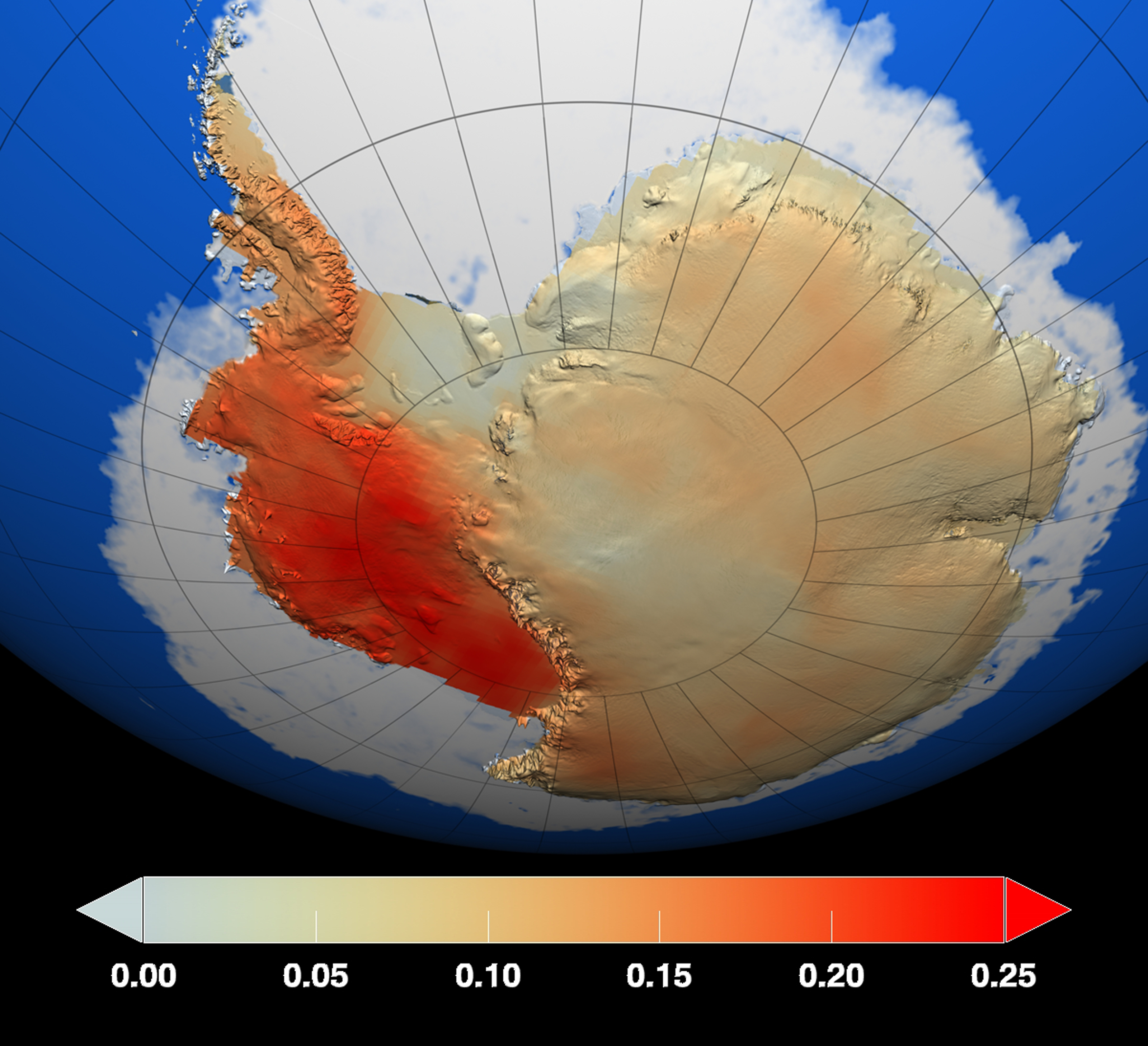
Global warming due to excess greenhouse gases in the atmosphere—the result the large-scale burning of fossil fuels—is causing Antarctic ice to melt. This will affect the rest of the Earth, not least because if melting ice releases water into the sea faster than it evaporates, global sea levels will rise. The melting of the Antarctic ice sheet, particularly the West Antarctic, would also likely cause ocean currents to shift and so affect global climates. Antarctica has lost on average 152 billion tonnes of ice per year since 2002 and scientists predict that sea levels will rise by 25 centimetres (10 inches) from the water melted from Antarctic ice by 2100. Even if global temperature rise is limited to the 1.5°C goal set out in the 2015 Paris Agreement, there is concern that ice loss from the West Antarctic ice sheet may continue at the same rate for many decades.
Updated 17th September 2024
Ice shelf thinning
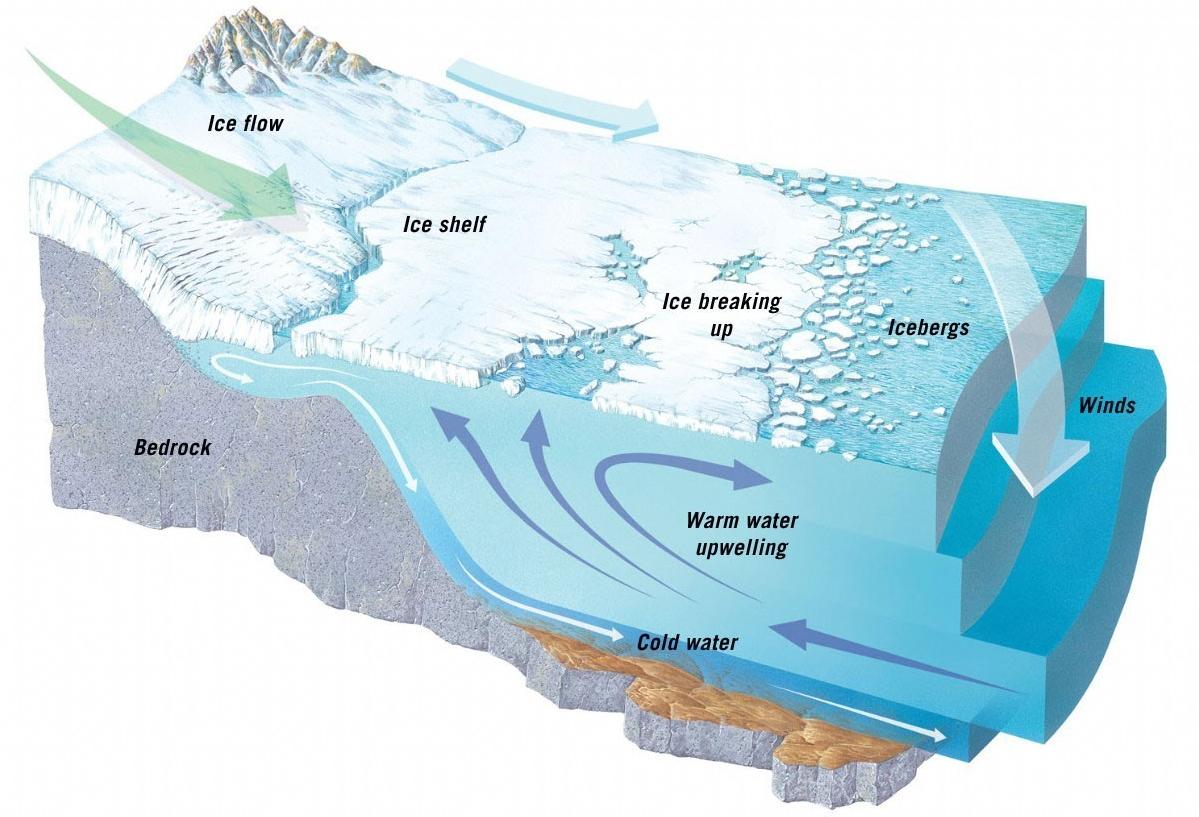
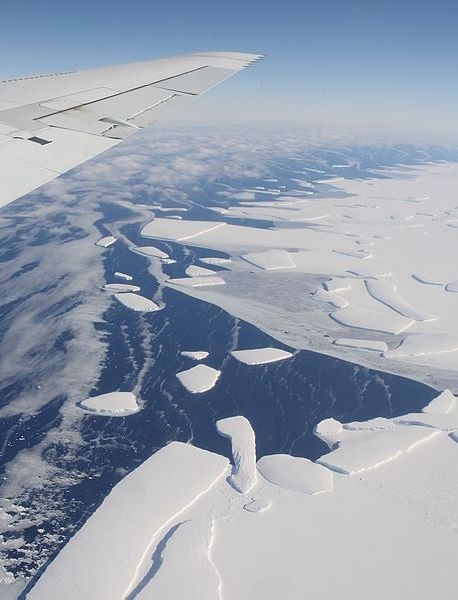
Scientists have discovered that Antarctica's ice shelves are thinning at an accelerating rate. Using satellite data collected between 1997 and 2015, they found the total loss was about 25 cubic kilometres per year for the first part of that period. But after 2003 this figure jumped to 310 cubic kilometres per year—a twelvefold increase. The ice shelves of West Antarctica, where most of the thinning appears to be taking place, act as a buttress to the West Antarctic ice sheet. There is concern that if this thinning weakens the shelves so that land ice flows much faster towards the sea, an imbalance is created. Ice melting in the sea at a faster rate than water is evaporated and falls on the ice sheet as snow will cause sea levels to rise.
Loss of ice appears to be occurring in much of the West Antarctica ice sheet. In 2019, a research team using data from CryoSat, a polar observing satellite, reported that the elevation (height above sea level) of the ice sheet was falling by almost two centimetres (0.8 inch) a year.
Scientists think that the thinning is being caused by warm water getting under the floating ice shelves, melting them from below. This warmer water appears to be being blown towards Antarctica by stronger westerly winds in the Southern Ocean—possibly an effect of global warming. As of 2022, the two ice shelves thinning most rapidly are those in front of the Pine Island and Thwaites glaciers in West Antarctica.
Ice sheet reduction
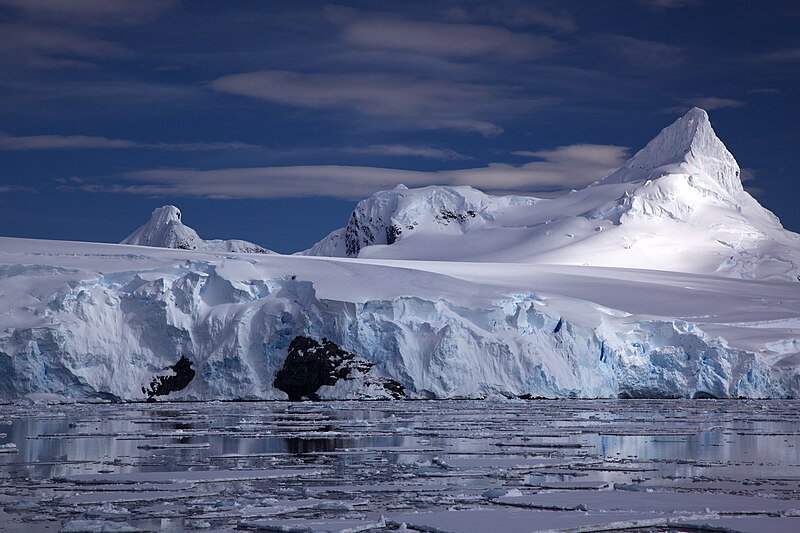
The West Antarctic ice sheet is much more vulnerable to the loss of ice than the East Antarctic ice sheet, which has about 10 times the volume of ice as West Antarctica and is regarded as stable. In West Antarctica, however, there are no large large ice shelves along the coasts of the Amundsen and Bellinghausen seas to stem the flow of ice streams from the interior—and where ice shelves do exist, they are in danger of breaking up.
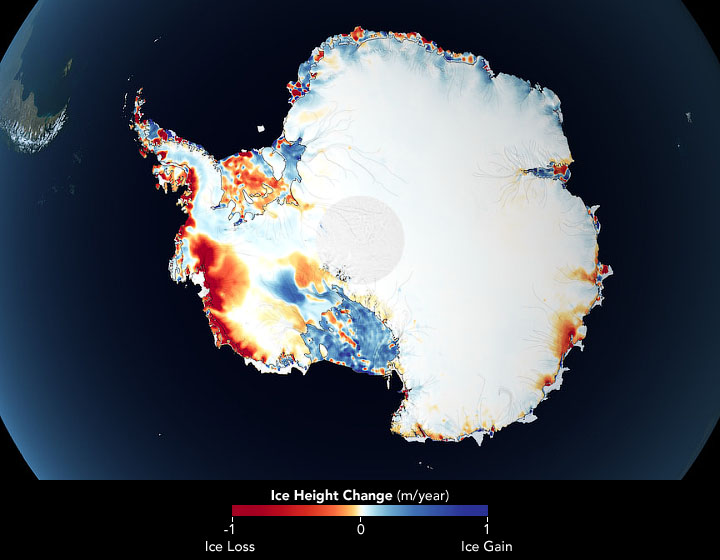
The warming of the Southern Ocean off the Antarctic coast is causing ice stream glaciers to slide into the sea increasingly rapidly. The warm waters melt the underside of the ice where it grinds against the sea bed. The melting reduces the friction where ice meets rock, enabling the ice to slide more quickly into the sea. The ice streams are flowing faster than snowfall on West Antarctica can replenish them, with the result that the ice sheet is becoming thinner and thinner.
Pine Island Glacier, a large ice stream in West Antarctica and the fastest melting glacier in the entire continent, is alone responsible for about 25% of Antarctica's ice loss.
Research shows that ice is being lost from the West Antarctic ice sheet faster in recent decades. More than 100 metres (330 feet) of ice thickness has gone in some parts since the 1990s. A 2018 study estimated that ice loss across the entire continent was 43 gigatonnes (Gt) per year on average during the period 1992–2002. This accelerated to an average of 220 Gt per year during the five years from 2012 to 2017. Most of the ice loss has taken place on the Antarctic Peninsula and West Antarctica.


What happens to the ice? It breaks up into icebergs which eventually melt. If water is released into the oceans at a faster rate than it evaporates, a rise in sea levels will occur. Antarctica's total contribution to sea level rise since 1979 has been estimated to be between 8 and 14 millimetres (0.3 to 0.55 inches). A complete loss of the West Antarctic ice sheet—which, thankfully, would take many centuries to take place—would raise sea levels by about 5 metres (16 feet), submerging coastal cities across the globe.
Thwaites Glacier
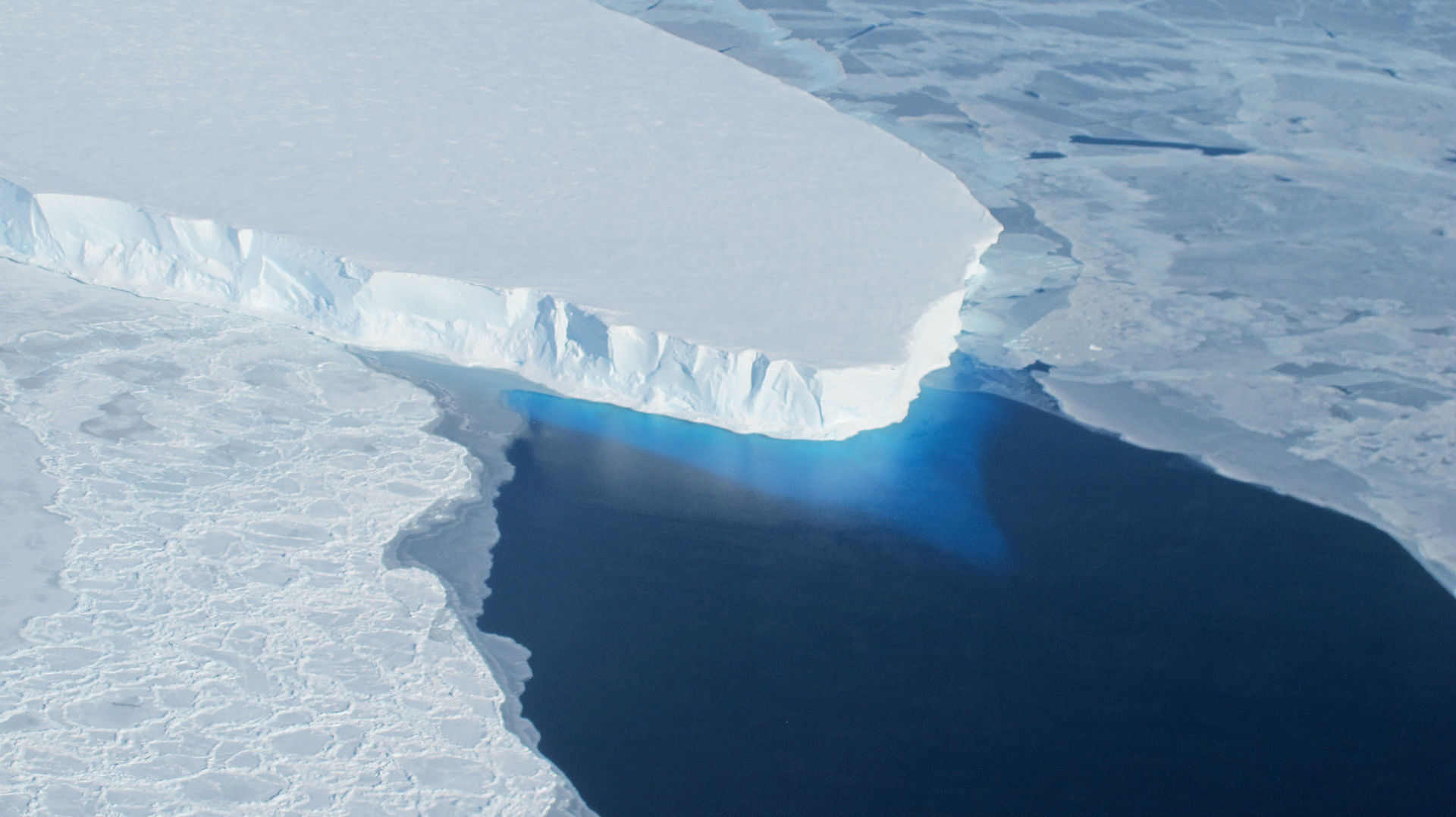
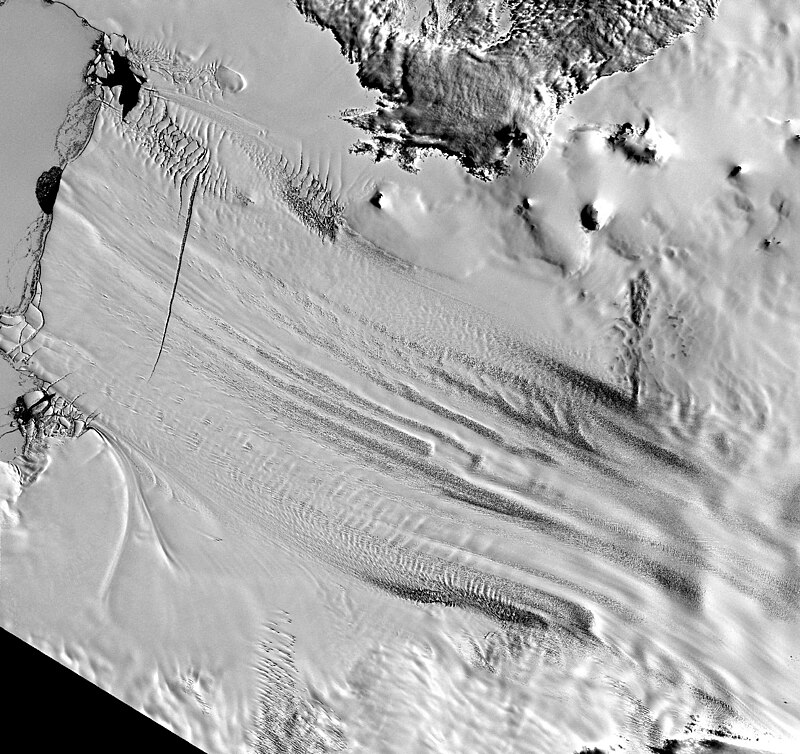
Researchers are keeping a close eye on the ice shelf formed by West Antarctica's second largest ice stream, the Thwaites Glacier. At roughly the size of Florida, Thwaites is one of the largest and widest glaciers in the world, spanning about 120 kilometres (80 miles). It flows off the land to form an ice shelf floating in the Amundsen Sea. Now warming ocean water is causing the ice shelf to melt from below. Scientists think the shelf may shatter into many pieces, creating hundreds of icebergs, and that this may take place during the later 2020s or early 30s. If so, the Thwaites' outflow is likely to accelerate quickly. Thwaites has already lost 540 billion tonnes of ice since the 1980s. Its annual ice loss has doubled in the past 30 years, and it now loses around 45 billion tonnes more ice than it receives in snowfall per year.


The amount of ice likely to be lost from Thwaites in this century will amount to only a few centimetres of sea level rise. But if the entire glacier were ever to melt and release all its water into the ocean, sea levels worldwide would rise by more than 65 centimetres (2 feet). This is unlikely to come about for many centuries, but is nonetheless a cause for concern. It is the reason why Thwaites is popularly known as the "Doomsday Glacier".
Loss of sea ice
Sea ice forms in the ocean waters surrounding Antarctica during the continent's winter months, March to October. It reaches its maximum extent in September. Most of the ice melts in summer, reaching its lowest extent each February. In 2023, Antarctic sea ice reached a minimum extent of 1.79 million square kilometres in February—a record low. The rate of growth since then has been slow, reaching a maximum of only 16.96 million sq km in September—well below previous winter record lows—before falling back. The pattern repeated itself in 2024: on 7th September, the amount of sea ice was less than on the same date in 2023. The average between 1981 and 2010 was 18.71 million sq km, meaning a loss of ice of around 1.75 million sq km (the area of Alaska and Arizona combined).
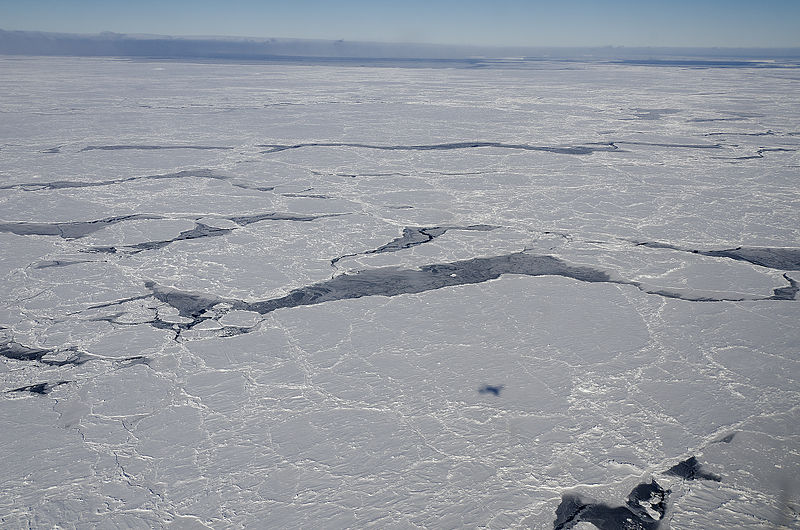
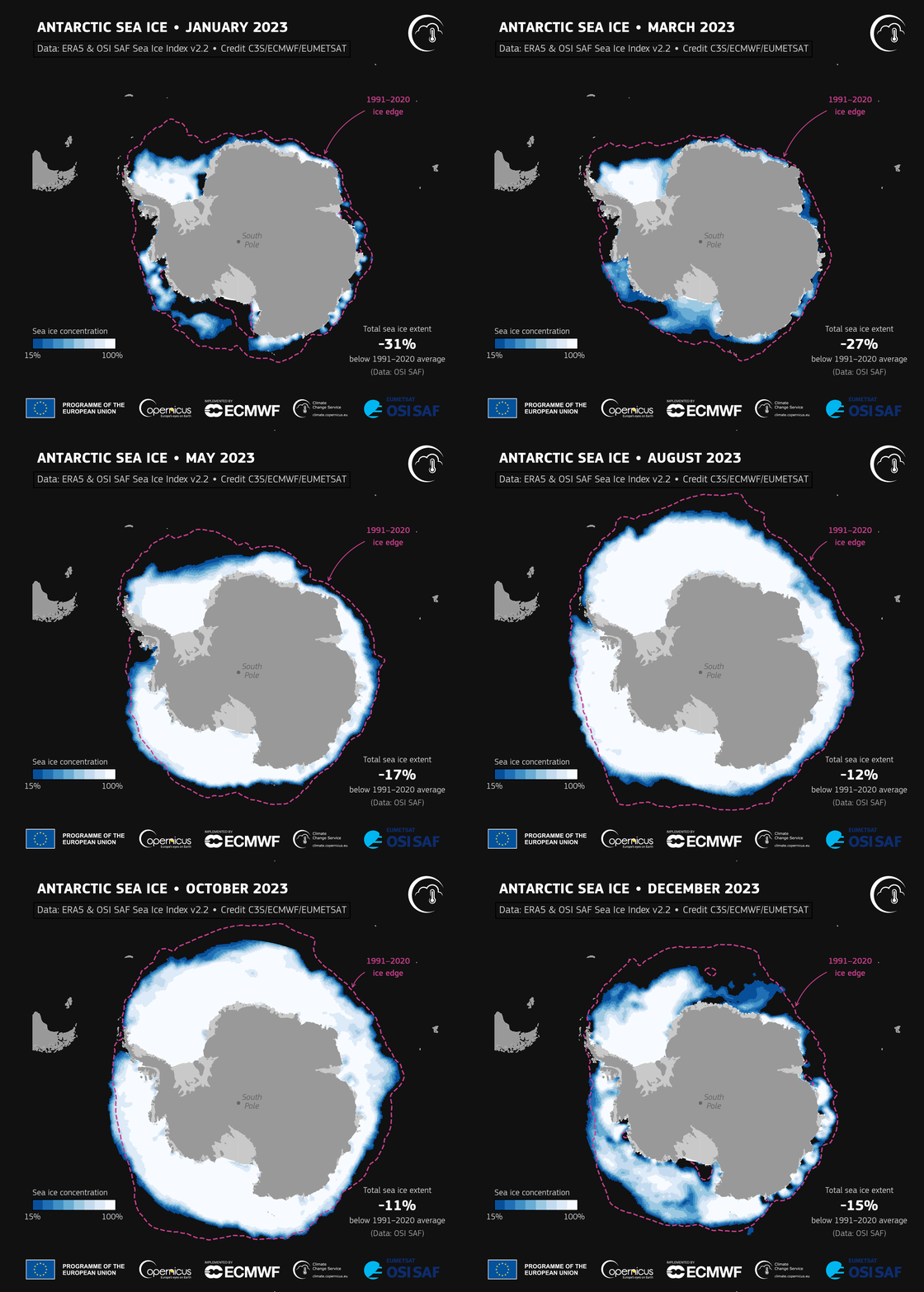
Scientists think there are several natural factors which are affecting the region at the same time, but global warming is likely to be a contributory cause: the surface waters of the Southern Ocean, which surrounds the continent, have been consistently warmer since 2016. There may have also been changes in ocean currents and the strengthening of winds that drive temperatures in Antarctica.
Antarctica's huge expanse of ice regulates the temperature of the entire Earth: it acts as the planet's "refrigerator". This is because its white surface reflects the Sun's energy back into the atmosphere like a vast white mirror. When sea ice disappears, it exposes the dark ocean, which absorbs sunlight instead of reflecting it. This means that the heat energy is added to the water, which in turn melts more ice. Scientists call this the ice-albedo effect. Without its ice cooling the planet, Antarctica is in danger of turning from a refrigerator into a radiator.

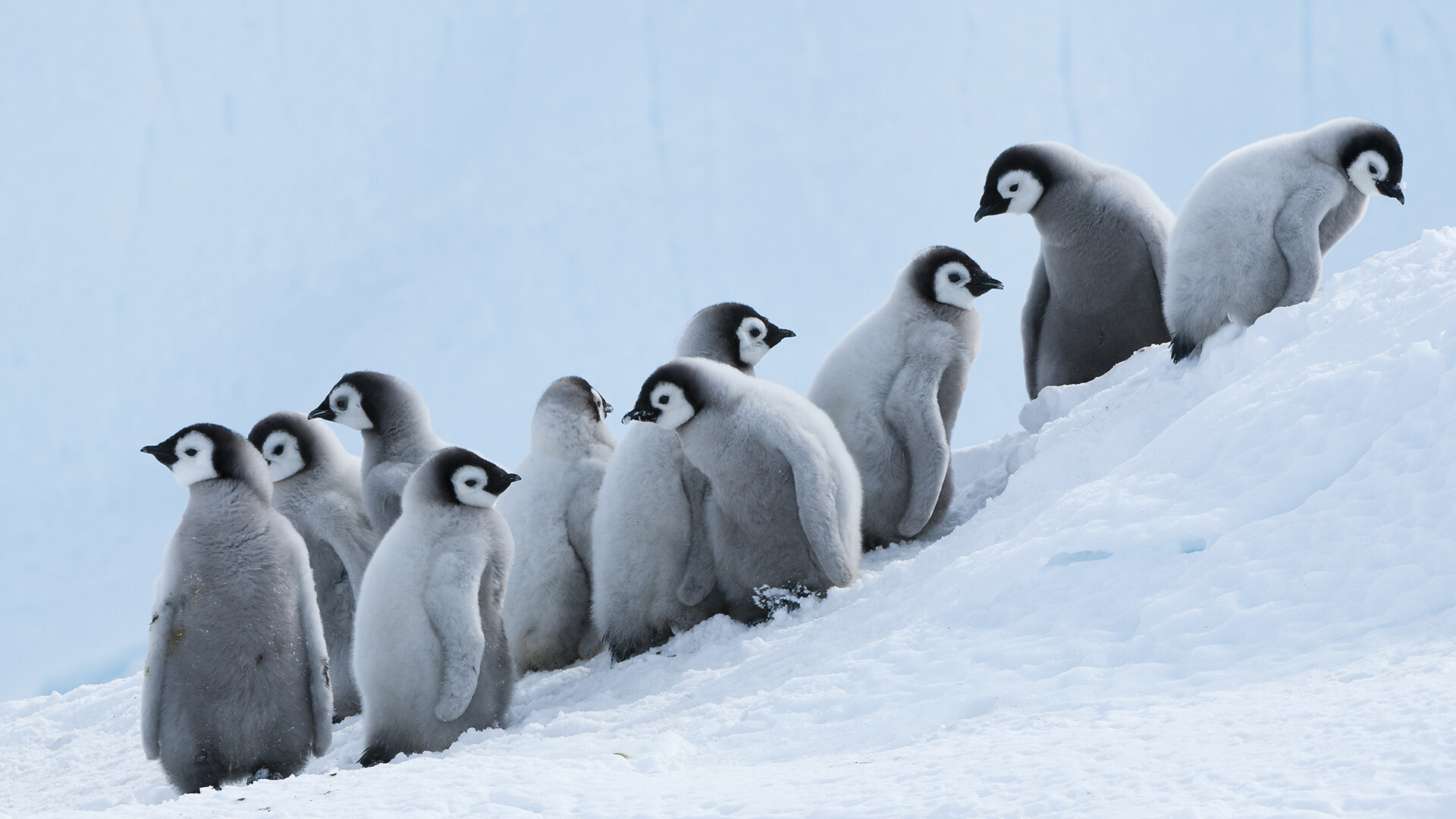
The loss of winter sea ice is already affecting Antarctica's wildlife. Thousands of emperor penguin chicks have died and a lack of food is threatening the continent’s fur seals. Warmer Antarctic waters may affect the growth of krill which feed on phytoplankton beneath the sea ice. Vast swarms of krill provide food for a wide range of marine species, including baleen whales.
Consultant: Nicholas Harris