
Ancient Egypt

CITE
We have made every effort to follow citation style rules, but there may be some minor differences. If in doubt, please refer to the appropriate citation style manual.
Funeral of a pharaoh. (2026). In Q-files Encyclopedia, History, Ancient Egypt. Retrieved from
https://www.q-files.com/history/ancient-egypt/funeral-of-a-pharaoh
"Funeral of a pharaoh." History, Ancient Egypt, Q-files Encyclopedia, 26 Mar. 2026.
https://www.q-files.com/history/ancient-egypt/funeral-of-a-pharaoh.
Accessed 22 Sep. 2026.
Funeral of a pharaoh 2026. History, Ancient Egypt. Retrieved 22 September 2026, from
https://www.q-files.com/history/ancient-egypt/funeral-of-a-pharaoh
History, Ancient Egypt, s.v. "Funeral of a pharaoh," accessed September 22, 2026.
https://www.q-files.com/history/ancient-egypt/funeral-of-a-pharaoh


Funeral of a pharaoh
On the death of the pharaoh, the plans for his funeral were put into action. Firstly, his body was taken to be prepared for burial: made into a mummy. This process took 70 days to complete. Ceremony and ritual were important features of a pharaoh’s funeral. After the Opening of the Mouth ceremony had taken place, priests carried the coffin to the tomb. Following one final ceremony, the coffin was lowered carefully into the sarcophagus. The priests then left the tomb. Buried alongside the pharaoh and his treasures were food, drink and other necessities he would need in the Afterlife.
Opening of the Mouth
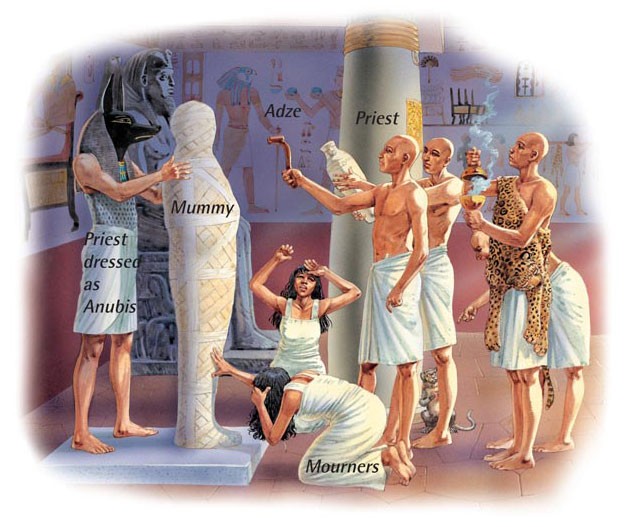
The Opening of the Mouth ceremony took place after the mummification process has been completed. While one priest, dressed as the jackal-headed god Anubis, held the pharaoh's mummy upright, another priest held out an adze, a kind of hand tool. He touched the hands, feet, eyes, ears, nose and mouth. By so doing, the priest enabled the dead pharaoh to breathe, eat and speak in the Afterlife.
A pyramid burial

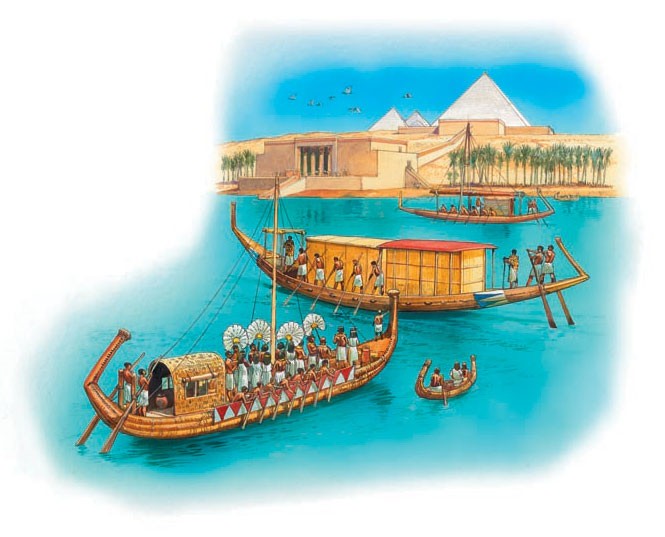
During Old Kingdom days, dead pharaohs were entombed in pyramids. A pharaoh’s life work was the building of his pyramid. On the day of his funeral, his coffin was taken by a barge on its short journey from the royal palace in Memphis along the Nile to his pyramid. His ka statue, the Chief Embalmer, priests, mourners (known as kites), and other members of his family all travelled with him. As the boats sailed along the river, the Lector Priest read from a scroll of “magical utterances”. The barge bearing the pharaoh’s coffin then docked at the pyramid harbour.
The pharaoh's body was first taken inside the valley temple where it was prepared for burial by undergoing the mummification process. The coffin was then mounted on a sled, which was pulled by oxen up the causeway. After rituals had taken place inside the mortuary temple—including the Opening of the Mouth ceremony—priests carried the coffin along the passageway inside the pyramid to the tomb. Following the burial, granite slabs were lowered behind them, sealing off the tomb.

Funerary boats
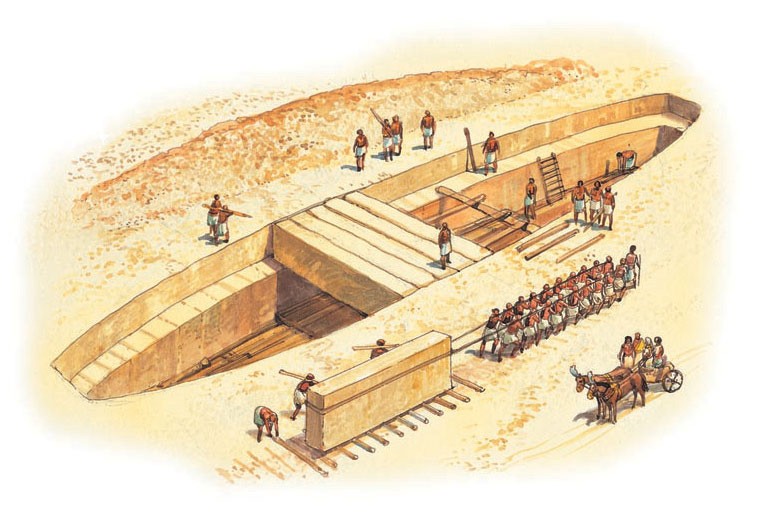
The pharaoh needed boats to carry him to the heavens in the Afterlife. These were built specially and buried close by his pyramid. Workers dug two long, boat-shaped pits in the ground, placed the parts of a funeral boat carefully inside each one and lay a series of limestone beams to cover them over.
A funeral in the Valley of the Kings
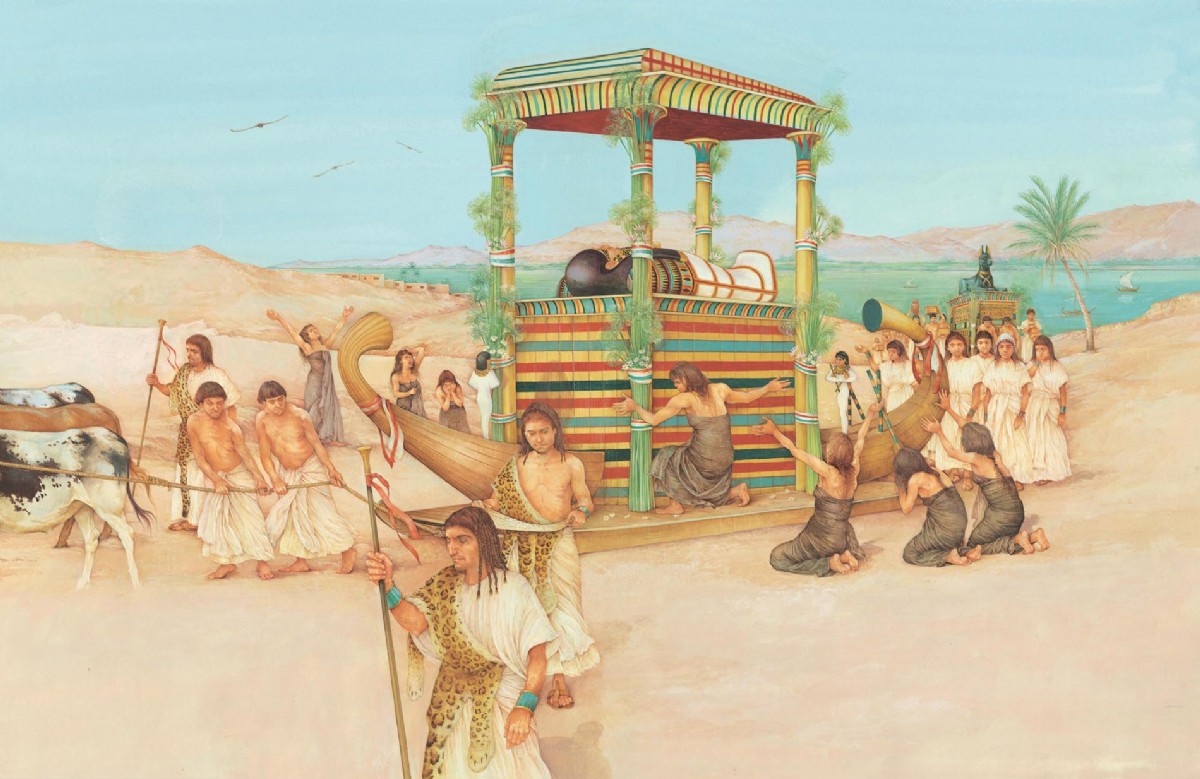
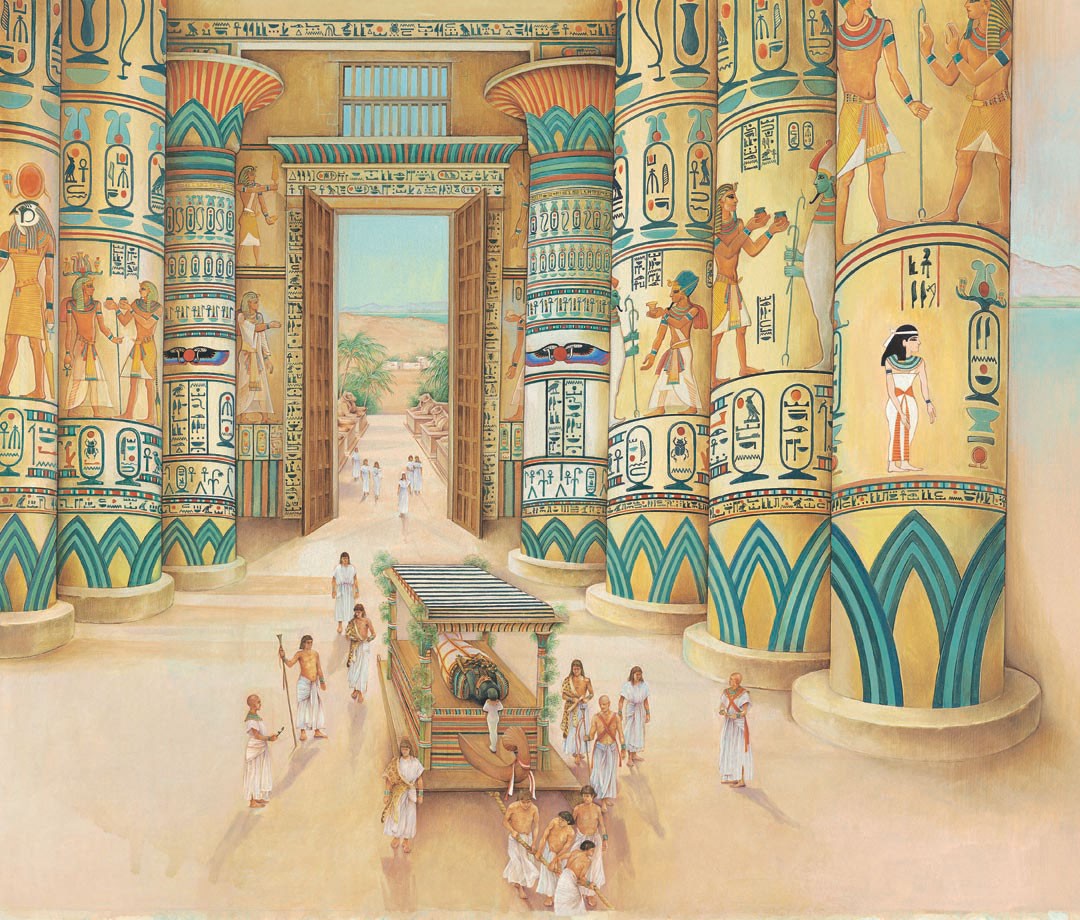
By the New Kingdom, pyramids were no longer being built. The burial place for pharaohs was now in the Valley of the Kings, on the western bank of the Nile, opposite Thebes, the religious capital of ancient Egypt. A flotilla of boats first carried the dead pharaoh, his family, officials and priests along the Nile to Thebes. The pharaoh's body was then taken to the Great Temple of Amun-Re. The funerary boat was dragged on a sled by a team of oxen into the hypostyle hall through the massive doors. From here it passed by rows of huge, richly decorated columns to the inner sanctuary where prayers were said.
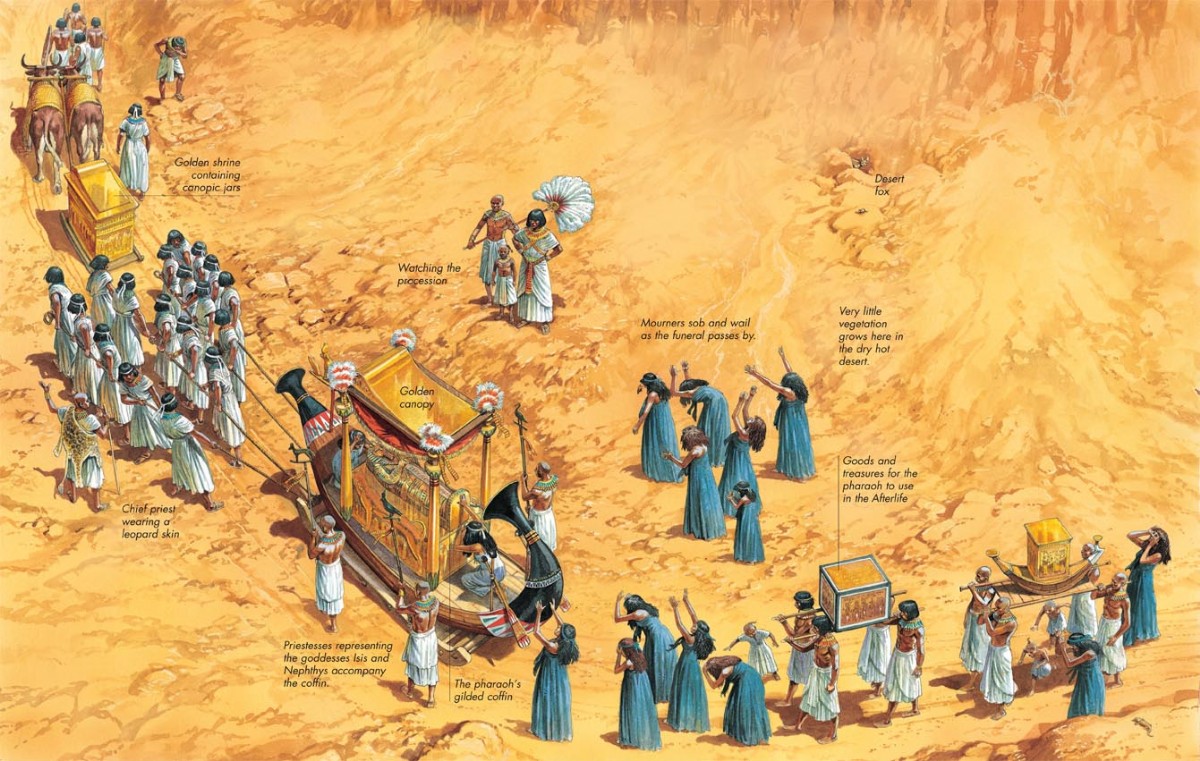
Then the funeral party made the short journey across the Nile and to the Valley of the Kings where the pharaoh’s tomb had already been dug and prepared, ready to receive its occupant. Priests pulled the coffin and walked alongside carrying symbols of the gods on long staffs.
Following the Opening of the Mouth ceremony, a great banquet was held outside the tomb’s entrance. Then the coffin was then carried down a series of steps and passageways, cut deep inside the rock, to the burial chamber. Following the burial, the priests ordered the tomb to be permanently sealed with blocks of stone to protect its treasures from robbers.
Consultant: Philip Parker
pics

Without in any way limiting Q-files Ltd’s exclusive rights under copyright, any use of this publication to “train” generative artificial intelligence (AI) technologies to generate text is expressly prohibited. Q-files Ltd reserves all rights to license use of this work for generative AI training and development of machine learning language models.