
British kings and queens
Anglo-Saxon and Danish kings of England
Egbert (802–839)
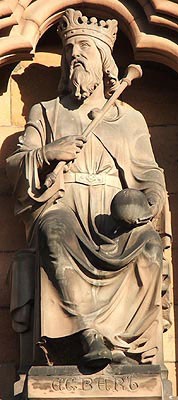
Egbert (Ecgberht), King of Wessex, was the first monarch to establish rule over the whole of Anglo-Saxon England. Returning from exile at the court of Charlemagne, he won back the kingdom of Wessex in 802. Following his conquest of Mercia at Ellandun in 825, he gained control all of England south of the Humber. Victories in Northumberland and North Wales in 829 extended his territories. He was later regarded as the Bretwalda (Anglo-Saxon for "ruler of the British”). Just before he died, Egbert defeated a combined force of Danish Vikings and Cornish at Hingston Down in Cornwall.
Aethelwulf (839–856)
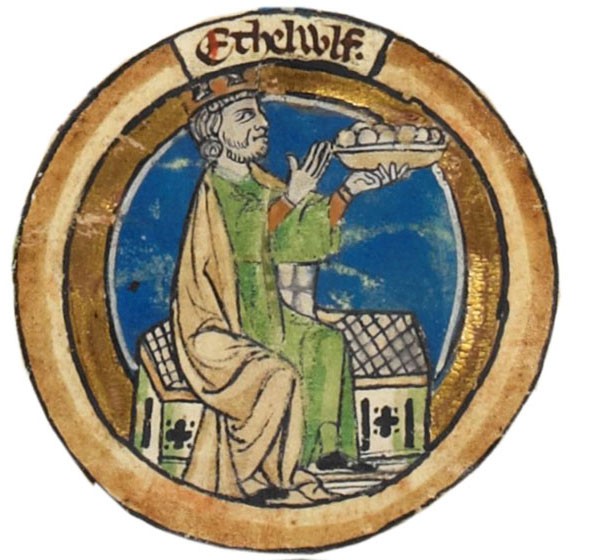
Aethelwulf was the son of Egbert. In 851 he defeated a Danish army at the Battle of Aclea. In what was probably the first naval battle to take place in English waters, his eldest son Aethelstan triumphed against the Danes off the coast of Kent. A devoted Christian, Aethelwulf travelled with his son Alfred on a pilgrimage to Rome to meet the Pope in 855. Aethelwulf insisted that each of his four sons became king in turn, rather than allow young children to become king and risk weakening the monarchy.
Aethelbald (856–860)
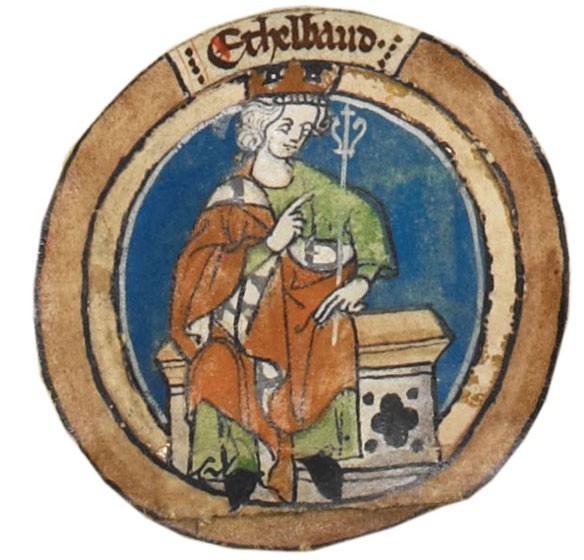
The eldest son of Aethelwulf, Aethelbald was born around 834. He forced his father to abdicate (give up the throne) upon his return from his pilgrimage to Rome. Following his father’s death in 858, he married his widowed stepmother, Judith, daughter of Charles the Bald, king of the Franks. Their marriage was, however, annulled (cancelled) after only a year.
Aethelbert (860–866)
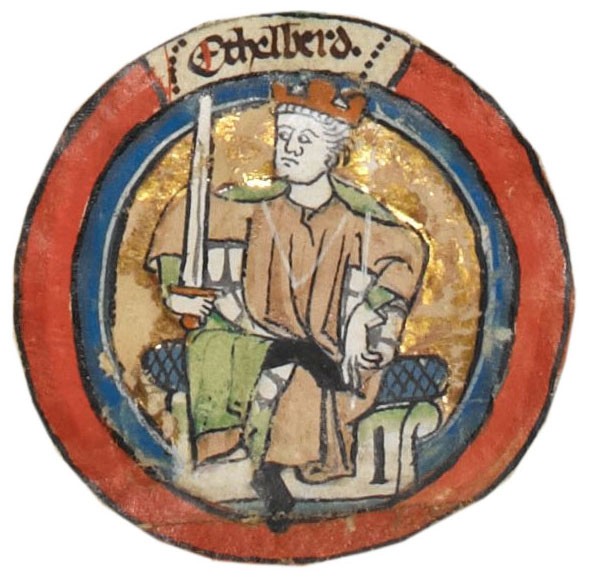
Aethelbert became king following the death of his brother Aethelbald. Shortly after his succession, Danish Viking forces sacked Winchester, before being driven back by the Saxons. In 865 another Danish army landed in East Anglia and began their conquest of England.
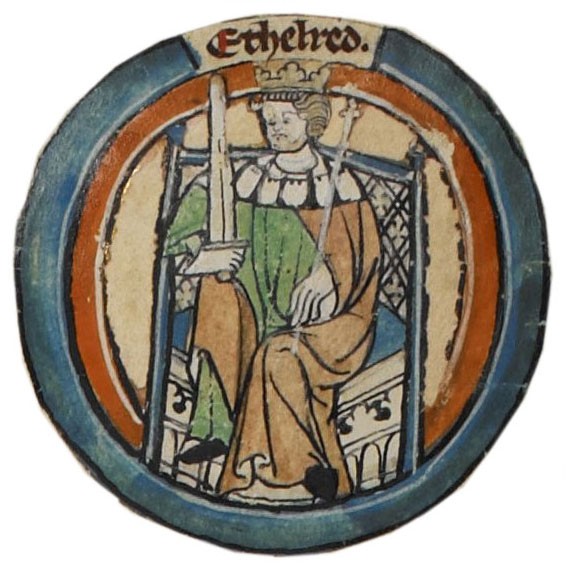
Aethelred I (866–871)
Aethelred succeeded his brother Aethelbert. His reign became a struggle against the invading Danish forces, who established the Viking kingdom of Jorvik with York as their capital. In defence of the kingdom of Wessex, together with his brother Alfred Aethelred fought the Danes at Reading, Ashdown and Basing. Aethelred suffered serious injuries during the another battle at Meretun in Hampshire. He died of his wounds shortly afterwards at Witchampton in Dorset.

Alfred (870–899)
Alfred became king of Wessex in 870 and spent the first years of his reign fighting the Danish Vikings. After he defeated the Danes in 878, he signed a treaty with their leader, Guthrum, dividing England in two along a line from London to Chester. Alfred ruled the land to the south but was recognized as overlord of the Viking-run territory, which later became known as the Danelaw, to the north. A great scholar, Alfred translated important historical works in Latin into Anglo-Saxon and supported schools and monasteries. In 891, he ordered work to begin on the Anglo-Saxon Chronicle, a yearly account of events in England that continued into the 1100s. Alfred was the only English monarch to be known as "the Great".
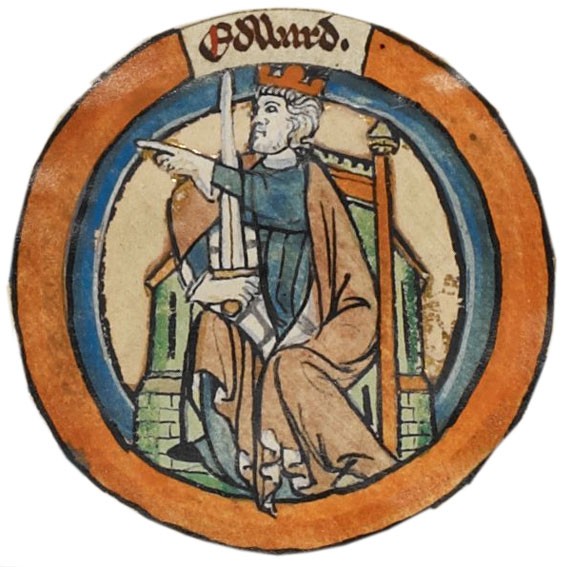
Edward the Elder (899–924)
Edward was the son of Alfred the Great. A bold soldier, he made great gains from the Danes. He defeated them in Northumbria at Tettenhall in 910 and, in alliance with his sister Aethelflaed—who had married the ruler of Mercia and governed that kingdom after her husband's death—retook south-eastern England and the Midlands. By 921, he had subdued the Scots, whose king, Constantine II, recognized him as "father and lord". Edward was killed fighting the Welsh near Chester.
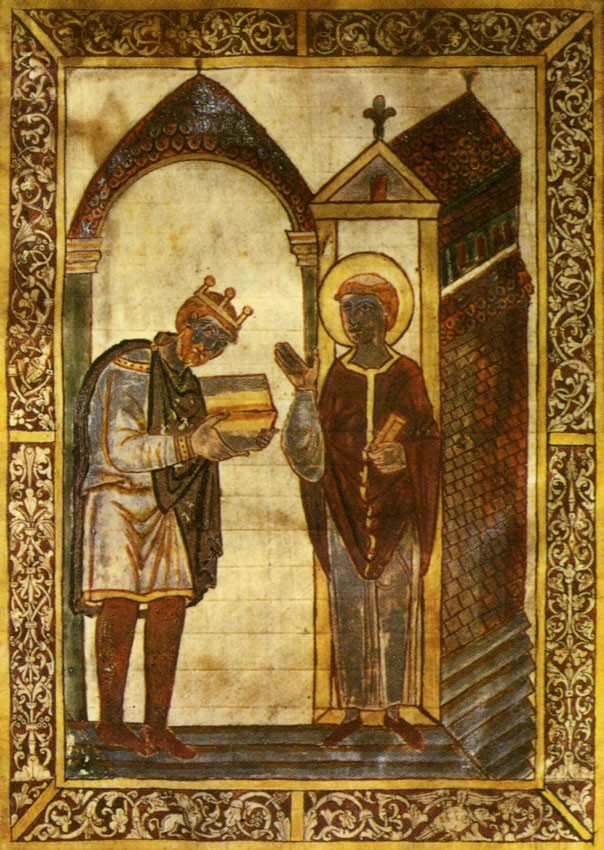
Aethelstan (924–939)
Son of Edward the Elder, Aethelstan extended the boundaries of his kingdom even further than his father had done. In the years 927–28, Aethelstan took York from the Danes, forced King Constantine of Scotland and the northern kings to submit to him, and made the Welsh kings agree to pay him an annual tribute, including 25,000 oxen. At the Battle of Brunanburh in 937, Aethelstan defeated an invasion by the king of Scotland in alliance with the Welsh and Danes in what is said to be one of the bloodiest battles ever fought on British soil. For the first time, all the Anglo-Saxon kingdoms were brought together to create a unified England—although Aethelstan had, in effect, become the ruler of the whole of Britain. He died childless.
Edmund I (939–946)
Edmund succeeded his half-bother Aethelstan as king at the age of 18. He had already fought alongside him at the Batlle of Brunanburh in 937. He re-established Anglo-Saxon control over northern England and suppressed rebellions by the Mercian Danes. Aged only 25, Edmund was stabbed by a robber at a feast in his own hall at Pucklechurch near Bath.
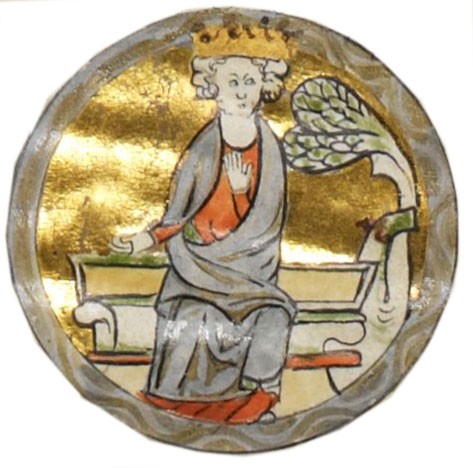
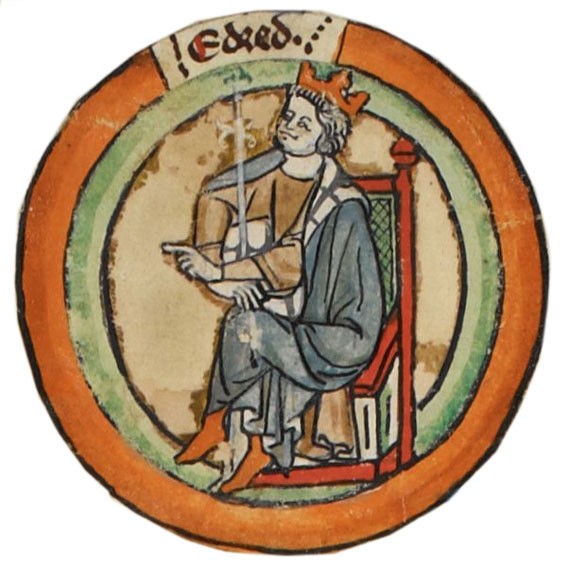
Eadred (946–955)
The son of Edward the Elder by his third marriage to Eadgifu, Eadred succeeded his brother Edmund. He defeated the last Danish Viking king of York, Eric Bloodaxe, in 954. Eadred died from a serious stomach ailment in his early 30s, unmarried and without an heir, at Frome in Somerset.
Eadwig (955–959)
The eldest son of Edmund, Eadwig (Edwy) was about 16 when he was crowned king. The coronation, conducted by Oda, Archbishop of Canterbury, took place at Kingston-on-Thames, which was situated on the border between Alfred's kingdom of Wessex and the Danelaw. Mercia and Northumbria broke away in rebellion during Eadwig’s short reign. He died in Gloucester when he was just 20 from unknown causes.

Edgar (959–975)
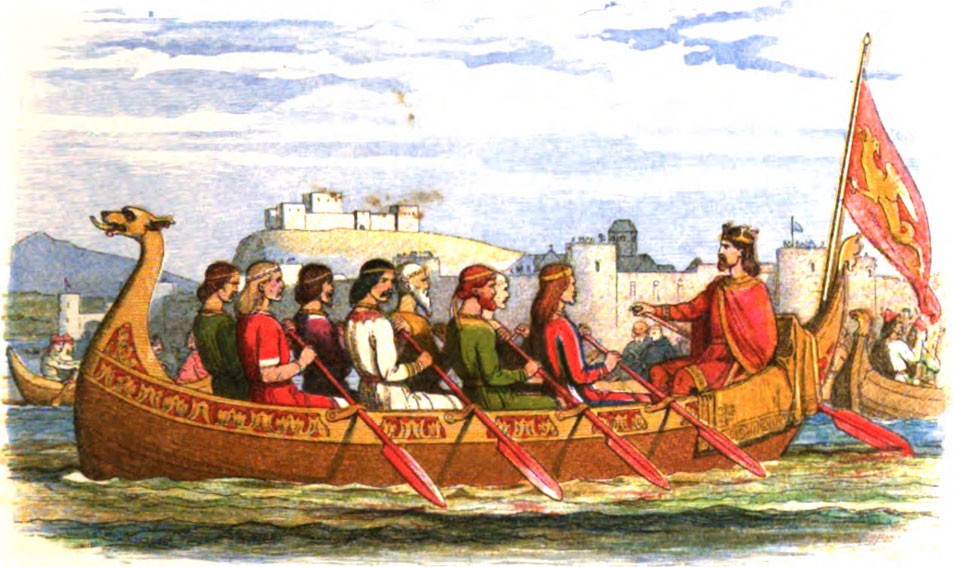
The youngest son of Edmund, Edgar had been in dispute with his brother concerning succession to the throne. He was already king of Mercia and the Danelaw from 957, and succeeded his brother as king of England following Eadwig's mysterious death in 959. Together with Dunstan, whom he made Archbishop of Canterbury, Edgar led a revival of England’s monasteries. At his coronation of Bath in 973, his wife, Aelfthryth became the first consort to be crowned queen of England.
A strong king, the rule of Edgar "the Peaceful" was acknowledged by other rulers in Britain, as well as by Welsh and Scottish kings. He made laws that, for the first time, applied in Northumbria as well as Wessex and Mercia.
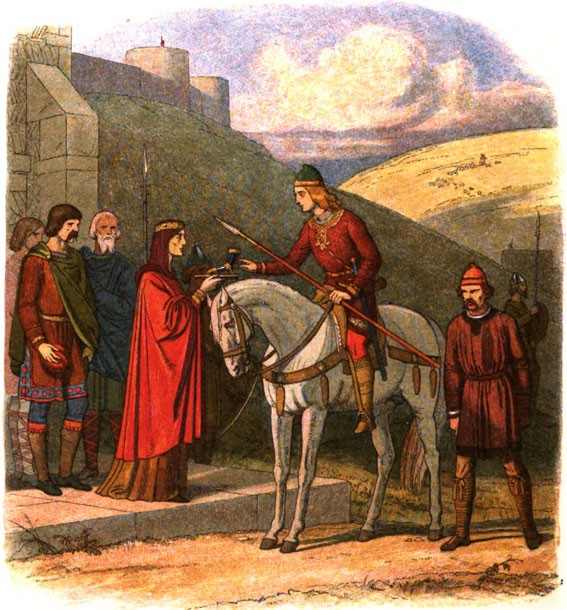
Edward the Martyr (975–978)
Eldest son of Edgar (but not of Queen Aelfthryth), Edward was crowned king when aged just 12. His claim to the throne was contested by the supporters of his even younger half-brother, Aethelred. The dispute almost led to civil war in England. Edward's short reign ended when he was murdered at Corfe Castle by followers of Aethelred. A victim of the widowed Queen Aelfthryth’s ambitions for her own son Aethelred, he was named a martyr by his supporters, and later recognized as a saint by both the Catholic and Eastern Orthodox churches.
Aethelred II (978–1013 and 1014–1016)
Aethelred, the younger son of Edgar, became king at the age of about 10, following the murder of his half-brother Edward. Known as the Un-raed or “Unready” (meaning “ill-advised”, or that he was unwise), Aethelred failed to win the allegiance of many of his subjects. Relations with the Church, a powerful force in the land, and which had made his dead brother a martyr, were also poor at first. Aethelred tried to defend England against Danish raids from the 980s onwards by attempting to buy them off with money raised through a tax which later became known as Danegeld.
In 1002, Aethelred ordered the massacre of all Danes in England. But he was forced to flee to Normandy in 1013 when Sweyn Forkbeard, King of the Danes, along with his son, Cnut, invaded and conquered England. Aethelred returned to England in 1014 after Sweyn's death. But the rest of his reign was marked by constant war with Cnut.
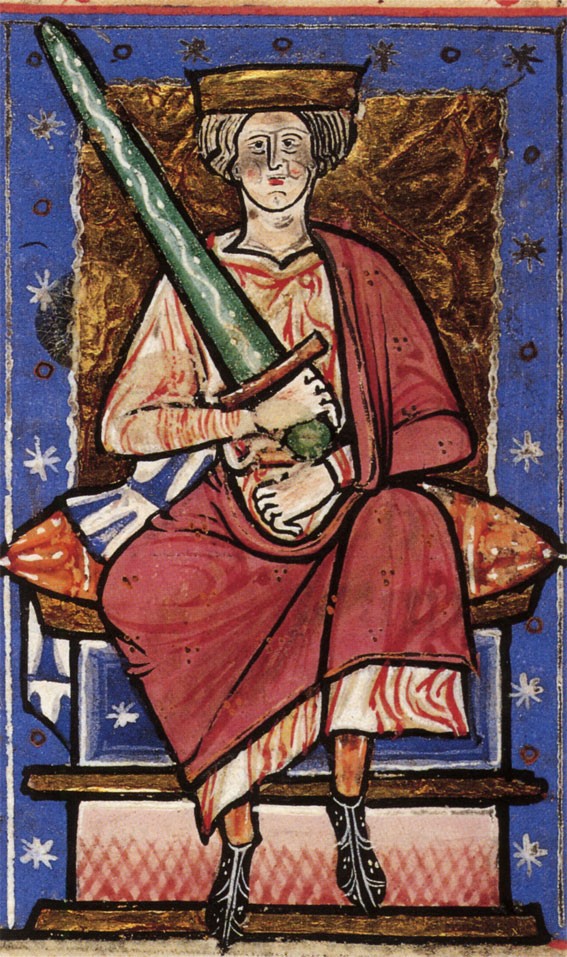
Sweyn Forkbeard (1013–1014)

Sweyn Forkbeard, King of the Danes, along with his son, Cnut, invaded England with a large army in 1013 and, despite some resistance from Aethelred in London, the country surrendered to him without a fight. Sweyn, son of Harald Bluetooth of Denmark, had, since 1000, also ruled part of Norway. Proclaimed king of England on Christmas Day 1013, Sweyn was the first Danish king of England. Sweyn made his base at Gainsborough in Lincolnshire, but just five weeks later he was dead.
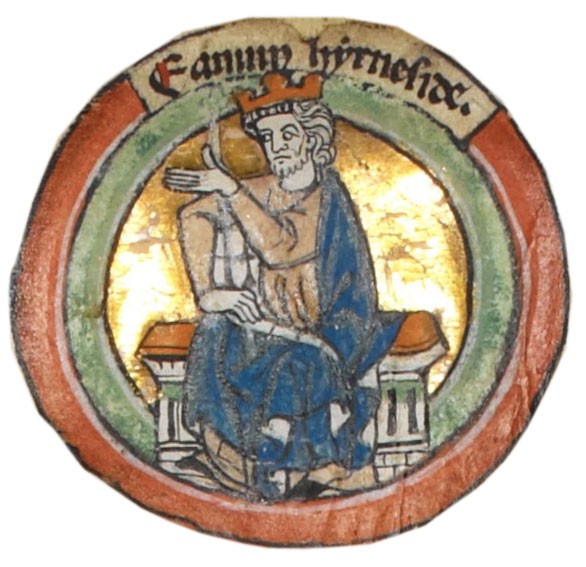
Edmund II (1016)
The son of Aethelred and his first wife, Aelfgifu of York, Edmund was chosen to succeed Aethelred by the citizens of London—but by then much of the rest of England had been conquered by Cnut. Their armies met at the Assandun in Essex, where Edmund was defeated. He agreed to divide up the kingdom, with Cnut ruling the north and Edmund the south. However, Edmund suddenly died—he was probably assassinated—so the whole country fell to Cnut. Edmund was named "Ironside" because of the resistance he had initially led against the Danes.
Cnut (1016–1035)
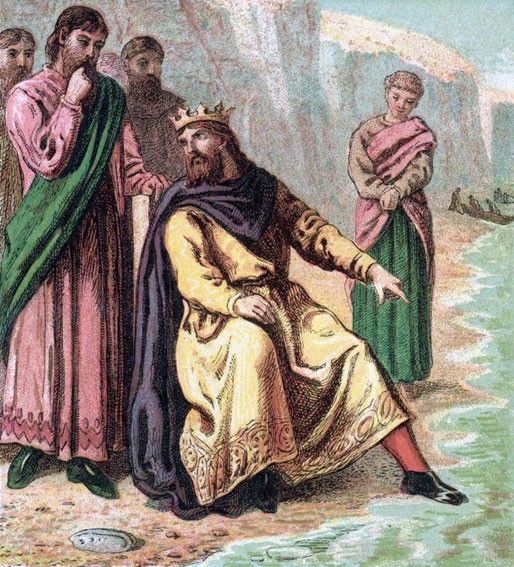
In 1014 the Danish king of England, Sweyn Forkbeard, died and was succeeded by his son Cnut (Canute). Cnut eventually took control of England after the deaths of the Saxon kings Aethelred and Edmund. Cnut was a wise ruler, treating both Danes and Saxons with equal respect. He created a large empire, including Denmark, Norway and parts of Sweden, that lasted until his death in 1035. Cnut is famous for an event, which may or may not have happened, when he set his throne by the seashore and commanded the tide to halt. When the sea continued to rise as usual and the waves washed over his feet, Cnut leapt backwards and declared that a king's power was worthless: the sea obeyed only the law of God.
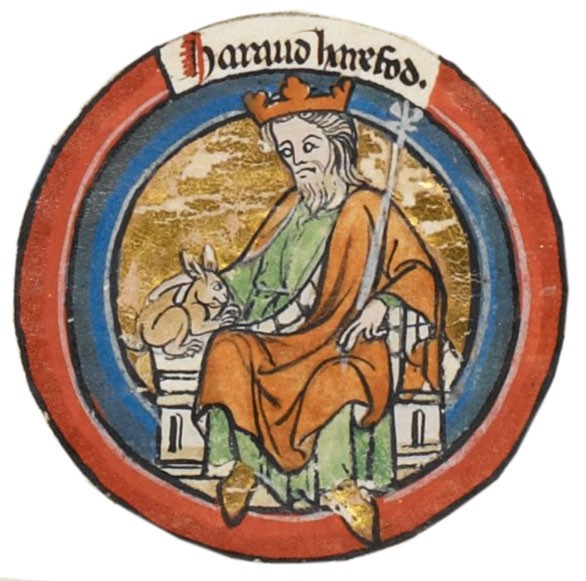
Harold I (1035–1040)
Harold Harefoot was the son of Cnut and his first wife, Aelfgifu. He was called “Harefoot” because of his speed and skill as a hunter. Harold and his half-brother Harthacnut (Harthacanute) shared the kingdom of England after their father's death—Harold becoming king of Mercia and Northumbria, while Harthacnut became king of Wessex. But while Harthacnut was absent fighting to protect his other kingdom, Denmark, from Norwegian and Swedish invaders, Harold took the opportunity to become sole ruler of England.
Harold died in 1040, just weeks before Harthacnut was due to invade England with an army to win back his kingdom from his half-brother.
Harthacnut (1040–42)
Harthacnut was the son of Cnut and his second wife, Emma of Normandy (the former wife of Aethelred the Unready). Cnut had intended Harthacnut to become king of England, in preference to his half-brother Harold Harefoot. But when Harthacnut was forced to travel to Denmark, of which he was also king, to fight Norwegian and Swedish rebels, Harold became ruler of all England. In 1040 Harthacnut set sail for England, having previously delayed an invasion on hearing that Harold was sick and would soon die. Wary of resistance, he arrived with a fleet of 62 warships.
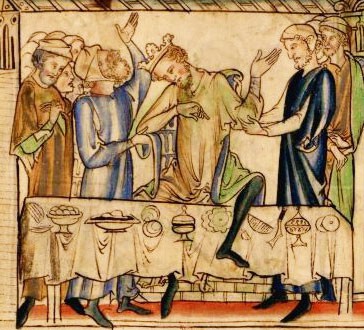
Harthacnut died at a wedding whilst toasting the health of the bride—either from ill-health or (possibly) from having been poisoned. He was aged just 24, unmarried and childless. He was the last Danish king to rule England.
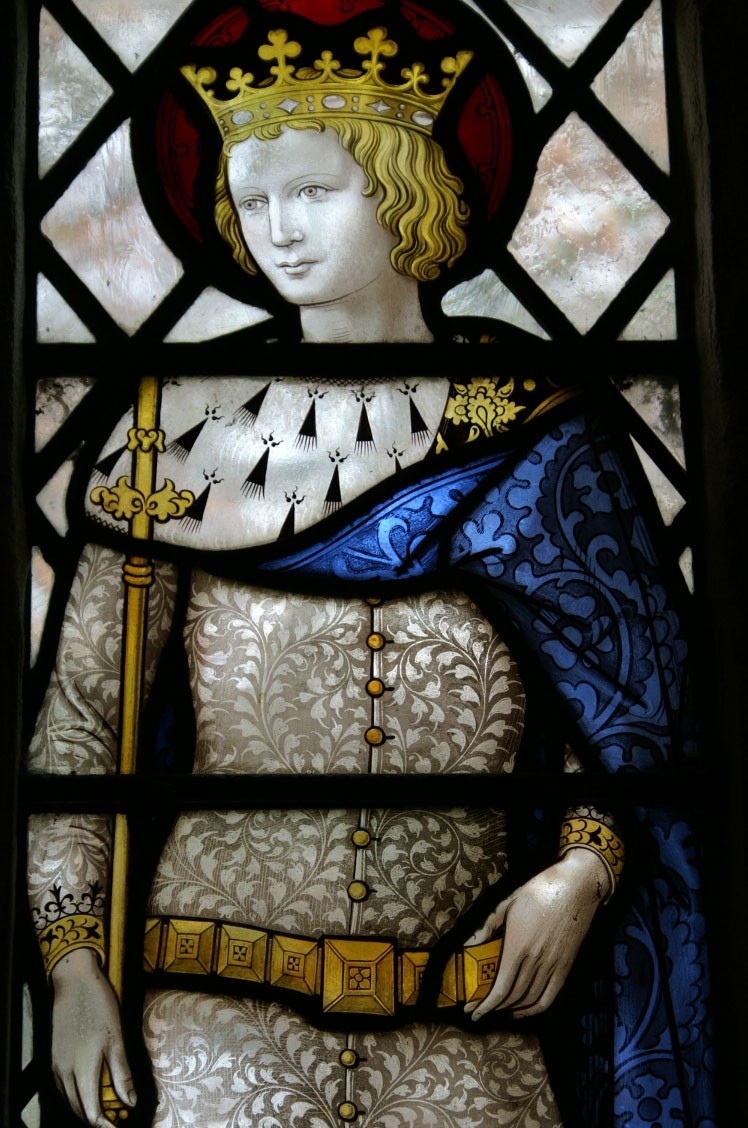
Edward the Confessor (1042–1066)
Following the death of Harthacnut, Edward the Confessor became king. As the surviving son of Aethelred and his second wife, Emma, he was a half-brother of Harthacnut. With few rivals, Edward was the undisputed king. He set about restoring the rule of the kings of Wessex to the English throne.
A deeply religious man, hence his nickname, “Confessor”, with no interest in military matters, he left the running of the country to Earl Godwin of Wessex and his son Harold, while he devoted himself to the rebuilding of Westminster Abbey. Edward had married Godwin’s daughter, Edith. Godwin attempted to seize power in 1051, but with the help of the earls of Mercia and Northumbria, Edward banished Godwin from the country and Queen Edith from court.
Edward was forced to accept the powerful Godwin back, however, in 1052, when he invaded England with an army commanded by his two sons, Harold and Tostig. Harold, who inherited Godwin’s title of Earl of Wessex on his death in 1053, was loyal to Edward and commanded the king’s army when required, and gained a reputation as a skilled and powerful leader. Edward died childless, eight days after the completion of Westminster Abbey in January 1066. He was buried there. The fight for who should succeed him led to the Norman invasion of October 1066 and the Battle of Hastings.
Harold II (1066)
Despite not being of royal descent, Harold Godwinson, Earl of Wessex, was elected king of England by the Witan, a council of high-ranking nobles and religious leaders, following the death of Edward the Confessor. This decision infuriated William, Duke of Normandy, who claimed that both Edward, his relative, and Harold himself had promised the English throne to him several years earlier.
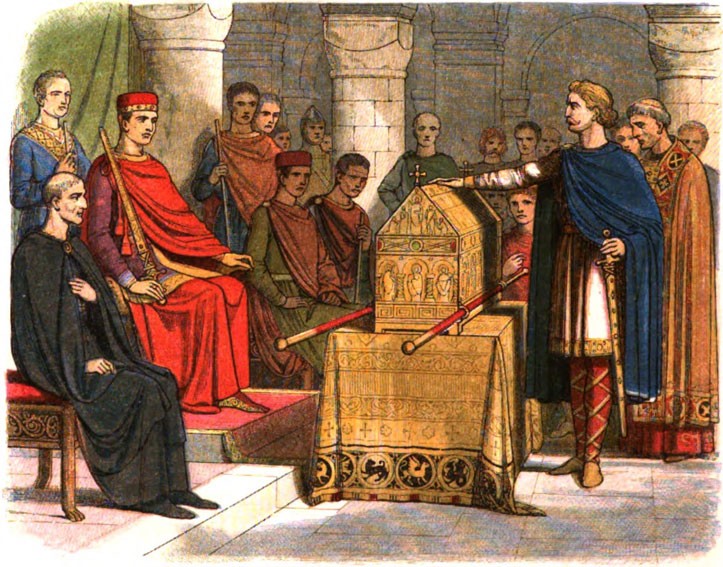
In 1064, Harold had been held in Normandy after a shipwreck and was allowed to return to England in return for a promise that he would support William’s claim to the throne. But Harold said the “promise” had been forced out of him and had no basis in law.
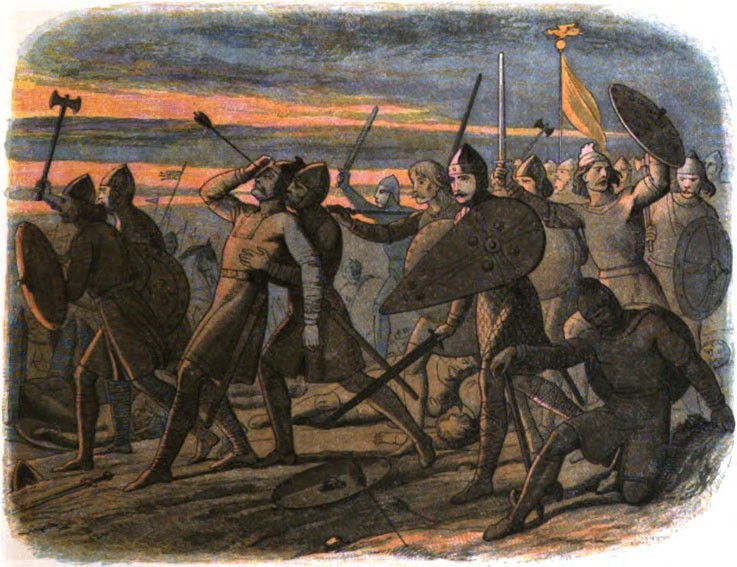
In September 1066, Harold defeated an invading Norwegian army led by his brother Tostig in alliance with the Norwegian king Harald Hadrada at the Battle of Stamford Bridge in Yorkshire. He then rushed south to confront William of Normandy with an army of 7000 men, who had landed his forces in Pevensey Bay on the Sussex coast. The death of Harold at the Battle of Hastings in October—supposedly by an arrow through his eye, as depicted in the Bayeux Tapestry—brought to an end the line of Anglo-Saxon kings of England and the beginning of Norman rule.
Consultant: Philip Parker