
Castles & knights

CITE
We have made every effort to follow citation style rules, but there may be some minor differences. If in doubt, please refer to the appropriate citation style manual.
Siege. (2022). In Q-files Encyclopedia, History, Castles & knights. Retrieved from
https://www.q-files.com/history/castles-knights/siege
"Siege." History, Castles & knights, Q-files Encyclopedia, 10 Feb. 2022.
https://www.q-files.com/history/castles-knights/siege.
Accessed 6 Aug. 2026.
Siege 2022. History, Castles & knights. Retrieved 6 August 2026, from
https://www.q-files.com/history/castles-knights/siege
History, Castles & knights, s.v. "Siege," accessed August 6, 2026.
https://www.q-files.com/history/castles-knights/siege


Siege
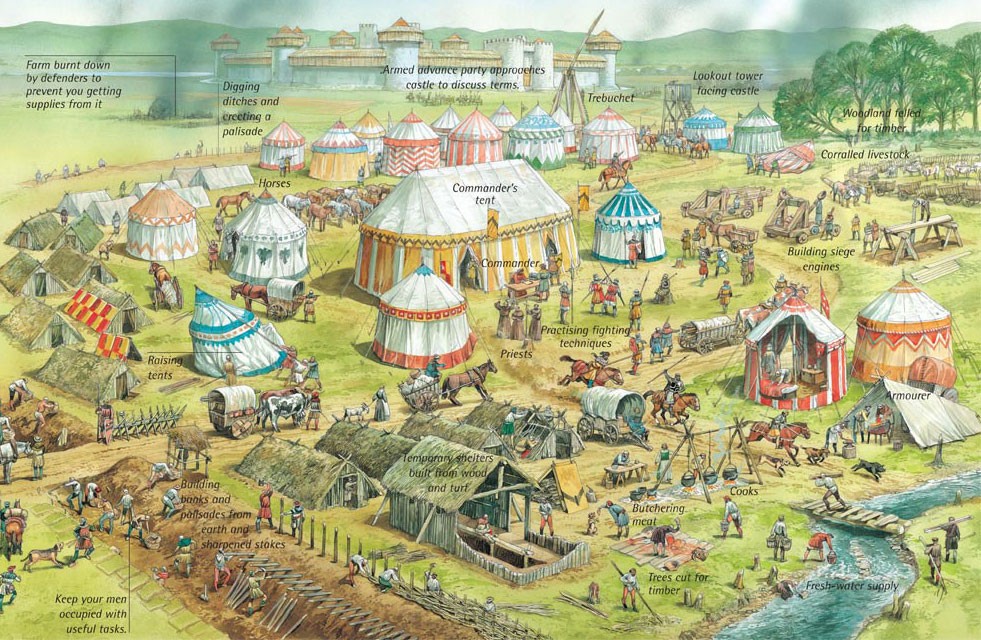
During a siege, a castle was surrounded by an enemy army. It prevented supplies from entering it and anyone inside from leaving it. Sooner or later, if the siege held, the castle inhabitants would be starved into surrender. Often, instead of waiting for the defenders to starve, the attackers set about forcing their way in to the castle by using a formidable array of siege weapons. They might also try a series of other tactics designed to weaken the castle's defences in some way, or even avoid the need for a costly and dangerous siege in the first place.
Spies
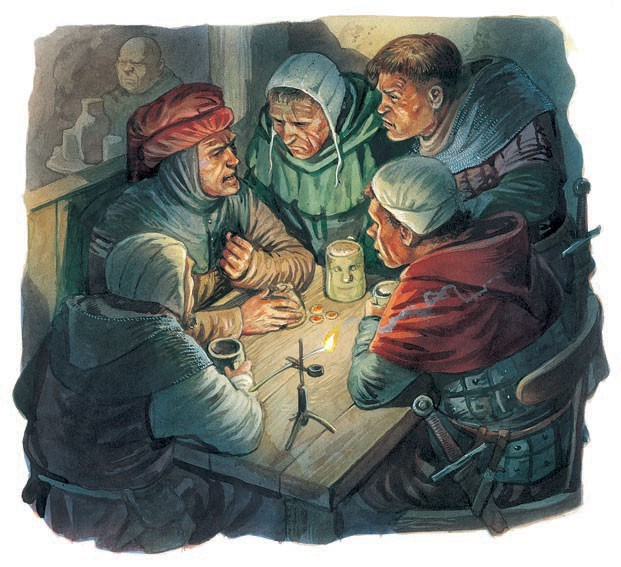
Besieging armies tried to recruit spies to help give them an advantage. Men posing as mercenaries (soldiers paid to fight) or local merchants or craftsmen who knew the castle well might be hired as spies. The besiegers were after information about how many people were inside the castle, where the weak spots in its defences were, how large its garrison was, how plentiful its supplies of food and water were, and how prepared the castle was for an attack.
Other siege tactics
If the spies revealed that additional troops were on the way to help defend the castle, the besieging army could organize an advance party to ambush them before they got there. If the lord was away from his castle, they might also attempt to capture him and hold him until he surrendered.

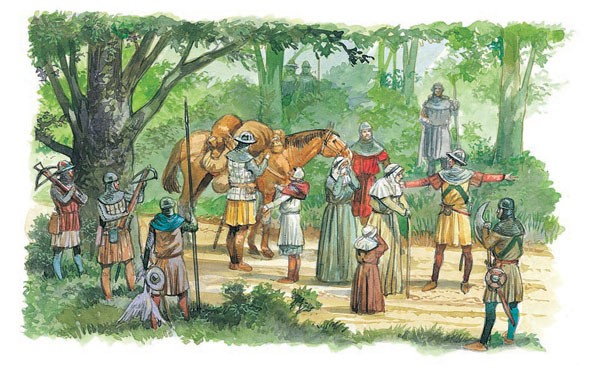
Local people, particularly women and children, would be encouraged to enter the castle. They would be no use to the defence of the castle, but at the same time would use up vital food and water. The defenders were much more likely to surrender if they were hungry and thirsty.
Supplies
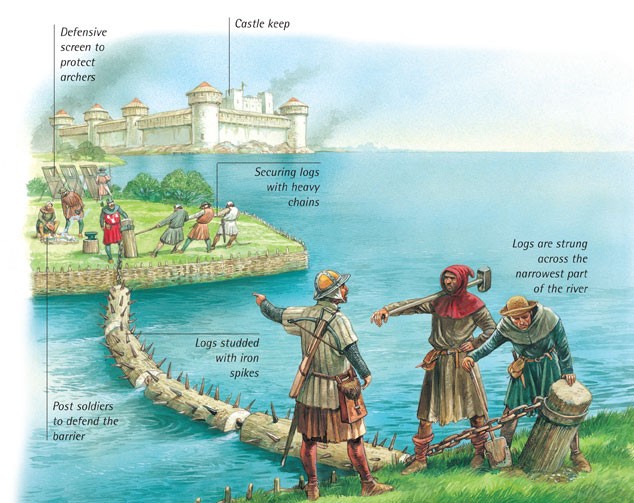
A besieging army might often raid local farms and villages for provisions, destroying anything they did not need to prevent any supplies getting to the defenders in the castle. It was also essential to block any potential supply routes to the castle. Fixing a heavy chain across a river just below the water’s surface to snarl up boats was one way. Logs, chained together and studded with metal spikes, might be also strung between the banks.
Siege camp
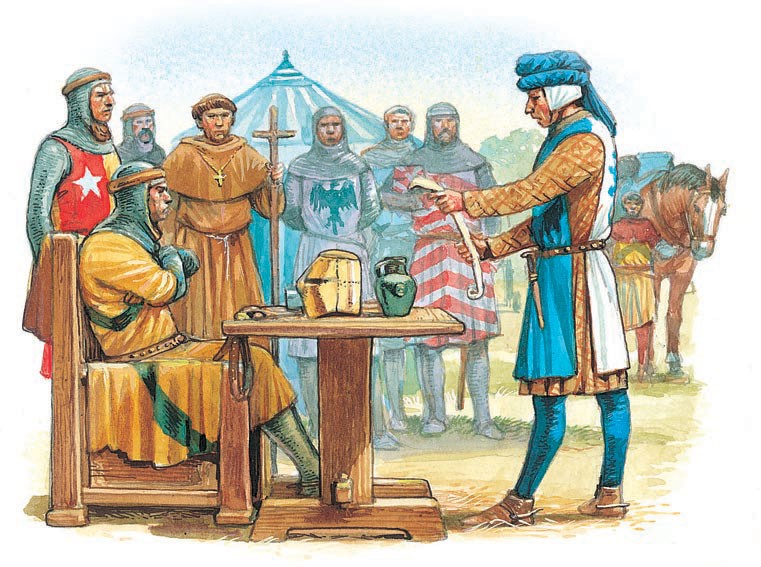
Heralding the attack
Before battle commenced, it was standard practice to send a herald to announce the planned attack. If the castle’s lord thought the attacking forces were too great, he might send a messenger back to negotiate with their commander, and even surrender without a shot being fired.
Siege tactics
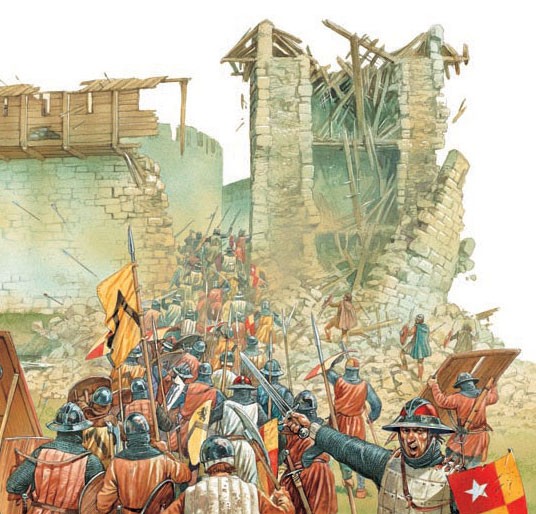
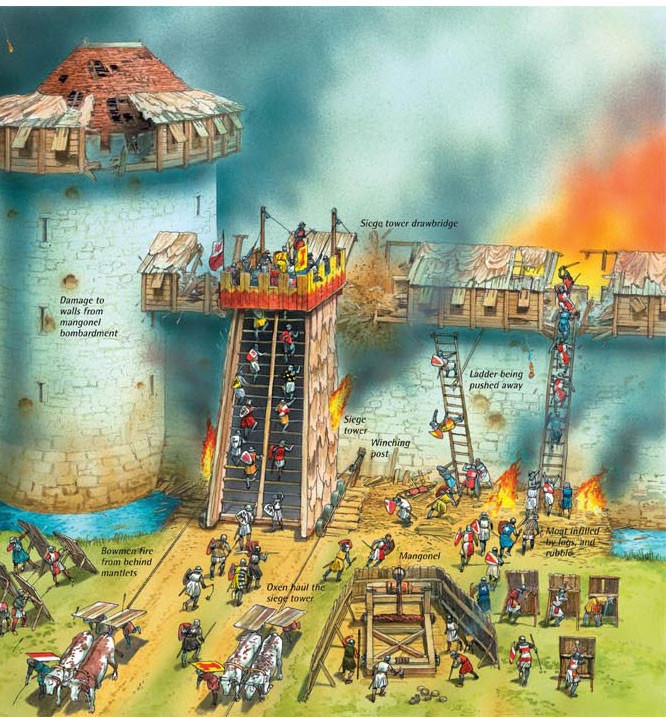
Protected by wooden boards called mantlets, archers aimed their arrows at defending soliders on the castle battlements. They fired through narrow slits in the centre of each mantlet. A column of soldiers waited behind a wall of mantlets for the signal to advance, should a breach be successfully made in the walls or gatehouse.
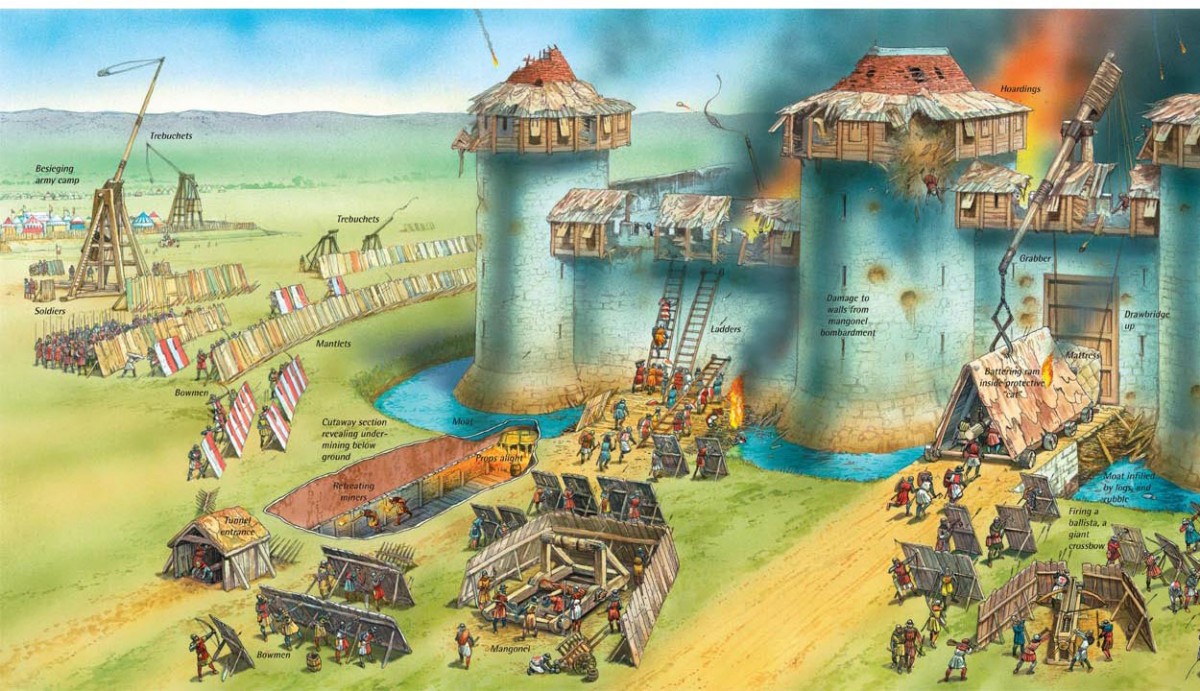
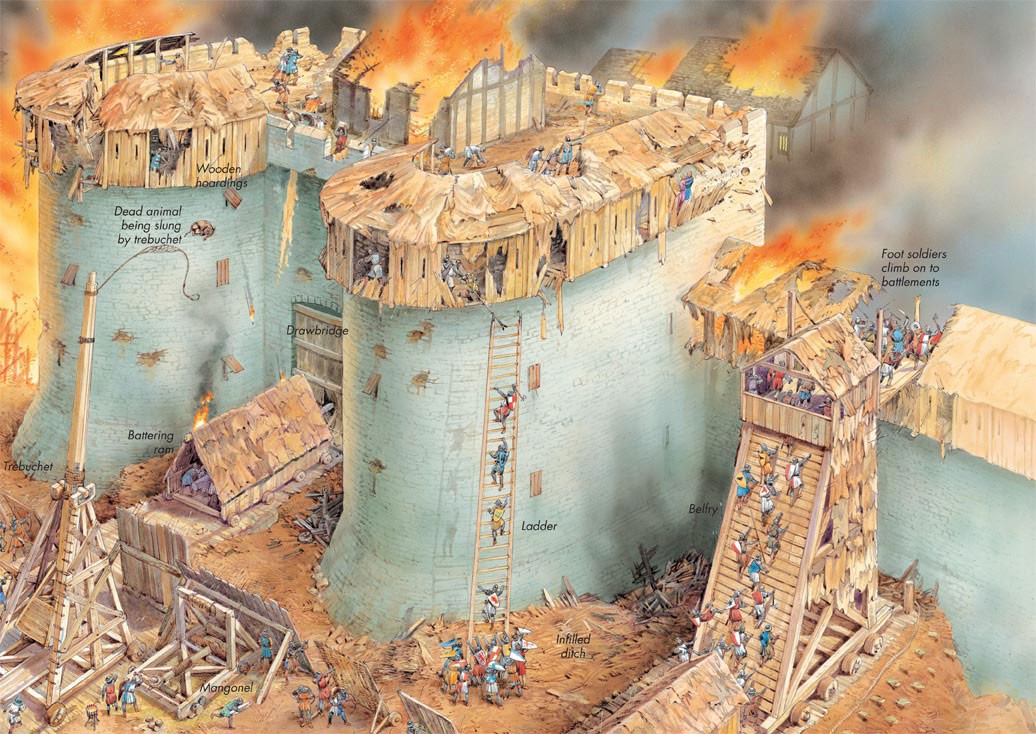
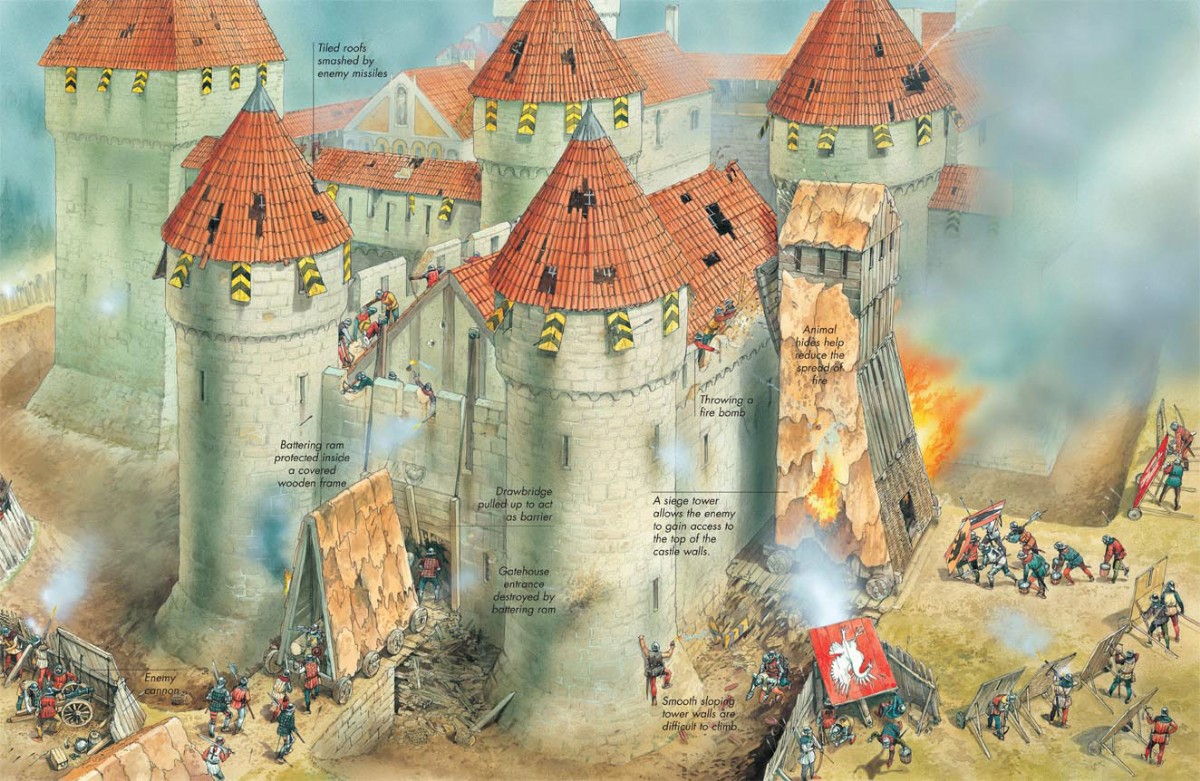
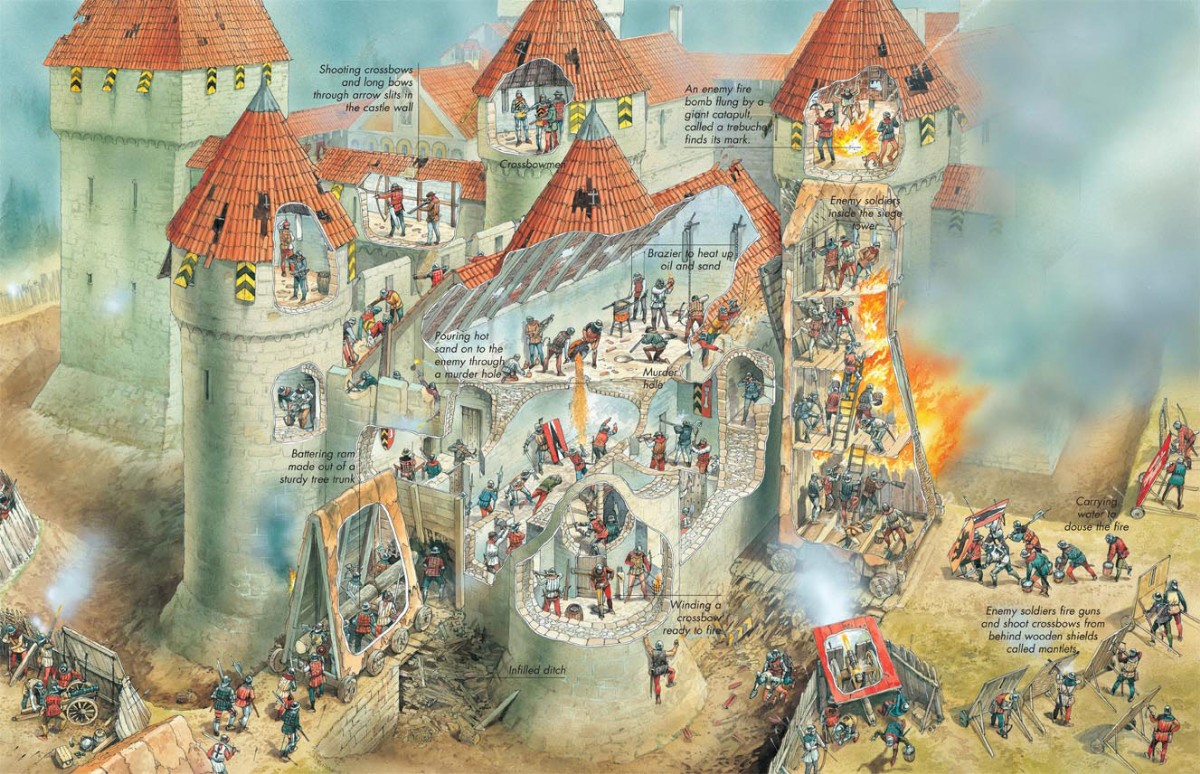
While the trebuchets bombarded the castle from distance, men-at-arms drew up mangonels close to the castle and used them to pulverize the walls with boulders. Although the drawbridge had been raised long before, the besieging army filled the moat and rolled their battering ram right up to the gatehouse. The defenders dropped a large mattress in front of the gate in an effort to cushion it against the damaging blows, while they tried to haul the “cat” away with a giant grabber.
Scaling the walls
Once the wooden hoardings on the battlements had been largely destroyed by fire and bombardment, the besieging army prepared to scale the walls. They could try climbing ladders, but these were easy to push away from the walls by the defending guards. Much more effective was a siege tower or belfry. The moat was filled in with logs and rubble and winching posts fixed in place. Teams of oxen hauled on ropes and the giant wooden “bear”, as the siege tower was sometimes called, draped with wet hides to protect it from catching fire, rumbled forwards. Under cover from its timber frame, the men clambered up a staircase and prepared to leap on to the castle battlements by means of a small drawbridge at the top.
Undermining
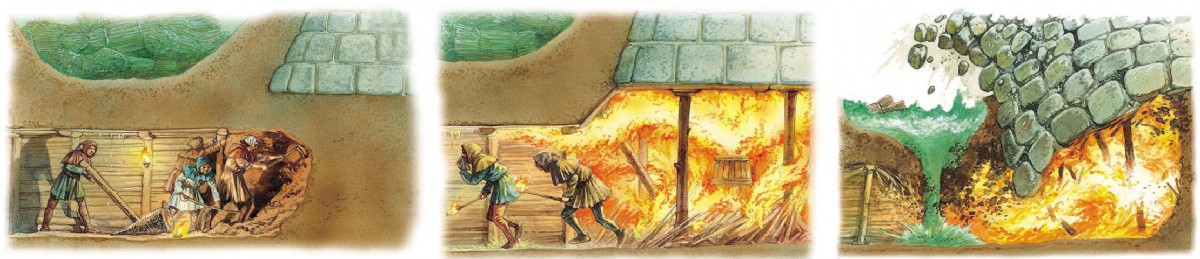
A good way to bring down castle walls was by undermining them. Miners dug a tunnel under the foundations of the walls. There they propped up the tunnel with wooden timbers which they then set alight. After the supports had burnt through, the tunnel soon collapsed, bringing down the wall above. To counter this threat, builders switched from square towers to round ones, so leaving no vulnerable corners. Adding broad plinths to the bases of the walls was another ploy: it made them too thick to undermine.
Consultant: Philip Parker
pics

Without in any way limiting Q-files Ltd’s exclusive rights under copyright, any use of this publication to “train” generative artificial intelligence (AI) technologies to generate text is expressly prohibited. Q-files Ltd reserves all rights to license use of this work for generative AI training and development of machine learning language models.