
EASY READ Ancient worlds

CITE
We have made every effort to follow citation style rules, but there may be some minor differences. If in doubt, please refer to the appropriate citation style manual.
EASY READ What happened in the Trojan War?. (2025). In Q-files Encyclopedia, History, EASY READ Ancient worlds. Retrieved from
https://www.q-files.com/history/easy-read-ancient-worlds/easy-read-what-happened-in-the-trojan-war
"EASY READ What happened in the Trojan War?." History, EASY READ Ancient worlds, Q-files Encyclopedia, 5 Dec. 2025.
https://www.q-files.com/history/easy-read-ancient-worlds/easy-read-what-happened-in-the-trojan-war.
Accessed 30 Oct. 2026.
EASY READ What happened in the Trojan War? 2025. History, EASY READ Ancient worlds. Retrieved 30 October 2026, from
https://www.q-files.com/history/easy-read-ancient-worlds/easy-read-what-happened-in-the-trojan-war
History, EASY READ Ancient worlds, s.v. "EASY READ What happened in the Trojan War?," accessed October 30, 2026.
https://www.q-files.com/history/easy-read-ancient-worlds/easy-read-what-happened-in-the-trojan-war


What happened in the Trojan War?
The Trojan War was fought between the Greeks and the city of Troy, probably during the 14th century BC—we do not know exactly when. A real war, or series of wars, may well have taken place, but the tale of the Trojan War as told by the poet Homer in his poem, the Iliad, centuries later is more a myth (a made-up story) than a true account.

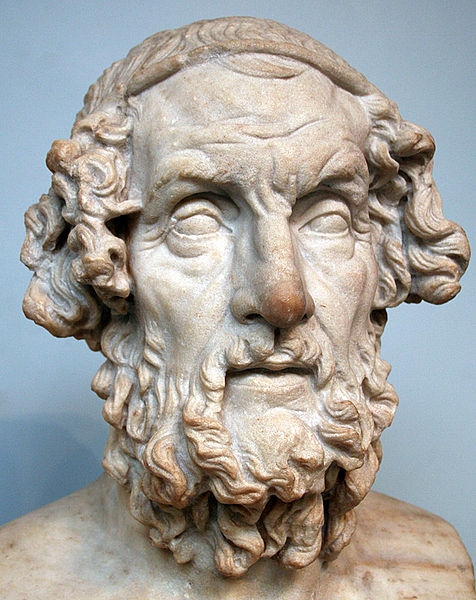
Homer
Homer was the author of the Iliad and the Odyssey, two epic poems (long poems that tell a story). They were probably created around the late 8th or early 7th century BC. Very little is known about who Homer was, or whether he was a man or woman. "Homer" may have even been a group of people, all of whom helped create the poems over a long period of time.
How the war started
Helen, wife of Menelaus, King of Sparta, was carried off by the Trojan prince, Paris. She was his prize for choosing Aphrodite as the most beautiful goddess in a competition with Athena and Hera. Menelaus and his brother Agamemnon, King of Mycenae, vowed to win Helen back. They also wanted to destroy the city of Troy as a punishment.


Gods and heroes
A number of Greek states formed an alliance with Agamemnon as their leader. Among the Greek warriors were some special heroes, men whose mother or father was a god. Achilles, Odysseus and Ajax were all heroes. The Greeks were helped by several of the gods, including Athena, Poseidon, Hera and Hermes. Each god had their favourites, and they often protected them in battle.
The Trojan army was led by King Priam. They had their heroes, too, including Hector, the son of Priam, and Aeneas. The Trojans also received help from the gods, chief among whom were Apollo, Aphrodite and Ares.
The siege of Troy
Most of the Trojan War consisted of one long siege, lasting 10 years. The city had strong fortifications, and the Greeks found it difficult to break through its walls. The most important battles were fought during the final year of the siege, and it is these that are described in Homer’s Iliad.


In an attempt to break the deadlock, Menelaus offered to fight Paris in single combat. But Aphrodite prevented Paris from being slain. Then two great heroes, Ajax for the Greeks and Hector for the Trojans, also fought in single combat. Neither man could gain an advantage.
The death of Patroclus
Achilles was the Greeks' greatest warrior. But he chose to sit out most of the war. Agamemnon had stolen his prize, a woman called Briseis, and so Achilles refused to fight. With the Trojans starting to gain the upper hand, Agamemnon begged Achilles to fight once more, but Achilles could not be persuaded. His friend Patroclus then asked for permission to wear Achilles’ armour and go into battle himself. Achilles reluctantly agreed, but told Patroclus not to pursue the enemy to the walls of Troy.
Patroclus was successful at first, forcing the Trojan armies back. But he ignored Achilles’ advice and carried the fighting on towards Troy. Hector then killed Patroclus with his spear.

Achilles' revenge

When Achilles found out what had happened to Patroclus, he swore to take revenge on Hector and the Trojans. Immediately returning to battle, Achilles routed the Trojans, who fled in panic. Hector stood firm, but Achilles chased the Trojan prince three times around the city walls before killing him. Achilles then tied Hector’s body to his chariot and dragged it back to the Greek camp in full view of Hector's father, Priam, who was watching from the city walls.
Achilles was eventually killed by Paris. He shot an arrow which was guided by Apollo to his only weak spot, his heel.
The Trojan horse
Odysseus thought up a clever idea to get a small number of men inside the walls of Troy. Pretending to give up their fight, the Greeks sailed away, leaving behind a mysterious offering to the Trojans: a gigantic wooden horse. Thrilled with their victory, Trojans wheeled the horse inside the city walls.
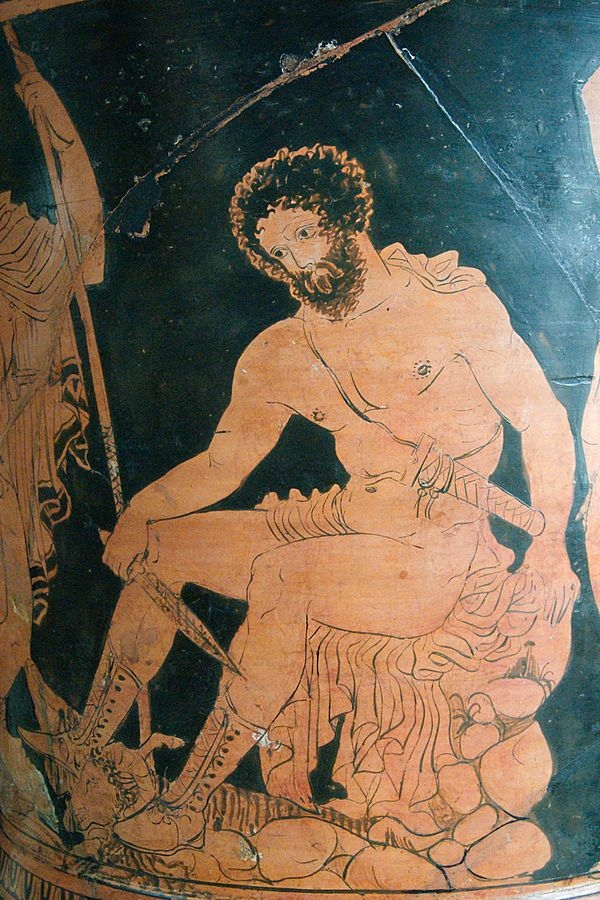

But while the inhabitants of Troy were enjoying their celebrations, some Greek soldiers hidden inside the horse silently climbed out. They then threw open the city gates for the returning Greek army, and the city was sacked. Helen was reunited with her husband, Menelaus.
Ready to find out more?
Here are some pages in other parts of Q-files you might like to explore:
Trojan War
Warfare in ancient Greece
Consultant: Philip Parker
pics
Without in any way limiting Q-files Ltd’s exclusive rights under copyright, any use of this publication to “train” generative artificial intelligence (AI) technologies to generate text is expressly prohibited. Q-files Ltd reserves all rights to license use of this work for generative AI training and development of machine learning language models.