
EASY READ Ancient worlds

CITE
We have made every effort to follow citation style rules, but there may be some minor differences. If in doubt, please refer to the appropriate citation style manual.
EASY READ Who lived in ancient Babylon?. (2025). In Q-files Encyclopedia, History, EASY READ Ancient worlds. Retrieved from
https://www.q-files.com/history/easy-read-ancient-worlds/easy-read-who-lived-in-ancient-babylon
"EASY READ Who lived in ancient Babylon?." History, EASY READ Ancient worlds, Q-files Encyclopedia, 5 Dec. 2025.
https://www.q-files.com/history/easy-read-ancient-worlds/easy-read-who-lived-in-ancient-babylon.
Accessed 13 Sep. 2026.
EASY READ Who lived in ancient Babylon? 2025. History, EASY READ Ancient worlds. Retrieved 13 September 2026, from
https://www.q-files.com/history/easy-read-ancient-worlds/easy-read-who-lived-in-ancient-babylon
History, EASY READ Ancient worlds, s.v. "EASY READ Who lived in ancient Babylon?," accessed September 13, 2026.
https://www.q-files.com/history/easy-read-ancient-worlds/easy-read-who-lived-in-ancient-babylon


Who lived in ancient Babylon?
Babylon was one of the most important cities in Mesopotamia. This was the fertile land that lay between the Tigris and Euphrates rivers in what is now Iraq. It was one of the first places in the world where people settled down to be farmers. This happened in around 10,000 BC.

The Sumerians
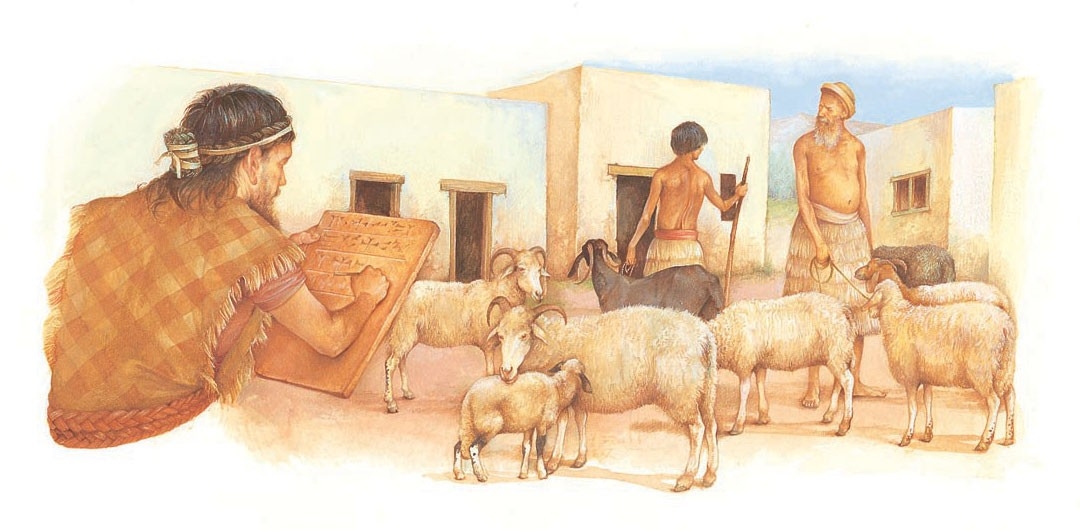
The first cities in Mesopotamia were founded by the Sumerian people about 6500 years ago. One of the earliest forms of writing was invented by the Sumerians. We know a lot about their way of life because they left many clay tablets with pictures—which represented words—carved on them. The writing later developed into lines and symbols, which were easier to carve. This is known as cuneiform. Writing enabled accurate records to be kept, such as of the number of animals a shepherd had.


Hammurabi of Babylonia
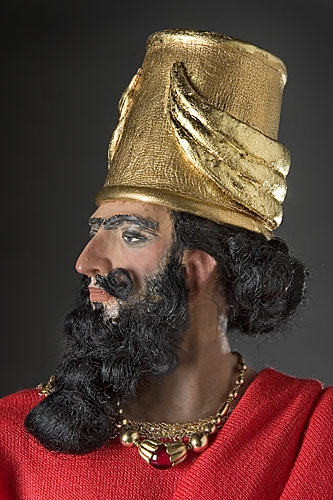
In 1792 BC, Hammurabi came to the throne of Babylonia, a Mesopotamian kingdom. Its capital city was Babylon. Hammurabi was a wise king who set out a new code of laws. These set out the rights of women, protected poor people and punished wrongdoers. Unlike previous rulers, Hammurabi did not see himself as a god. During his reign, Babylon became a rich city. Hammurabi built a great ziggurat (stepped temple) there, which was later known as the Tower of Babel.

Assyrian Empire
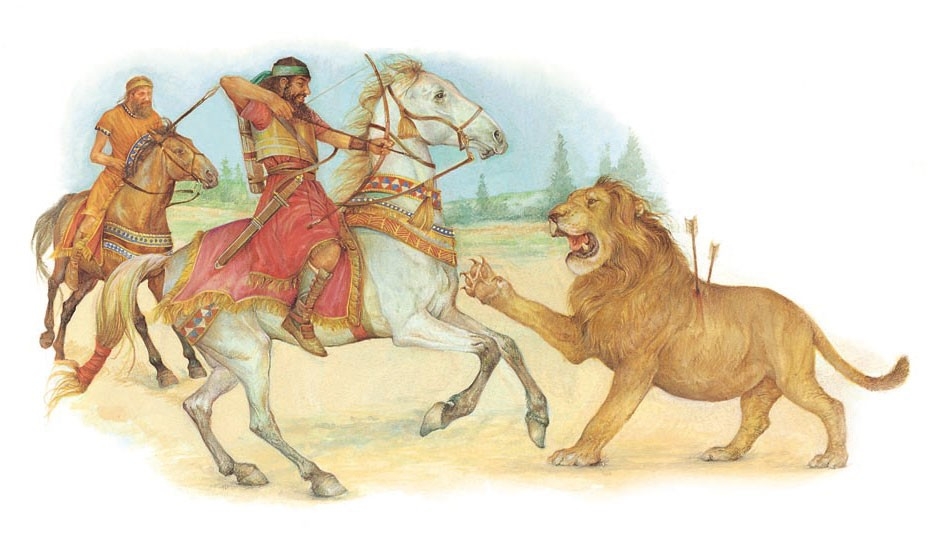
Six centuries after Hammurabi’s death in 1750 BC, his kingdom was conquered by a warlike people, the Assyrians. They came from northern Mesopotamia. After many years of warfare, the Assyrian Empire expanded to cover most of the Near East, from the Persian Gulf to Egypt. The last great Assyrian king was Ashurbanipal (668–631 BC). Archaeologists found 20,000 clay tablets in the library at his palace of Nineveh. These tell us much about Assyrian laws and history.
Nebuchadnezzar
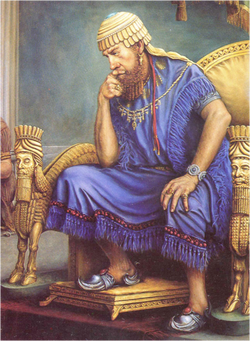
King Nabopolassar (ruled 626–605 BC) overthrew the Assyrians. They had destroyed the city of Babylon. His son, Nebuchadnezzar II, became king of Babylon in 605 BC. He fought many wars and created a huge empire. He used wealth from his conquests to rebuild Babylon. Under Nebuchadnezzar's rule, it became one of the richest cities in the world. The Babylonian Empire came to an end in 539 BC, when the city was conquered by the Persians.
Ziggurats
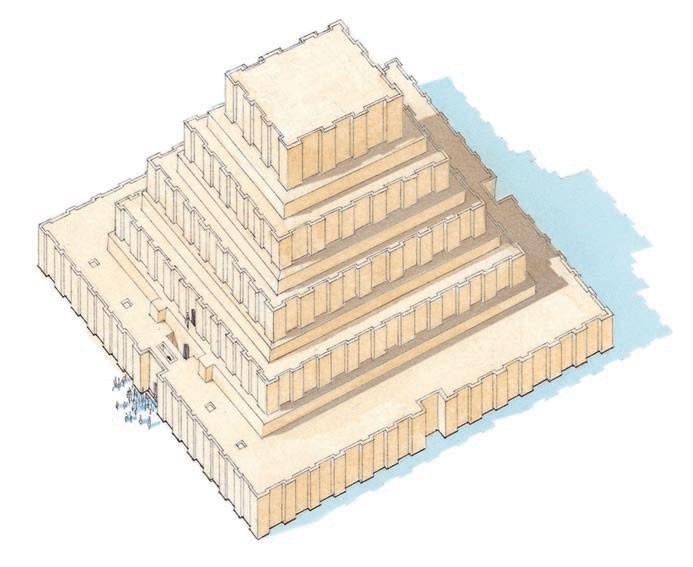
Huge stepped pyramid temples, called ziggurats, were built in Mesopotamia. Ziggurat was the Assyrian word for "mountaintop". They were meant to be stairways linking earth to heaven. The earliest ziggurats were built by the Sumerians. Nebuchadnezzar built a huge ziggurat to the god Marduk in Babylon.
The Hanging Gardens

Nebuchadnezzar created the Hanging Gardens to remind his wife, Amytis, of the green hills of Media, her homeland. Water was pumped up from the river and ran down through the gardens as cooling streams. Sadly, no trace of the Hanging Gardens remains today.

Ishtar Gate
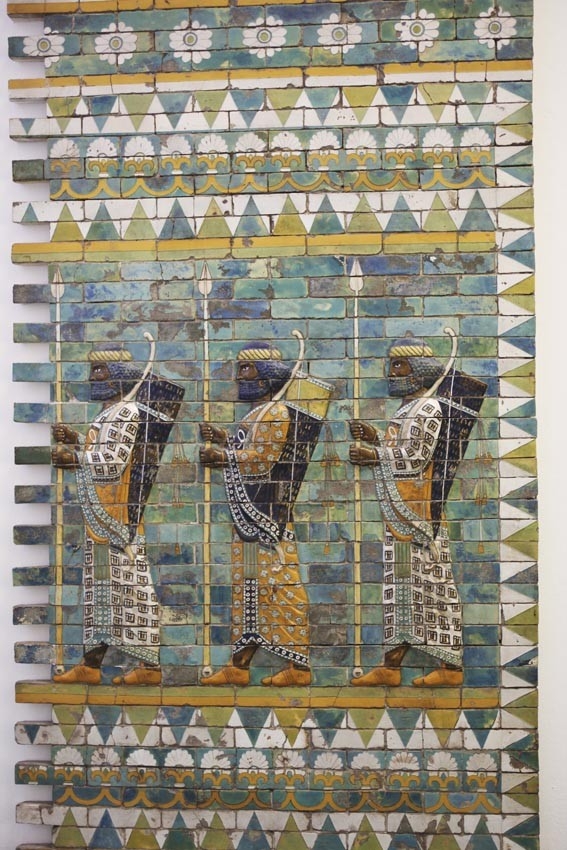
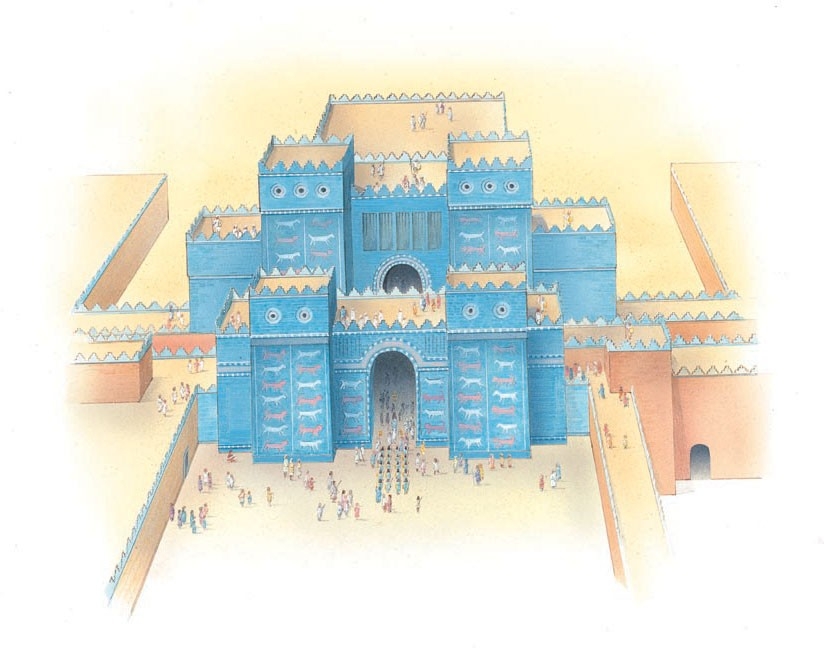
Babylon had eight gateways in its walls, the finest of which was the Ishtar Gate. Built to honour Ishtar, the goddess of love and battle, the gateway was 15 metres (50 feet) high. The walls surrounding it were covered in blue bricks, decorated with carvings of dragons and bulls. The dragons were symbols of the Babylonians’ chief god, Marduk. The bulls represented the lightning god, Adad.
Babylonian science

Babylonian scientists studied the stars and planets and tried to work out their positions in relation to the Earth. They believed that the Earth was a flat disc floating in space on a cushion of air. Babylonian mathematicians were the first to divide a day into 24 hours, each hour into 60 minutes and each minute into 60 seconds.
Ready to find out more?
Here are some pages in other parts of Q-files you might like to explore:
Mesopotamia
First writing
Babylon
Consultant: Philip Parker
pics


Without in any way limiting Q-files Ltd’s exclusive rights under copyright, any use of this publication to “train” generative artificial intelligence (AI) technologies to generate text is expressly prohibited. Q-files Ltd reserves all rights to license use of this work for generative AI training and development of machine learning language models.