
Fish
Piranhas
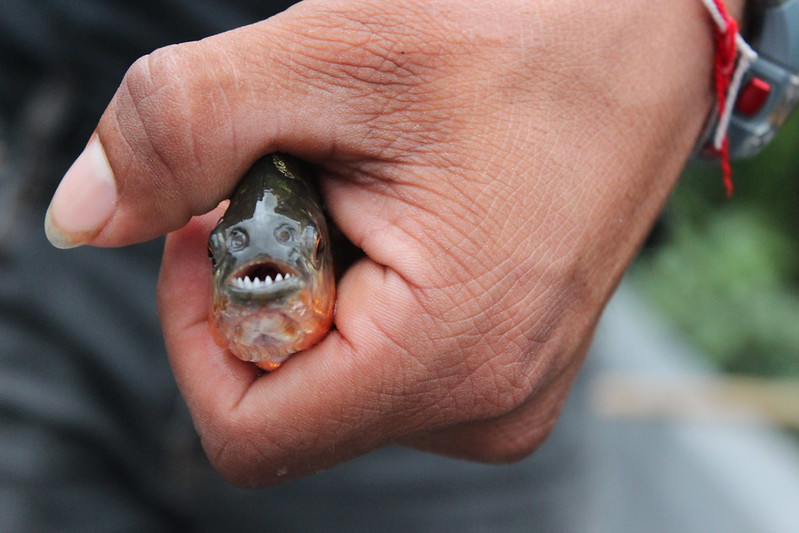
Piranhas are freshwater fish native to the streams and rivers of South America, such as the Amazon, Orinoco and Paraná rivers. There are between 40 and 60 different species of piranha, but their markings and colouring vary so widely that they can be difficult to tell apart. The most common, the red-bellied piranha, is also the largest—it can grow up to half a metre (1.6 feet) long. Black, or redeye, piranhas are smaller, known for their extremely powerful bite. Some of the most ancient freshwater fish on Earth, piranhas have changed very little in millions of years.

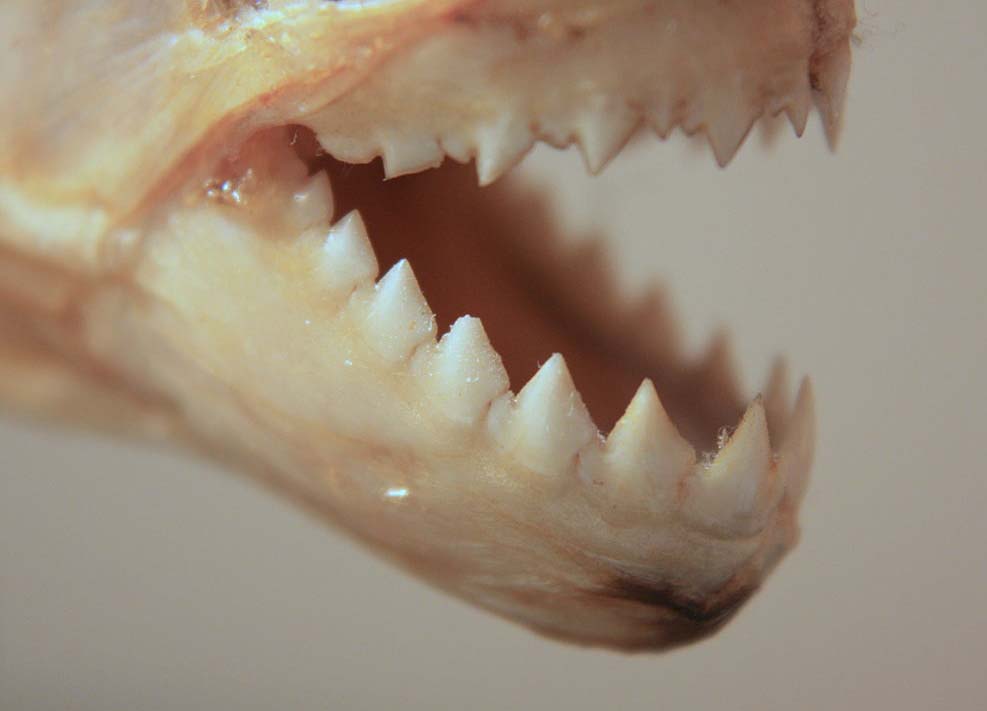
Teeth
Piranhas have a single row of sharp, interlocking teeth in both jaws. The teeth are triangular and shaped like blades, allowing the piranha to slice through flesh easily. Strong muscles close to the tip of the jaw help the piranha to clamp down on its prey with great force. Black piranhas have the most powerful bite for their size—they can bite with a force three times their own body weight.
Feeding

Piranhas are omnivores, and eat whatever is available. They most commonly eat crustaceans, insects, water plants and seeds, but will also eat other fish, even taking bites out of other piranhas. Some piranha species, such as the pike piranha, feed on the scales and fins of other fish. Most piranhas also scavenge on carrion—dead birds and animals that fall into the water. Others are entirely vegetarian.
Piranhas travel together in shoals of up to 20 fish, with the youngest fish at the centre of the group. This is thought to be for protection against predators such as caimans and dolphins.

Attack
With their razor-sharp teeth, piranhas are fearsome predators. Red-bellied piranhas lurk in dark areas, lying in wait for their prey. When a fish swims by, they suddenly attack, aiming for the tail and eyes to stop it swimming away. Like sharks, piranhas can detect the smell of blood in the water, which leads them to their prey. A "feeding frenzy" may take place if a shoal of piranhas finds a particularly large and tasty meal.
Piranhas have a reputation for being dangerous to humans, because their bite can cause painful injuries. But serious attacks on humans are rare. Piranhas will occasionally attack and eat large mammals and people if they are already wounded.
Consultant: Chris Jarvis