
Marine invertebrates
Coral polyps
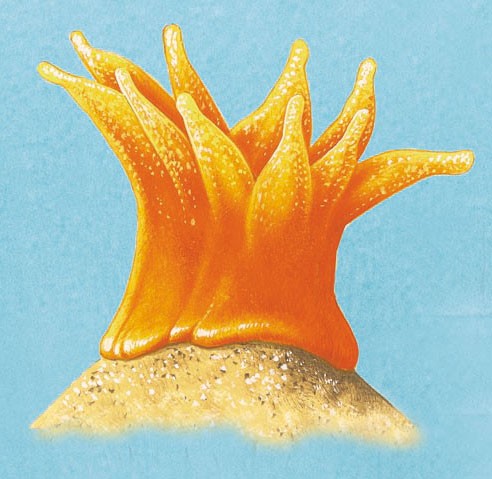
Coral is a hard substance formed from the skeletons of tiny animals called polyps. Polyps live together in huge colonies in shallow warm waters fringing volcanic islands or rocky coastlines in the tropics. Each polyp measures just 5 millimetres (0.2 inch) across and is little more than a stomach with a ring of food-catching tentacles around its mouth. Polyps feed on microscopic plankton in the water. The polyps build up a stony, cup-shaped skeleton around their soft bodies. When they die, the stony casings are left behind. These may build up into huge coral reefs.
Shapes and colours
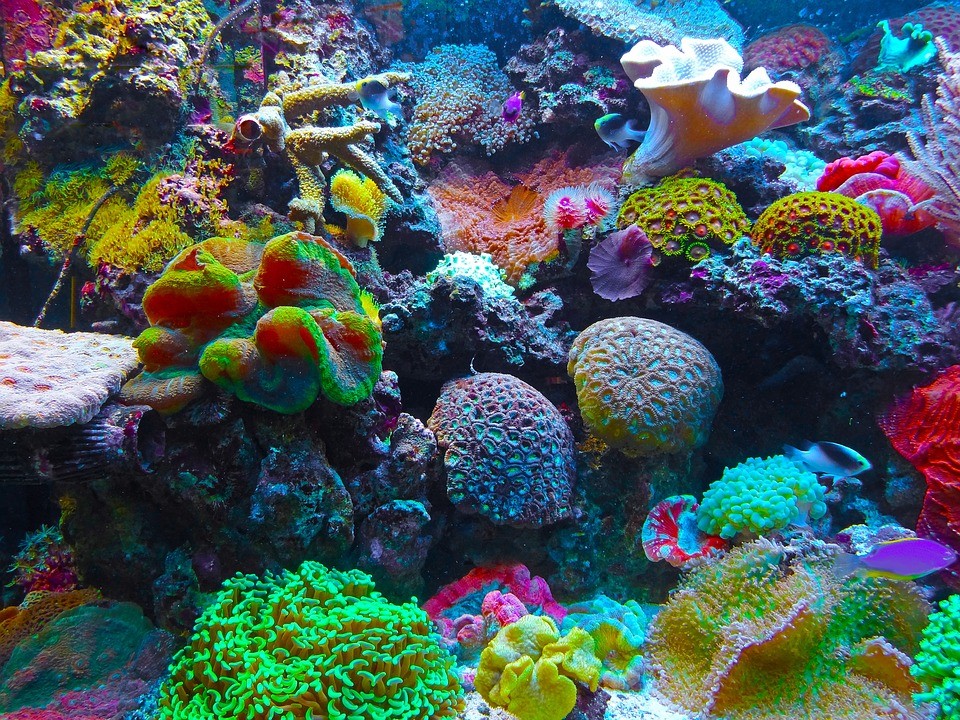
Different kinds of polyps produce different shapes of coral. Some are shaped like branching plants, others are flat like a fan, long and thin like pipes or rounded like human brains. Only the living surface of the coral is coloured by the presence of algae. The layers of polyp skeletons underneath are white. The living layer of tiny polyps feed on zooplankton that drifts by in the current which they trap using the stinging cells in their tentacles.
Spawning
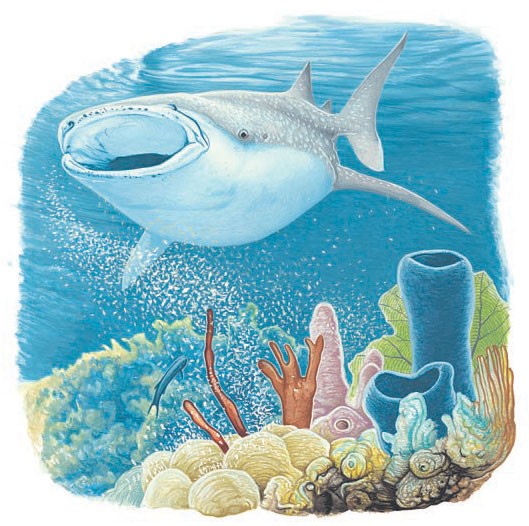
Corals reproduce by spawning: releasing millions of eggs and sperm into the water. In the Ningaloo Reef, on the western coast of Australia, the polyps reproduce at the same time each year, a few days after the full moon in March or early April. The reef waters burst into colour as the corals spawn.This event attracts a number of creatures that feed on the spawn. Among them is the largest fish in the world—the 12-metre (40-foot) whale shark.
Consultant: Chris Jarvis