
EASY READ Science
What are things made of?
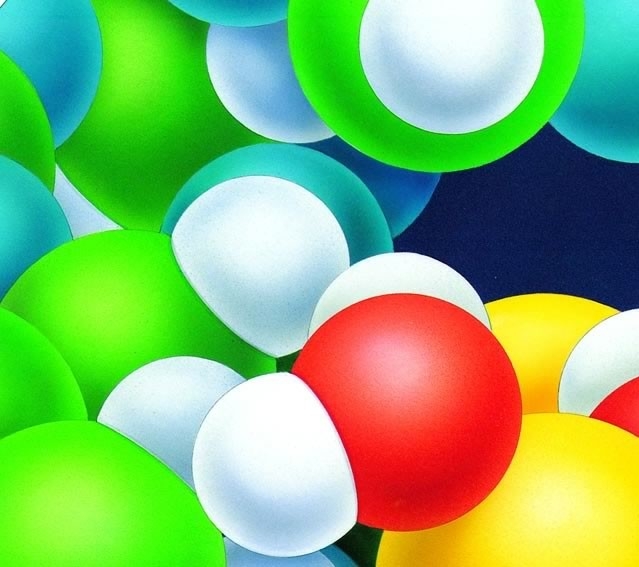
Everything in the Universe, including the air we breathe, is made up of extremely tiny building blocks called atoms. They are so small, you would not even be able to see one under a very powerful microscope. A grain of sand alone may contain over a million million million atoms.
Inside an atom
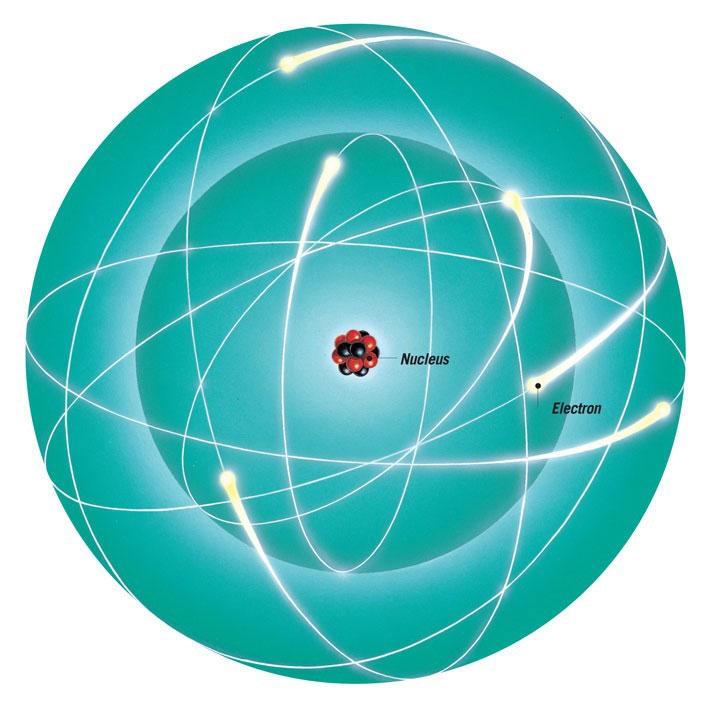
An atom is like a tiny ball. Inside is mostly empty space. At the centre of an atom lies its nucleus. This is made up of even smaller particles, called protons and neutrons. Whizzing around the nucleus are more tiny particles, called electrons.
Elements
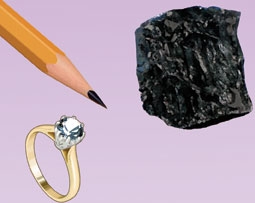
There are around 100 different kinds of atoms that occur naturally. A substance made from just one kind of atom is known as a chemical element. One element differs from another by the number of electrons and protons it has in each of its atoms (sulphur, for example, has 16 of each, while lead has 82).
Compounds and molecules
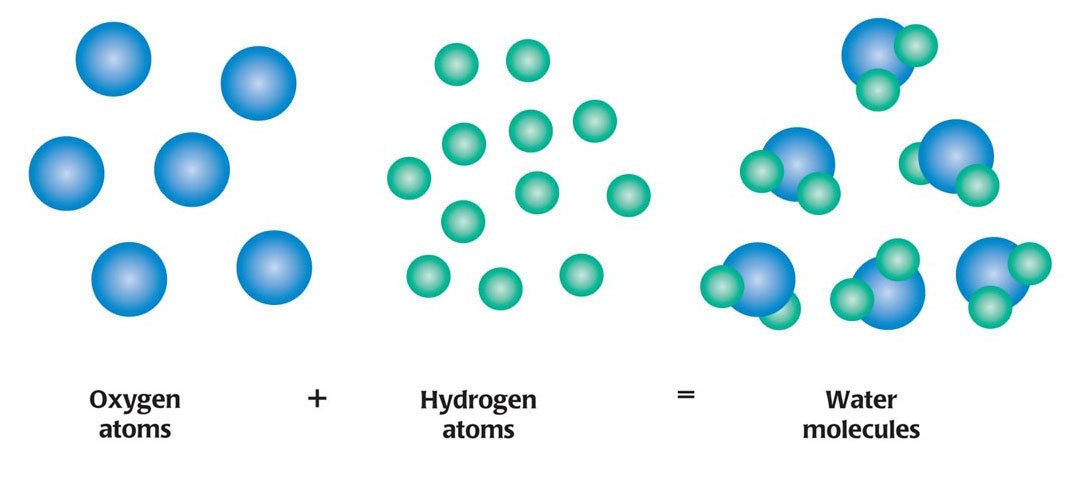
Atoms are usually joined together, or bonded. These bonded atoms are called molecules. When atoms of different elements bond together, they make an entirely new substance called a compound.
Water is both a molecule and a compound. It is made up of oxygen atoms and hydrogen atoms that have joined together. Salt is a compound of the elements sodium and chlorine. Its scientific name is sodium chloride.
Chemistry
Everything around us—air, water, paper, coins, even our own bodies—is made of atoms and molecules. They are known as substances or materials. Different substances “behave” in different ways: they may melt at certain temperatures, for example, or they dissolve in liquids. The science of how substances behave is called chemistry.

Consultant: Mike Goldsmith
Ready to find out more?
Here are some pages in other parts of Q-files you might like to explore: