
Media and communications

CITE
We have made every effort to follow citation style rules, but there may be some minor differences. If in doubt, please refer to the appropriate citation style manual.
Broadcasting. (2026). In Q-files Encyclopedia, Technology, Media and communications. Retrieved from
https://www.q-files.com/technology/media-and-communications/broadcasting
"Broadcasting." Technology, Media and communications, Q-files Encyclopedia, 19 Mar. 2026.
https://www.q-files.com/technology/media-and-communications/broadcasting.
Accessed 22 Sep. 2026.
Broadcasting 2026. Technology, Media and communications. Retrieved 22 September 2026, from
https://www.q-files.com/technology/media-and-communications/broadcasting
Technology, Media and communications, s.v. "Broadcasting," accessed September 22, 2026.
https://www.q-files.com/technology/media-and-communications/broadcasting


Broadcasting
Broadcasting is the transmission of radio and television programmes via cables, ground-based transmitters, satellites and the internet. There are thousands of different TV channels around the world, broadcasting entertainment, news, information and sport. TV programmes are created at television stations. Some programmes, such as news and sports, are broadcast live, which means the viewers see action as it happens. Most programmes are recorded and broadcast at a later date.
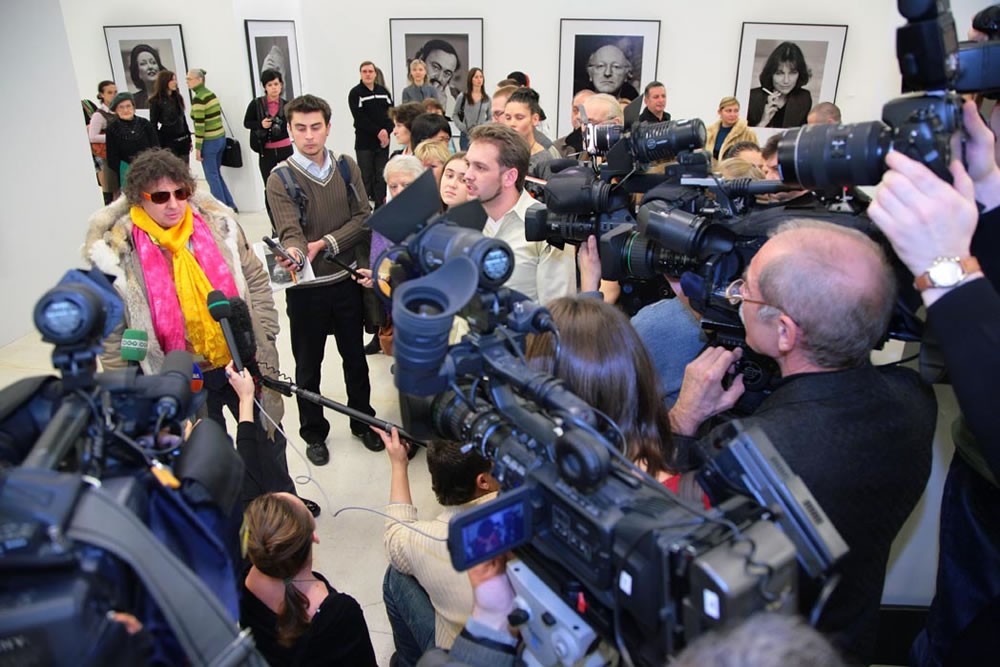

TV studio
Television programmes such as news, discussions and games shows are made in a large room at the TV station called a studio. Each programme has its own backgrounds and furniture called a set. Cameras and microphones send signals to the control room. Lighting comes from powerful lamps. The camera operator steers the camera while checking the picture in the viewfinder. The floor manager also works in the studio. He or she makes sure everything runs smoothly.
TV camera

A television camera contains charge-coupled devices (CCDs). The camera shoots the changing scene 25 times a second. As it does so, the CCDs collect light on millions of tiny squares, called pixels. Each pixel measures the brightness and colour of that light (made up of red, blue or green) in digital form, and so creates a digital TV signal.
Control room
Pictures from the cameras in a television studio, and from cameras at outside broadcasts, such as sporting events, are fed to a control room, where they appear on screens. Responsible for what pictures we see on our screens, the director gives instructions to the people in the studio and the vision and sound controllers. Live pictures from cameras, pictures from videotape (such as short news reports) and computer graphics may be mixed to create the signal for the pictures that will be broadcast. Sound from microphones is added.

Signals
There are several ways of broadcasting signals. In each case, the signal is modulated before it is sent, with different channels using different carrier signals. The receiver tunes in to the signal from the channel the viewer wants to watch. Signals now travel in digital rather than analogue form. This allows many more channels to be broadcast.

Terrestrial, cable
and satellite
In terrestrial TV, the signal goes to a transmitter where it is turned into a signal that is spread out in all directions. TV signals are transmitted using radio waves. Different channels are carried by waves of different frequency (the number of waves sent out each second). The signal can be detected by an aerial within range of the transmitter.
In cable TV, the signal travels from a cable TV station through a network of underground cables made of optical fibres. The signal is then converted to an electrical one and travels to the television receiver via a coaxial cable (a cable that has a conducting wire contained in an insulating layer, itself surrounded by a wire "shield").
In satellite television, the signal is beamed by microwaves to a satellite orbiting the Earth. The satellite detects the signal with its antenna and re-transmits it so that it can be picked up by receivers on the Earth’s surface.
Aerials and dishes
Terrestrial TV signals are broadcast from transmitters (1) at the top of tall masts, often on hill tops, and detected by aerials (2) placed high up on roofs. This gives the signals a clear route from transmitter to aerial. But in mountainous areas the signals are often blocked by hills. This is not a problem with satellite TV, where the signals come down from a satellite high in the sky to small aerial dishes (3) aimed accurately at the satellite.

Satellites


TV broadcasting satellites sit directly above the Earth’s equator, about 36,000 kilometres (22,000 miles) up, in an orbit called a geostationary orbit. They orbit at the same rate as the Earth turns, which means they always stay above the same point on the Earth’s surface. TV signals are beamed to them by microwaves from dish aerials at a ground station. The satellite transmits a broad signal beam which covers a wide area when it hits the surface. Any receiver in the area can detect the signal.
Webcasts
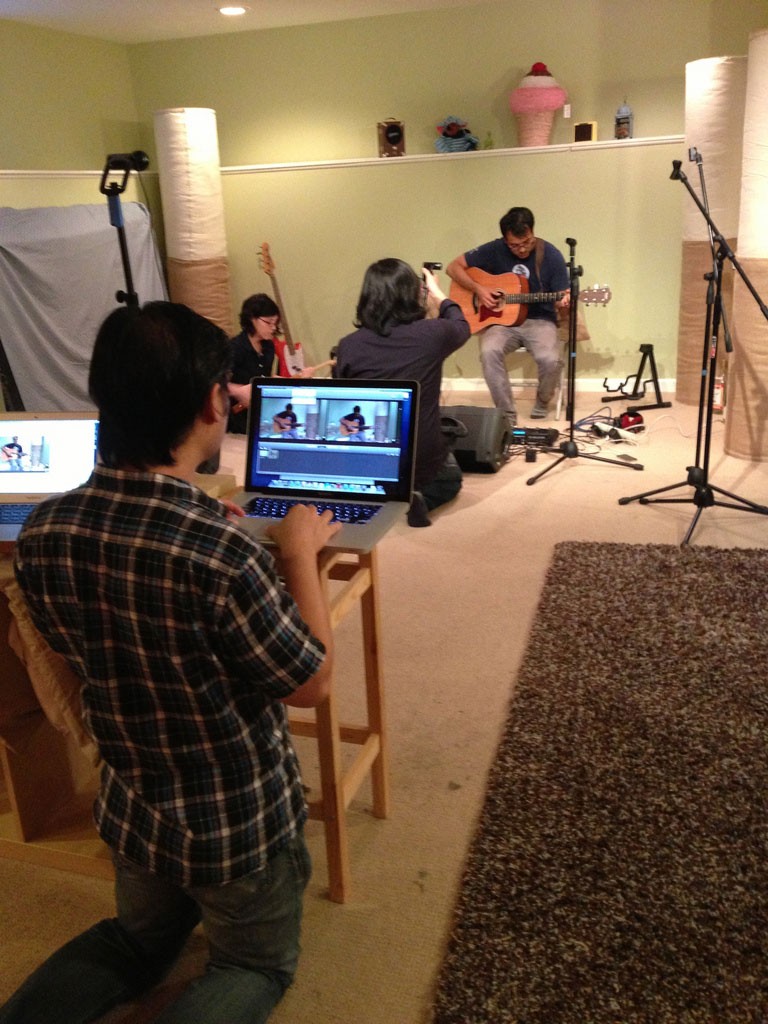
A webcast uses streaming media technology to distribute a TV programme to many listeners or viewers via the internet—another form of broadcasting. The development of this technology has allowed a number of small, independent TV companies, as well as the big established broadcasting networks, to produce their own shows and broadcast them over the internet. A "wedcast", for example, allows video footage of a wedding in a distant location to be shown live to friends and family over the internet.
Consultant: Chris Oxlade
pics

Without in any way limiting Q-files Ltd’s exclusive rights under copyright, any use of this publication to “train” generative artificial intelligence (AI) technologies to generate text is expressly prohibited. Q-files Ltd reserves all rights to license use of this work for generative AI training and development of machine learning language models.