
Media and communications

CITE
We have made every effort to follow citation style rules, but there may be some minor differences. If in doubt, please refer to the appropriate citation style manual.
Undersea communications cables. (2026). In Q-files Encyclopedia, Technology, Media and communications. Retrieved from
https://www.q-files.com/technology/media-and-communications/undersea-communications-cables
"Undersea communications cables." Technology, Media and communications, Q-files Encyclopedia, 19 Mar. 2026.
https://www.q-files.com/technology/media-and-communications/undersea-communications-cables.
Accessed 6 Aug. 2026.
Undersea communications cables 2026. Technology, Media and communications. Retrieved 6 August 2026, from
https://www.q-files.com/technology/media-and-communications/undersea-communications-cables
Technology, Media and communications, s.v. "Undersea communications cables," accessed August 6, 2026.
https://www.q-files.com/technology/media-and-communications/undersea-communications-cables


Undersea communications cables
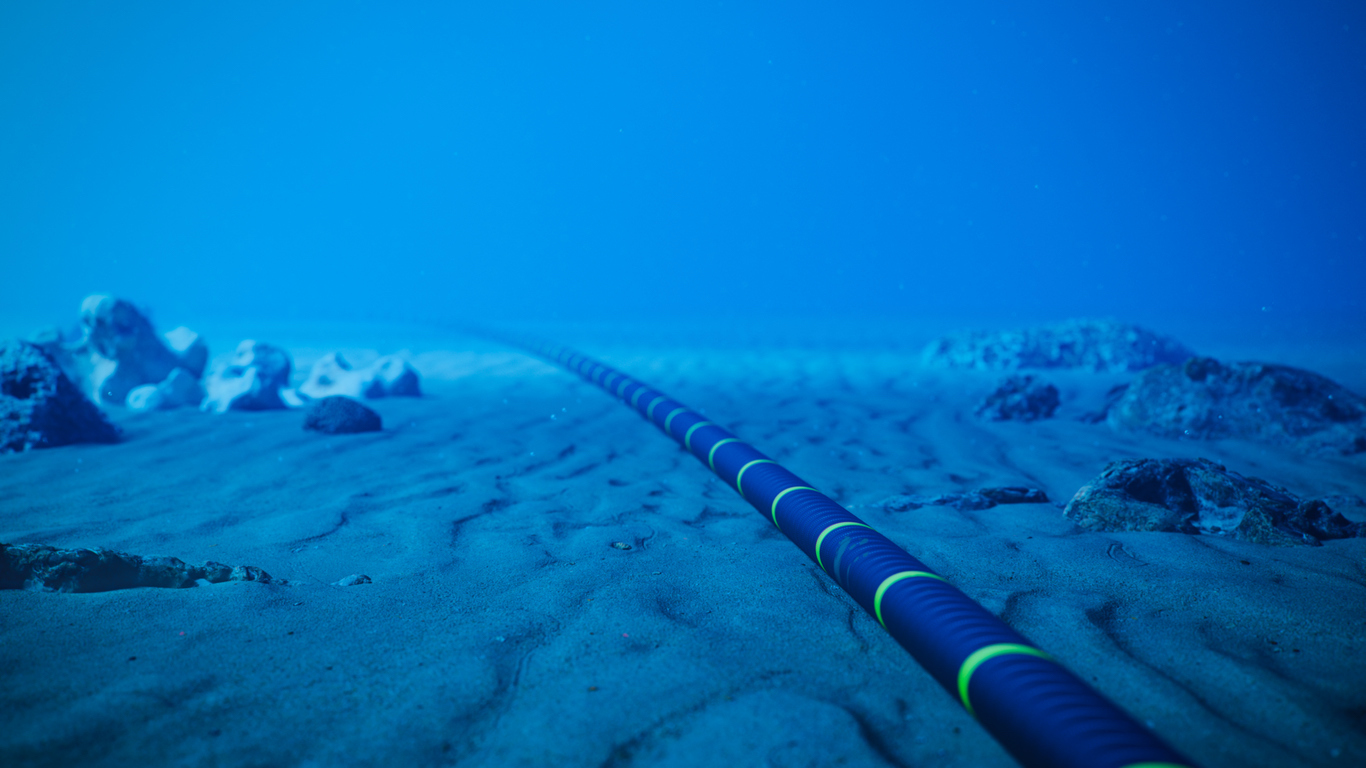
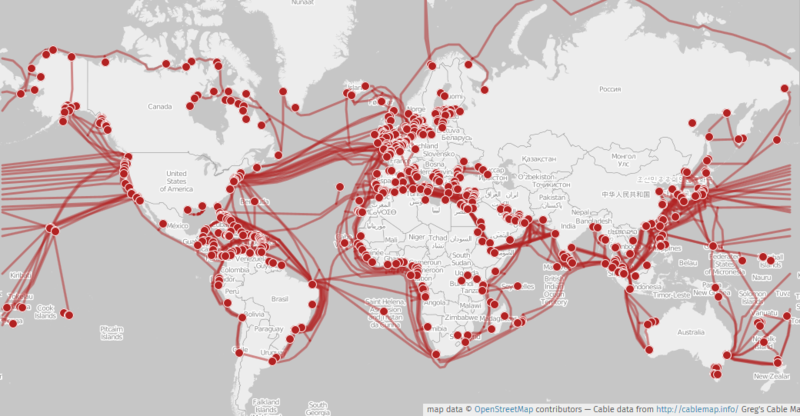
Undersea (or submarine) cables today make up much of the global telecommunications network. There are about 485 of these cables, together extending for approximately 1.3 million kilometres (about 810,000 miles) across the floors of the world's oceans. The cables carry more than 95% of all the intercontinental data traffic on the global internet, including around 45 million financial transactions every day. Modern undersea cables use fibre-optic technology to carry this digital data, which consists of both telephone and internet traffic. Fibre-optic cables were first developed in the 1980s, and used for transatlantic telephone calls from 1988 onwards.
Fibre-optic cables
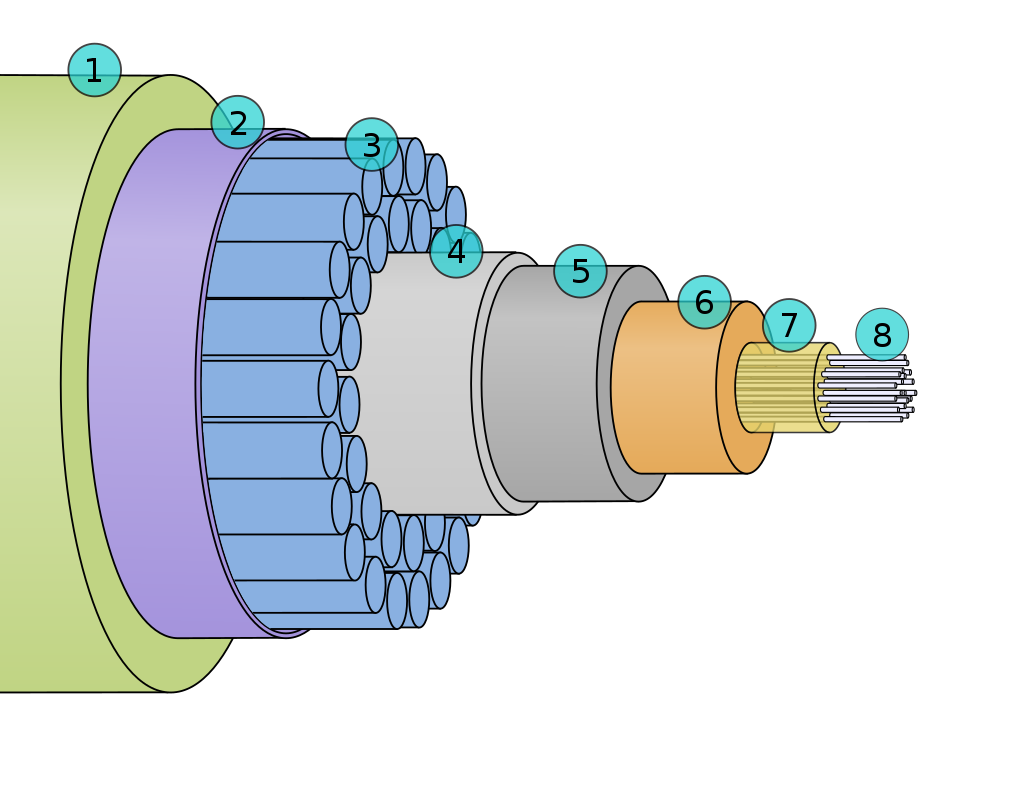
Specialized fibre-optic cables are used for long-distance undersea data transmission. Each cable contains several strands of optical fibre (varying between four and a few dozen), with each fibre able to carry hundreds of separate information channels. Optical amplifiers, which maintain the strength of the signal, are positioned every 100 kilometres (about 60 miles) or so along the cable. Signals can cross the Atlantic Ocean in 60–70 milliseconds.
In shallow seas close to shore, the cables are covered with thick protective coating to protect them from the buffeting of tides or rocks being hurled at them in stormy seas. In the deep ocean, the cable may no thicker than a garden hose.
Undersea cables are extremely reliable. If a cable does break, often there is another cable available to allow transmission to continue. Also, the carrying capacity of the fibre-optic cables—up to 200 terabits per second—is much greater than satellites, which normally offer only 1000 megabits per second (a terabit is 1 million times larger than a megabit). However, new transoceanic undersea cable systems are expensive, costing several hundred million dollars to construct.


Vulnerability
Undersea communications cables form what is considered a vital infrastructure of the world—essential to nearly every country's economy as well as our daily lives. But the system is vulnerable both to environmental stresses—the cables stretch across submarine mountain ranges and over deep rifts in the ocean floor—and to the possibility of sabotage (deliberate intent to cause damage).
Many stretches of cable run through remote areas of ocean and in international waters (those outside the territory of any country). They are easily accessible to submarines or robot submersibles. The highest-risk zones are, however, at "choke points", where several major undersea cables all meet the land in the same place. For Europe, these include Gibraltar and Malta, where many cable connections from Asia make landfall after passing through the Suez Canal.


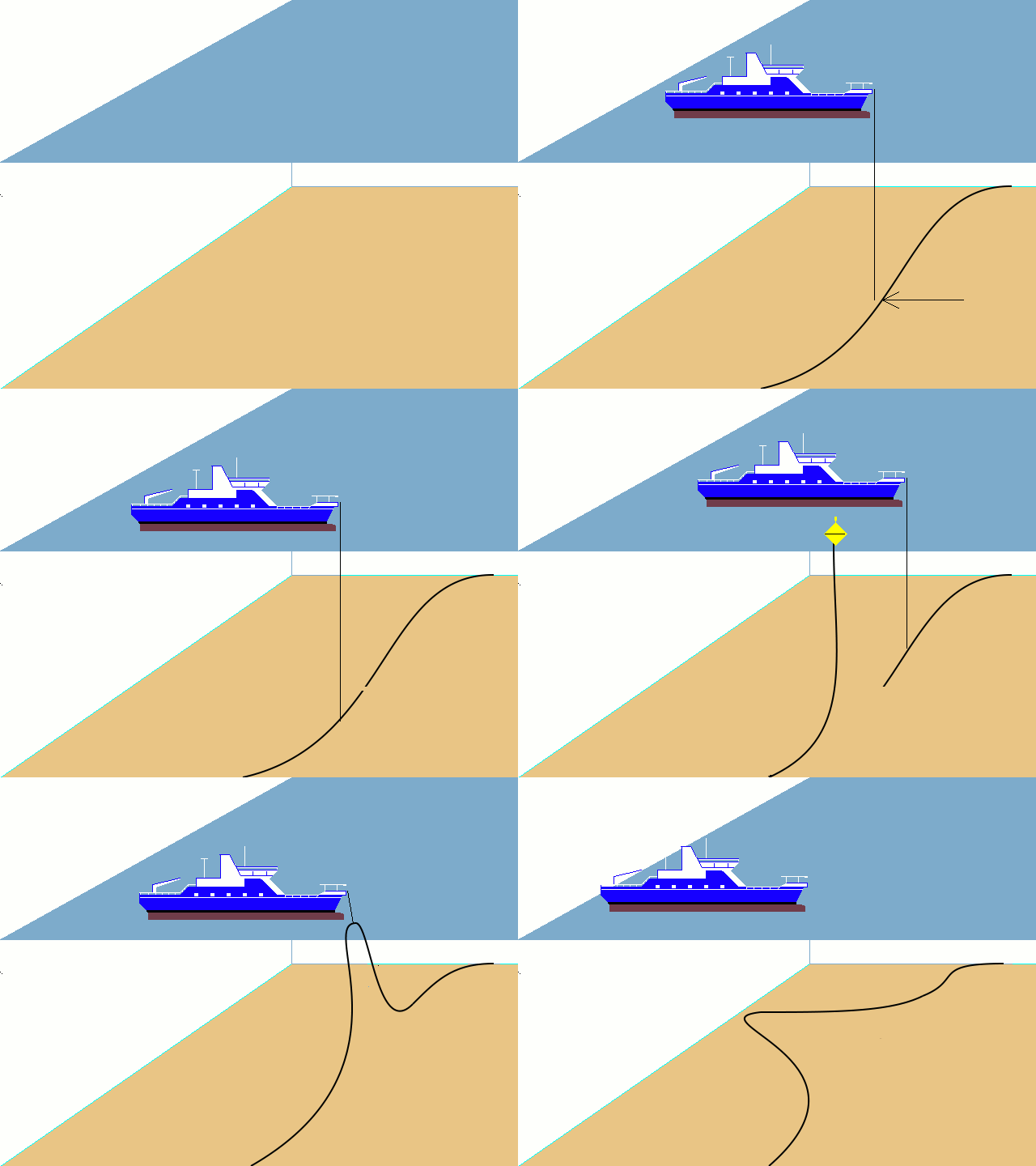
The risk to governments is that terrorists or enemy states may sabotage—or tap into—the vital undersea cables at critical points on the network. So far, most cable breakages have been caused accidentally by ships' anchors or fishing nets, or natural causes such as earthquakes, volcanic eruptions, turbidity currents (undersea landslides)—and even shark bites. In response to the potential threat of breakages, cable companies have laid additional cables along alternative routes so that damage, accidental or otherwise, to any one cable will usually not affect internet traffic.
History of undersea cables
The first undersea communications cables were transatlantic telegraph cables, laid in the 1850s. The SS Great Eastern, built by Isambard Kingdom Brunel and, in its day, the world's largest steamship, was used to lay cables in the 1860s, including the first successful transatlantic cable in 1866. Undersea cables first connected all the world's continents (except Antarctica) in 1871, when the Indonesian island of Java was connected to Darwin, Northern Territory, Australia.


British undersea cable systems dominated the North Atlantic Ocean, the most important route, until the early 1900s. In the late 19th century, the British government set about building a worldwide telegraph network entirely within the British Empire, fearing that any line passing through non-British territory would pose a security risk. Known as the All Red Line (maps of the period showed British territories coloured in red or pink), the cable network linked Britain with Canada, Australia, New Zealand, India, South Africa and various islands in between across the Atlantic, Pacific and Indian oceans.
Later, cables carried telephone calls rather than telegraph messages. TAT-1 (Transatlantic No. 1) was the first transatlantic telephone cable system. Between 1955 and 1956, cable was laid between Scotland and Newfoundland. Thirty-six telephone channels were carried when the service began.
Consultant: Mike Goldsmith
pics
Without in any way limiting Q-files Ltd’s exclusive rights under copyright, any use of this publication to “train” generative artificial intelligence (AI) technologies to generate text is expressly prohibited. Q-files Ltd reserves all rights to license use of this work for generative AI training and development of machine learning language models.