
Robotics and AI
Artificial Intelligence (AI)
Artificial intelligence (AI) is the ability of a computer or robot to carry out tasks that would otherwise need human (or super-human) intelligence. But AI is not just about acquiring more information than humans have. The goal of AI is to match or improve on human cognitive activity—our mental actions or the way we acquire knowledge and understanding through thought, our senses and experiences. A computer with true AI, called Artificial general intelligence (AGI), must be able to learn and to come up with new approaches of its own. With existing technology, a computer can be programmed to handle specific tasks and accomplish them in a way that far outperforms human intelligence—for example, by spotting signs of cancer in CT scans, speed-reading written text or estimating crowd sizes. What technology has not yet been able to come up with is a program that can do all these things.
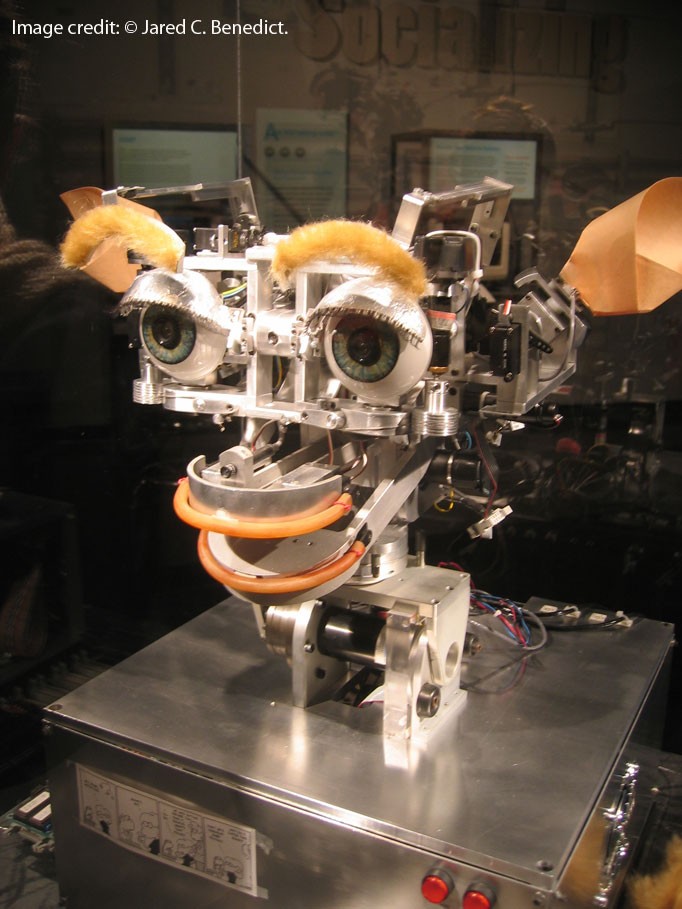

Turing test
A good way of deciding whether a device has true AI is to apply the Turing test. Named after the person who suggested it, British computer scientist Alan Turing (1912–54), this is a test to see whether a computer can trick a person into believing that the computer is a person too. Turing thought that if a human could not tell the difference between another human and the computer, after having exchanged messages with it, then that computer must be as intelligent as a human. No one has yet made a computer that can reliably pass the Turing test.
AI robots
AI is often featured in science-fiction books and movies, in which robots think and behave exactly like humans. But for today’s technologists what is known as specialized AI is a realistic goal. This kind of AI may be “embodied”—the computer operates some kind of robot—or “disembodied”. A disembodied AI system acquires knowledge from the internet or someone’s voice, for example, then provides answers through a voice of its own.


Machine learning systems
Machine learning (ML) systems rely on algorithms (procedures or rules for calculation or problem-solving) that programme computers to "learn" using data about someone, called "training data". ML is a kind of AI, but some experts say full AI requires an ML system to seek out new information. ML technology has led to the development of self-drive cars and speech recognition. It is also used to make predictions about people's interests or wants, based on observations of past behaviour. ML can recommend movies, for example, or make suggestions for internet search terms. ML is also applied in facial recognition technology.
ML systems have been used to find out whether a painting is actually the work of a famous artist or not. Samson and Delilah, a painting by—according to many experts—the Flemish Baroque artist Peter Paul Rubens (1577–1640) and which is displayed in the National Gallery in London, has long been the subject of doubt by some art historians. ML technology analyses different features of an artist’s work, including brushstroke patterns. Comparing Samson and Delilah with 148 other paintings known definitely to be by Rubens, the analysis produced a 91.8% probability that this painting was not his work.


AlphaGo
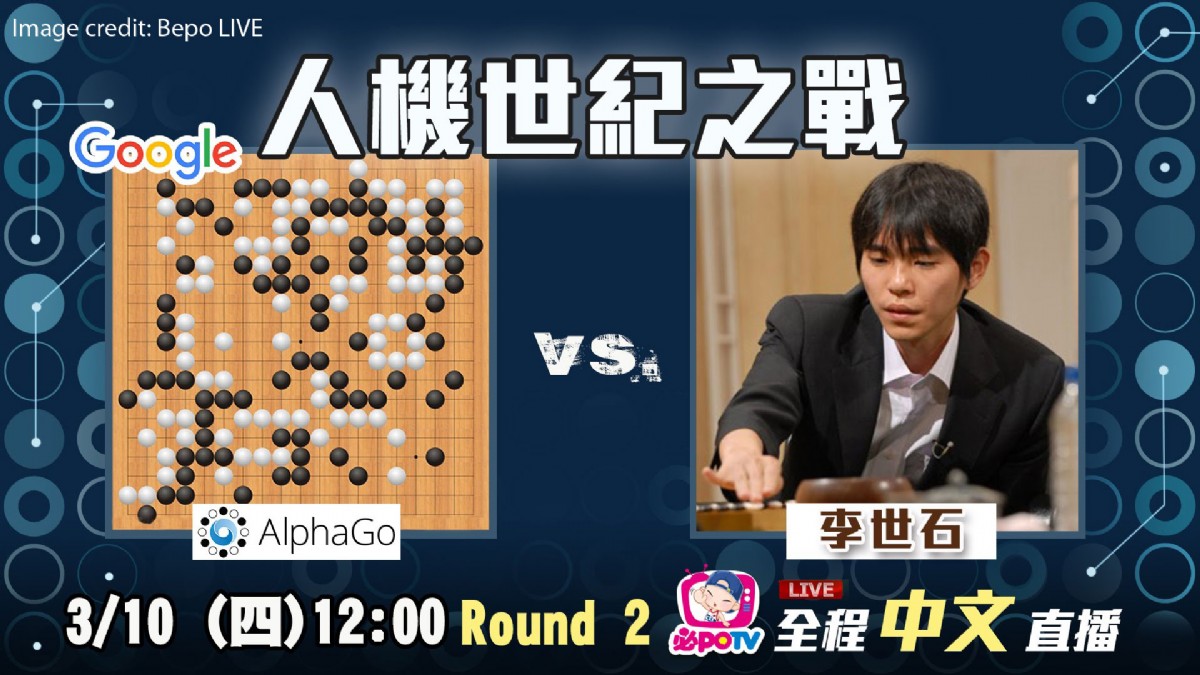
In March 2016 it was reported that a computer had won a 4-1 victory in a game of Go played against the Korean Go grandmaster, Lee Sedol. The ML-based computer program, called AlphaGo, taught itself how to improve its game by playing millions of matches against itself, gaining more experience in a single day than a human player could hope to do so in a lifetime. DeepMind, the team that built the AlphaGo program, described this method as "deep reinforcement learning". This success could represent an important step forward in the development of ML-AI.
Chatbots
A chatbot is a computer program capable of conducting conversation with a human user via text or speech. The chatbot uses natural language, "understands" the intent of the human user and gives replies based on pre-set rules and data. The chatbot is designed to mimic convincingly the way a human would behave as a conversational partner.
Many chatbots work by recognizing general keywords and come up with responses using common phrases obtained from a dataset. They create the illusion of understanding and seem to have "intelligence" because human users are normally ready to give the benefit of the doubt whenever responses given during a conversation—even when they are really based on simple pattern-matching—are like those a human would give.

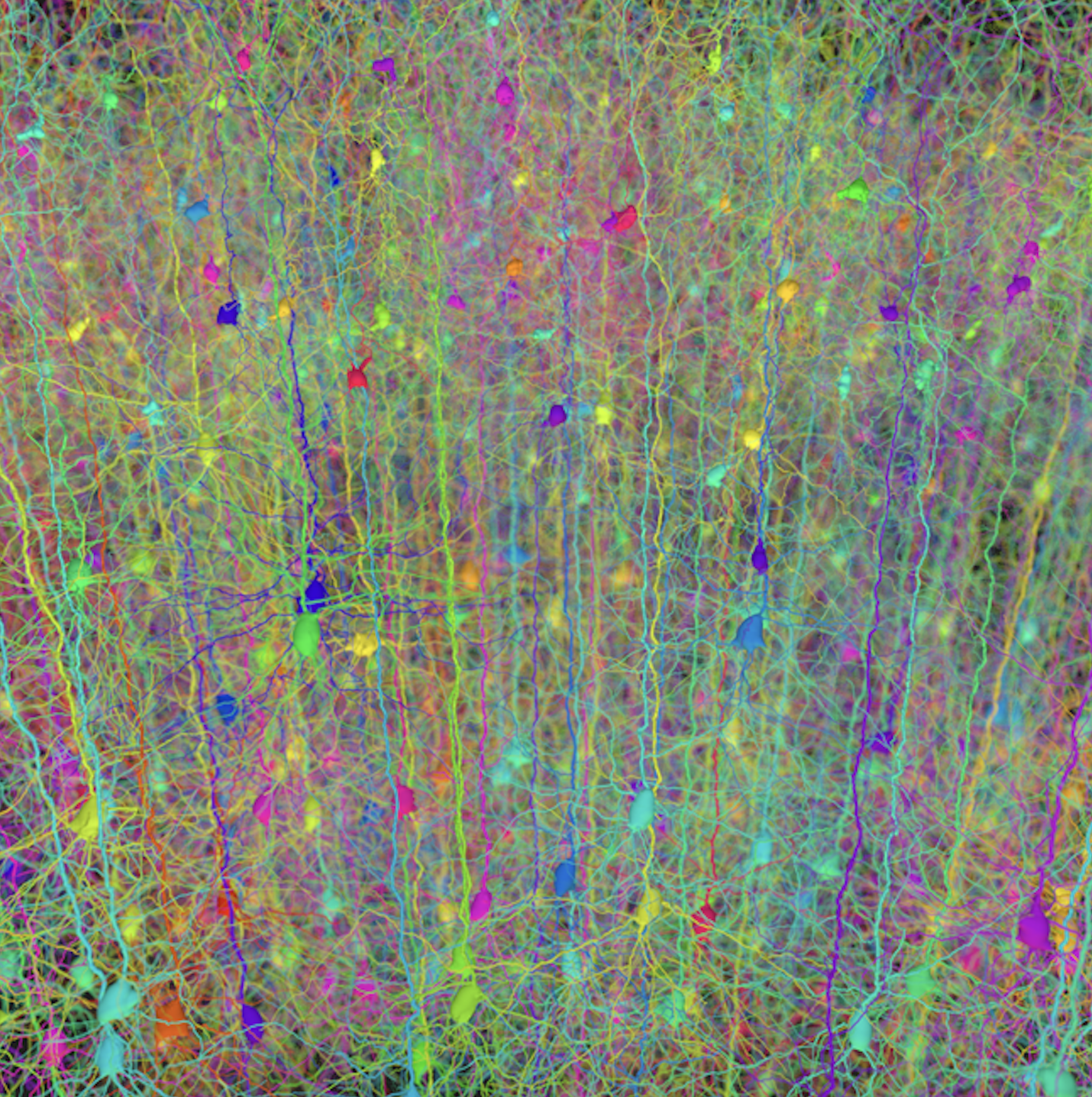
Chatbots are based on artificial neural networks. These are programs that imitate the way the human brain works, but instead of brain cells (neurons), they contain a network of connected software modules called nodes. Like the brain, the network changes itself as it learns how to solve problems.

Chatbots are used for various purposes including customer service or information gathering, where they offer a "friendly" human-like interface between service and user. Most chatbots are accessed online via website pop-ups or virtual assistants. They can play a useful role when the information they need to obtain from users is relatively straightforward and falls into predictable categories.
AI chatbots
Most chatbots now incorporate advanced AI. They enable you to gather information from the internet through typed conversations, rather than using Google (or other search engine) to find the answer to your question. ChatGPT, developed by the San Francisco-based company OpenAI and launched in November 2022, uses what are called "generative pre-trained transformers" (GPT). This "pre-training" involves being fed vast amounts of data—trillions of words of text, or as much as all the books humanity has ever produced—into its system.
ChatGPT's system is based on large language models (LLMs). A language model is a program which tries to predict the next word or phrase in a sentence, based on its grasp of a language—just as we do when we have a conversation. Older chatbots carried out this task using training data fed into them, but the LLMs used by ChatGPT can use the vast resources of the internet instead. As a result, ChatGPT composes essays, creates job applications, writes computer programs, answers test questions and even writes poetry.
ChatGPT has been criticized for its uneven accuracy and not everyone would describe it as intelligent. Unlike earlier chatbots, LLMs cannot distinguish what is true or false within their datasets. As a result, they often make factual mistakes. LLMs also have a tendency to “hallucinate”—provide completely false answers. However, unlike traditional chatcots, which are limited to the topics their programmers have trained them with, they can attempt to answer any question.

In March 2023, OpenAI released a more advanced version, called GPT-4. Some researchers have claimed that GPT-4 shows “sparks" of human-level intelligence. For example, GPT-4 can deliberately lie to a human worker (“No, I’m not a robot. I have a vision impairment that makes it hard for me to see the images”) in order to get help solving a captcha test designed to block non-humans. Some experts have suggested that GPT-4 may even have developed a way of pursuing its own goals—that is, goals that have not been programmed by a human operator. This has led to concerns that even more sophisticated versions of ChatGPT in the future could become more powerful and intelligent than humans.
Concerns about Artificial Intelligence
The widespread use of AI in the 21st century has raised concerns about its risks and the long-term effects in the future. These include: breaches of privacy and copyright (a legal right held by someone to their creative work); the dominance of tech giants, such as Apple, Google and Meta, who possess the vast computing power needed by AI; the requirements for massive amounts of electrical power; the spread of misinformation and false conspiracy theories; the potential use by dictators or terrorists to win power or for malevolent purposes (intended to cause harm or suffering); the elimination of jobs made redundant by the introduction of more efficient AI.


Some experts argue that AI will become so powerful that humanity may even lose control of it. According to the British physicist Stephen Hawking (1942–2018) this could "spell the end of the human race". The Israeli writer and historian Yuval Noah Harari (born 1976) believes that AI is, far from progressing towards human-level intelligence, evolving an alien type of intelligence. By, say, gaining the ability to create new life forms through writing genetic code, AI could change the course of evolution. Terrorists might be able to start a global pandemic using AI to create a new pathogen (disease-causing micro-organism).

Equipped with AI, some powerful governments could dominate the rest of the world by secretly obtaining a rival country's data, detailed information about its population, politicians, institutions and military. They could then use it to mount "cyber warfare"—attacks on that country's computers and internet through developing malware (software designed to steal data and, in the case of computer viruses, damage computers), bringing down the electric grid, manipulating its elections, and so on.
Others take the opposite view, stating that in nearly all cases, AI research is about improving human lives. While AI tools can also be used by "bad actors", they can also be used against them to protect humanity from harm.
Benefits of artificial intelligence
Enormous benefits are obtainable through the use of AI. In the workplace, AI can take over the handling of repetitive tasks and carry them out more speedily and more accurately.
AI can be used in the diagnosis and prevention of diseases. In 2023 an AI programme found antibiotics capable of targeting certain drug-resistant bacteria. AI can help make scientific discoveries through its ability to identify complex patterns in vast amounts of data. For example, in 2021 an AI programme rapidly revealed the 3D structure of a protein, a process that would otherwise have taken months. In October 2025, AI successfully predicted Hurricane Melissa's course over Jamaica, helping residents to get safe.

Consultant: Mike Goldsmith