
Exploration

CITE
We have made every effort to follow citation style rules, but there may be some minor differences. If in doubt, please refer to the appropriate citation style manual.
Vasco da Gama. (2024). In Q-files Encyclopedia, History, Exploration. Retrieved from
https://www.q-files.com/history/exploration/vasco-da-gama
"Vasco da Gama." History, Exploration, Q-files Encyclopedia, 31 Jul. 2024.
https://www.q-files.com/history/exploration/vasco-da-gama.
Accessed 6 Aug. 2026.
Vasco da Gama 2024. History, Exploration. Retrieved 6 August 2026, from
https://www.q-files.com/history/exploration/vasco-da-gama
History, Exploration, s.v. "Vasco da Gama," accessed August 6, 2026.
https://www.q-files.com/history/exploration/vasco-da-gama


Vasco da Gama
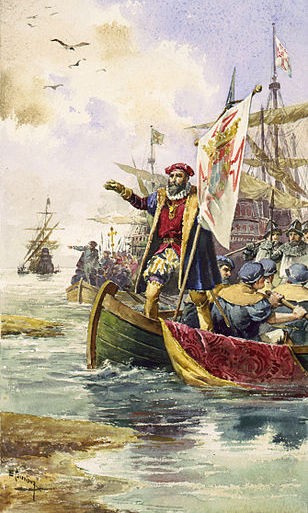
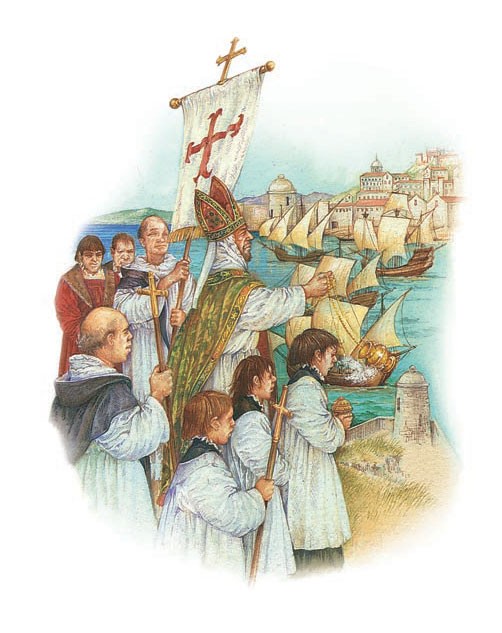
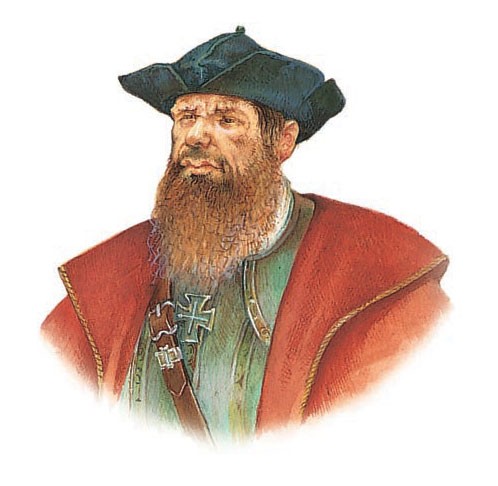
In the late 15th century, Europeans were keen to find a new sea route to the Far East. They wanted to trade independently with China, Japan and India without having to rely on the Silk Road, a trade route which led overland through Central Asia and was under the control of Muslims. In July 1497, under the orders of King Manuel I, Portuguese explorer Vasco da Gama (c.1460–1524) set sail from Lisbon in the hope of finding a new route to India around the southern tip of Africa.

Rounding the Cape
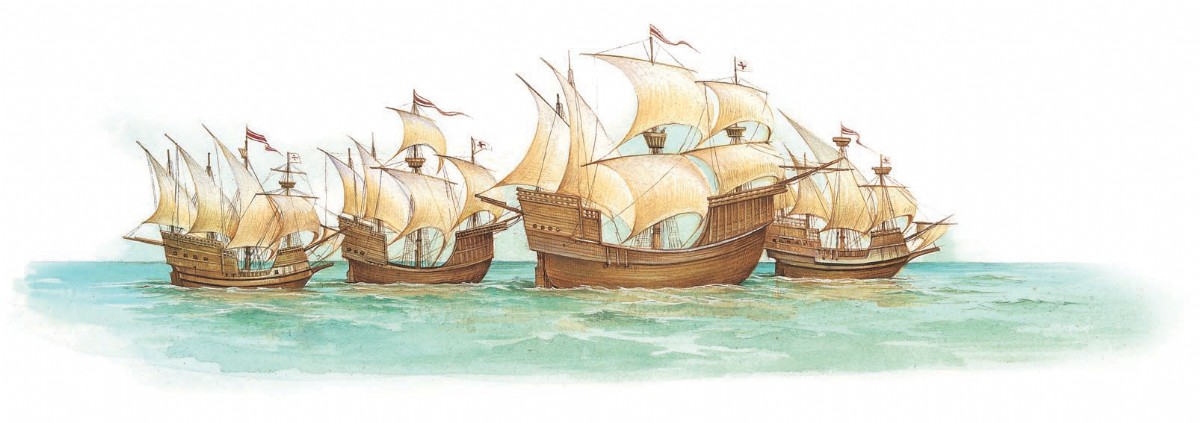
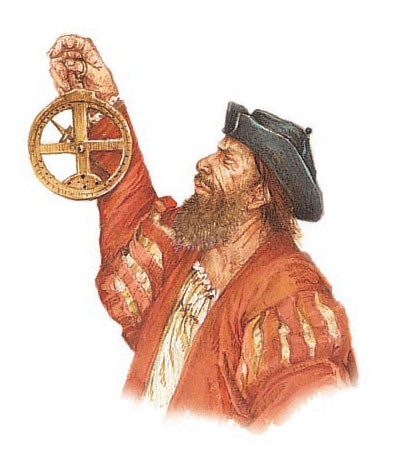
Vasco da Gama set out with four ships under his command: two large merchant ships, the São Gabriel and the São Rafael; the Berrio, a light caravel (small, speedy sailing ship); and an unnamed store ship (which was later damaged in a storm and abandoned). To avoid unfavourable winds and currents, da Gama boldly led his fleet out into the Atlantic instead of along the west coast of Africa. They did not see land for three months. The crew feared that they would sail off the edge of the earth. The fleet eventually swung east round the Cape of Good Hope, near the southernmost tip of Africa.

East coast of Africa
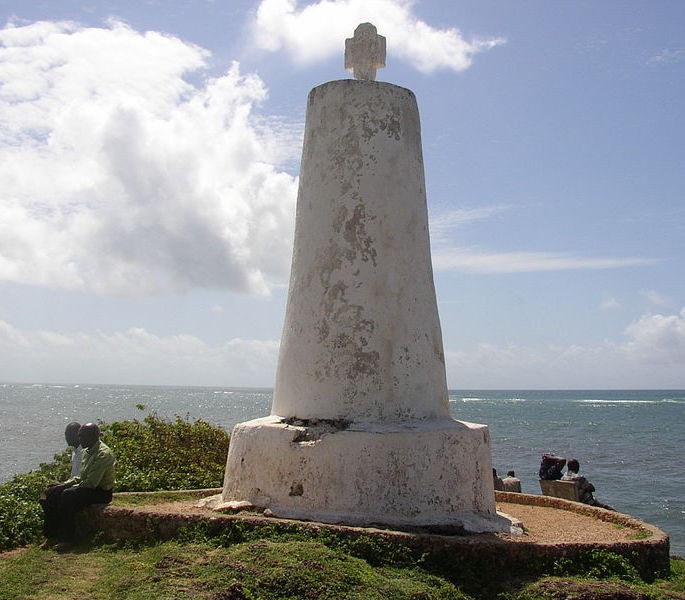
Da Gama's ships sailed up the east coast of Africa. On their way, they set up stone columns, called padrãos. These would act as signposts for future sailors. The Portuguese had hoped to trade with the rulers of East Africa. However, the Sultan of Mozambique was insulted by the cheap trinkets they offered him. They received a warmer welcome in Malindi (in modern-day Kenya), where the Sultan exchanged spices for Portuguese goods.
Arrival in India
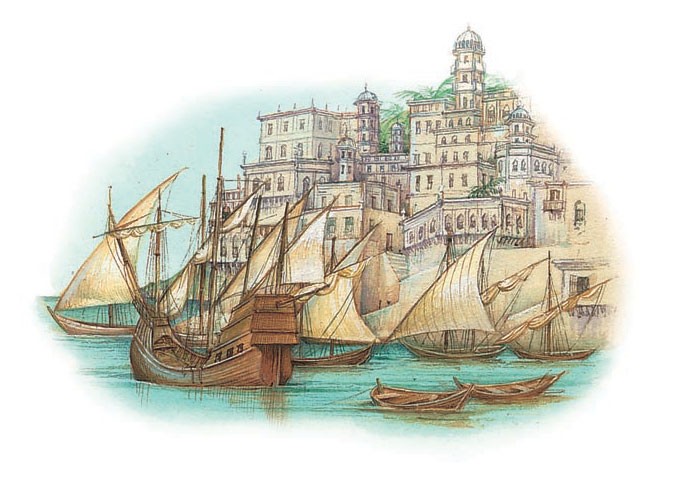
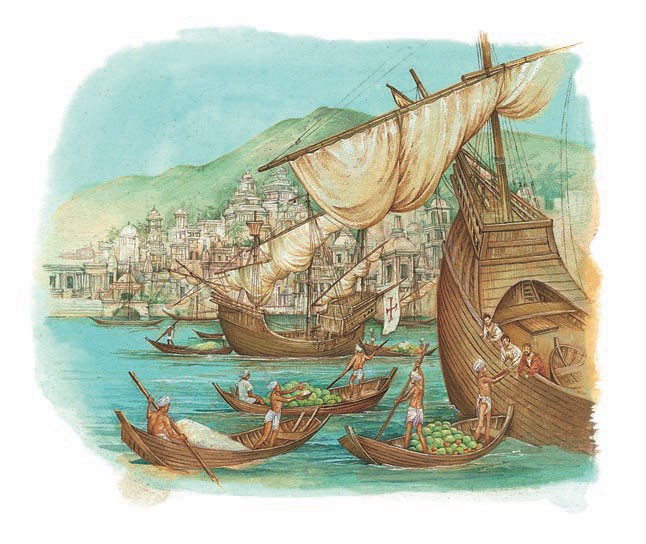
With the assistance of an Arab navigator, the ships crossed the Indian Ocean in just 23 days, arriving at Calicut (present-day Kozhikode) on the Malabar Coast of southwestern India (present-day Kerala state). The Hindu ruler of Calicut, the Zamorin, welcomed da Gama. However, he refused to trade with the Portuguese. The goods offered by the Europeans, including beads, cloth and olive oil, were of no interest to the rich ruler. Da Gama and his men left India with only a modest cargo of spices, exchanged in the markets of Calicut.
But Da Gama's voyage paved the way for Portugal to set up an overseas trading colony in India. It was the beginning of the Portuguese global empire. Portugal was to control the valuable spice trade between Europe and Asia until the Manila Galleons, operated by the Spanish, began their voyages across the Pacific Ocean to Acapulco in Mexico in the late 16th century.
Consultant: Philip Parker
pics

Without in any way limiting Q-files Ltd’s exclusive rights under copyright, any use of this publication to “train” generative artificial intelligence (AI) technologies to generate text is expressly prohibited. Q-files Ltd reserves all rights to license use of this work for generative AI training and development of machine learning language models.