
The world in the 20th century
The world between the wars 1919–1939
The years between the two world wars were far from peaceful. Germany, Italy and Japan emerged dissatisfied with the peace treaties they were forced to sign after World War I and began to fight for their own interests. The world’s economy collapsed in 1929–31, while civil war broke out in Spain. Both the USA and the new Soviet Union opted out of world affairs—as far as they were able. Eventually the world was at war again, after first Japan and then Germany invaded other countries in the late 1930s.

The Treaty of Versailles
The Ottoman Empire, Austria, Hungary and other nations of the Central Powers all signed separate armistice agreements. As a result of the war, the German, Austro-Hungarian and Ottoman empires were broken up and their ruling dynasties overthrown. In 1919 Germany signed a peace treaty with the Allied powers, called the Treaty of Versailles. The treaty forced Germany to pay 132 billion marks (about £284 billion today) to other European nations. In Germany, bitterness about the treaty—and the economic and social chaos caused by the war—made it easier for Adolf Hitler and his Nazi Party to gather support and win power in 1933.
Weimar Republic
In February 1919, a new democratic government of Germany, was established at the small town of Weimar. Every German over 20 was given the vote. Berlin at the time was gripped by massive street demonstrations organized by the Communist Party of Germany (KPD) led by Karl Liebknecht and Rosa Luxemburg. They wanted to spark a revolution in Germany following the Russian Revolution of 1917. The uprising was crushed by the Weimar government, led by President Friedrich Ebert, in 1919.

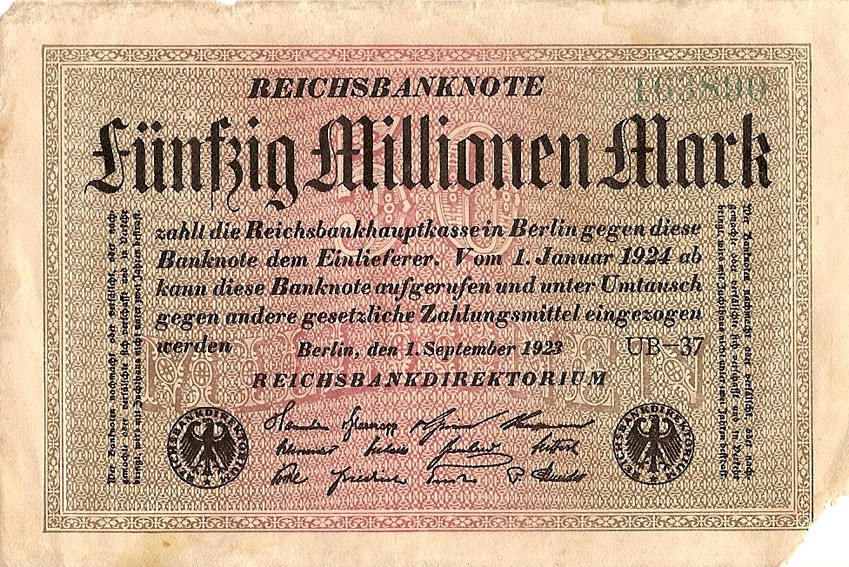
In 1923, Weimar statesman Gustav Stresemann brought together a Great Coalition of parties in the German Parliament (Reichstag) and made effective laws. The German bank was reformed, ending years of hyperinflation—during which the mark plummeted in value. He agreed the Dawes Plan with the US which gave Germany longer to pay reparations and secured a loan of 800 million goldmarks, to revitalize the German economy. The period between 1923 and 1929 saw the German economy booming and cultural life flourishing.
The League of Nations
At the end of World War I, the countries that signed the peace treaties at Versailles agreed to set up an international organization to preserve the peace and settle any future disputes by arbitration (talks rather than conflict). The League of Nations was based in Geneva, Switzerland. The League had no armed forces to compel its members to carry out its decisions, but it could enforce economic and other sanctions against them.


The League had several successes, including settling various disputes in the Balkans and Latin America and running the former German colonies as mandates (overseeing government by other colonial powers). But the League of Nations was weakened from the start when the USA refused to join and later when Japan, Italy and Germany all pulled out. The Italian invasion of Ethiopia (Abyssinia)—both then member nations—in 1935 showed the League to be powerless to intervene in armed conflicts. It collapsed during World War II and was taken over by the new United Nations.
United States
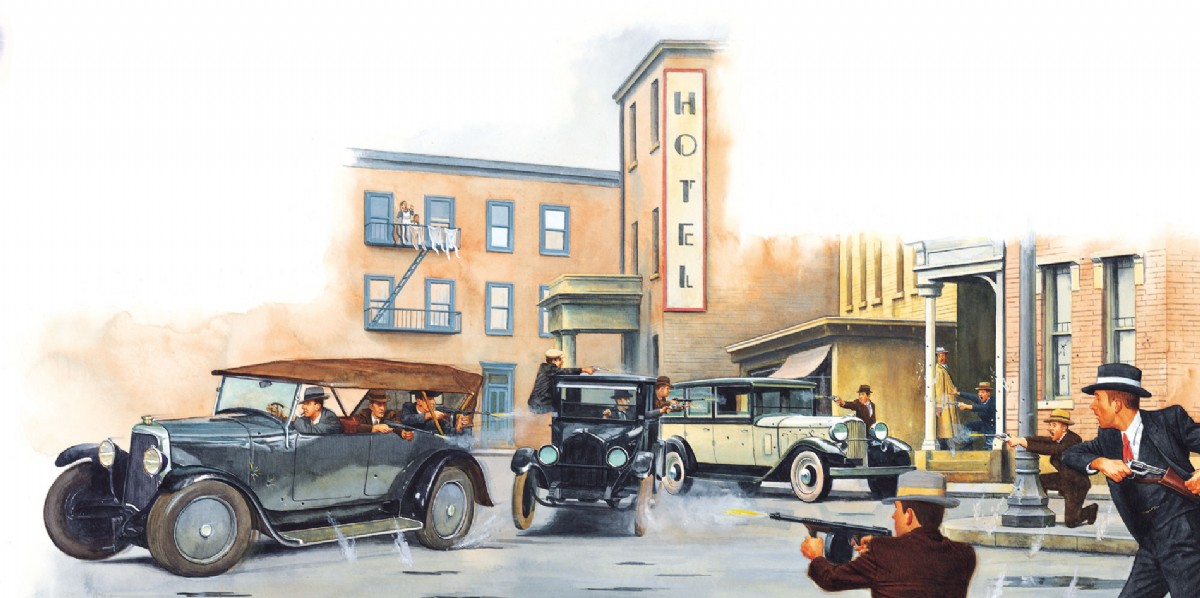
Although the USA fought on the side of the victorious allies in World War I, the American Congress rejected the Treaty of Versailles that ended the war and refused to join the new League of Nations. America turned away from the world and sought what it called "normalcy". During the 1920s the American economy boomed during the Jazz Age as people bought new cars and consumer goods. Hollywood produced many films, with "talkies", movies with sound, first appearing in 1927. The sale of alcohol was banned from 1920–33 during the Prohibition, leading to a black market in alcohol and a rise in gangsterism.


Soviet Russia
In February 1917 the unpopular government of Tsar Nicholas II was overthrown and a new Provisional Government took power. It pledged to continue to fight the Germans in World War I. The new government was opposed by the Communist Bolshevik Party, which in turn seized power in October 1917. Led by Lenin, the Bolsheviks quickly took Russia out of the war, seized all private property and began to turn Russia into the world’s first Communist state.
White Russian opponents of the Bolsheviks fought them during the Russian Civil War of 1917–22, supported at times by British and French troops. In 1922 the country was renamed the Union of Soviet Socialist Republics, or the Soviet Union for short. After Lenin’s death in 1924, Joseph Stalin took power. He was ruthless with his opponents, torturing and killing some and sending many others off to work in the slave camps of the Gulag. When he nationalized the farms in the early 1930s, he allowed millions of Ukrainian peasants to starve to death. In a series of Five Year Plans, the Soviet Union's industry and energy supplies were rapidly developed.

Great Depression
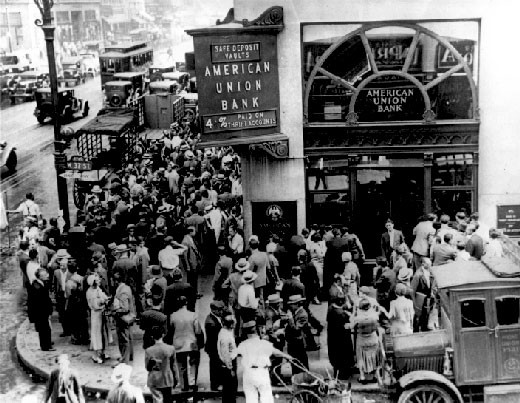
The Great Depression began in 1928 as prices of grain and other agricultural produce began to fall around the world. This was then followed by an international financial collapse. A boom on the American Stock Market in Wall Street, New York, came to a sudden end in October 1929 when speculators sold their company stocks in panic. The crisis spread across the Atlantic in 1931 when a major Austrian bank collapsed.
As the supply of money dried up, exports declined sharply, people stopped spending, and the world’s economy ground to a halt. The result was mass unemployment. Around 13.7 million Americans and 2.8 million Britons, for example, were soon out of work. The Great Depression led some governments to intervene more in their economies, but also led others to put up trade barriers to protect their own industries. Politically, it led to a rise in far-right political movements, as people looked for drastic measures to improve their situation.
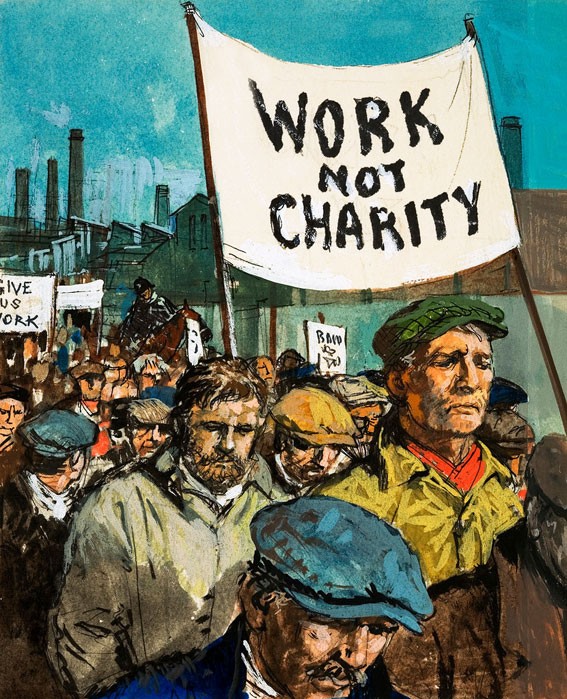
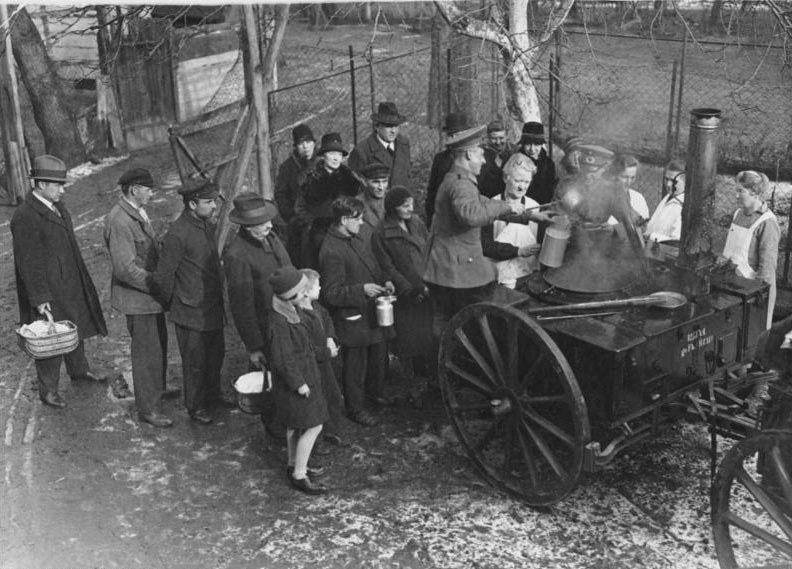
Weimar Germany, which relied on American financial loans, was hit particularly badly. Companies throughout Germany went bankrupt and millions of workers were laid off. In desperation, German voters turned to the extreme political parties in Germany: the Nazi and Communist Parties.
New Deal
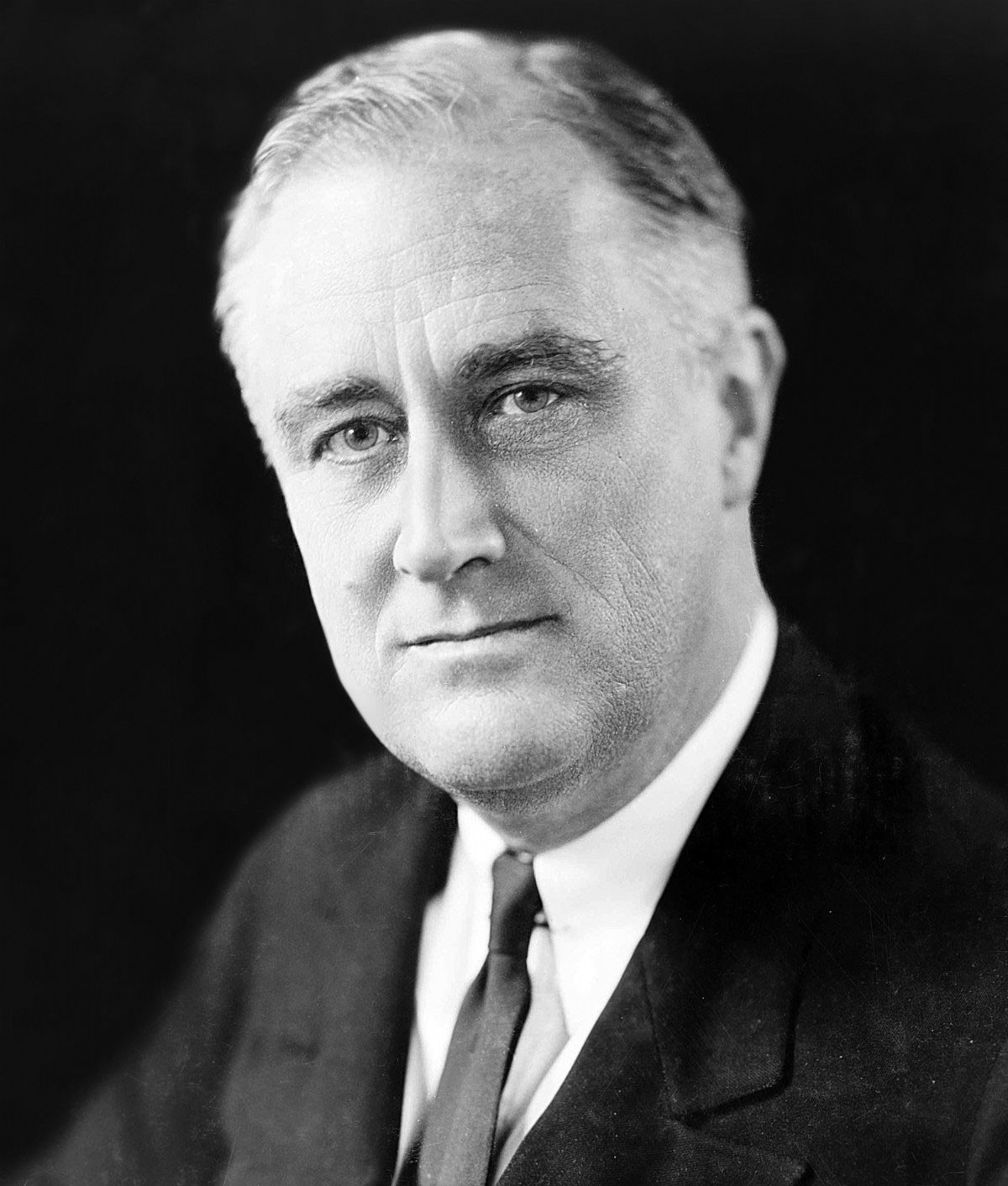
Millions of Americans were thrown out of work and lost all their savings as banks crashed during the Great Depression. In 1932 Franklin D Roosevelt won election as president promising a New Deal for Americans. His government took measures to stimulate the economy and provide help for the poor and unemployed. Roosevelt was a hugely popular president winning re-election in 1936, and again in 1940.
Fascist Italy
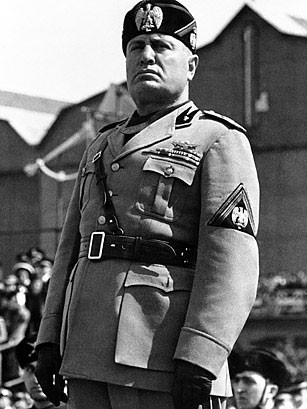
Italy had emerged on the winning side of World War I, but did not feel it had been awarded enough territory. The government was weak and divided and industrial unrest was common. In 1922, Benito Mussolini (1883–1945), the leader of the National Fascist party, marched on Rome and took power. He quickly set up a dictatorship and crushed all opposition to his rule. Fascists believed in nationalism and intense loyalty to their country. Above all, they gloried in military strength. They aimed to make their country a disciplined military power behind a strong leader, or Il Duce, as Mussolini was known.
Unlike Britain or France, Italy had only a small overseas empire: just Somalia and Eritrea in East Africa, Libya in North Africa, and some Greek islands. Mussolini had a vision of establishing a new Roman Empire which would dominate the Mediterranean Sea. In 1935–36 Italian forces overran Ethiopia (known at the time as Abyssinia) in East Africa and seized Albania in 1939. Italy also formed an alliance with Nazi Germany, known as the Rome-Berlin Axis, in 1936. She joined the Anti-Comintern Pact with Germany and Japan a year later.

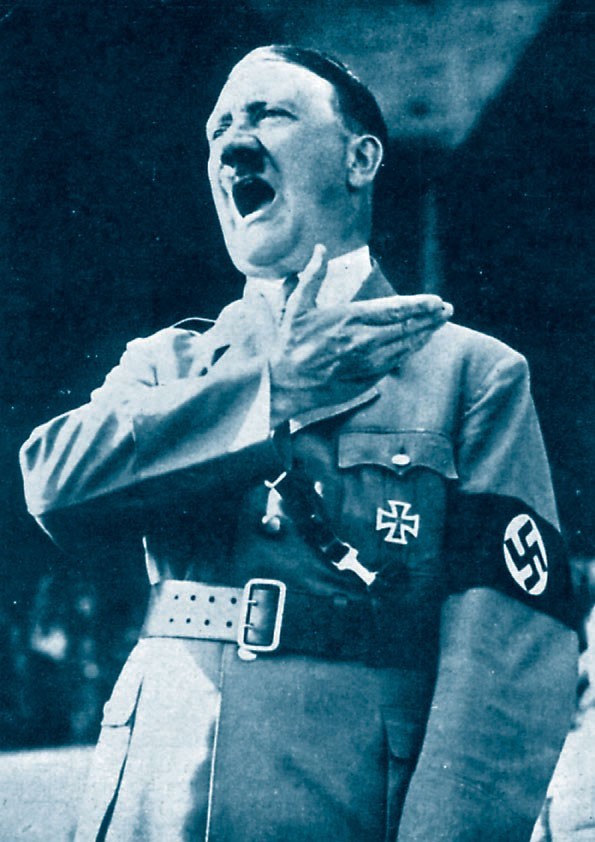
The rise of the Nazis
People had called World War I the “war to end wars”, but the peace treaty that was drawn up at Versailles in 1919 punished Germany severely for its part in the war. As a reaction to this, extreme nationalist fervour gripped Germany. This, combined with the dire economic situation in the country caused by the Great Depression, led to the rise to power of the National Socialist (Nazi) leader, Adolf Hitler. The Nazis won the greatest share of the vote in elections to the Reichstag in 1932, but not a majority. Hitler was, nonetheless, appointed Chancellor in January 1933.
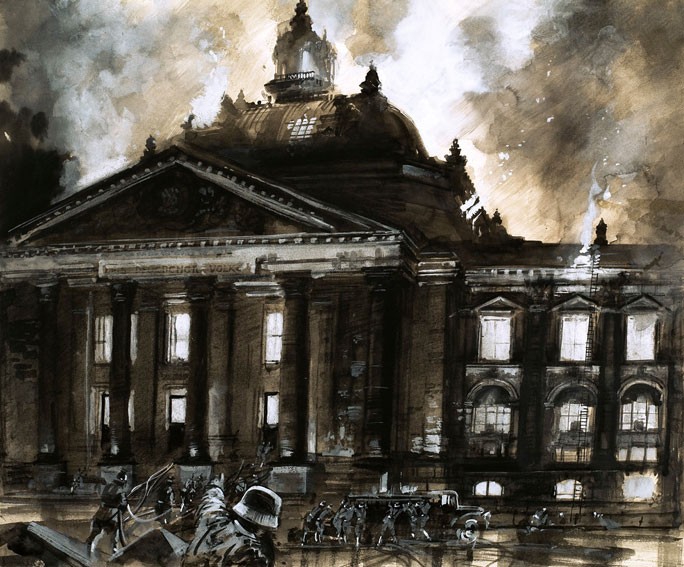
In February, the Reichstag building was set alight. The Communists were blamed for starting the fire and thousands of party members were arrested. Hitler then went further, passing an act allowing his government to pass laws without the approval of Parliament, then banning all other political parties. Germany was now a single-party state: the Weimar Republic was finished.
Nazi Germany
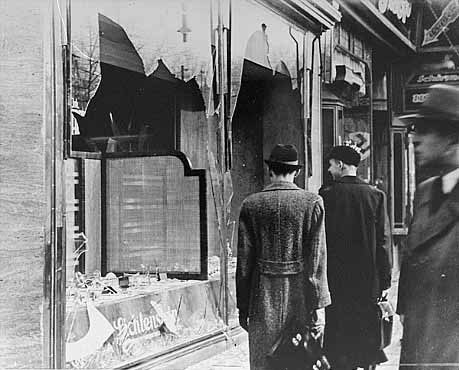
The aim of Nazi Germany was to create a New Order (Neuordnung) in Europe with Germany the ruler of the whole continent. All peoples the Nazis considered to be inferior to the Aryan race (the German people and other native speakers of Indo-European languages) would be exterminated or expelled.
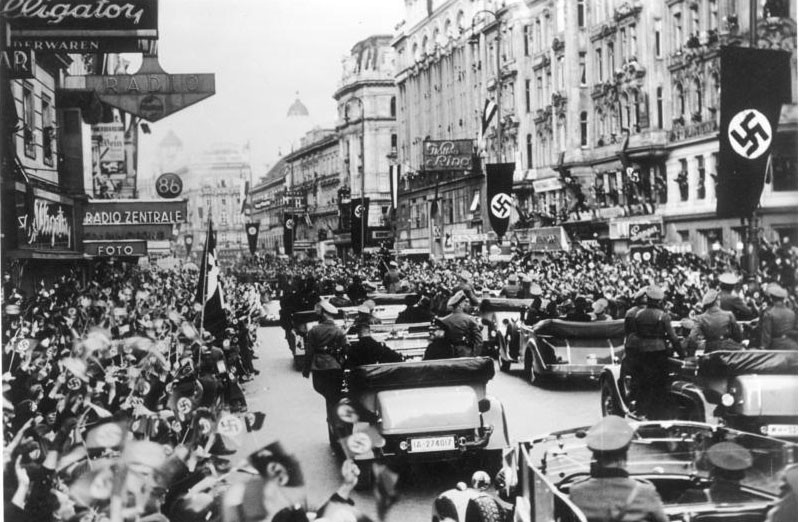
Having gained total power, Hitler began to rearm Germany and build up its armed services. In 1936 German troops occupied the Rhineland, in defiance of the 1919 peace treaty. Two years later he engineered the Anschluss ("union") with Austria, again in defiance of the treaty.
The path to war
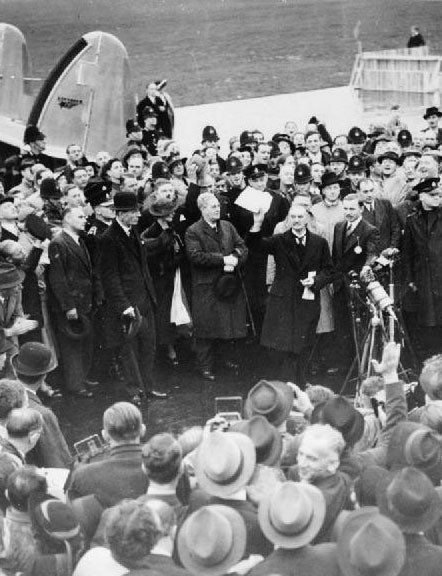
Hitler then demanded that the Sudeten border region of Czechoslovakia become part of Germany. At a conference in Munich in September 1938, the British, French and Italian governments agreed to this—against the wishes of Czechoslovakia. Believing this agreement would satisfy German ambitions, the British prime minster Neville Chamberlain called it “peace in our time”, but in March 1939 German troops occupied the rest of Czechoslovakia. By now, Britain and France were aware that they could no longer appease or placate Hitler and were very fearful of his intentions. They therefore pledged to defend Poland and other eastern European countries if they were attacked by Germany.
Invasion of Poland
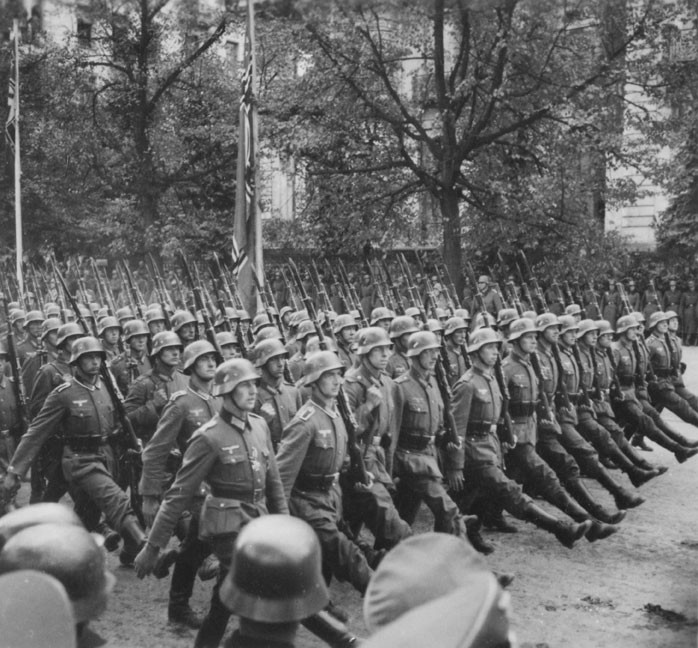
In 1939 Germany was ready for war. It wanted to invade Poland but did not yet wish to fight the Communist Soviet Union. In August 1939 a Nazi-Soviet Pact was agreed that divided up Poland between Germany and the Soviet Union. On 1st September Germany invaded western Poland. Two days later, Britain and France declared war. World War II had begun.
Imperial Japan
Like Italy, Japan had emerged on the winning side of World War I but it too wanted more territory in return. Japanese nationalists were keen to establish a Japanese Empire in Asia and rid Japan of Western influence. Extreme nationalists and the military gradually took control of the government. The emperor was a mere figurehead. By 1940 all political parties had been merged into a single association.

Japan already controlled Korea and Taiwan. In 1931 Japanese forces seized Manchuria in northeast China. In 1937 Japan attacked the rest of China. One year later, it announced its own "New Order" in Asia: one dominated economically and militarily by Japan.

Spanish Civil War
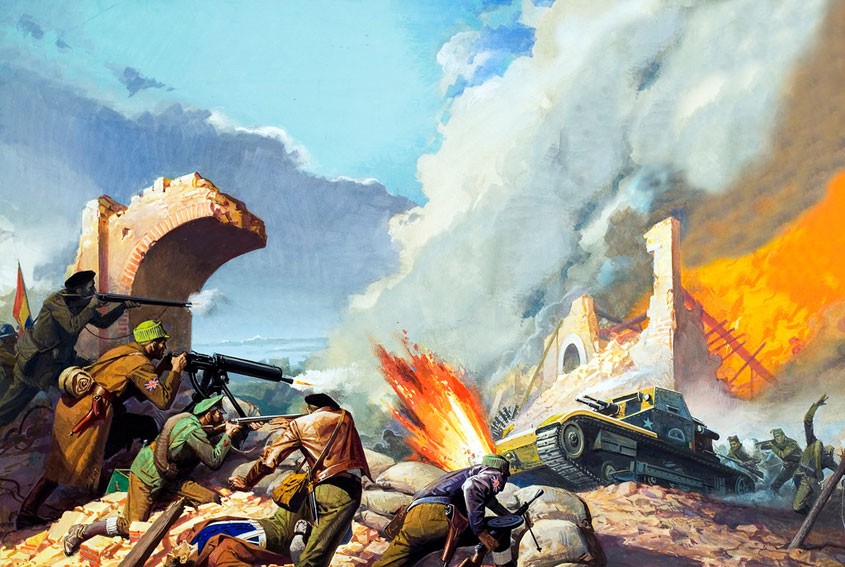
In 1931 King Alfonso XIII fled Spain and the country became a republic. The new government of President Azana pursued left-wing policies but came under attack from conservatives. In 1936 a group of nationalist army commanders in Morocco led by General Francisco Franco (1892–1975) rose in open revolt against the Spanish government. The rebels soon captured the south and west of Spain and eventually took control of the rest of the country by spring 1939.
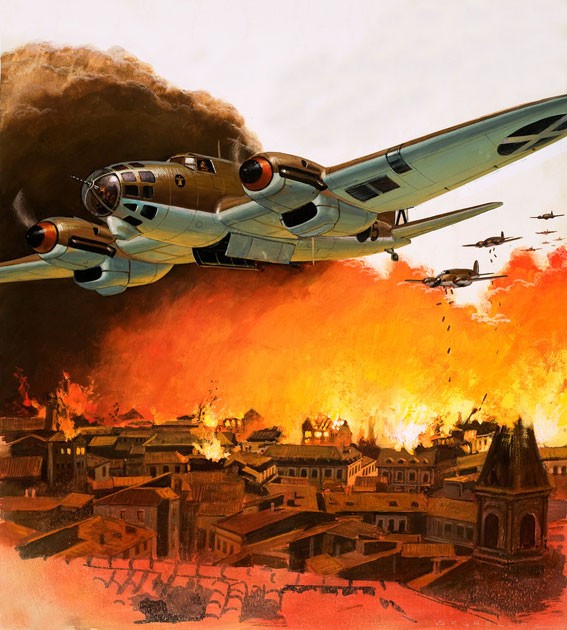
The war became a battleground of ideas for the whole of Europe, with Soviet Russia and left-wing sympathizers in various countries fighting for what were called the International Brigades, supporting the republic, and Germany and Italy supporting the nationalist rebels, known as the Falangists. Germany used the war to perfect its use of aerial warfare, bombing the Basque town of Guernica on 26th April 1937. Around 1 million Spaniards lost their lives in the war. Spain was neutral throughout World War II, and remained under Franco’s dictatorial control until his death in 1975.
Consultant: Philip Parker