
Natural history of the British Isles
Butterflies and moths of the British Isles A-Z
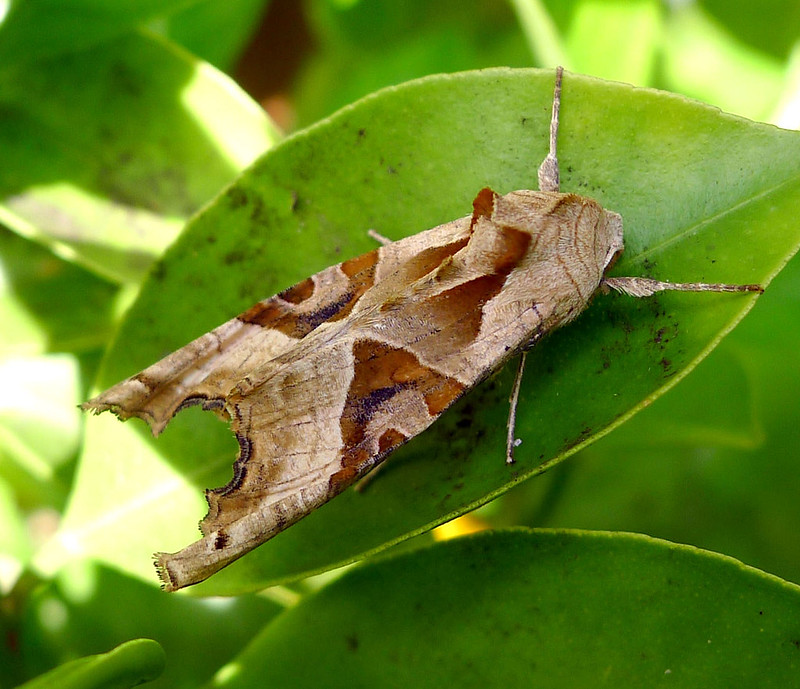
Angle shades moth
Phlogophora meticulosa
The angle shades moth lives in gardens, woodlands and hedgerows all over the British Isles. It has pinkish-brown colouring. When it rests, it creases its wings, which makes it look like a dry leaf and keeps it well hidden from predators. Wingspan: 4–5 cm (1.6–2 inches).
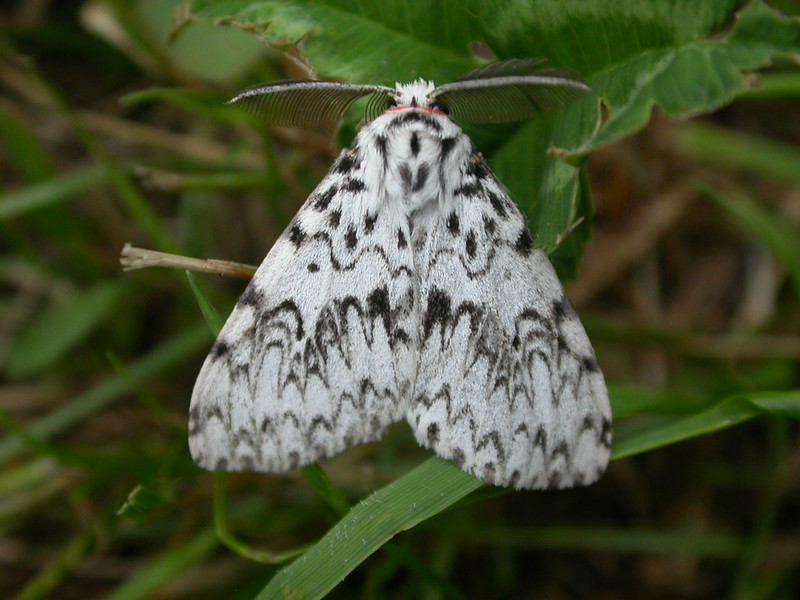
Black arches moth
Lymantria monacha
The black arches moth is common across southern England and Wales, especially in oak woodlands. Its striking black-and-white pattern makes it easy to recognize. Adults fly at night, and can be seen resting on tree trunks during the day. Caterpillars feed on oak leaves. Wingspan: 3.5–5.5 cm (1.4–2.2 inches).
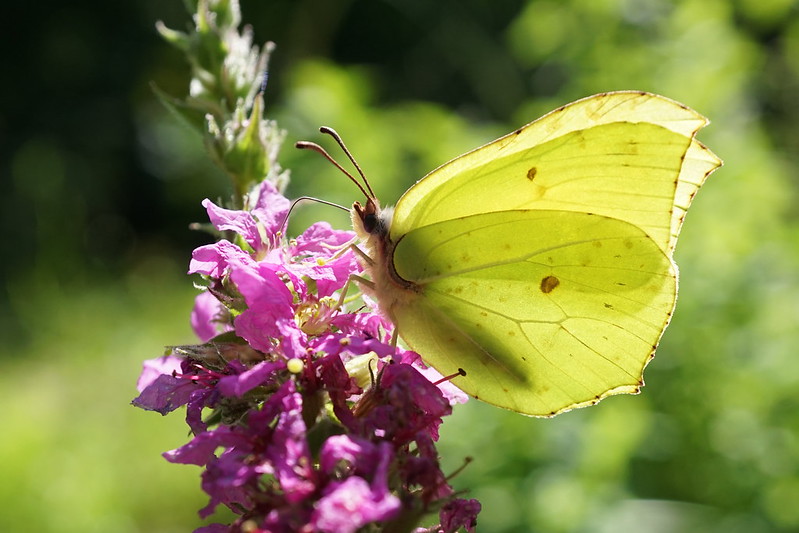
Brimstone
Gonepteryx rhamni
With leaf-shaped, greenish-yellow wings, brimstone butterflies are well camouflaged when they rest among leaves. It is thought that the males’ buttery-yellow colour may have given the butterfly its name. Brimstones live in woodlands in England and Wales. Caterpillars feed on the leaves of buckthorn, a spiky tree. Wingspan: 6–7.5 cm (2.4–3 inches).
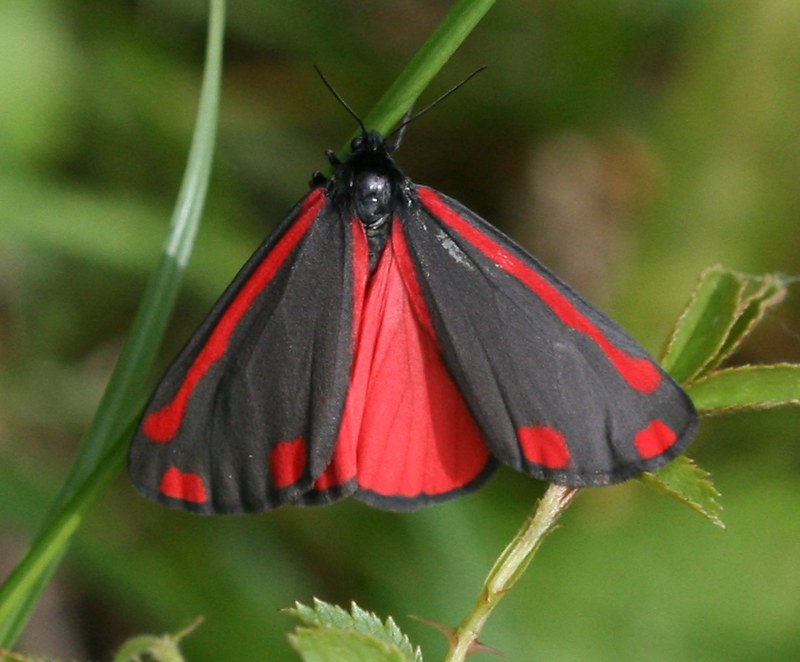
Cinnabar moth
Tyria jacobaeae
This moth is named after the bright red mineral. Its forewings are patterned black and red, while its hindwings are plain red. Cinnabars live in grassy areas all over the British Isles, but are especially common on sand dunes and in areas with sandy soil. Caterpillars feed on a plant called ragwort. Wingspan: 3.5–4.5 cm (1.4–1.8 inches).
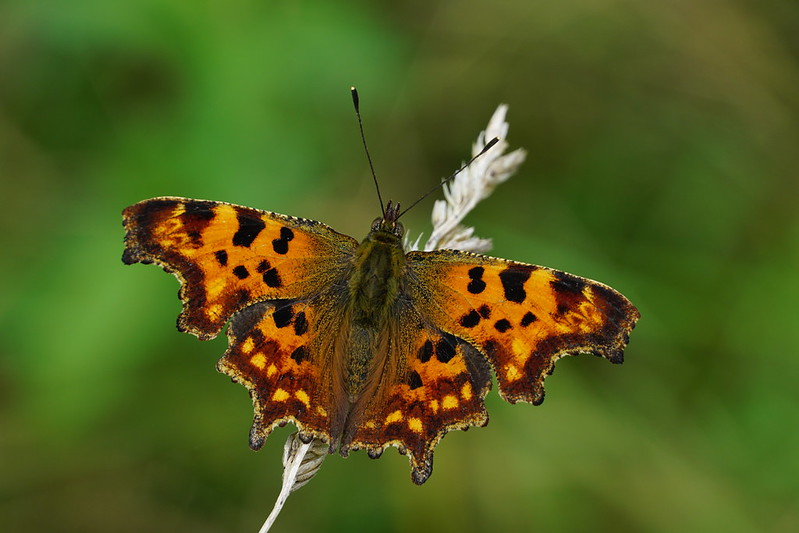
Comma
Polygonia c-album
The comma's wings are jagged like the edge of a shell or leaf. This helps to camouflage it, making it look like a dried-up leaf. On the underside of its wings, this butterfly has a tiny white marking in the shape of the letter C, or comma (“,”), giving it its name. Commas became very rare during the 19th century, but today their numbers are increasing. They live in sunny woodland clearings all over the British Isles. Caterpillars feed on stinging nettles. Wingspan: 5–6 cm (2–2.4 inches).
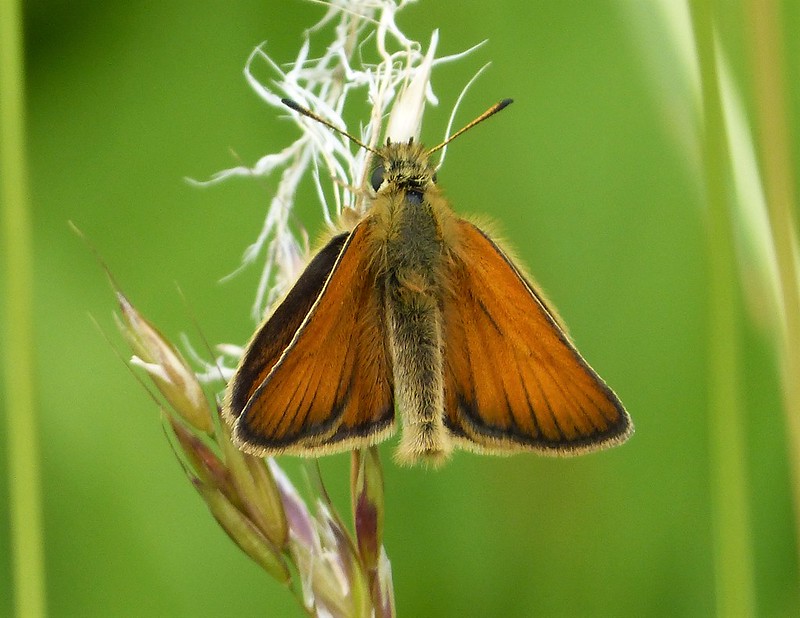
Essex skipper
Thymelicus lineola
The Essex skipper is a small orange butterfly with black-edged wings. It looks similar to the small skipper, and often lives alongside it in sunny areas of tall grassland. Essex skippers mainly live in central and southern England. Caterpillars feed on a tough grass called cocksfoot grass. Wingspan: 2.5–3 cm (1–1.2 inches).
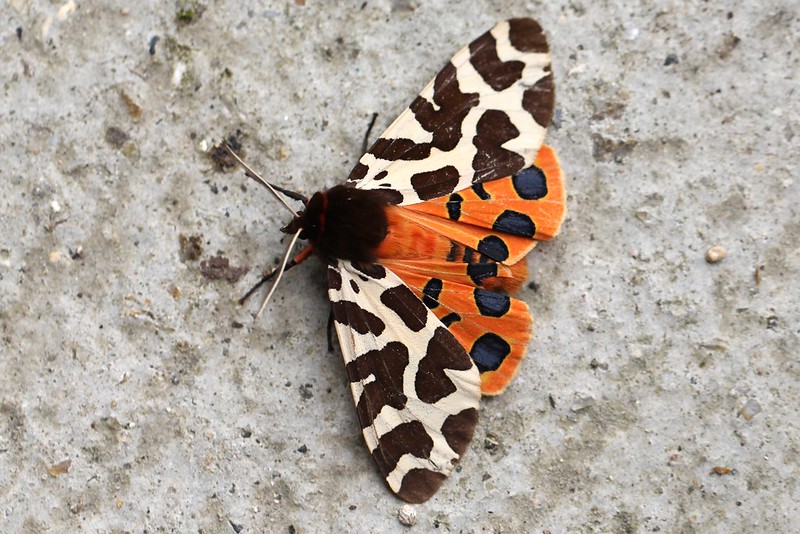
Garden tiger moth
Arctia caja
This large moth belongs to the family of tiger moths, which have brightly patterned and coloured wings. Garden tigers live in damp, grassy open spaces such as meadows, riverbanks and hedgerows. They are becoming endangered, particularly in southeast England, as their habitats are threatened. Caterpillars feed on stinging nettles and dock leaves and are known as “woolly bears”. Wingspan: 5–8 cm (2–3.1 inches).
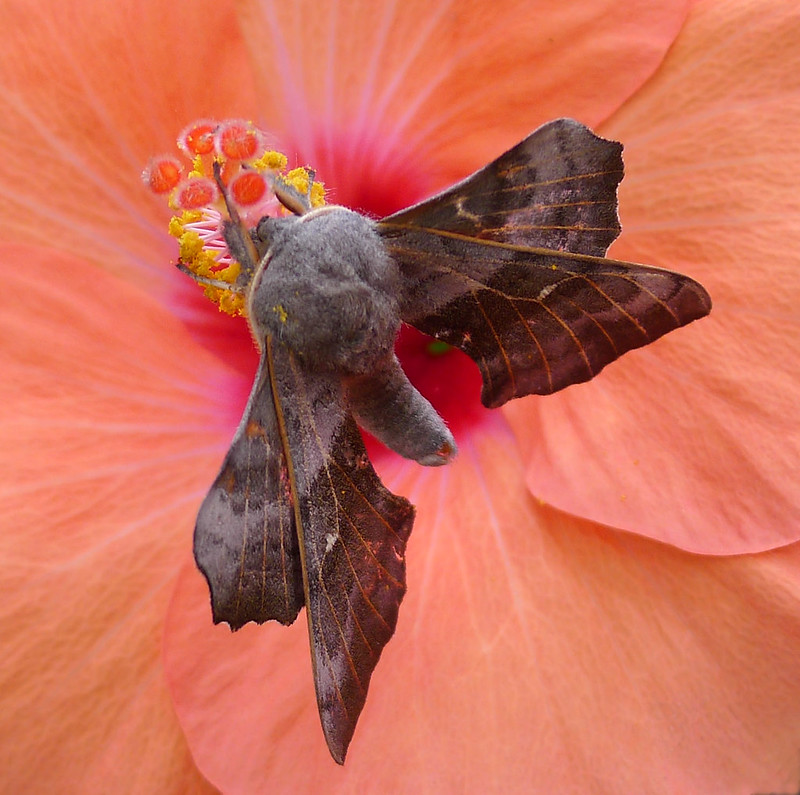
Hawkmoths
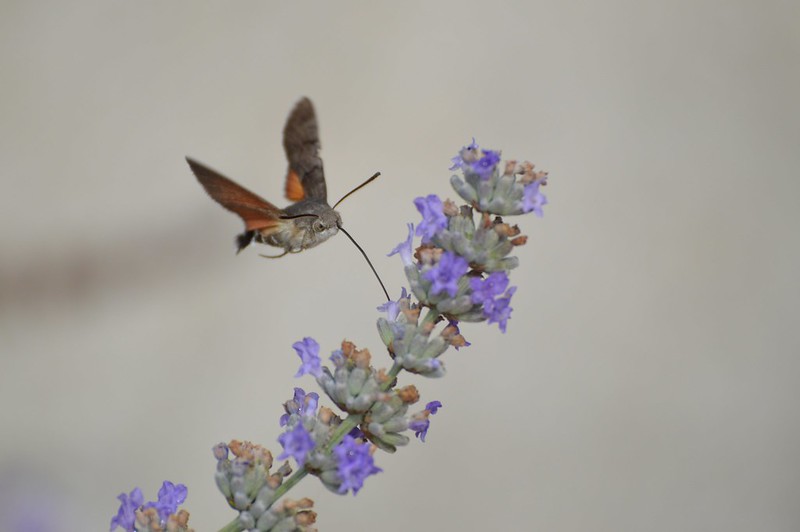
Deilephila elpenor (elephant hawkmoth), Macroglossum stellatarum (hummingbird hawkmoth), Laothoe populi (poplar hawkmoth), Sphinx ligustri (privet hawkmoth)
The British Isles are home to 18 species of large, fast-flying moths called hawkmoths. The most common is the poplar hawkmoth, which lives in woodlands, gardens and heathland and flies by night. Its caterpillars feed on the leaves of the poplar tree. Wingspan: 6.5–9 cm (2.6–3.5 inches).
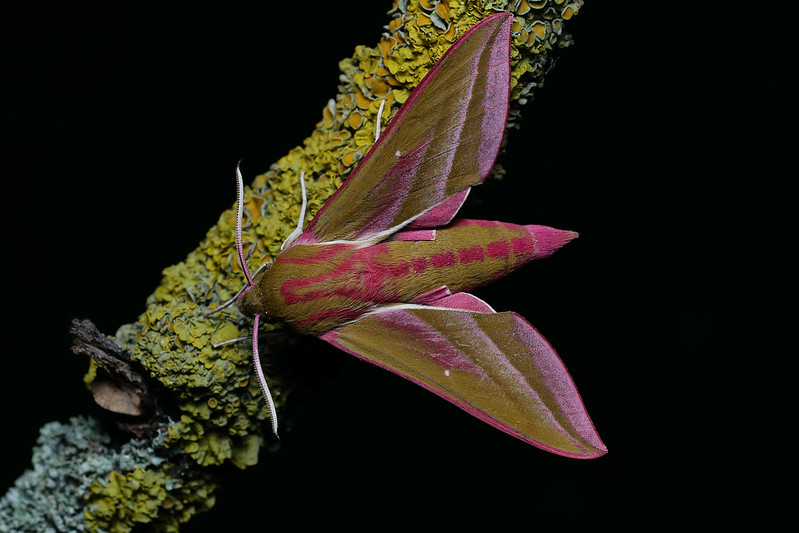
The elephant hawkmoth has bright pink-and-gold colouring. Its name comes from the appearance of its caterpillars, which look like elephants' trunks and have large eyespots. Elephant hawkmoths fly in woodlands, parks and gardens at dusk. Caterpillars feed on purple flowering plants called willowherbs. Wingspan: 4.5–6 cm (1.8–2.4 inches).
The hummingbird hawkmoth is a migrant species that visits the British Isles in spring from the Mediterranean. It can be seen during the day feeding, using its long proboscis to reach deep into flowers for nectar. Like the bird after which it is named, the hummingbird hawkmoth can beat its wings rapidly in a figure-of-eight pattern to hover, allowing it to feed without having to land. It flies on sunny days in summer throughout the British Isles. Wingspan: 5–6 cm (2–2.4 inches).

The enormous privet hawkmoth flies at dusk, in search of nectar from strong-smelling flowers, It has a pink-and-black striped body and holds its wings in a "V" shape at rest. If disturbed, the male privet hawkmoth makes a hissing sound, by rubbing together the scales and spines at the end of its body. Its caterpillars feed on privets, as well as ash trees, lilacs, jasmine and other plants. Wingspan: 9–12 cm (3.5–4.5 inches).
Holly blue
Celastrina argiolus
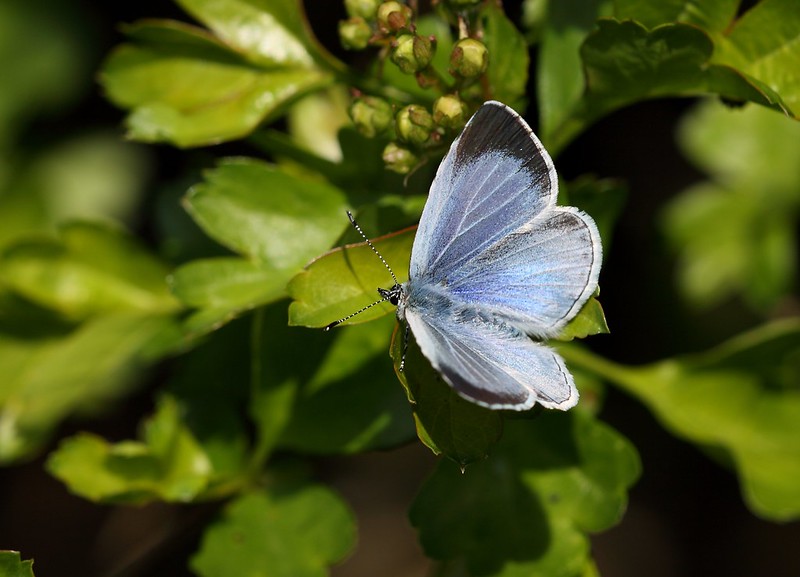
This small blue butterfly is one of the first to emerge each year in spring. Unlike other blue butterflies which fly low to the ground, it flies high up around the branches of trees and bushes, especially holly and ivy, in which its larvae hatch and feed. It also has black spots on the undersides of its wings (other blue butterflies have orange spots). Females' wings have dark edges, while males' are entirely blue. Wingspan: 3.5 cm (1.4 inches).
Jersey tiger moth
Euplagia quadripunctaria
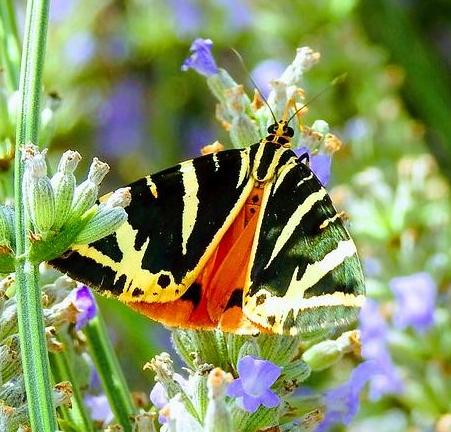
The jersey tiger is part of the colourful tiger moth family. Its forewings are patterned with black-and-white stripes, while its hindwings are bright orange, spotted with black. Jersey tigers live in open, rough ground, such as the areas around clifftops and patches of waste ground in towns and cities. They are attracted to flowering plants such as buddleia. Caterpillars feed on nettles and ground ivy. Length: 5–6.5 cm (2–2.5 inches).
Large blue
Phengaris arion
Large blue butterflies are some of these islands’ rarest. They became extinct in the British Isles in 1979. A conservation project to re-introduce them from Europe was successful, but today their numbers are still low and nearly all of them live in south west England. Large blue butterflies lay eggs in red ants’ nests. When they hatch out, the caterpillars feed on ant grubs. Wingspan: 4–4.5 cm (1.6–1.7 inches).

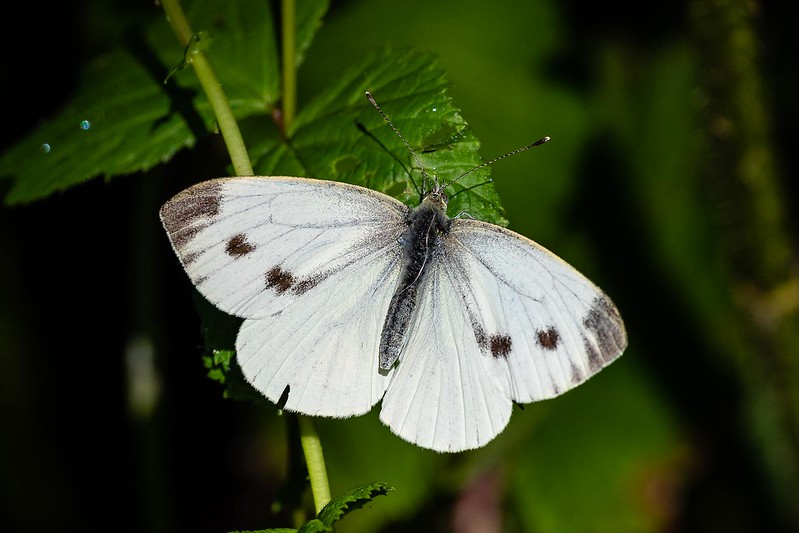
Large white
Pieris brassicae
The large white butterfly is common throughout Britain and Ireland, especially in lowland areas. It has white wings with black tips. Females have two black spots on each forewing. Caterpillars eat cabbage leaves and the leaves of a crop called rapeseed. Wingspan: 6–7 cm (2.4–2.8 inches).
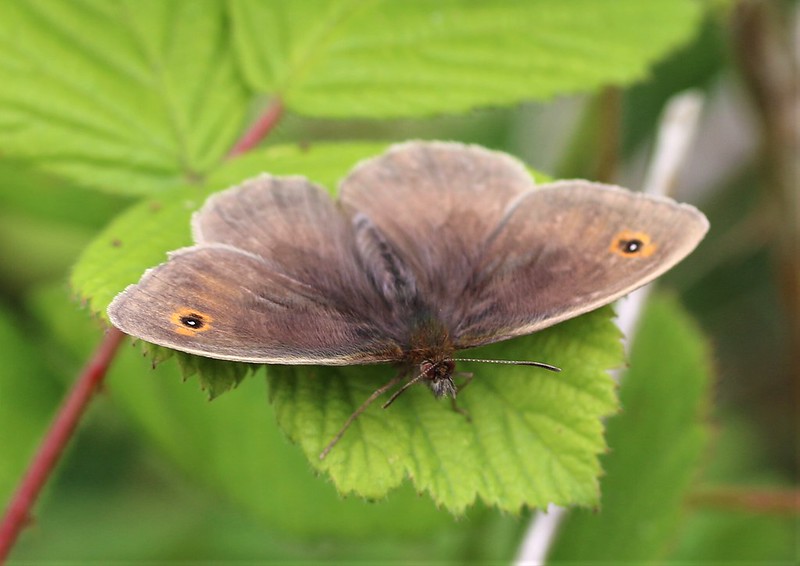
Meadow brown
Maniola jurtina
The meadow brown is one of the most common butterflies in the British Isles, found in almost all habitats. It especially prefers grassland areas, where its caterpillars feed on meadow grasses. This medium-sized butterfly has brown wings, with an orange-and-black patch on each forewing. It sometimes flies together with others in flocks of more than a hundred. Wingspan: 5–5.5 cm (2–2.2 inches).
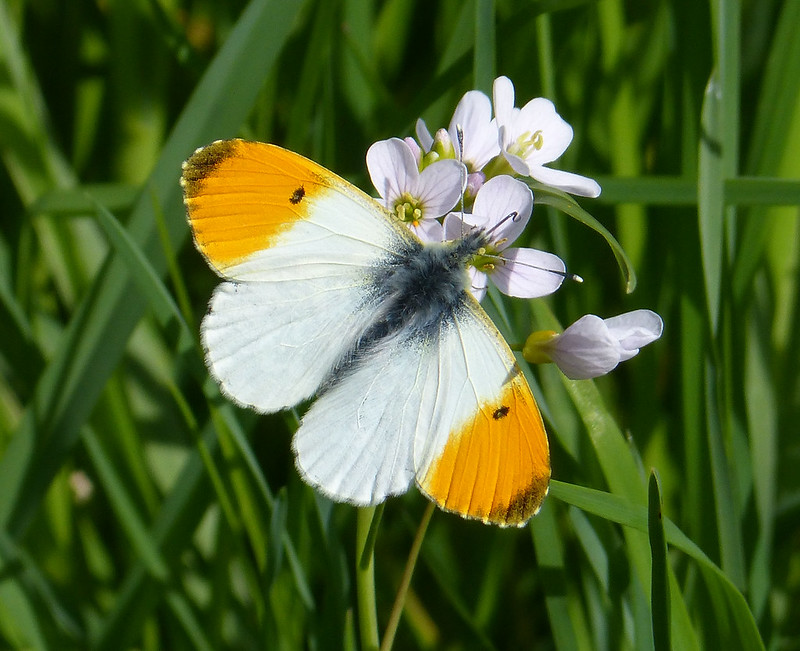
Orange tip
Anthocharis cardamines
The bright wing-tips of the male orange tip butterfly make it easy to spot. Females have pale black wing-tips instead of orange. This butterfly's underwings are mottled brown and white, which camouflage it against vegetation. Orange tips are widespread across the British Isles, where they live in damp meadows, woodland edges, hedgerows and gardens. Caterpillars feed on meadow plants such as cuckooflower. Wingspan: 4.5–5 cm (1.7–2 inches).
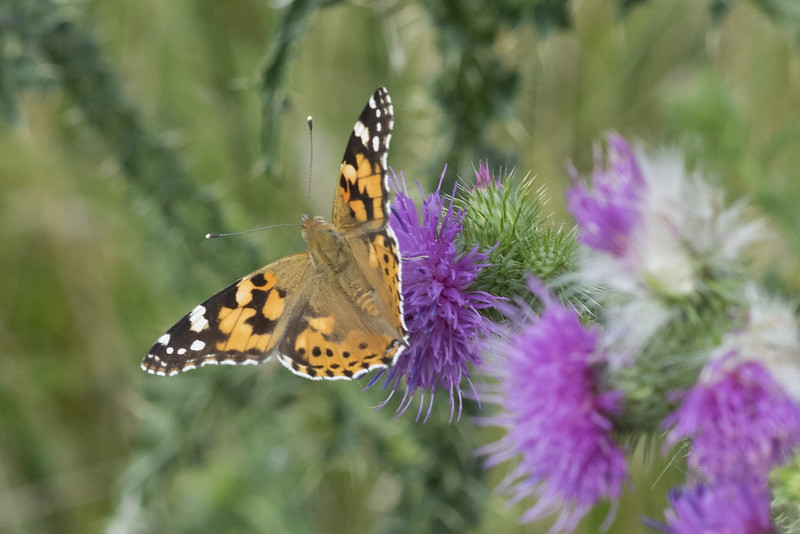
Painted lady
Vanessa cardui
The painted lady butterfly is a summer visitor to the British Isles—it arrives from North Africa in spring. It cannot survive the winter cold, and returns south in autumn when temepratures begin to fall. The painted lady’s wings are patterned orange-and-black, with white on the wing-tips. It can often be seen basking in sunny spots. Caterpillars feed on thistles or stinging nettles. Wingspan: 6.5 cm (2.5 inches).
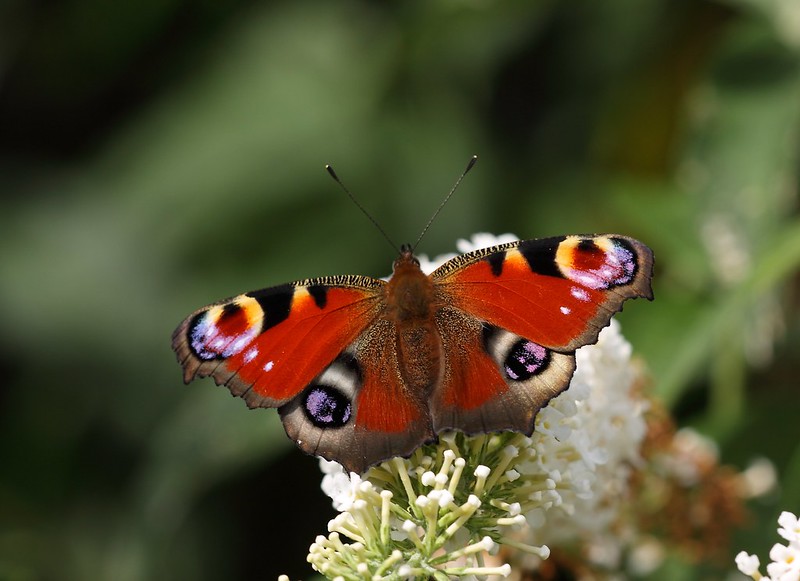
Peacock
Aglais io
The peacock butterfly is easy to recognize by the multi-coloured “eyespot” pattern on its wings. These large spots look like the eyes of a much larger animal, and so scare off its predators. Peacock butterflies are common visitors to gardens in late summer, where adults seek out their favourite food, the buddleia plant. Its caterpillars feed on stinging nettles. Wingspan: 6.5–7 cm (2.5–2.8 inches).
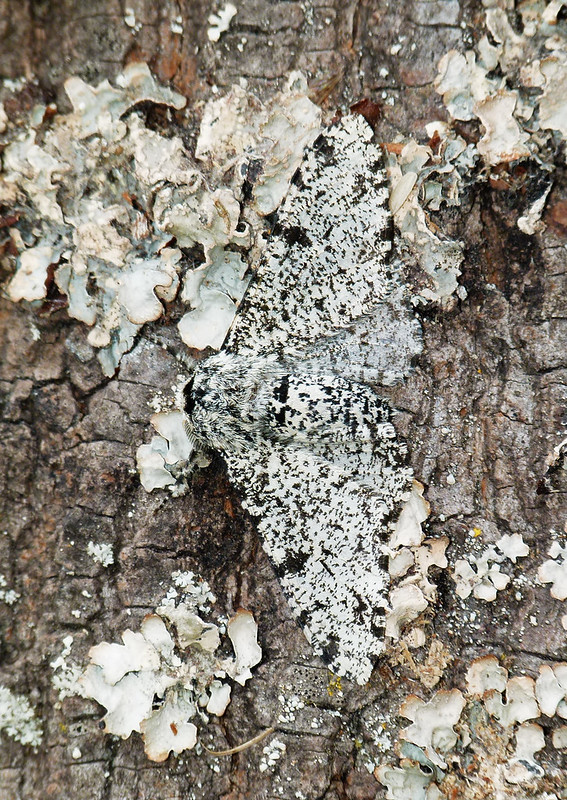
Peppered moth
Biston betularia
This black-speckled moth is a famous example of natural selection. During the Industrial Revolution, factories covered England’s northern cities and surrounding countryside with soot, making it difficult for peppered moths to hide on the darkened tree trunks. However, some of the moths with darker colouring survived, because they could camouflage better and so hide from predators. They became the dominant peppered moths in northern England. Today, air pollution levels have improved and peppered moths have become paler again. Wingspan: 4.5–5.5 cm (1.8–2.2 inches).
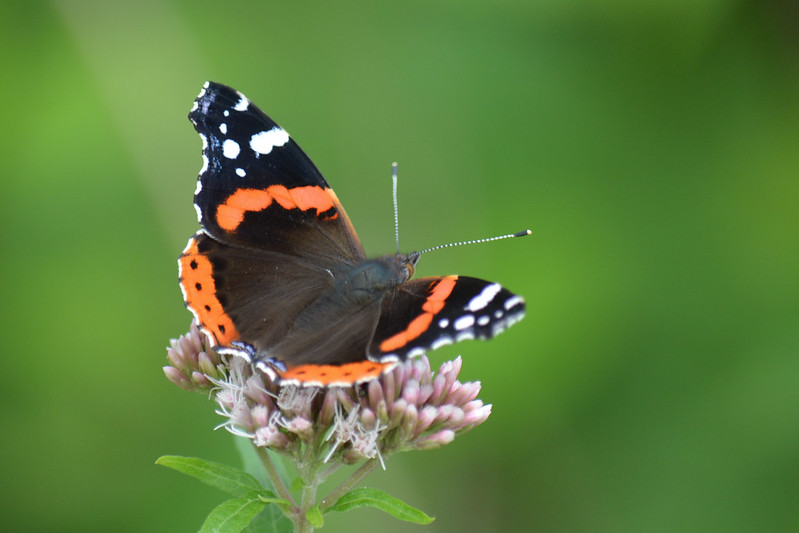
Red admiral
Vanessa atalanta
The red admiral is one of the largest butterflies that visits British and Irish gardens. It is especially drawn to buddleia, a purple flowering bush. Like the painted lady it is a migrant visitor, arriving from North Africa in spring. A small resident population does not migrate and spends the winter in the south of England. Its caterpillars feed on stinging nettles. Wingspan: 7–7.5 cm (2.8–3 inches).
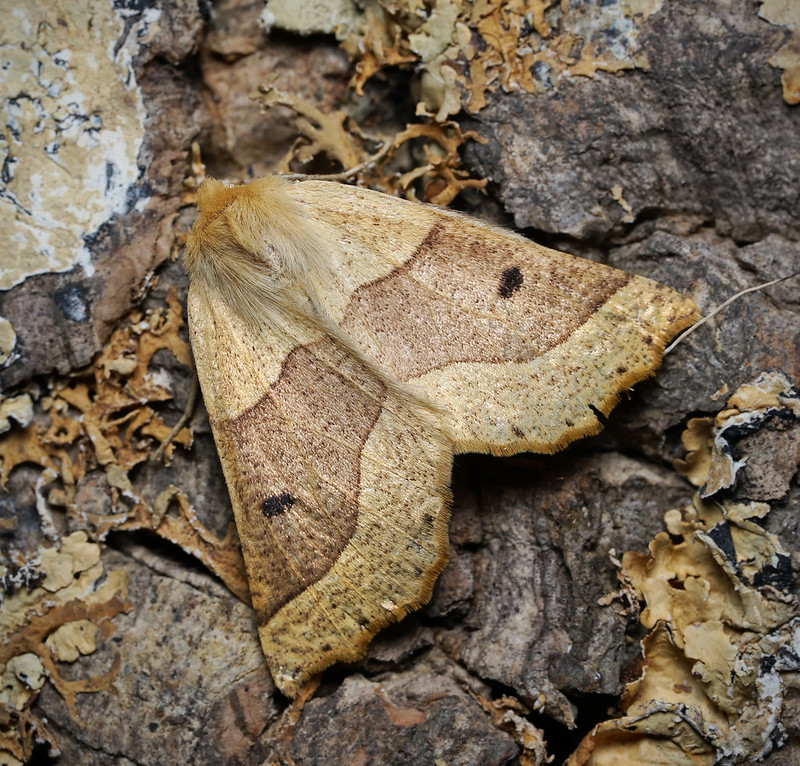
Scalloped oak moth
Crocallis elinguaria
The scalloped oak moth has a dusty yellow colouring, a dark stripe across its wings and a black spot on each forewing. It is common throughout the British Isles, especially in woodlands, gardens and hedgerows. The caterpillars feed on hawthorn, blackthorn, oak and honeysuckle. Wingspan: 3.5–4.5 cm (1.4–1.7 inches).
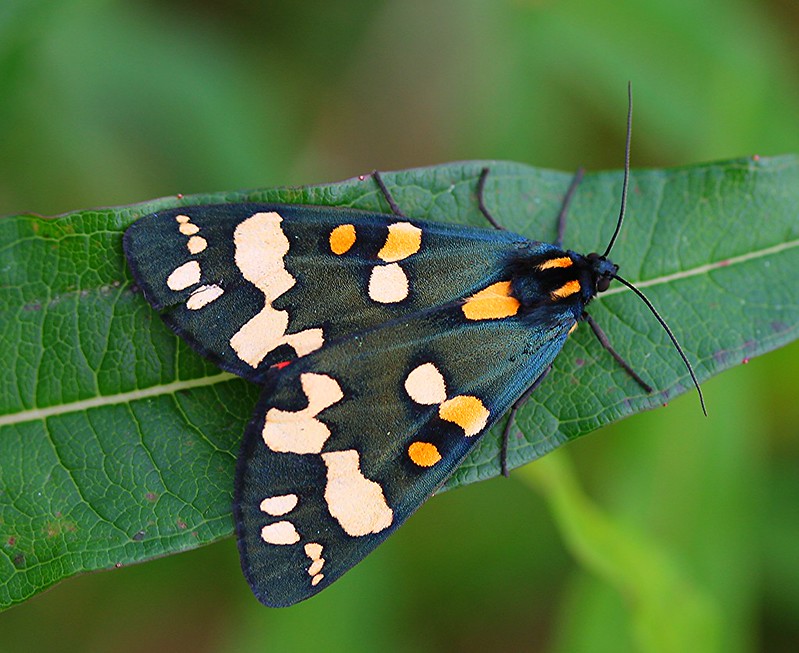
Scarlet tiger moth
Callimorpha dominula
Like other tiger moths, the scarlet tiger moth is brightly-patterned: its forewings are a dark greenish-black with spots of white and gold, while the hindwings are red. Scarlet tigers live in south and west England and Wales, mainly in damp areas such as riverbanks, wetlands and coasts. The caterpillars feed on bramble and nettles. Wingspan: 4.5–5.5 cm (1.8–2.2 inches).
Silver Y moth
Autographa gamma
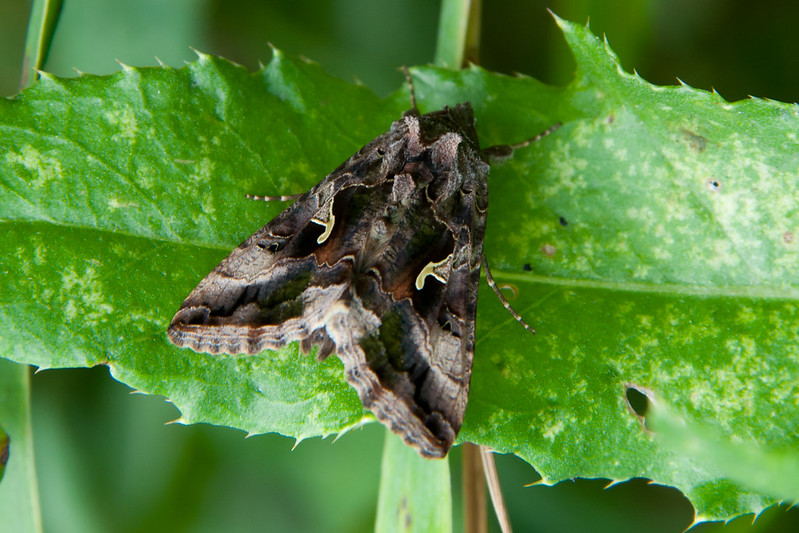
One of the most commonly seen moths in the daytime, the silver Y can be identified by the metallic “Y” shape on each forewing. Its colouring is otherwise dark and patterned. Silver Y moths are a migrant species, and arrive from continental Europe in the spring in vast numbers—sometimes as many as 200 million. The moths are most active in late summer, when they can be seen resting in sunny spots during the day. Their caterpillars feed on stinging nettles and clover. Wingspan: 3.5–4 cm (1.4–1.6 inches).
Silver-washed fritillary
Argynnis paphia
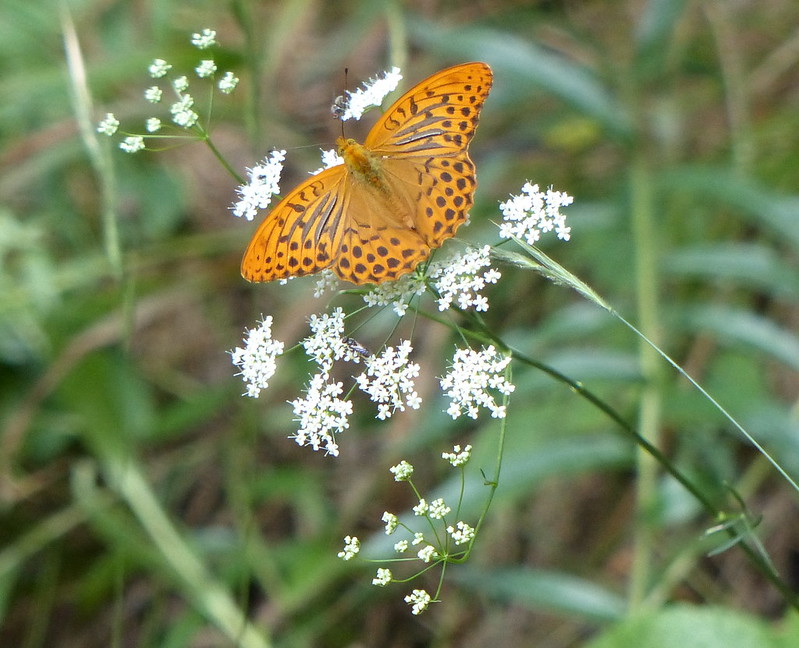
This butterfly belongs to a family of butterflies called fritillaries, which all have golden-brown wings with black patterns (their name comes from the Latinfritillus meaning "chequerboard"). The silver-washed fritillary is the largest member of the family. The undersides of its wings are streaked with pearly silver. It lives in southern England, Wales and Ireland, mainly in woodlands. Its caterpillars feed on violets. Wingspan: 6.5–8 cm (2.5–3 inches).
Six-spot burnet moth
Zygaena filipendulae
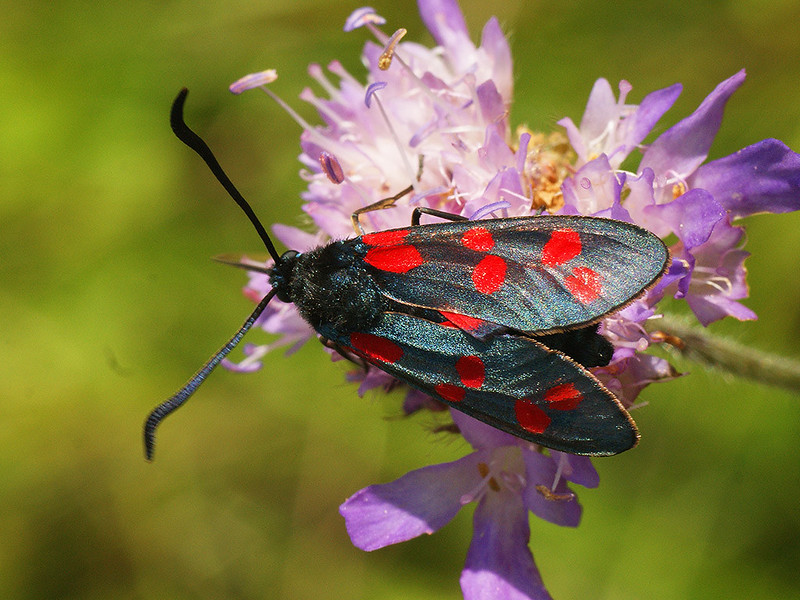
The six-spot burnet moth has dark greenish-black forewings, each with six red spots. It lives everywhere in the British Isles and is best spotted by day in grassland areas with plenty of flowers. Its caterpillars feed on a yellow flower called bird’s-foot trefoil. Wingspan: 3–4 cm (1.2–1.6 inches).

Small tortoiseshell
Aglais urticae
Small tortoiseshells are some of the commonest butterflies in the British Isles, and live almost everywhere from city gardens and roadsides to wild moorlands. These familiar butterflies have black and orange patterned wings edged with dashes of bright blue. They can be seen feeding on flowers on sunny days all year round. Their caterpillars feed on stinging nettles. Wingspan: 4.5–6 cm (1.8–2.4 inches).
Small white
Pieris rapae
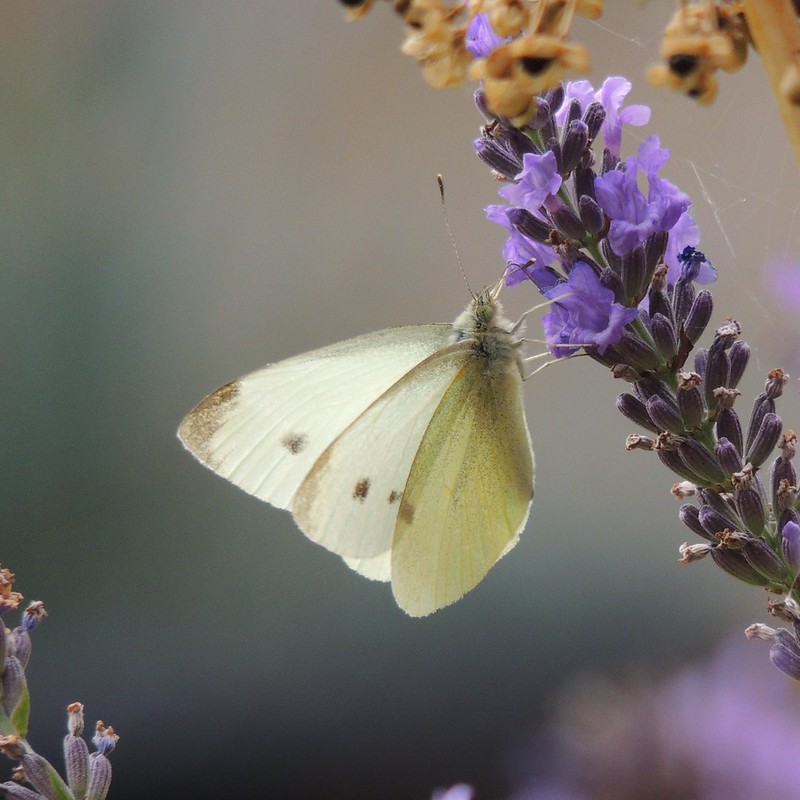
The small white butterfly has white forewings tipped with black, each with a dark spot. It lives everywhere in the British Isles except northern Scotland. It is a common visitor to gardens and vegetable patches, especially where cabbages are grown, as it lays its eggs on cabbage leaves. This has earned it the nickname “cabbage white”. Wingspan: 5 cm (2 inches).
Swallow-tailed moth
Ourapteryx sambucaria
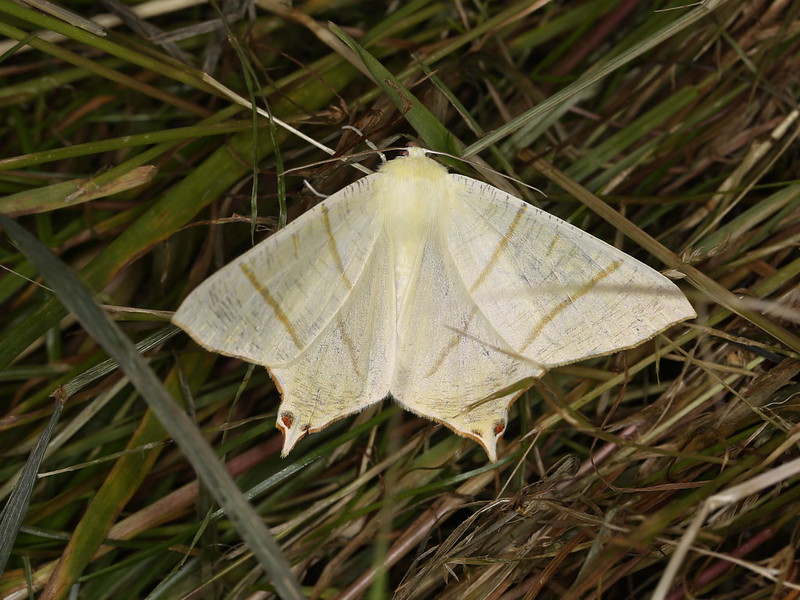
It is rare to catch a glimpse of this large, delicate moth—adults only emerge and fly during June and July, and then only at night. Swallow-tailed moths have pale yellow wings which grow paler as they get older. They take their name from the small “tails” on the end of each hind-wing, which look similar to the forked tail feathers of a swallow. Wingspan: 4.5–5 cm (1.8–2 inches).
White admiral
Limenitis camilla
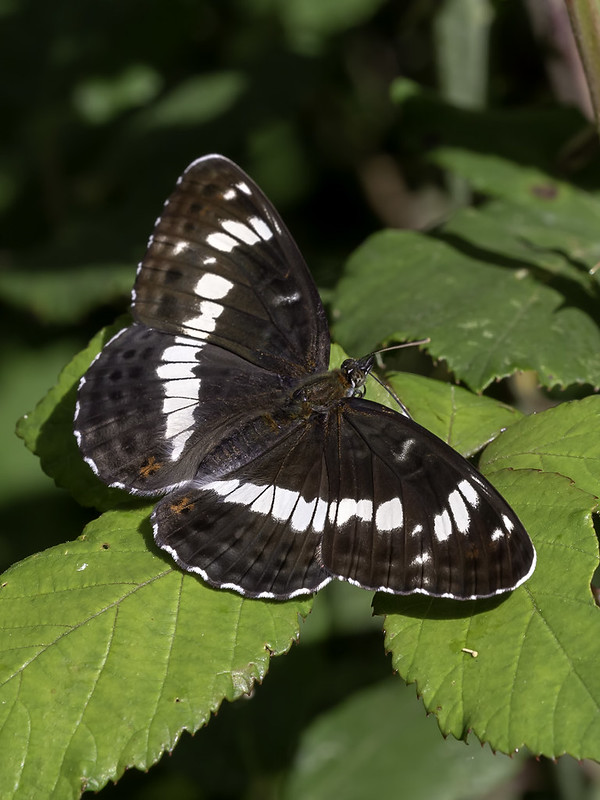
White admiral butterflies live in the south and east of England, where they can be spotted in shady woodland clearings. They have black forewings with a white stripe. White admirals can also be identified by the way they fly: a series of short wing beats followed by long glides. The caterpillars feed on honeysuckle. Wingspan: 6–6.5 cm (2.4–2.5 inches).
Consultant: Chris Jarvis