
Q-news

CITE
We have made every effort to follow citation style rules, but there may be some minor differences. If in doubt, please refer to the appropriate citation style manual.
Scientists discover a microbe that hungrily devours carbon dioxide. (2023). In Q-files Encyclopedia, , Q-news. Retrieved from
https://www.q-files.com/news/scientists-discover-a-microbe-that-hungrily-devours-carbon-dioxide
"Scientists discover a microbe that hungrily devours carbon dioxide." , Q-news, Q-files Encyclopedia, 10 Nov. 2023.
https://www.q-files.com/news/scientists-discover-a-microbe-that-hungrily-devours-carbon-dioxide.
Accessed 13 Sep. 2026.
Scientists discover a microbe that hungrily devours carbon dioxide 2023. , Q-news. Retrieved 13 September 2026, from
https://www.q-files.com/news/scientists-discover-a-microbe-that-hungrily-devours-carbon-dioxide
, Q-news, s.v. "Scientists discover a microbe that hungrily devours carbon dioxide," accessed September 13, 2026.
https://www.q-files.com/news/scientists-discover-a-microbe-that-hungrily-devours-carbon-dioxide


Scientists discover a microbe that hungrily devours carbon dioxide
Scientists have discovered a microbe (micro-organism) living in the sea near the volcanic island of Vulcano in the Mediterranean Sea that devours carbon dioxide extremely quickly. A kind of cyanobacteria (also known as blue-green algae), the microbe has evolved naturally over billions of years to absorb carbon dioxide from seawater. Researchers see the use of microbes such as this as an efficient way of "capturing", or removing, carbon dioxide—a greenhouse gas—from the atmosphere. Ending the burning of fossil fuels is vital in tackling the climate emergency, but most scientists agree that carbon dioxide and other greenhouse gases that have already been emitted will also need to be sucked from the air to achieve net zero by 2050.
21st April 2023


Along with plants on land, marine organisms such as kelp, seagrass and phytoplankton absorb carbon dioxide (CO2), taken from the air and dissolved in seawater. They turn the gas into biomass (organic material) as part of the photosynthesis process. Two kinds of cyanobacteria already known to scientists, Prochlorococcus and Synechococcus, are responsible for approximately 50% of all carbon captured by marine organisms.
The new microbes, also kinds of cyanobacteria, were discovered in volcanic seeps—vents on the seabed where CO2 and other gases leak out into the sea—near the Italian island of Vulcano. The waters contain very high levels of CO2 as a result. The cyanobacteria that live here possess an unusually huge appetite for CO2, turning it into biomass faster than any other known species.
Feasting on the carbon, the microbes grow "astonishingly quickly" according to the researchers. On absorbing the CO2, the microbes become denser and sink to the seabed. This property could prove useful for storing captured carbon in the deep oceans, a process known as carbon sequestration.
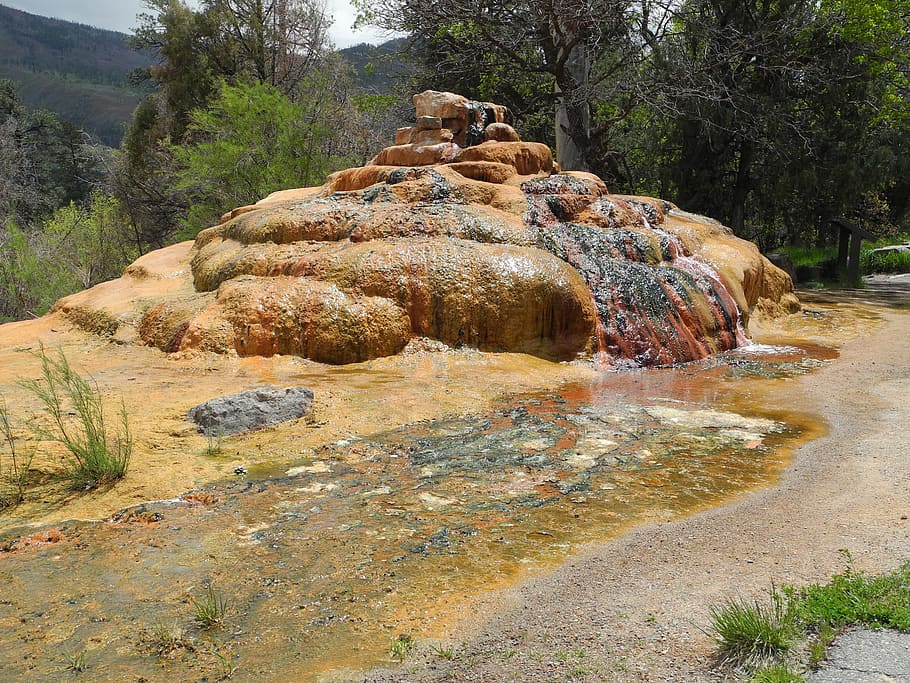
The team also explored hot springs in the Rocky Mountains in Colorado, USA, where levels of CO2 dissolved in the water are up to a thousand times greater than the waters near Vulcano. Here the researchers hope to discover other kinds of cyanobacteria that have evolved an even greater ability to consume CO2.

Scientists suggest that the CO2-gobbling cyanobacteria could be "engineered" to produce useful substances, such as biofuels or bioplastics, as well as trapping CO2 from the atmosphere. Researchers are already exploring the use of cyanobacteria to convert captured CO2 into limestone rock. Engineered to make a certain enzyme, the microbes could act as catalysts to speed up a chemical reaction in which CO2 combines with calcium and magnesium in seawater to form limestone. This would act as a permanent carbon sink, storing the excess CO2 emitted into the atmosphere.
pics
Without in any way limiting Q-files Ltd’s exclusive rights under copyright, any use of this publication to “train” generative artificial intelligence (AI) technologies to generate text is expressly prohibited. Q-files Ltd reserves all rights to license use of this work for generative AI training and development of machine learning language models.